
Cellar/Shift Brewer
Fort George Brewery

Over the past two weeks, a series of emergency acts have increased the availability of loans to small business owners during the coronavirus crisis. But some growing food and beverage companies are concerned that they will be left out of a new set of loans designed to lessen the impact of the coronavirus crisis because they are backed by investment funds.

In a conversation with BevNET managing editor Martin Caballero, veteran natural CPG consultant Bob Burke, principal at Natural Products Consulting LLC, offered his insights and perspectives on how brands can manage their teams, relationships and finances to both survive this trying period and to thrive at its conclusion.

As COVID-19 rapidly transforms consumer behavior, data firms are closely monitoring patterns — and looking to past economic debacles to help predict an uncertain journey ahead.

In a webinar hosted by Rabobank yesterday, analysts at the multinational banking and financial services company offered an overview of the macro impacts of COVID-19 on the food and beverage industry.
Cellar/Shift Brewer
Fort George Brewery
Sales Representative
Fort Myers Brewing Co

National Account Manager – Albertsons (All Banners)
CG Roxane LLC (Crystal Geyser Alpine Spring Water)
Territory Manager- Washington State
503 Distilling
MA: State Manager Spiked Ade
Spiked Ade

North Carolina Brand Manager
Edmunds Oast Brewing Company

Business Development Specialist
Nantucket Crisps


As many foodservice operations cease or dramatically reduce their footprint, food products originally produced and packaged for restaurants, hotels, schools and other establishments are being rerouted to retailers and wholesalers. The FDA and USDA are aiming to expedite the labeling process for these products with new guidance published this week.

While many established companies are bearing up under the storm thus far, small entrepreneurial brands, from early stage startups to regional players, who often have less distribution to start, are feeling the pain from retail disruptions. However, amidst lost supermarket sales or cancelled expansion plans, online is providing a possible bright spot for these brands.

The increased demand for products through online sellers like Amazon means that brands need to shift tactics — something that’s hard to do during a crisis; Betsy McGinn sat for a video interview with Jeff Klineman, BevNET’s editor-in-chief, to provide important advice on how brands should approach their Amazon and broader e-comm strategies as consumer behavior takes a disruptive turn to online food and beverage purchasing.

We’re back for a 60 minute livestream today, March 26th. The fourth round of food and beverage brands includes Suja, Coolhaus, Poppi, Cappello’s, and Tempo. As a special treat this week, we also have Darren Rovell, who is a Partner at Tastemaker Capital and former ESPN reporter, weighing in on the brands and providing feedback.
NOSH's video content includes thousands of video interviews with leading industry experts and topics such as investing, e-commerce, branding, current events and more.






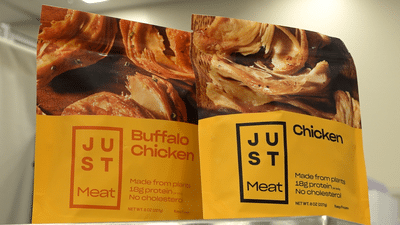
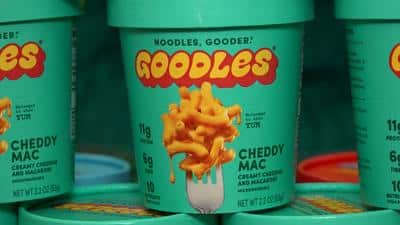
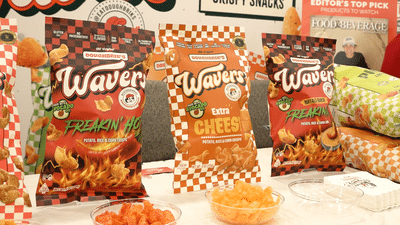
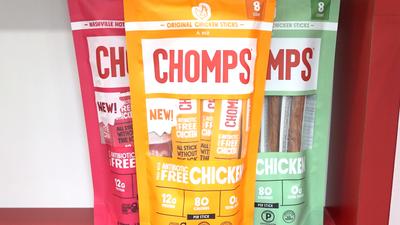

Even as the coronavirus has ground most of the U.S. economy to a near stop, food and beverage suppliers and retailers — deemed an essential business by state and federal governments — are running at full speed, and looking to expand.

In a video call with BevNET editor-in-chief Jeff Klineman, Adnan Durrani, the CEO of American Halal, the maker of the Saffron Road line of meals and snacks, gave strategic insight into the challenges of operating a large food and beverage company during these chaotic times, which Saffron Road — and other food and beverage brands — are currently experiencing.
As it becomes more unclear just how long Americans will have to embrace social distancing, two more food and beverage conferences have decided to change course. Both the The Sweets & Snacks Expo, which was scheduled May 18-21, as well as Specialty Coffee Expo, which was scheduled for April 24-26, have been cancelled

Under careful self-scrutiny due to the spread of the novel coronavirus, food producers, regardless of size, are having to rethink their production, supply chain and distribution efforts to keep up with increased demand from consumers and retailers while balancing the safety of their employees. Large producers, in particular, are having to change production paradigms while also answering the call to give back and assist employees and communities in need.

The USDA last week expanded its guidelines for products that can use the label claim “healthy.” The update could be a boon for meat snack brands looking to boost their products’ health claims — but while those brands welcome it, they don’t see the designation as a game-changer.

The Families First Coronavirus Response Act (FFCRA), which was signed into law last week, was designed to provide an option for employees to take paid leave due coronavirus-related illness, quarantine or loss of childcare. But, while they are supportive of the bill, some food and beverage company CEOs are also concerned about keeping their manufacturing facilities staffed. Some say they are scrambling for other ways to help families cope while still staffing their production lines.