Search across the BevNET CPG Media network including BevNET, Nosh, Brewbound, Taste Radio, Nombase and CPG Jobs.
Eat Just Bets On Plant-Based Chickrn
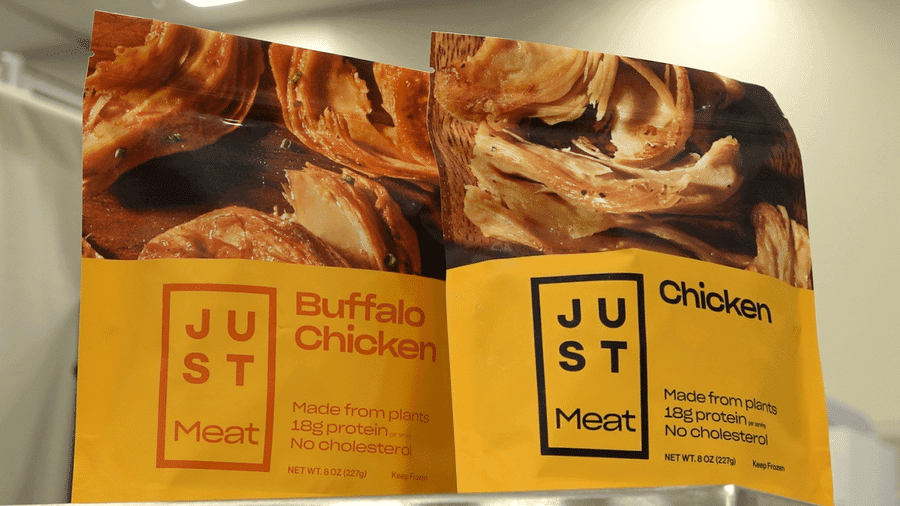
At Expo West this year, co-founder and CEO Josh Tetrick spoke to Nosh about its new plant-based chicken alternative product and why it took the brand so long to innovate into the category. Tetrick explained how the brand formulated its product and why it took an under-the-radar approach to its retail launch strategy.
During the booth interview, Tetrick also discussed what isn’t working in the plant-based meat category and how brands can win consumers back on flavor-first innovation.
Transcript
Note: Transcripts are automatically generated and may contain inaccuracies and spelling errors.
Speaker 1 [00:06] Hi, this is senior reporter Lucas Southard. I'm here at the Just Booth and I'm here with CEO Josh Tetrick. Josh, tell me a little bit about, uh, the launch into plant-based chicken, a new product line for you guys.
Speaker 2 [00:19] The long journey into chicken. Well, you know, we started off with egg, which is about the hardest, uh, plant product that you could do. Um, I grew up eating a ton of chicken in Birmingham, Alabama, and it was always something I wanted to do once we got the egg to a place where. It was selling, we're making a little bit of money selling it. Um, so it was a six-year journey to create, uh, our, our new product, Just Chicken, and we really wanted to nail this tender, pull-apart kind of feel. Um, we've seen a lot of the plant-based chicken have a, a density to it where they can be too mushy, and we wanted this pull-apart tender Alabama barbecue style chicken, um. It took longer than we thought to make it happen, which is usually the case, but finally it got out there and uh we're in some of the biggest retailers across the country now.
Speaker 1 [01:09] Along with the formulation, when you did launch, you kind of, you kind of quietly launched, uh, last summer into a couple of retailers and then made it a little bit more well known in the fall. Tell me a little bit about that approach to bringing this product, uh, out for a brand that's pretty recognizable in the plant-based space. Well,
Speaker 2 [01:26] one of the biggest reasons that we didn't make a big deal when we first launched is we didn't think it was good enough. So that's probably a good reason, so we worked to improve it. We wanted, you know, it's always my filter is, um. Am I really proud of it? Do I want my, if my friends at a Walmart or at a Whole Foods or any retailer and they tell me they're about to buy it, am I excited they're gonna buy it? Or am I thinking, oh man, I don't want you to bring that home because you're gonna be disappointed in what I'm doing? So we have some work to do. So we, we worked on it, we improved the texture, and now it's in a place where I'm excited to show it off and talk a lot about it.
Speaker 1 [02:06] So you launched into some conventional grocery stores. You're in some Walmarts as well, or a lot of Walmarts.
Speaker 2 [02:14] 3100,
Speaker 1 [02:15] 3100. And then you've got some new launches coming up. Can you talk about that? We do,
Speaker 2 [02:20] yes. So today we're, we launched with HEB. We're with Sprout. nationally we're within 3100 Walmarts. Uh, we're with Giant. Uh, we're with Hannaford, um, and this upcoming Monday we're really proud to launch an every single solitary Whole Foods. That's a, that's a big deal. Yeah, it's a real big deal. Whole Foods has been one of the most important retailers for us. They, um, they were a big early supporter of, uh, of Just Egg, and, um, you know, it's the whole meat thing is incomplete unless they come aboard and. Thankfully, they were, they were open to it and we, we get to see how the Whole Foods shopper likes it this, uh, starting on Monday.
Speaker 1 [02:57] Looking towards, uh, what you did with egg and, and how you scaled that, that product, have you taken a different approach with the launch of the chicken, or are you thinking about it in a different way in terms of bringing more consumers to this product, marketing it, or is it similar to, to how you scaled egg?
Speaker 2 [03:19] I would say the biggest difference is. Before we launched Just Egg, there was no such thing as a plant-based egg. There was an egg and then there was energy or you know some vegan egg replacer they used instead of applesauce. The process of it was really lost on people. This less so really the, the thing we're trying to emphasize in all our marketing here is. This is not the plant-based chicken that you might have tried before, um, because a lot of people have tried it before and have left the category because they thought it was too dense, they thought it was, it made them too thirsty, it, it was too mushy, whatever the reason is, we want people to get back in and try it, um, and say, you know what, this is, this is a different kind of thing. Like this is meaningfully different than the stuff that I, that I tried before and far away, the most important thing for us is trial. We just need people to try it. And, and we've seen as people try it more, the velocities go up both in the natural channel and, and big retailers like Walmart. So that's far, far and away the most important thing for us. And Just Egg, about 91% of the, the consumers who buy Just Egg, thankfully are not vegan or vegetarian. So we really want, you know, to bring the non-vegans and vegetarians into the category because that's obviously the vast majority of the consumer base out there. Um, and we're, I would say another difference is. Now we have a pretty solid consumer base with Just Egg. We want to introduce them to a new thing through their loyalty to Just Egg.
Speaker 1 [04:51] Broadly looking at. The plant-based meat or meat alternative category, um, food tech in general has seen investment kind of decline just as done very well, uh, getting investor support and, and having kind of a solid base of funding behind it, but at the same time, consumer demand has been a little challenged. There's been some headwinds we've seen sales go down more or less across plant-based, but most especially in protein. Um, how is just kind of. Readjusting to where the consumer is in the plant-based or meat alternative category.
Speaker 2 [05:27] We did more in sales over the course of the last 3 months than any time in our 12-year history. So 3 of the last 4 months have been record months for us. We did more last year in revenue than we ever did in history. Just Egg is the highest units per store per week, highest velocity plant protein item. But, um, we have seen consumer sentiment in certain ways, um, change. And I think what we and other companies need to do to grow is make things that are really good. We, we, we can't, if we're, if we think just being made from plants is good enough, it ain't gonna work. Um, consumers will try it, they'll think it's interesting, they'll tell some friends about it, and then they'll leave when they wanna, you know, really have something that's good, you know, if we really care about doing good for animals, doing good for the climate, doing good for people's health, which is why we started the company, we better really give a damn about making this good. It has to be good enough that Um, when compared against conventional chicken or when compared against a chicken egg, folks are like, it's hard for me to tell the difference. And ultimately, I want them to say, we think this thing is a lot better. Second thing is, and we had a hard time with this for, for a while. Making something that tastes really good, that is doing good for the world in a way that's not making money. Not gonna work either. You gotta figure out a way to sell it for more than it costs. And that sounds like such a simple thing that it took us about a decade to figure out how to do. Um, and it was a combination of, you know, some, some mentors of me that really pushed me to have this no burn mentality. Um, my COO who has really. Um, help drive, um, a set of efficiencies across the organization to lower costs, paying attention to things that maybe 12 years ago seemed kind of boring to me, like, um, optimizing our warehousing. They didn't sound like the
Speaker 1 [07:27] boring stuff
Speaker 2 [07:27] that the most exciting reason to start a company, but if you don't optimize your warehousing, you might be, you might be out of business.
Speaker 1 [07:33] Well, that's it for us here at the Just Booth, but we'll be releasing more content and interviews and a lot more news from Bevnet and Nash.