Scaling Smarter: Behind IQBAR’s Ecomm-To-Retail Strategy

When improving brain function is a brand’s core mission, aligning with one of the smartest minds in fine dining could be a genius move.
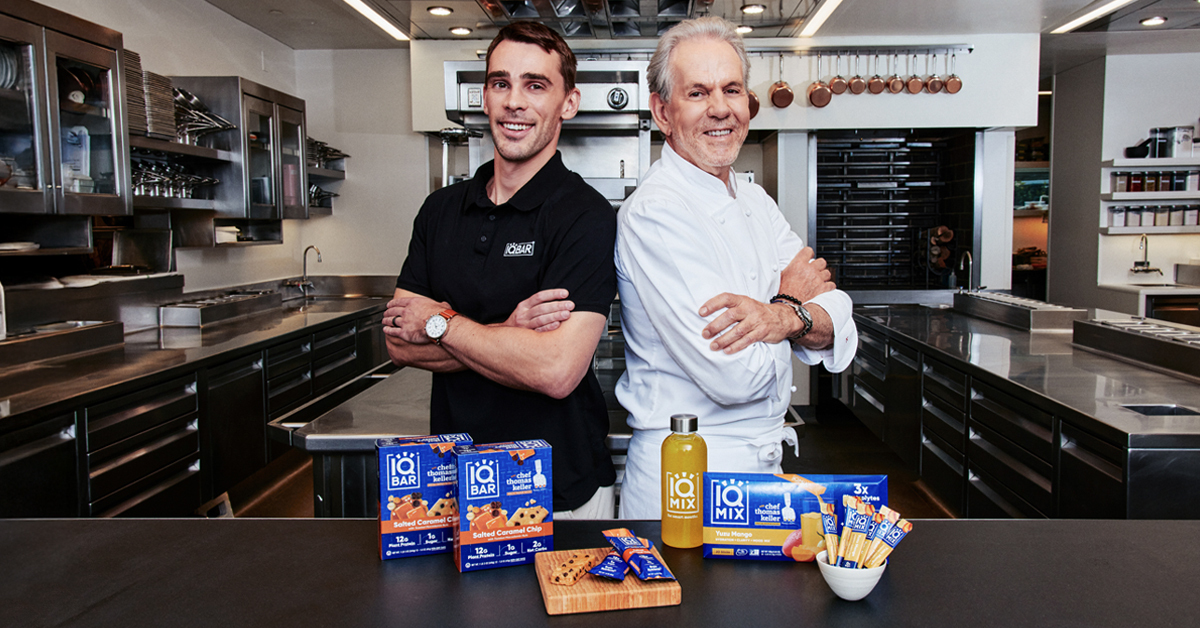
IQBAR – which makes protein bars, hydration powders (IQMIX) and functional instant coffee (IQJOE) – recently partnered with celebrity chef Thomas Keller on two new products as the brand tallies its first year where retail sales outpaced the brand’s ecommerce business.
After finding out that Keller was a regular IQBAR customer, founder Will Nitze spoke to the chef at a KeHE holiday show.
“A week later, I was sitting in my living room and thinking: Wait a second. This guy’s the most decorated chef in America, and we run a food company. There’s got to be something there,” Nitze told Nosh. “So I called him and said, ‘Hey, what do you think about co-developing a couple of products?’”
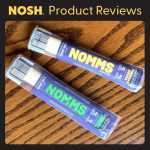
After a year-long formulation process, the brand debuted its Salted Caramel Chip IQ Protein Bar and Yuzu Mango hydration sticks in two new products. Ten percent of proceeds for every sale will be donated to Keller’s Ment’or non-profit, which supports aspiring chefs in the U.S.
Bringing Keller on board for two products in the IQBAR portfolio aligned with the brand’s strategy of reducing cannibalization through diversification across three different categories.
“From the outside looking in, it’s ostensibly circuitous or disjointed. The reality is that it’s completely by design,” Nitze said.
Other bar brands might expand into bites, cereal or other snacks with similar nutritional value propositions. IQBAR’s approach has been to platform along separate categories and offer differentiated functional benefits so a consumer will turn to the brand during multiple day-parts or for different use-occasions.
“You get more at-bats throughout a consumer’s day,” he said. “For example, if they sit down for breakfast, they want to have a coffee and a bar, and then something to hydrate. They will consume all three of our product lines in one sitting. It’s solving completely distinct challenges.”
This type of platforming also diversifies how the brand moves further from ecommerce to retail. Nitze pointed out that powdered hydration sticks can be an “extremely challenging” category to win in grocery, but it is “extremely successful” online and in the club channel.
“If all we did was hydration, that’s a giant problem. But it’s not a problem because that’s one of our three lines and it’s not even our hero line,” he said. “We can operate with a scalpel versus a hammer and just say: ‘Okay, we’re going to build a giant ecommerce business for hydration and instant coffee.”
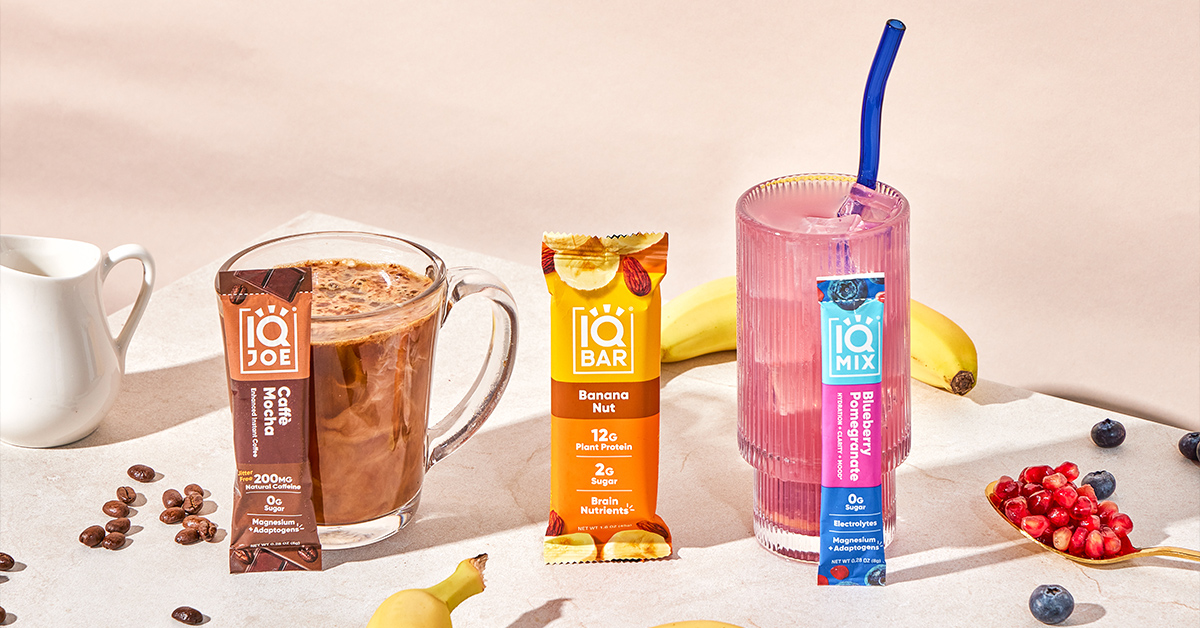
While 99% of sales for those two lines remain online, the brand has steadily built a 12,000-door footprint for its bars in retail. IQBAR’s omnichannel approach spans conventional, natural, club and mass channel retailers like Wegmans, H-E-B, Publix, Sprouts, Costco, Sam’s Club, Target, and Walmart, among others.
IQBAR retail sales will overtake its ecommerce business, but that evolution has taken significant effort in adjusting its bar SKUs for brick-and-mortar.
Following its minority investment by Lotus Bakeries in 2023, IQBAR refreshed its packaging after receiving feedback from retail buyers that enthusiasm for keto-positioned products was waning. It has invested in custom packaging for its bigger retail partners in club and mass channel retailers to hit specific margin targets.
More importantly, the brand needed to rethink its packaging and pack sizing as it charted a path deeper into retail. That’s not to say IQBAR is moving away from ecommerce but using its digital base to drive retailer interest in the brand, Nitze pointed out.
“We don’t go to trade shows and, yet we’re in every major retailer other than a couple. How? Build a great ecomm business,” he said. “That is the analog of a trade show floor. Buyers will go to the Amazon bar section and look at what brands are gaining traction.”
Last year, IQBAR became profitable and expects to continue that trend “indefinitely,” Nitze said. He credits the work the small IQBAR team does focusing on value creation over premiumization.
“We bang our heads against the wall in every which way to drive efficiencies operationally,” he said. “We spend all our time trying to charge less for the same thing.”