Hero Steps Into the Bagel Void – And Enters Pasta Category

When one freezer door closes, another opens.
The meltdown of beleaguered bagel slinger BetterBrand provided an opportunity for Hero Labs to replace its reduced-carb rival on shelves nationwide at Whole Foods Market this past spring. Hero’s take on the beloved breakfast staple is baked with resistant wheat starch, wheat protein, fava bean protein, jerusalem artichoke fiber, olive oil and yeast.
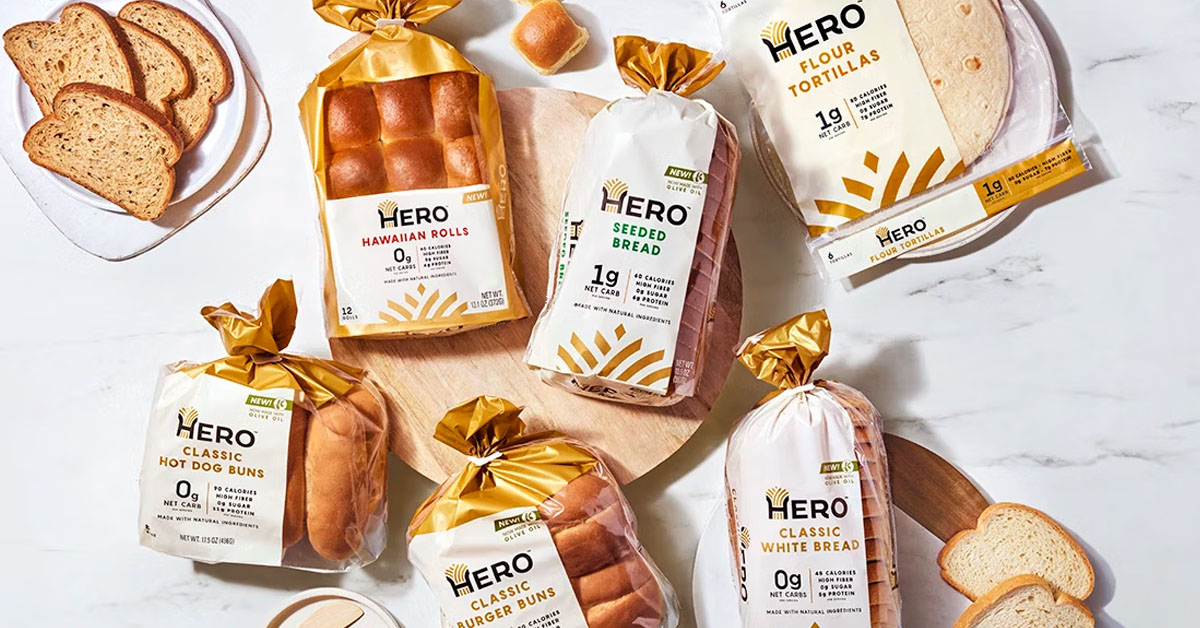
Just a few months since its debut, the item has quickly become a top seller for the brand, which also produces high-protein, high-fiber white bread, seeded bread, tortillas, burger buns and hot dog buns that it sells online and in thousands of retailers nationwide.
“Timing is a lot of it, but I think product quality is a lot of it, too,” YuChiang Cheng, CEO of the San Francisco-based startup, said of the brand’s big bagel break.
Hero also sells limited-edition, direct-to-consumer products, including croissants, brioche slider rolls, Hawaiian rolls and cheddar biscuits. Today marks the brand’s entry into the pasta category with the launch of Hero Low Carb Penne. The product will be available online exclusively this summer with potential retail expansion next year.
To date, the business has raised a total of $59 million in funding, according to Crunchbase, and is backed by both strategic investors including Cleveland Avenue, Electric Feel Ventures and DNS Capital, as well as celebrity investors like Tom Brady, The Weeknd and Kevin Durant.
“We invest a lot of money and R&D in our products. We have our own food scientists and chefs on staff who help us do this. We generally take somewhere between a year to two years to formulate our products,” Cheng noted.
In an interview with Nosh, Cheng shared more about Hero’s pasta plans, how the team is tackling tariffs (as well as a costly switch from seed oils), and how the brand benefited from the collapse of its competitor. Responses have been lightly edited for length and clarity.
How has your business benefited from the situation surrounding BetterBrand?
We had buyers calling us who had spaces on the shelf that were opening up. And we were fortunate enough to be able to fill those, and that’s a lot of our bagel story, to be frank.
We launched bagels initially with our executive [leader of frozen] over at Whole Foods. Her name is Marissa Norden. She believed in our product; she believed in our brand. And despite a fallout at one of her other vendors, she was still willing to take a risk with our product, even though I’m sure she, in a conservative world, would have filled it with a large incumbent with a large balance sheet. But I think we gave her enough comfort, both from our balance sheet perspective and our product quality perspective that she took a risk with us.
How has your bagel line performed in Whole Foods?
We launched bagels in April this year, with Plain bagels, and we’ve quickly followed that up with Everything bagels. We were already in Whole Foods with some of our other SKUs for almost five months, but bagels quickly launched with them and became our No. 1 SKU in their store for our brand, very, very quickly.
We’ve also seen this proliferate into a bunch of other retailers – Sprouts, Publix and Safeway/Albertsons – they all have the bagels now. And on Amazon, we’ve seen the sales drive really quickly.
Tell me about your pasta launch.
We plan our roadmap out very far ahead, and this was always a category that we wanted to provide for our consumers. We felt that the consumer was pulling us to make it, and then, we set our brains to work to figure out, is there really space for this in the marketplace?
And what we found is that there’s some great innovation happening, for sure, and the options available in the last five years have been impressive, but there seems to be a little bit of a hole in that. If you want the nutrition around fiber, protein, no sugar, lower carbohydrate then you are generally pushed towards something with an alternate protein or carbohydrate like chickpeas or quinoa or something like that.
We felt that there’s an opportunity there, because those ingredients tend to not perform as well with some of our audience due to the nightshades and other gastrointestinal issues that may plague some of our target consumers. And we also felt that, you know, our mission really is to make real food with real ingredients.
If you look at our ingredient panel, it’s only like five ingredients. There’s no sugar or preservatives. It’s super clean, and it performs just like you would expect a noodle to perform. It holds its shape very well. It gives you that nice little chewiness to it that you would expect. It doesn’t break into some type of powder or anything like that when you cook it.
You’ve expanded your retail footprint significantly in the past two years. How are you growing in a strategic and disciplined way?
We do very much believe in devoting a lot of our time and energy to making sure that the doors we’re in are successful. We’re helping them by making sure that we help with marketing and drive consumers into their stores, but also provide them with the right SKUs to help build out that portfolio that they have and help them manage gaps within their own sets. Bagels are a really good example of that.
We’re actually turning away doors right now. We’re saying no to them, to pause for the time being. I think the word is out that Hero can help you drive dollars in your store. It’s all incremental, and we’re in a very, very fortunate position to have a lot more retailer demand than we feel comfortable to satisfy. We want to make sure that we’re measured and that we overdeliver for our current partners.
You transitioned last year away from seed oils in all your formulations. Has that moved the needle on your business?
We’ve transitioned fully to olive oil. I’d say it causes a lot of headaches from a logistics standpoint just because of the spot markets and commodity markets on that, but it’s a friction and overhead that we truly believe is the right thing for the consumer. It’s not so much a financial driver. I would say in terms of growth from the switch, it’s not fully measurable.
What other challenges are you facing in the business currently?
The majority of our ingredients are consumed and purchased from people here in the United States. A small percentage of our ingredients come foreign, and they’re stuck. And unfortunately, if 5% or whatever percentage it is is having a problem, then you can’t purchase and use the rest of the percentage that you’re buying domestically because you have a bottleneck. We literally have called vendors and partners that we’ve worked with for over five years, and they can’t even quote us a price. They don’t know. And if they can’t quote a price, I can’t buy it from them.
We have situations where products are stuck at the ports because the customs agents do not understand what percentage they need to slap on that product, so instead, to be cautious, they’re just holding it and not releasing it. So you know, all I ask is that there be some type of stability so that we can make decisions and work with our supply chain.
It you don’t know how much you’re importing from each of the ports, then all the trucking agencies are laying people off or not renewing their contractors, so all of a sudden there’s a shortage of trucks. So even if it does release, you’re not going to be able to transport it at any fair price. And even if you are fully, 100% made in America, the trucking increase and the fuel increase cost is going to hit you, too.
Are you passing these extra costs to your consumers?
It is not sustainable for anyone in the bread business not to pass the cost. Even if you’re Bimbo or Flowers, you’re eventually going to have to, because it’s so material.
Explore the Nombase CPG Database
Head to Nombase to learn more about the tagged companies and their offerings.