
David Adds More Artificial Ingredients, But Will Consumers Care?

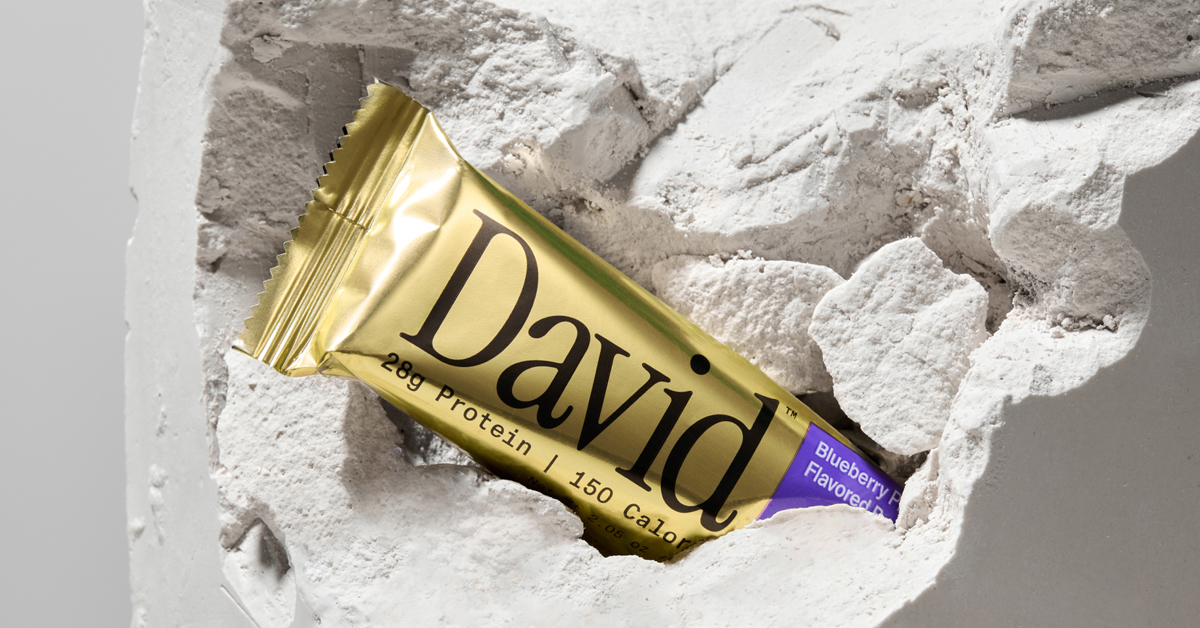
Less than six months since its debut, the gold-wrapped, high-protein David bar is rolling out a new recipe featuring artificial sweeteners and flavors.
The brand’s co-founders, Peter Rahal and Zach Ranen, claim the new formula improves the taste, texture and shelf life and cited studies showing the safety of ingredients now used in the bars.
What’s in: Maltitol, sucralose, acesulfame potassium and artificial flavors (which, according to the co-founders, are “chemically the exact same as a natural flavor”).
What’s out: Polydextrose, stevia and monk fruit.
What’s not changing is the macronutrient profile – David’s true differentiator. A bar still contains 28 grams of protein with 150 calories and 0 grams of sugar.
Why are we watching this? Well, ultraprocessed foods are increasingly under fire. Also, artificial sweeteners and flavors are prohibited ingredients at Natural Products Expo West (i.e. a major event for the industry), and ace-K and sucralose are banned at Whole Foods Market (read: limiting David’s distribution options at an integral natural retailer).
Still, that may not matter, according to some accounts. Does a premium protein bar brand need the natural channel to succeed? And will wellness-minded consumers embrace the new formulation?
Sure, David is “highly processed… but it’s ideal for building muscle and decreasing fat,” Ranen argued.
“Highly processed foods can be great for you, and that’s what we’re creating at David. We are for the consumers who can recognize this nuance – consumers who want the flexibility to consume processed foods intelligently because processed foods can be a great asset in allowing for strong nutrition in a portable way,” he explained to Nosh via email.
When the brand launched last fall, critics balked at some of its “unrecognizable” ingredients, while others championed its “unparalleled” protein-to-calorie ratio, illuminating a diametrical divide in consumer attitudes toward health and nutrition. With its latest moves, influencer Andrew Huberman-backed David is committing more firmly to its stance – that calories matter more than “clean” labels.







![[Exclusive]: Leaven Foods Rises with TIME Best Inventions Honor as It Seeks to Scale Sourdough](https://d2azl42aua8mom.cloudfront.net/wp-content/uploads/2026/10/14180815/Leaven-970-150x150.png)