Commodity Crop To CPG Convert: How Fruitist Is Building A Berry Snack Brand

Single-ingredient commodities such as milk and eggs have succumbed to the influence of CPG growth strategies (think everything from Vital Farms to Chobani) – could the produce set be next?
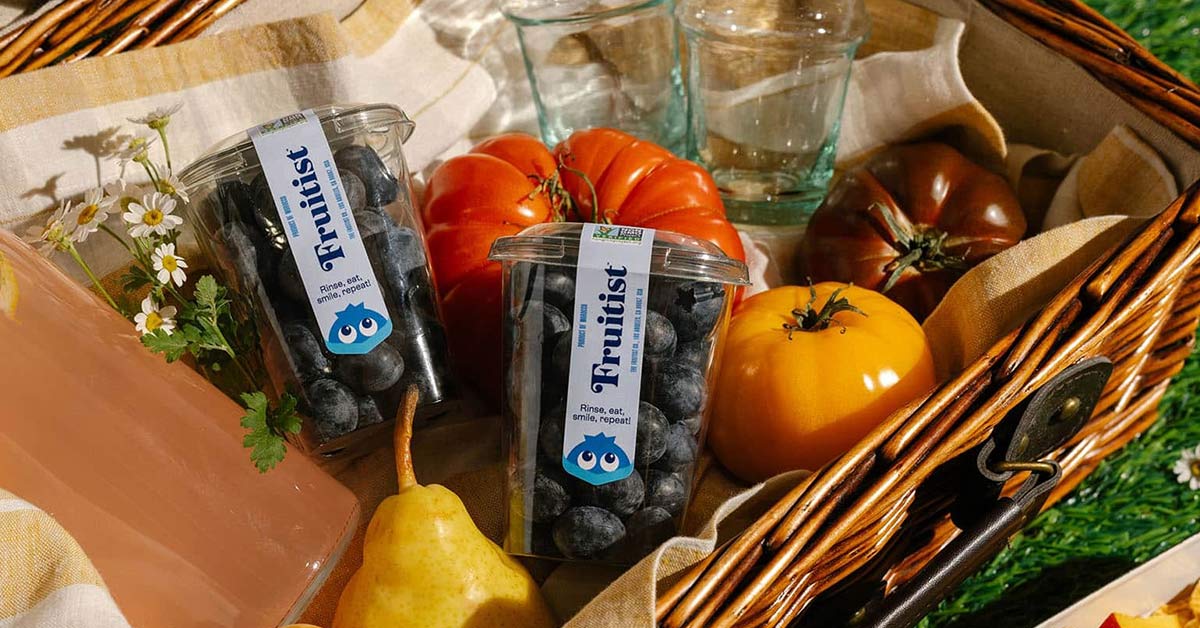
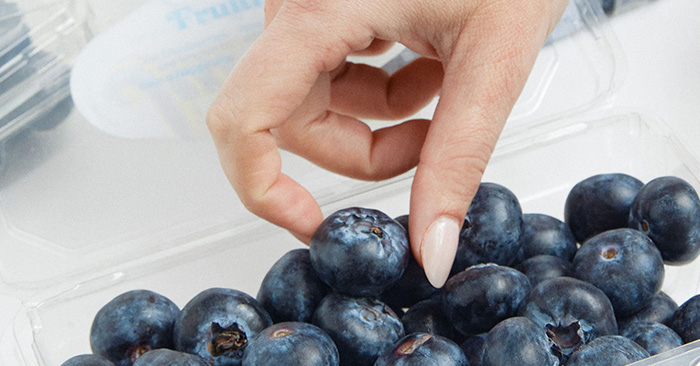
Agriculture outfit Fruitist is working to build what it believes could be the next big thing in fresh snacking with a focus on one single input: Jumbo blueberries. After rebranding from its original moniker Agrovision earlier this year, the 13-year-old company has thrown its full weight behind a better berry.
“We saw a large opportunity to bring something new to the world that we’ve always referred to as premium berries and cherries,” said CMO Fadi Karam. “But it wasn’t until we actually built what we’ve built and delivered what we’ve delivered to see the real differential in the consistency, the taste, the flavor of every Fruitist berry. I think we’re building a reputation for fruitist as a quality guarantee.”
Now, Fruitist is moving beyond the category’s most common packaging format – clamshells – as it works to build out a brand platform on the promise of eliminating “berry roulette” with consistent high-quality berries in a new Snack Cup format. These are the same jumbo berries Fruitist has been building behind, but now packed and placed in an on-the-go, convenient format.
“Produce is on trend,” noted Scott Dicker, senior market insights data analyst at SPINS. “Nutrient density is on trend. A lot of the health properties that are found in berries are on trend with some of the health focuses around anti-inflammatory, longevity – things of that nature – also on trend. There certainly is a benefit to being [one of the] first to market [too].”
According to Fruitist CEO Steve Magami, consumers that have had a bad berry experience will, on average, avoid purchasing from the set for five to six weeks. That was the problem he aimed to solve and believes he can drive consumers back to the set by building the brand’s reputation around consistent quality and positioning it in line with the healthy, fresh snacking trend.
As he worked to build Fruitist, the company invested heavily in infrastructure that would allow it to ensure the consistency and quality of every fruit, noting that the resulting berries almost have a “pop to them… you could almost measure the acoustics of the sound.”
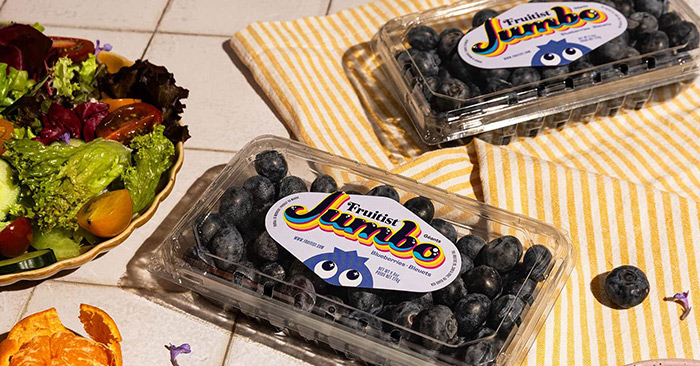
Founded in 2012, the company also grows a range of other berries and cherries in 10“micro-climate” regions around the world, enabling it to procure quality-controlled berries year-round. Fruitist products are sold in 28 countries and over 12,500 retail locations in North America, including U.S. retailers such as Whole Foods, Costco, Trader Joe’s, Walmart, Sprouts and Publix.
While it has raised over $600 million in venture capital during its lifespan, Magami emphasized that the business is profitable and recently surpassed $400 million in annual sales. It has strategically invested in “elite infrastructure” and supply chain operations, investments which Magami said have been made in support of the brand’s pursuit of extending the product’s quality and shelf life, including precision production, R&D, optical sorting and controlling the cold storage of the product at “effectively one degree above freezing” from field to retail shelves.
“Our employees [are] across the whole chain [aside from transportation] and that is the difference we’ve brought to the industry – vertical integration,” Magami said.
He detailed the “historical, incumbent model,” which relies on a plethora of middle men, including packers, importers and distributors, and sources from a broad ranging network of small farmers: “It stifles quality, it stifles the deployment of technology and innovation, and it stifles investment and reinvestment [in this category].”
According to Magami, the company’s largest retail partner in North America recently reported that having Fruitist products on shelf not only drove higher foot traffic, but it also had “zero shrink” with the item, emphasizing that its next best supplier has a 4% shrink rate.
In addition to minimal shrink, Fruitist sees a large amount of whitespace to build brand equity in a space that largely lacks connection with its consumer and is not a category that typically sway where a consumer shops. Karam said that leading berry producer Driscoll’s has “single-digit” brand awareness, stating that “there’s a difference between awareness and equity, as you know. So people know the brand, but it doesn’t stand for much.”
“It’s time for someone to come into the produce category and build a brand,” Karam said, remembering a pitch he made during his past career in private equity. “Brands are more important in categories where the quality matters and when it comes to food, especially superfoods, quality matters so much more because people are buying these berries because they believe that it’s bringing them certain health benefits while being tasty.”
Dicker also echoed that opportunity, noting that “that’s a nice new take on [fresh snacking].” However, he said that there could be long-term hurdles to continued growth, including the high likelihood large, incumbent berry producers will attempt to copy the approach, compounded by the pressures of selling both to a produce buyer and a refrigerated buyer in some retail stores.
“You have to convince them that you are going to bring incremental buyers to that category – that’s both a challenge and an opportunity,” Dicker said. “In one sense, it’s hard to say, ‘take away these eggs’ – which probably has a much higher velocity – but on the other hand, you’re saying, ‘Do you really think that your seventh brand of eggs is adding incremental buyers?’ Whereas, [this] on-the-go snack, healthy snack… can add incremental buyers.”
Fruitist believes it is already taking on the challenge, pointing to the traction Vital Farms achieved in bringing premium, consistent quality to the egg set, as well as the rise of Chobani, which has flexed its brand equity across a range of dairy segments. Magami said that Fruitist is not necessarily competing with commodity berries anymore, which he said they view almost as an ingredient berry compared to the brand’s “snackable iteration.”
Magami noted that at “one of the largest natural retailers globally” the brand is outselling incumbent berries sometimes three-fold without any cannibalization.
“We expand the category… you won’t see the same thing in eggs, for example…What we’re realizing is that it’s not a premium blueberry, it’s just a great value blueberry. It’s more expensive, but the value you’re bringing seems to be so important to consumers that even in [value-oriented] retailers… we’re also seeing success.”
Explore the Nombase CPG Database
Head to Nombase to learn more about the tagged companies and their offerings.