Beyond Lactation: Mamala Seeks to Expand Postpartum Nutrition Into Snacks

While plenty of CPG brands work to appeal to women, only a small minority are positioned specifically around supporting women’s health.
“We live in a world where the majority of the products we consume are based on a man’s biology, everything from Tylenol to protein bars,” said Mamala Organics founder Rebecca Schwartz Smith. “I am out to create something that’s based on a woman’s biology.”
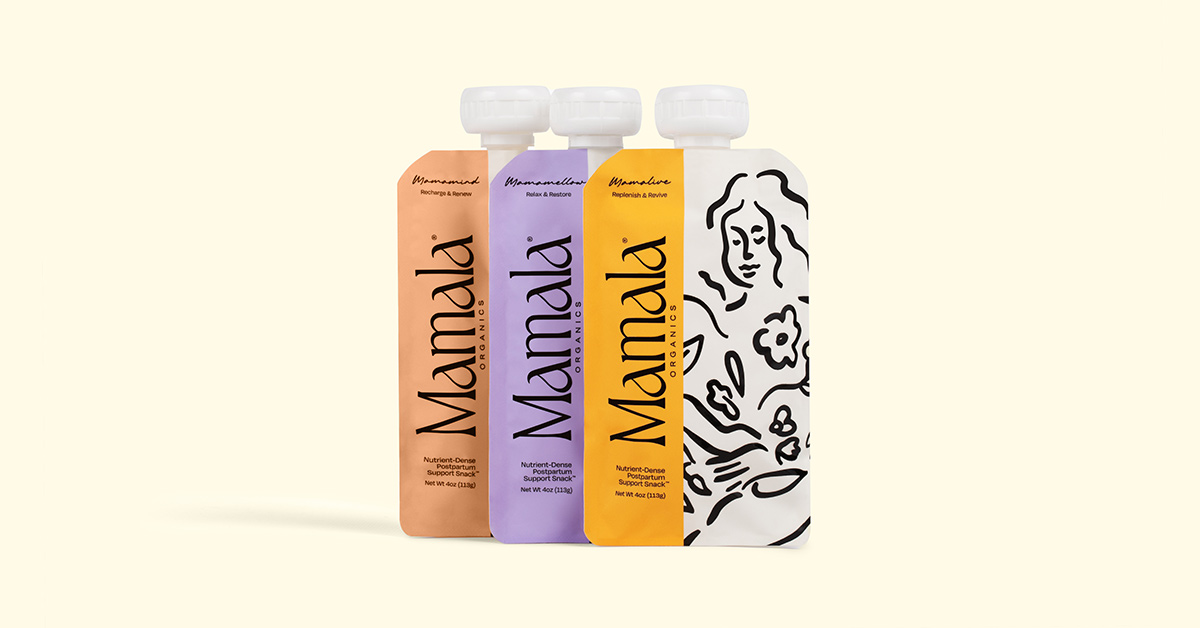
After four years of ideation and two years focused on recipe development and brand creation, Schwartz Smith, a former public relations expert in the fashion space and mother of two, debuted Mamala Organics this past week, a 2-SKU line of pouched Support Snacks made with whole foods and a focus on providing essential nutrients to support women during the postpartum period.
According to Schwartz Smith, the company has outpaced its sales goals three-fold within the first week: “Our launch week has validated this as a new category… there’s so much to do in this functional snacking for women’s health space… this is not a niche product – the TAM (total addressable market) is there.”
Recipes include Mamamellow (vanilla, pumpkin seeds and dates) and Mamamind (pomegranate, blueberry and quinoa sprouts). A third SKU is coming soon – Mamalive – made with coconut, sweet potato and spinach. Each organic, plant-based pouch is free from top allergens and contains 110 calories, 5 grams of protein and 18 grams of carbs as well as macronutrients such as vitamin D, iodine, B vitamins and more.
A 6-pack of pouches costs $42, with additional bulk options available including 12-, 24- and 60-packs. The products can be consumed straight from the pouch or added to a meal. Schwartz Smith emphasized that the recipes, created alongside a registered dietitian and four food scientists, have been developed to complement postnatal supplements.
“This new category of functional snacking for women’s health – that’s what Support Snacks are… I really see this as something in addition to the better-for-you snacking category. This is its own thing… Your supplements serve a purpose, but our body can only absorb so much of those. The rest has to come from whole foods – let us bridge that gap.”
CPGs To ‘Serve The Sisterhood’
The current market for postpartum nutrition snacks consists completely of products offering lactation support benefits, such as those offered by brands like Boobie and Oat Mama, but rarely focus on the nutritional needs of a mother navigating postpartum recovery, Schwartz Smith said.
“There are all these women that are not only feeling the social and cultural pressure [of breast feeding], but [also] what’s available to them is really only focused on lactation – they’re totally left out of the conversation,” said Schwartz Smith. “I wanted to create something that was for all women going through this stage. I’m here to serve the sisterhood, no matter what the experience for you is, we are here for all of you.”
A convenient format was key, she emphasized. The bulk of the focus around postpartum nutrition comes from blogs promoting recipes for homemade bars, balls, cookies, smoothies and more. As a mother of two, Schwartz Smith said she understands the importance that these snacks are both convenient, shelf-stable and available to take on the go.
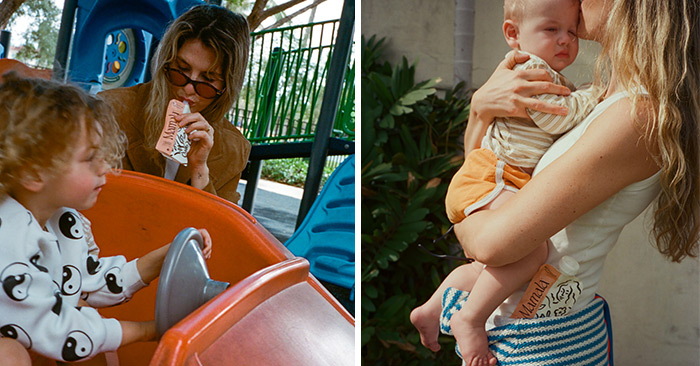
“I kept seeing women on the playground, on the airplane, at the pediatrician’s office – noshing on their kids’ pouches – but reluctantly; they were just so hungry,” she said. “During my own postpartum… the biggest pain point for me was accessing great nutrition. I was taking my postnatal supplements, but four o’clock would roll around every day, and I’d be looking at a half eaten bagel, half eaten bowl of oatmeal, and thinking I know I’m doing myself a disservice, I know I’m nutrient depleted, but I just don’t have the bandwidth to feed myself.”
According to Schwartz Smith, the postpartum period is one of the most “nutrient critical life stages” for women and can last up to 10 years. While nearly half of women no longer breastfeed after the first three months – the only need state current postpartum products are designed to address – “100% of women are contending with the full spectrum of postpartum symptoms” for much longer, she said.
Postpartum nutrition during this period should also address needs including hormone regulation and imbalances, digestion and microbiome health, tissue repair and muscle function, mood support as well as lactation, she stated.
“I started with postpartum, because that’s me, that’s my community,” she said. “It’s the most acute nutrient need state. It’s the most researched time of a woman’s life. But right on the back end of postpartum is perimenopause and menopause. On the front end is trying to conceive, prenatal and on the front end of that is menstruation and general women’s health. When we talk about Mamala Support Snacks, we’re talking about nutrient dense, functional snacking for a lifetime of nutrient critical moments for women.”
Proving Out Postpartum Products
As she works to build the brand, Schwartz Smith is leaning on a roster of fractional executives and experienced CPG advisors including former Tofurky president and CEO Jamie Athos; Cedar Carter, CEO of skincare brand The Good Patch; and Jolene Jacobs, former senior director of medical sales and operation at Infinant Health, which introduced Evivo infant probiotics to the market.
Over the next 12 to 18 months Mamala will focus on building its direct-to-consumer business and “owning the digital space,” including on TikTok and with organic influencer marketing. Schwartz Smith has primarily self-funded the company, in addition to “a very small amount of angel money,” and is currently working on raising additional capital.
After it has established itself online, the brand will work toward a brick-and-mortar rollout in “controlled regional markets,” such as Miami, New York and Los Angeles, she said, and is building on the belief that consumers will need to be exposed to the product three to five times before she believes they will be pushed to purchase.
In order to build up that community exposure and show up organically in the lives of its target audience, the brand is working to partner with a wide variety of practitioners such as lactation consultants, doulas, midwives, OBGYNs, pediatricians, physical therapists and even yoga teachers, she said.
“Community is everything. When I say we’re serving the sisterhood, it’s not a cute tagline; it’s literally what we’re doing every day.”