Hershey Hedges Against Cocoa Constraints As It Eyes Price-Pack Innovation

The Hershey Company posted net sales growth of 8.7% to $2.89 billion in Q4 2024 and full-year net sales up 0.3% in its earnings release this morning. The strong performance beat analyst revenue and earnings expectations, at a time when chocolate makers in particular are facing a constrained supply chain and consumer spending environment.
“This is a transformational time for Hershey,” CEO Michele Buck said during prepared remarks. “As we mentioned in our last earnings call, we expect the surge in cocoa prices to continue to put significant pressure on earnings in 2025.”
Reported gross margin rose 1170 basis points to 54% driven by volume increases, mark-to-market gains, net price realization and supply chain improvements, which offset higher commodity costs and a negative sales mix.
Within its Salty Snacks segment, net sales increased nearly 36% to $278.9 million in Q4 as volumes jumped 41 points, though nearly half of those points were contributed by the lapping of planned inventory declines. On the confections set, sales rose 6% to $2.35 billion with volume moving up 2 points.
The company also saw strong retail sales growth (+7.1%) in Q4, driven by strong chocolate category performance in club, dollar and ecommerce channels. In response to an investor question, Buck explained that Hershey is tracking a channel evolution in chocolate as it notches declines in historically important segments like convenience but continues to grow in unmeasured channels “that have traditionally not been as strong.”
According to Buck, the company expects net sales to increase 2% during the course of 2025, primarily driven by net price realization. But it’s bracing for high commodity costs and the impact of tariffs to offset price realization and productivity as well as cost savings gains with reported EPS expected to drop within the high-40% range in 2025.
In response to a call with investors and analysts, Buck noted that the company has baked “historic elasticities at [a] minus one level” into its 2025 guidance while indicating there is a potential for an upside depending on where cocoa costs and consumer spending patterns shake out over the next year.
Hershey took, on average, 4% price increases in 2024 and plans to take between 3% to 4% increases within its U.S. confections business during 2025. As it looks to 2026, SVP and CFO Steve Voskuil said “we wouldn’t expect pricing to be easy” and emphasized that across its portfolio 80% of items are still priced below $4 so future increases will have to be carefully assessed.
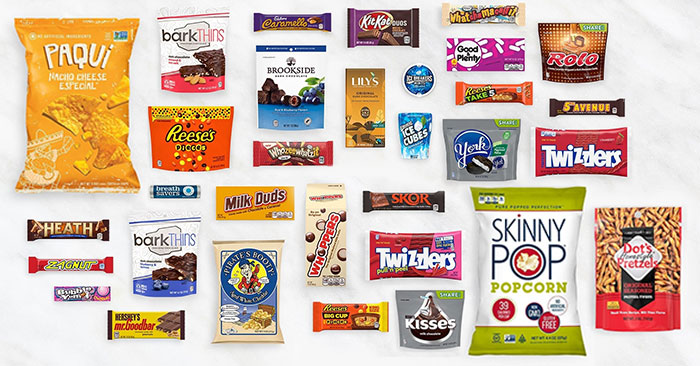
Price-pack architecture will be a key focus of Hershey’s innovation strategy in 2025 with Buck highlighting SkinnyPop, which saw sales increase 4.7%, as a primary target of these efforts. The brand will also be introducing a new celebrity spokesperson, refreshed branding and multi-brand multi-pack offerings in the year ahead.
“We are introducing fewer, better, and bigger innovations across the core, including our biggest Reese’s innovation ever, and we have healthy momentum from items launched in ’24,” Buck said during prepared remarks.
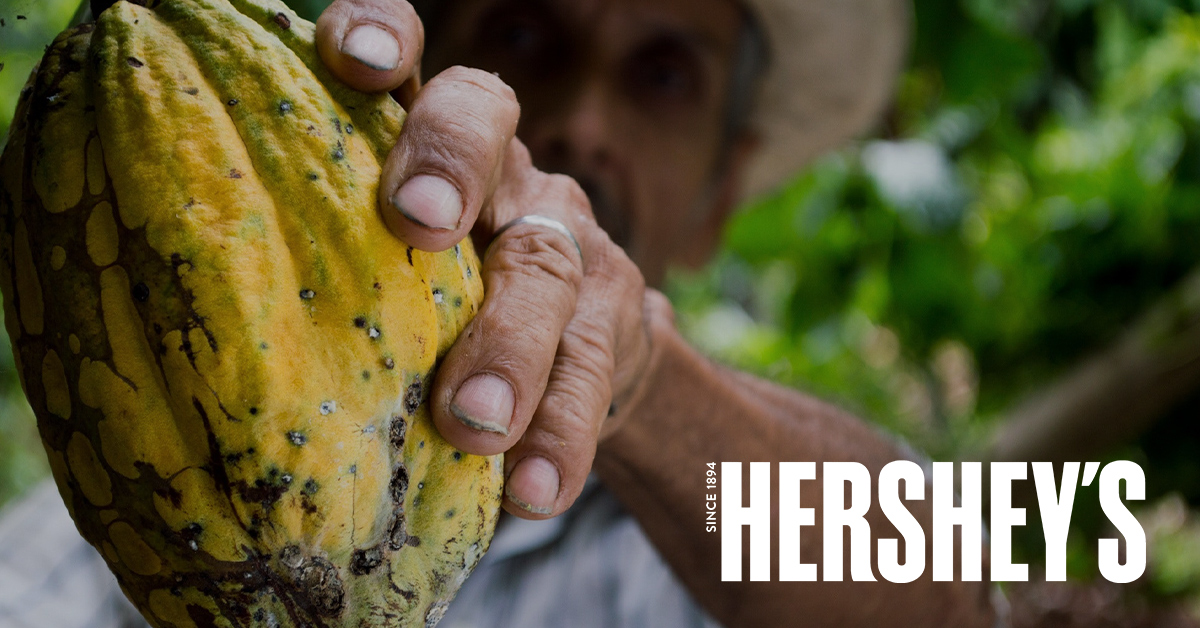
As for the cocoa supply chain, the chocolate giant has diversified its sourcing and is seeing productivity picking up in other geographies beyond Ghana and the Ivory Coast. The company continues to “take action” to support resiliency in West Africa, Buck said, and it is working to secure lower prices with cocoa traders at origin versus purchasing on the exchange.
“We’re trying to be very opportunistic about how we approach this whole area and take advantage of the market dislocations in a place that we see that we can come in a bit differently,” Buck told investors.
The company is working on alternatives when possible including reformulating with cocoa butter alternatives, but Buck emphasizes that it is “pretty precious about the brands” and will not make any switches that deteriorate the customer experience. Hershey is also watching developments in the cellular agriculture cocoa space, and believes that long term it could be “a game changer,” according to Buck.
The company currently under-indexes on non-chocolate candy, Buck explained, which it aims to begin developing with new innovations as well as unlocking distribution and velocity building opportunities for Sour Strips, which it acquired in Q4 2024. Those developments will help buffer Hershey’s portfolio long term, and it has additional, incremental news within the portfolio planned for later this year.