What’s Shifting Salty Snack Sales?

Months after acquiring better-for-you, grain-free tortilla chip producer Siete Foods, PepsiCo is pledging to clean up its flagship products – joining Big Food’s MAHA-driven efforts to kick FD&C colors to the curb. Lay’s and Tostitos will phase out the synthetic dyes, while Cheetos and Doritos will add new line extensions without them.
“We’re trying to elevate the perception of Lay’s. If you think about the simplest and most natural snack, it’s a potato chip; it’s a potato, it’s oil and it’s a little bit of salt – the most simple, no artificial ingredients,” said Ramon Laguarta, CEO of PepsiCo, on a call with investors.
The shift follows recent sales declines across the conventional potato chip space.
- Sales dipped 0.6% to $11.5 billion in the past year, per Circana data from June 15.
- The overall salty snack segment – which includes tortilla chips, cheese snacks, ready-to-eat (RTE) popcorn and pretzels – also saw sales slip 0.4% during the same period.
Not all have fared equally. Ultraprocessed, seed oil-containing products have declined (Lay’s was down 1.8% in the period), while better-for-you players like Boulder Canyon (+126%), Miss Vickie’s (+106%), Siete (+70.3%) and Jackson’s (+72.3%) have seen significant boosts, though their base sales are still miniscule (read: in the hundred-million range) compared to Lay’s $4 billion market share.
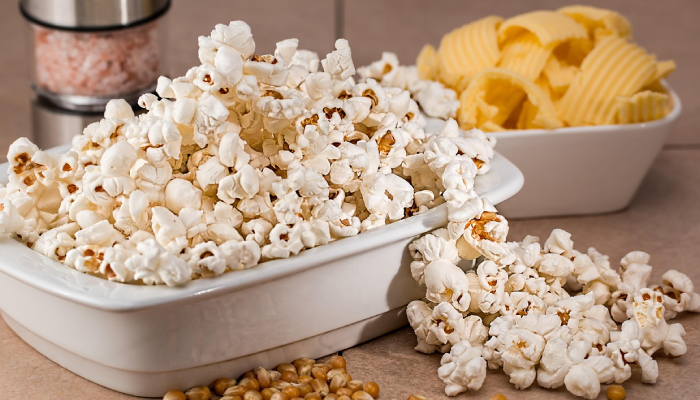
Popcorn also posted declines, with category sales falling 1.8% to $2.35 billion in the past year, while better-for-you brands like SkinnyPop (up 1.5%) and LesserEvil (up 55.9%), both of which are owned by The Hershey Company, were able to maintain positive growth.
- Weighed down by rising cocoa prices and softer demand for confectionery, Hershey is relying on its North American Salty Snacks segment to buoy its balance sheet in the interim.
While MAHA’s discussions surrounding seed oils, artificial colors and sweeteners and ultraprocessed foods (UPF) have dominated the food and beverage sector over the past year, they may be impacting consumers to a lesser extent than anticipated.
Despite the controversy surrounding these “demonized” ingredients, only 36% of North American consumers describe their approach to healthy eating as limiting ingredients that are “bad” for them, according to a new survey from Innova Market Insights.
- The report found that many consumers don’t check the ingredient lists for food and beverage products they purchase.
- Additionally, 37% of respondents said they will compromise on natural flavors for a product to taste good.
Related Reading: Is Big Food Embracing MAHA?