Seventy Percent Of Shoppers Try to Avoid UPFs, But Don’t Trust Brands to Help

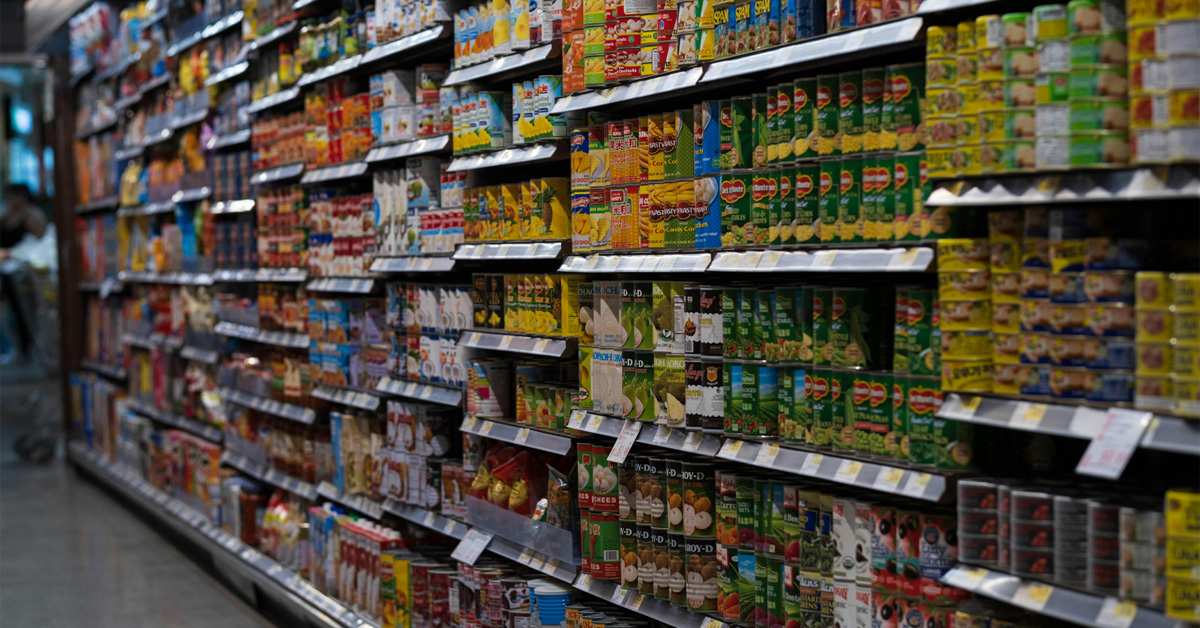
The large majority of consumers believe food companies rely on ultraprocessing methods to produce food and pad profit margins, but they place little trust in these entities to share accurate information about what they are selling, according to a new report from the Food Integrity Collective (FIC), a new initiative by the Non-GMO Project.
“That’s a real PR problem for the food industry when you can’t connect that distrust with the now common understanding ultraprocessed foods (UPFs) are linked to public health issues,” said Hans Eisenbeis, Non-GMO Project director of mission and messaging, during a recent webinar discussing a report on UPF awareness.
“This is a real conundrum for mainstream, conventional food manufacturers, [but] it’s really an opportunity for natural food makers who are already operating under a better-for-you banner.”
According to FIC, seven in 10 consumers claim to be actively avoiding UPFs, but without a standardized definition, identifying those items becomes an increasingly subjective activity. FIC will release its previously announced non-UPF standards during the first week of November. In preparation we dove into a recent report from the organization that seeks to benchmark where industry and consumer awareness stands.
“Do any of us feel confident that we could come up with a definition you could actually apply when you’re looking at groceries, item-by-item, in the store? We’re all in this anxious place where we have high interest but low knowledge,” said Eisenbeis.
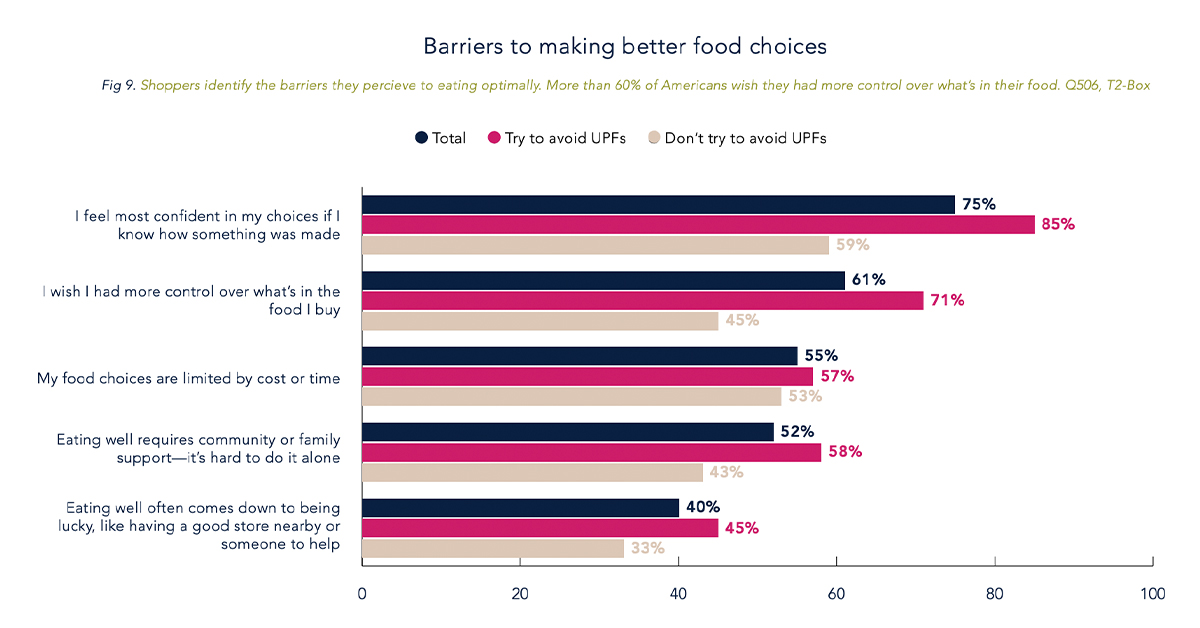
According to FIC’s survey, 85% of shoppers who are trying to avoid UPFs would feel more confident in their ability to do so if they knew more about how a product was made. Eisenbeis emphasized this is a major opportunity for smaller, mission-driven food companies to lean into their manufacturing and formulation stories and share more about how production supports those goals.
Packaging design and front-of-pack claims will likely play a leading role in the industry’s adaptation to UPF awareness. While the majority of shoppers claim to regularly look at nutritional information on packaged foods, UPF avoiders overindex in this behavior with two-thirds claiming they regularly scan nutritional information and ingredients labels.
The impact of those callouts, however, could vary greatly. The FIC’s survey found that consumers report “their most trusted source is themselves” when it comes to information about food; food companies are among those ranked as the least trusted with 47% of shoppers claiming they have little to no trust in the information shared by food companies.
“Our age of polarization has narrowed the circle of trust concentrically toward the individual, and perhaps exaggerated Americans’ sense of self-reliance while damaging their trust in larger social structures like government and business,” Eisenbeis said.
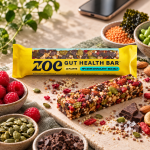
But once again, the lack of a standardized definition for ultraprocessed food leads to misidentification of these products. For example, FIC highlighted that soft drinks were the most cited category as potentially UPF, but just half of U.S. shoppers consider sodas to be UPF. Additionally only 19% said they believe protein bars are highly processed, despite these products typically containing common UPF ingredients such as maltodextrin, xanthan gum and potassium sorbate.
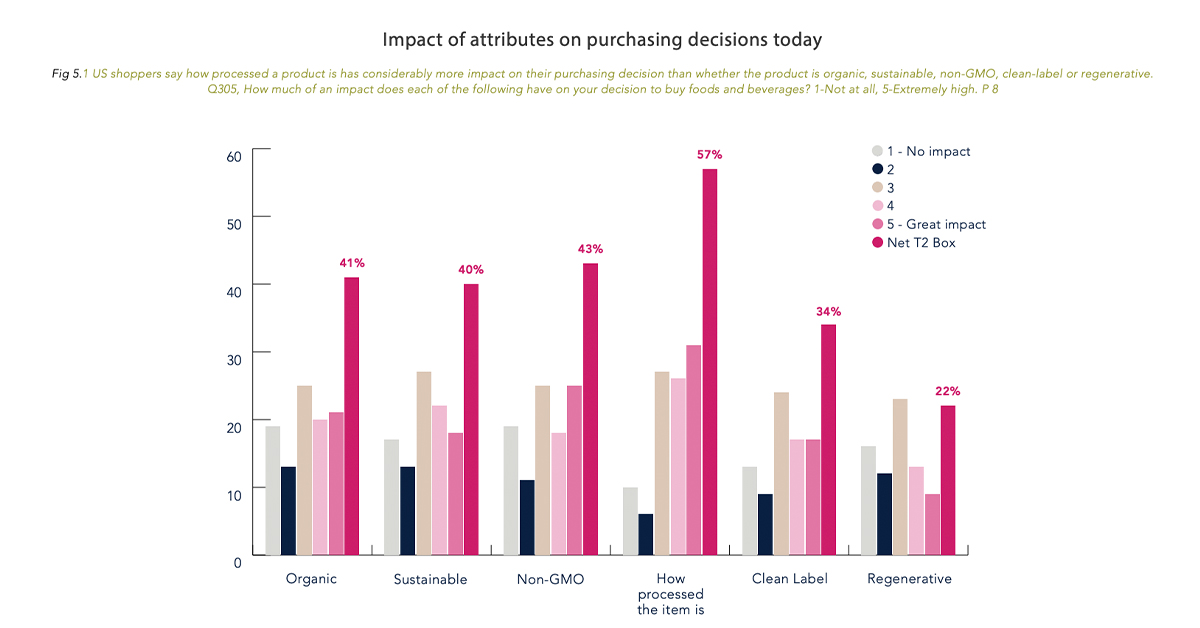
“Though shoppers’ interest in ultraprocessed food now surpasses their concerns about other attributes, they lack the knowledge they need to act,” the report reads. “Confusion about what ultraprocessing means keeps many shoppers from being able to identify basic hallmarks of UPFs, such as highly refined ingredients, artificial sweeteners and hydrogenated oils.”
“It’s really useful to remind ourselves that food is not just a theoretical topic for debate or discussion or a business opportunity – it’s not even just about systems, agricultural practices, distribution networks, retailers – it can be a deeply personal experience,” said Eisenbeis.