McCormick Balances Tariff Pain with Demand for Reformulated Recipes

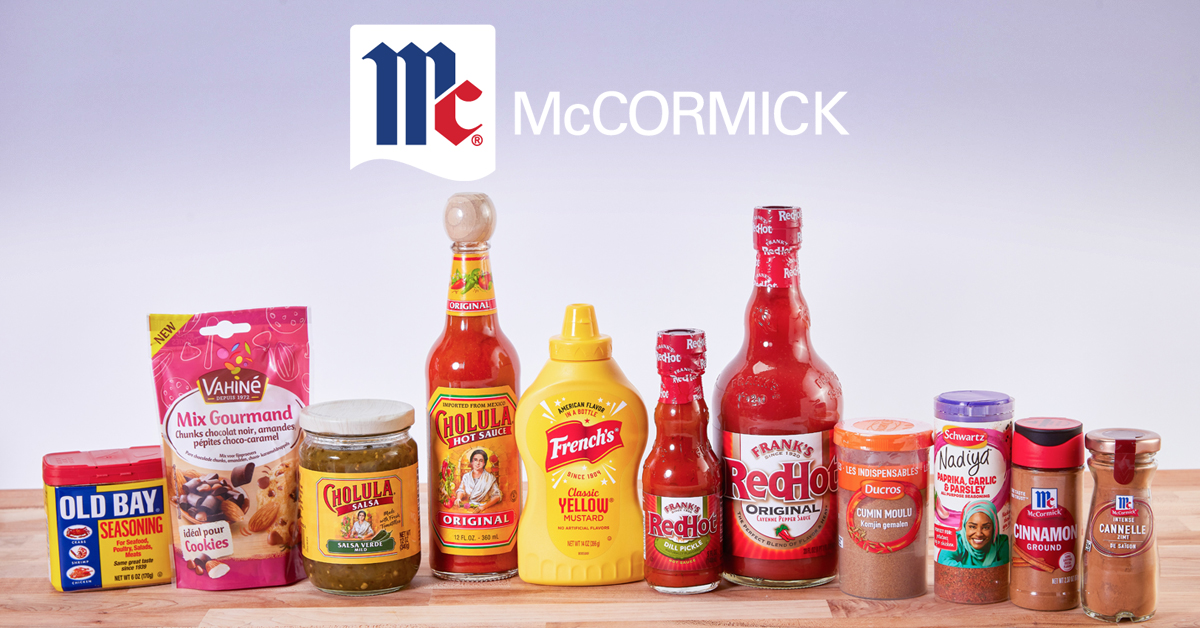
McCormick is caught in the middle of all of the current headwinds: tariff uncertainty, rising commodity costs, accelerating sales in unmeasured channels, shifting consumer demands and the ongoing Big Food Reckoning that’s forcing reformulations across the board.
But the true impact of all of those external forces have yet to be realized on the business, the company said during its third quarter results, released today.
Organic net sales increased 2% during the quarter, driven by 1% volume growth as well as a 1% contribution from pricing. Both of its two business segments also posted gains, with the consumer side tracking a 4% net sales increase year-over-year and its flavor solutions side posting 1% sales growth since the third quarter 2024. However, gross profit margin shrank by 130 basis points, largely due to higher commodity costs.
“We are absorbing some incremental costs this year, which has a near- term impact on our profitability,” said McCormick’s president and CEO, Brendan Foley. “This approach enables us to maintain our volume momentum and sustained investment in our growth initiatives, while still delivering operating profit growth for the year.”
The company is also bracing to feel the true impact of tariffs within the fourth quarter, executives said. McCormick has raised its expectations for gross tariff costs from $50 million to $70 million since Q2 and believes gross annualized tariff exposure is now about $140 million, a large increase from the $90 million expected last quarter.
“We continue to expect to have offset most of the tariff impact, but it’s worth noting that not all of our mitigation efforts are permanent, and this will need to be addressed next year,” said Marcos Gabriel, EVP and CFO. “As we look ahead to 2026 we plan to offset as much of the incremental impact as we can with productivity savings across the P&L, alternative sourcing, supply chain initiatives, and leverage our revenue management capabilities, including pricing. As you know, this is an evolving situation.”
The flavor focused conglomerate emphasized that its diversified supply chain, including its global manufacturing and sourcing capabilities, remain “competitive advantages” as it navigates and works to mitigate the impact of tariffs.
The company is also experiencing an increase in reformulation projects for larger customers; in response to a shareholder question, Foley called Walmart’s announced private label reformulation – removing synthetic dyes and a handful of controversial ingredients – “good news.” He said McCormick’s flavor house continues to grow and win new customers including “both high-growth innovators and private-label.”
“Momentum is building and the execution and impact are expected to materialize over time,” he said. “This is due to extended validation and launch timelines of these projects. In terms of innovation, we are collaborating with large and emerging brands for flavor, energy, hydration, protein based beverages, protein or fiber snacks and zero sugar drinks. We are increasingly benefiting from growth in health and wellness categories.”
In response to a shareholder question about whether the company would be interested in acquiring Kraft Heinz’s flavor-focused spinoff, which is “2.5x the size” of McCormick’s overall business, the company said it continues to be open to bolt on and transformational transactions, but remains focused on its latest deal, a joint venture with Grupo Herdez, McCormick de Mexico.
Explore the Nombase CPG Database
Head to Nombase to learn more about the tagged companies and their offerings.