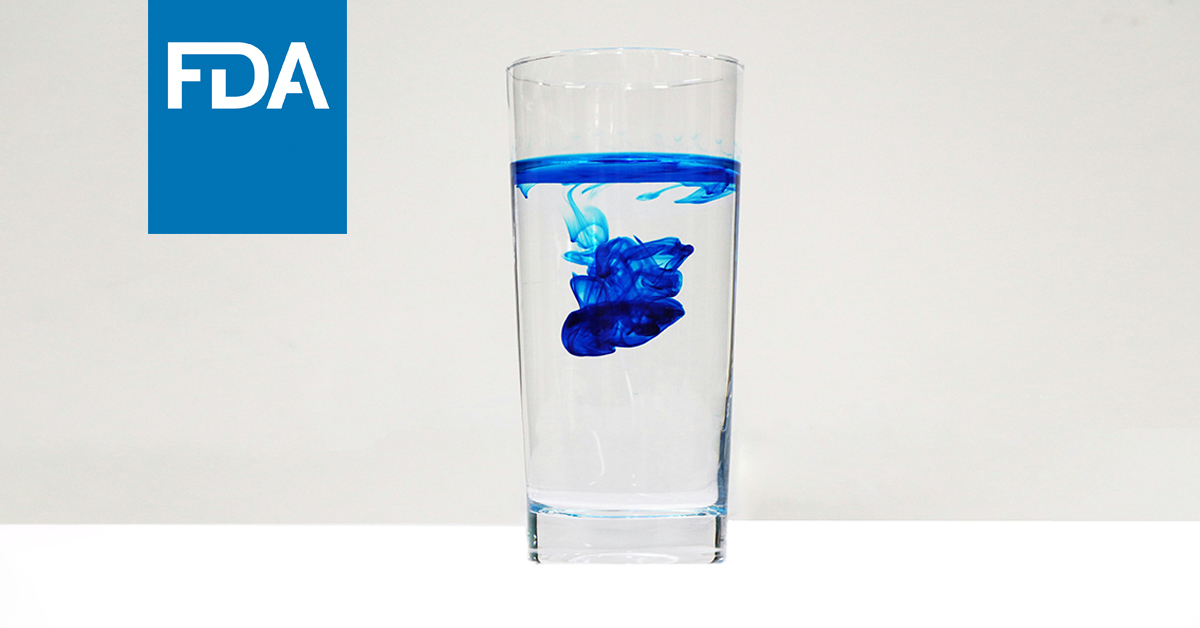
The U.S. Food and Drug Administration (FDA) announced it has approved the use of a new natural food dye, gardenia, to bring blue hues to sports drinks, flavored or enhanced non-carbonated water, fruit drinks and ades, ready-to-drink teas, hard candy and soft candy.
Approval for gardenia (genipin) blue was lobbied for by a petition from Gardenia Blue Interest Group (GBIG) and marks the fourth new natural color to secure FDA approval since April when U.S. Health and Human Services Secretary Robert F. Kennedy, Jr. publicly announced that the FDA would encourage the “phase out” of all previously approved petroleum-based synthetic dyes from the U.S. food system.
At the time of the announcement, no major food manufacturers had publicly agreed to do so. However, the mandate appears to be working. Leading packaged food and beverage producers, including Nestle, Conagra, Hershey, Kraft Heinz and General Mills, have publicly stated their plans to remove FD&C colors from formulations in the months since, alongside a variety of self-imposed deadlines varying per manufacturer.
But with a new color in, the FDA also said it is working to push food manufacturers to remove FD&C color Red No. 3 from formulations more quickly. The agency sent a letter to manufacturers this month requesting that they work to remove the input ahead of its previously announced deadline, set for Jan. 15, 2027.
“This expedited timeline underscored our serious intent to transition away from petroleum-based synthetic dyes in the food supply,” said FDA Commissioner Marty Makary, in a statement. “Now, by expanding the palette of available colors derived from natural sources, food manufacturers have a variety of options available that will make it easier to end their use of petroleum-based dyes.”
According to Kennedy’s announcement today, 40% of the food industry has committed to voluntarily phase out use of these dyes since April. Though reformulations appear to be underway, color manufacturers have warned this may lead to a shortage of natural alternatives while highlighting that naturally-derived dyes often have more complex supply chains and cost more than synthetic inputs.
Nonetheless, the Make America Healthy Again (MAHA) initiative has made food dye removal a central component of its efforts. Next month, the MAHA commission is expected to release its second report, outlining an actionable roadmap for the industry to support the removal of dyes, as well as the prominence of ultraprocessed foods and seed oils, from the U.S. food supply.
That latter objective has already been embraced by Starbucks. In June, Kennedy met with Starbucks CEO Brian Niccol and said, via social media, he was surprised to learn that the majority of food and drinks on the chain’s menu are already formulated without synthetic dyes, but noted that Niccol committed to further “MAHA” the company’s menu. Just last week, news began to spread that the company is also now considering removing canola oil from its menu.


 The U.S. Food and Drug Administration (FDA) announced it has approved the use of a new natural food dye, gardenia, to bring blue hues to sports drinks, flavored or enhanced non-carbonated water, fruit drinks and ades, ready-to-drink teas, hard candy and soft candy.