Fancy And Free-From: MAHA’s Influence At Specialty Food Show


Potato chips cooked in beef tallow. Chili crisp drenched in extra-virgin olive oil. Granola baked in coconut oil.
From pantry staples to snacks, the anti-seed oil sentiment was strong across product categories at the Summer Fancy Food Show this week.
The Specialty Food Association’s annual trade event typically includes ample items formulated for specific dietary needs spanning gluten- and grain-free, plant-based and more. This year, there appeared to be a sharper focus on fats in a wide array of applications that traditionally contain canola, soybean or other vegetable oils perceived as highly processed and unhealthy.
Seed oils have become a primary talking point of the Make America Healthy Again movement spearheaded by U.S. Health and Human Services Secretary Robert F. Kennedy, Jr., and, perhaps unsurprisingly, the influence of this trend was more apparent across the show floor this week than in years past.
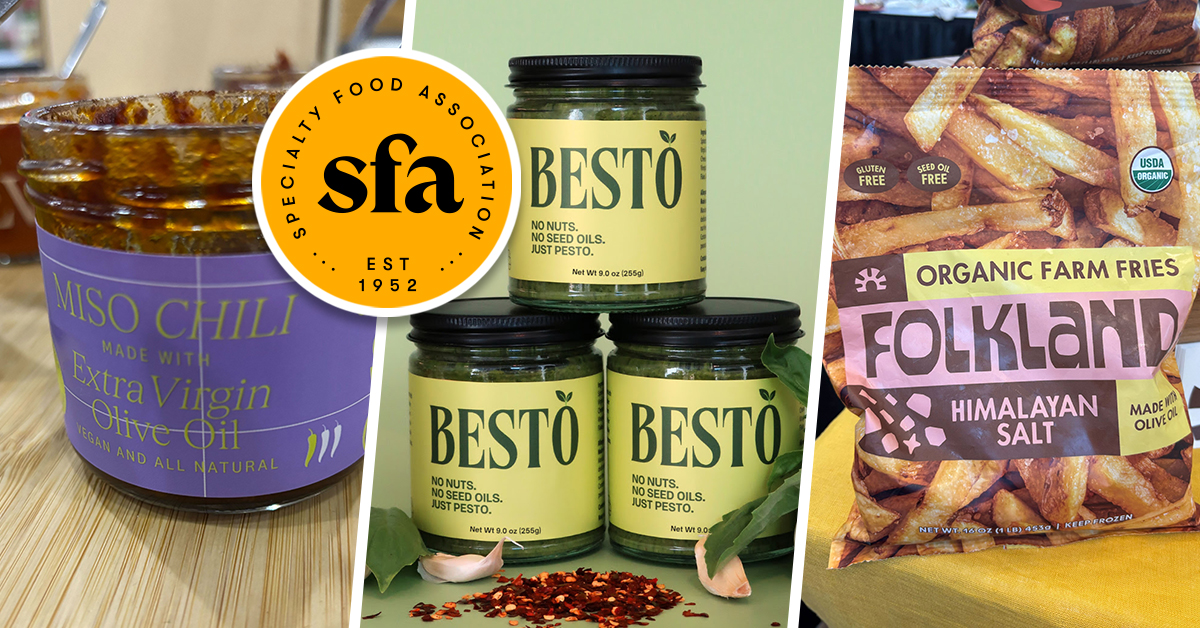
At the Fancy Food Show, newcomer Folkland Foods sampled its frozen fries made with extra-virgin olive oil. The Waterford, Pa.-based startup was launched by organic, regenerative potato farmers and received $3 million in grant funding last year to build out facilities for manufacturing and storing frozen potato products. The lineup, set to launch at Sprouts Farmers Market, includes Himalayan Salt, Garlic Rosemary and Cajun Spice flavors.
A few booths away, Derry, N.H.-based Beefy’s Own presented its “old-school” potato chips fried in beef fat. An ardent advocate of animal fat, the three-year-old brand bills itself as “the original beef tallow potato chips” produces an assortment that includes Original Sea Salt, Salt & Vinegar, Salt & Pepper, Sour Cream & Onion and Barbecue. The products are certified by the Seed Oil Free Alliance, sporting that seal on the front of the packaging.
Seed oil-free claims also popped up in new condiments at the show. Everiday Foods showcased its line of chili sauces made with extra-virgin olive oil, a differentiating factor in a set that typically uses grapeseed or soybean oil.
Another exhibitor, Besto, produces an alternative to traditional pesto with the tagline: “No Nuts. No Seed Oils. Just Pesto.” The 9 oz jarred sauce is crafted with extra-virgin olive oil, apple cider vinegar, parmesan cheese, basil, garlic, spinach and red crushed chili flakes.
Seeking to expand beyond its farmers market roots, Jack’s Dad’s Hummus touted its seed oil-free recipes that rely on miso instead of tahini and extra-virgin olive oil.
Sales of Certified Seed Oil Free products in tracked retailers have surged year-over-year by triple digits in natural and conventional channels (123.8% and 225.3%, respectively), according to the Seed Oil Free Alliance. But despite what appears to be mainstream traction for the movement, a recent survey by the International Food Information Council (IFIC) finds most Americans don’t know or care much about seed oils. More than seven in 10 respondents say they do not actively avoid them, and only three in 14 are “at least somewhat familiar” with the term “seed oils.” Additionally, nearly half of Americans believe seed oils are healthy.
Colors in the Crosshairs
MAHA’s influence at the Summer Fancy Food Show spanned deeper than seed oils. Several exhibiting brands highlighted the use of naturally derived dyes insteadof artificial colors. Gummy candy brand Rotten sampled its lineup of lower-sugar confections, which are tinted with spirulina, turmeric, carrots and blackcurrants.
Gluten-free empanada maker Nadas showed its range of rainbow-colored, frozen handheld products available in Spinach & Cheese, Beef, Mango Pork and Black Bean varieties. The dough is dyed to correspond with each flavor. For example, the Spinach & Cheese product is green while the Beef product comes wrapped in red dough.
Founder Carlos Santos emphasized that all of the Colombian-style products do not contain “fake dyes, just real natural colors”; the products are colored with dyes derived from natural sources such as vegetables or flowers. The products are also soy- and nut-free.
Outside of the convention center, the broader food industry continues to buckle under pressure to remove controversial ingredients from a range of products across grocery store shelves. This week, The Hershey Company became the latest in a string of packaged food conglomerates pledging to remove certain colorings from its products over the next year or two. The maker of Twizzlers and Jolly Rancher said it will nix synthetic dyes across its candy and snack portfolio by the end of 2027. Others, including Conagra Brands, Nestle, General Mills and J.M. Smucker Company have all announced similar commitments in the past month.
Explore the Nombase CPG Database
Head to Nombase to learn more about the tagged companies and their offerings.