Coffee, But Make It Like Skoal: New Formats Chase Caffeine Consumers

When most people think of caffeine, it’s from a hot cup of coffee or tea, or possibly a cold soda or energy drink.
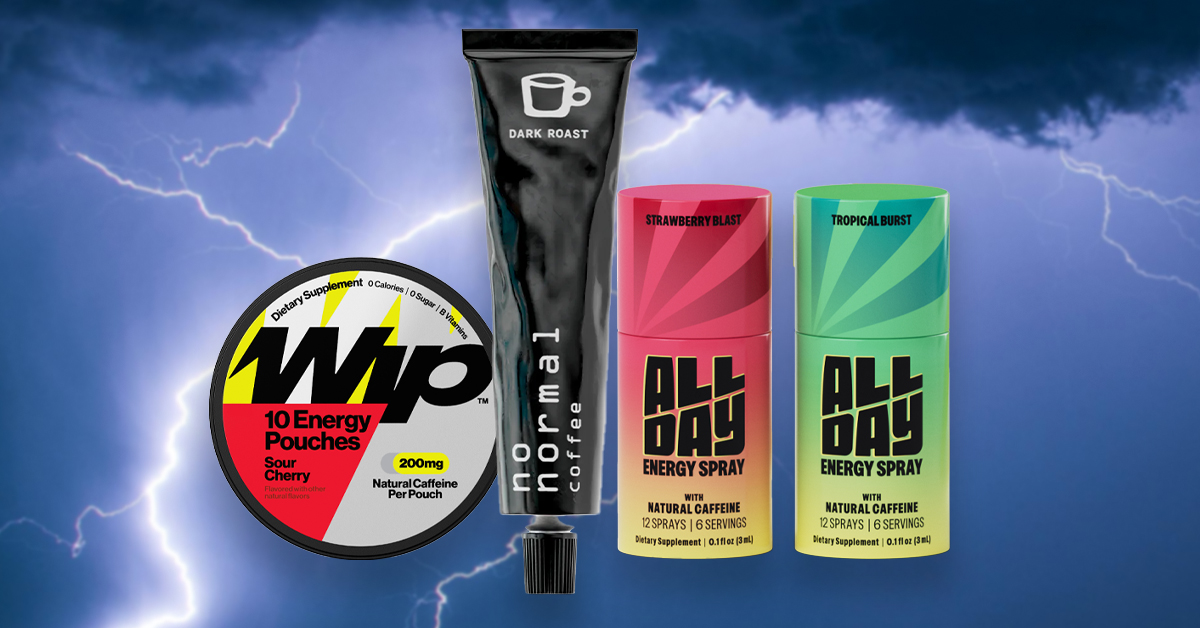
But a new set of entrepreneurs are hoping to peel consumers away from that assumption, launching unconventional caffeine products in pouches, sprays and concentrated pastes to seek out that subset of on-the-go energy users who might prioritize portability and function over a cup or can.
Caffeine is by far the most widely used drug in the U.S., with over 85% of the U.S. population (over the age of 2 years old) reporting daily consumption. The founders believe they can disrupt – or complement – traditional liquid or even pill delivery formats.
It’s not the first time someone’s tried this; Sheets, a caffeine-loaded dissolvable breath strip analog, had a good set of athlete endorsers more than a decade ago, while caffeine-loaded chocolate and gum are appearing more frequently as well. Even snack bar maker Clif has started a sub-line featuring caffeine recently.
But the novelty of these newer formats comes from the packaging.
Caffeine In A Favored Nicotine Format
Piggybacking off the mouth pouch trend from another widely-used drug category, nicotine, the format has “really taken off” thanks to ZYN, said Wip CEO Richard Mumby, and consumers see it as a convenient and “trustworthy delivery system.”
Launched at the beginning of the month, Wip is available in two caffeine dosages, 100mg or 200mg per pouch, and sold in 15-pouch tins in four flavors: Sour Cherry, Orange Citrus, Mint and Strawberry Kiwi. The brand formulates with green coffee bean-derived caffeine, B vitamins and chromium.
Manufacturers of alternative caffeine formats see them as a potential replacement for energy shots, like 5-Hour Energy, rather than coffee or energy drinks. That category remains fairly large – dollar sales over $870 million in the last 52-week period ending May 12, according to Circana MULO+C tracking – but it’s been gradually declining from the years when 5-Hour was a billion-dollar brand. Dollar sales were down 6% with volume also falling 7.3% during the period.
“When shots came on the scene it was very incremental,” said Wip Head of Sales Mike Sweeney, who previously served as VP of Sales at Bang Energy before it was sold to Monster. “When you start thinking about 5-Hour Energy, it’s been a billion dollar brand for a long time, but it’s been deteriorating. Retailers are trying to close that gap when people leave that product format.”
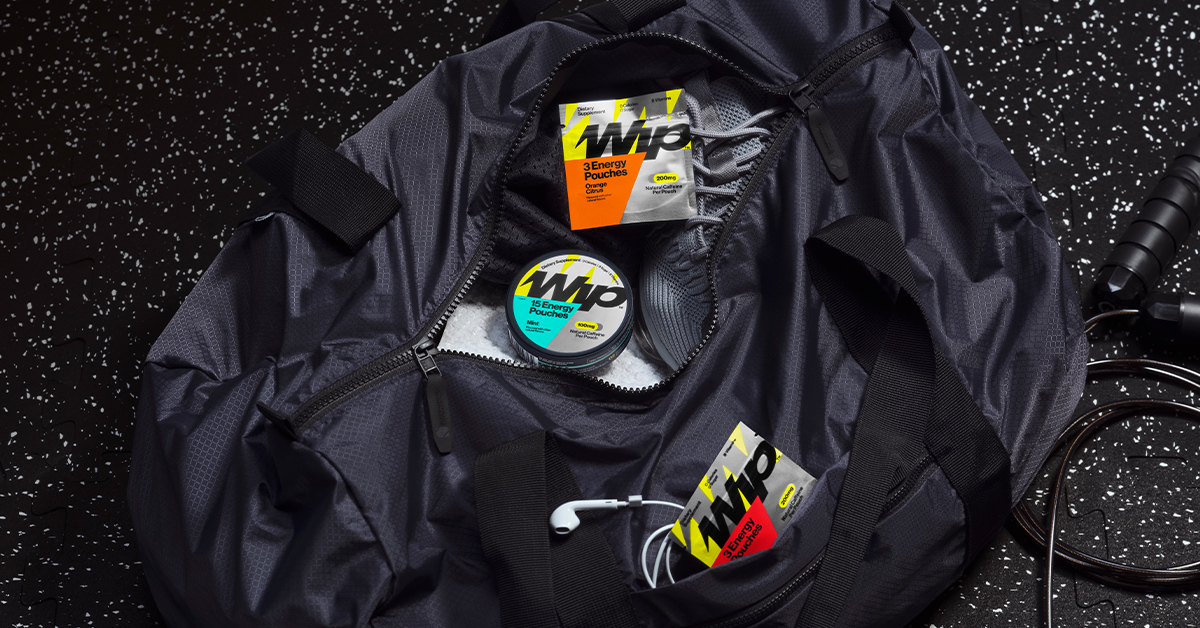
Sweeney has shaped his sales pitch to retailers around the incrementality that nicotine mouth pouches have provided convenience stores by bringing a new format to tobacco users who might not be interested in gums, vapes or patches.
“The nicotine pouch business has just exploded,” Sweeney said. “It’s driving a ton of traffic, a ton of users, and retailers are seeing a natural extension around that experience into other supplements and categories.”
Wip launched online and into select locations in Florida, New York, Arizona and California. It is now targeting independent c-stores in the Southwest with a lot of retailer interest, Sweeney added.
The mouth pouch format is well-positioned for the c-store checkout counter, where it can be merchandised alongside energy shots or pills, but less traditional retailers are bringing these in as well. Wip has seen interest from streetwear and skateboard shops as well as ACE Hardware franchise locations; energy drinks have long had a foothold in tradesmen’s stores like Home Depot and Autozone.
Demand is coming from first responders, truck drivers, airplane travelers, ride-sharing taxi drivers and construction workers who don’t have the time to stop for restroom breaks but need an on-the-go caffeine option that doesn’t come in fluid format, Mumby said.
From Pouches To Tubes
Beyond pouches, a couple of other new formats are starting to emerge. One is aimed for c-stores, while another has hints of gourmet.
ALLDAY, which also launched in June, is a caffeinated mouth spray similar to a tube of Binaca breath spray founded by two McGill University neuroscience undergraduate students. Chaim Weinerman and Mohand Khouider set out to find a caffeine delivery system that was more efficient than coffee, and after eight years of research, ALLDAY was launched. They claim that the spray can deliver energy two times faster than caffeinated drinks.
“Instead of chugging down a massive cup of coffee, you’re able to self-dose to a much greater degree because the impact is felt much quicker,” said CEO Alex Cantwell.
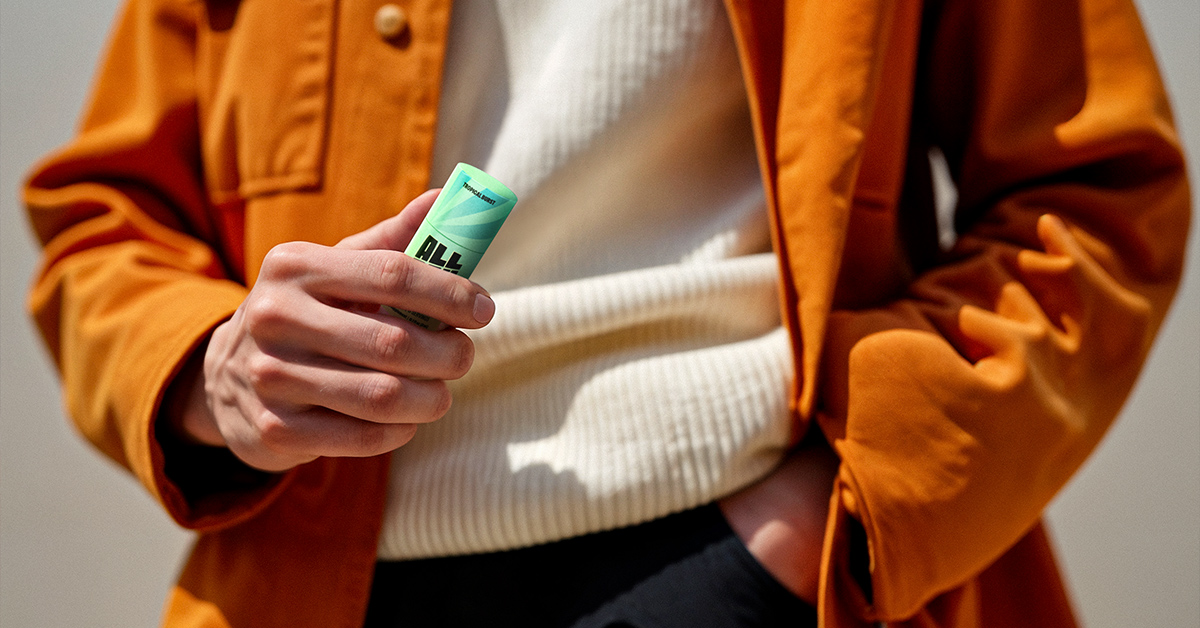
ALLDAY’s spray format delivers 32mg caffeine per spray and each 0.1 fl. oz. bottle contains about 12 sprays. This allows consumers to self-dose and reach full efficacy within 15 minutes. With beverages, Cantwell said, “you’ll start to feel it between 15 and 20 minutes, but you won’t get the full effect of caffeine until closer to an hour.”
The brand packaged the sprays to be “attractive to the convenience store buyer” in “discrete” bottles that are about “50% to 60%” the size of a typical energy shot, he said.
Even farther abroad, Swiss friends Alexander Häberlin and Philippe Greinacher set out to create a coffee product that didn’t necessarily require water to be enjoyed. Coffee “paste” NoNormal was born out of a desire to fill a need for an outdoor activity, accessible caffeine that could be sipped in a mug by the campfire, spread on a piece of bread or slurped straight from the tube.
“Why isn’t there a coffee paste?” Greinacher remembers asking. “You can have all the good stuff in it, like the oils, the flavors and it preserves well. It would make life so easy.”
Unlike other coffee alternatives that market themselves around environmental or health-related claims, NoNormal is positioned toward the coffee consumer who needs a new way to get a caffeine fix while out on the trail.
Based in Switzerland, the founders used a common packaging format carried over from World War II food rationing: squeeze tubes. After tinkering with nearly 50 recipes, the two entrepreneurs landed on a formulation manufactured by one of the largest coffee copackers in Switzerland, which, coincidentally, owns a tube-filling business.
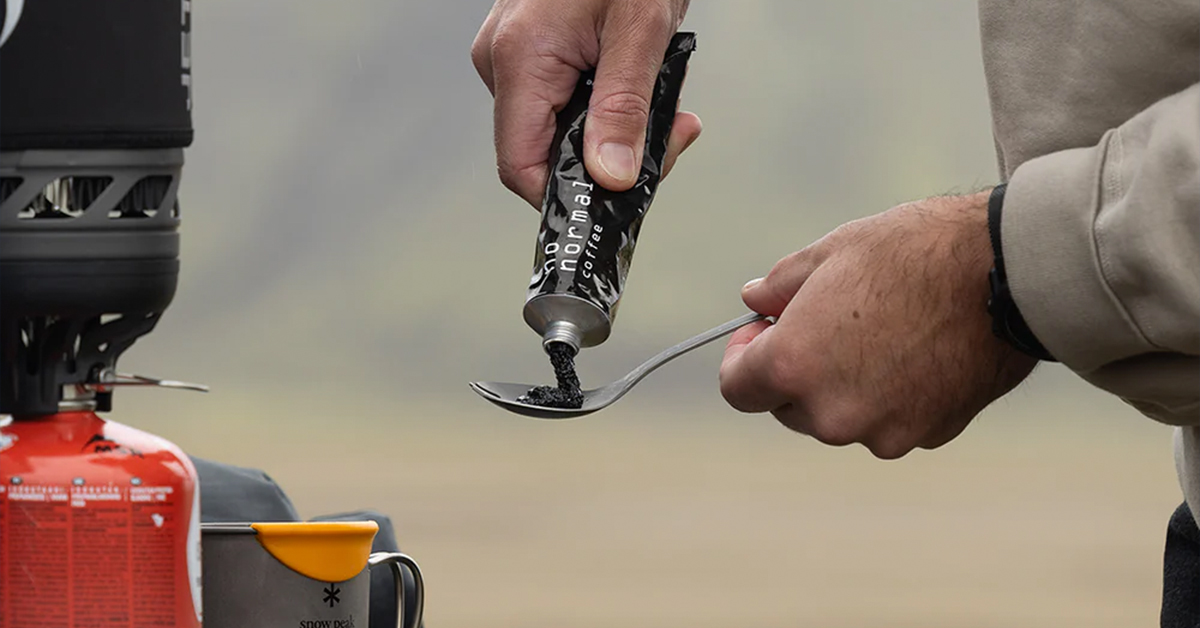
“We approached it like a Porsche: form follows function,” he said. “The design is built for ruggedness and the outdoors.”
Built for the outdoor enthusiasts, Greinacher sees other applications for NoNormal on air flights or in the armed forces where time, supplies and environment are not conducive to coffee as a liquid.
The design leans into the idea of chaos packaging, where a format is chosen that doesn’t quite meet the normal expectations but can bring in a different consumer through its ability to serve a specific need. One third of NoNormal’s customers don’t make a hot or cold coffee with the product but choose to eat it.
“There are a lot of products that people have gotten used to, but there are other ways where you can make something a bit more appealing or more friendly for certain situations,” Greinacher said. “We’ve been compared to the Swiss Army knife, which I love. If you could be the Swiss Army knife of something, it’s usually a badge of honor because you have so many applications.”