Can Mushroom Chips and Jerky Win Over Snackers? Sales Rise 17% As Brands Keep Betting

It seems that mushrooms are in everything these days, from coffee to chocolate bars. But after years of innovation and expansion, are consumers any closer to truly embracing functional shrooms as their snack of choice?
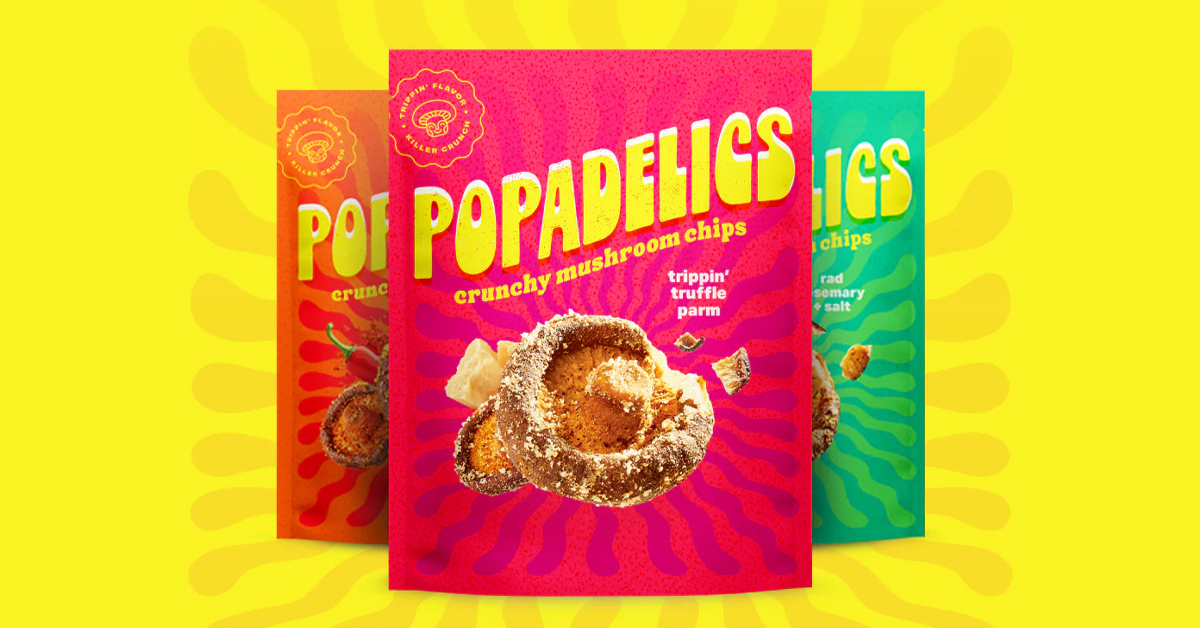
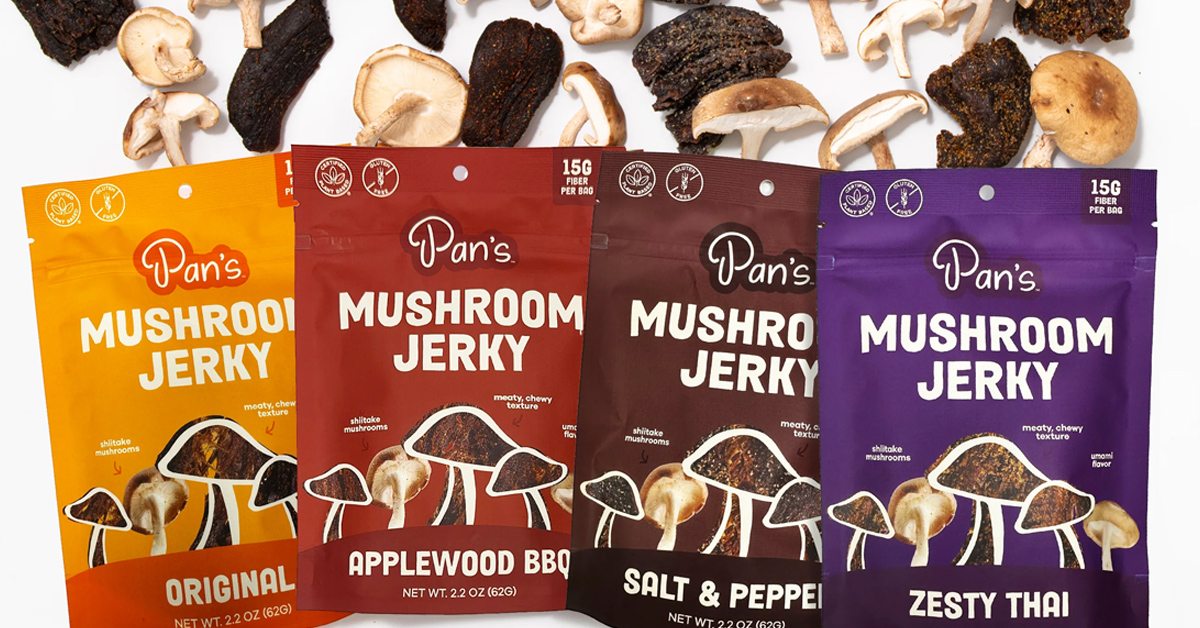
Brands like Popadelics, Pan’s, Evil Snacks and Munchrooms – to name a small handful – have sought to sell consumers on better snacking through fungi, producing their versions of chips, puffs and jerky among other formats to fulfill the desire for a crunchy, salty snack with a better-for-you and functional alternative.
And there are some signs they’re beginning to break through. Popadelics can be found in Walmart and Target and mushroom jerkies can be found in conventional grocery chains.
According to SPINS, dollar sales of products with “super mushroom” ingredients were up 17% year-over-year in U.S. retail for the 52-week period ending March 23, 2025, outpacing “super greens” (+10%) though not growing quite as fast as hemp protein (+35%) or collagen (+56%).
Marilyn Yang, co-founder and CEO of Popadelics parent company Fun-Gal Snacks, told Nosh in an email this week that she believes the “broader tailwinds” benefitting functional snacking have only gained traction in the post-pandemic marketplace.
“A more significant part of the public is now aware and concerned about ‘what’ is in their food, whether from an ingredients or nutritional standpoint, and we’re still only scratching the surface,” Yang wrote. “All that being said, I think broader demand has grown and will continue to grow. What will determine which products in the functional snacking world have long-term staying power will come down to continued product innovation, and the most important factor: snacks that actually taste good.”
Much of the buzz around functional foods in recent years has centered on ingredients like protein and collagen, while stress solutions and relaxation (where adaptogenic mushrooms often play a role) has been another prominent trend in both food and beverage.
For brands like Four Sigmatic, MUD\WTR and Clevr – which make mushroom-infused coffees and other drink mixes – they’re offering consumers better-for-you, functional alternatives to a daily use occasion that is already centered on function, namely the energy provided by a morning or afternoon cup of coffee.
But functional snacking brands have the added challenge of convincing consumers to also turn snacking – an occasion built primarily around flavor and satiation – into another chance to add function into their routine.
SPINS noted that this shift is occurring: while the overall snack category grew just 0.3% in the 52-weeks ending March 23, yogurt contributed more than 200% of total growth, “compensating for declines in categories like chocolate and potato chips.”
“The integration of superfoods into snack products reflects a natural synergy,” the SPINS report states. “Consumers can enjoy the perceived benefits of functional foods without feeling like they’re sacrificing enjoyment or satisfaction. That balance of taste, nutrition, and functionality is key to maintaining momentum in the better-for-you segment.”
According to Yang, the biggest headwinds for Popadelics include supply chain challenges and production capacity straining its ability to expand fast enough to meet demand. While the brand would like to grow its Amazon business, it can’t “be as aggressive” due to limited supply needed for existing retailers like Whole Foods and Sprouts.
“We’re currently working on several initiatives to expand our production capacity, which will allow us in the next few months to grow our Amazon and ecommerce business as well as to be more aggressive in terms of capturing even more retail accounts,” she wrote.
Kiva Dickinson, founder and managing partner of Selva Ventures, said he believes the functional snacks and mushroom category is indeed gaining more traction in mainstream retail outlets, with chains like Target and Walmart helping open the product format up to more shoppers.
However, he worried that there is still risk ahead for the category, as it wins trial from consumers, with brands that “over promise” on the immediate effects of adaptogenic mushrooms, or which go too far in drawing a connection with intoxicating psychoactive mushrooms – creating a false impression that the product may be mind altering.
Though he declined to name brands he felt were guilty of poor marketing, he suggested that there are some bad actors in the space “making really aggressive claims” on social media, such as targeting older consumers with chronic health conditions, which could cause some consumers to think the “whole category is a scam.”
“If consumers are subject to a brand over-promising and under-delivering, then they will become long term skeptics of the space in general,” he said.
While Selva does not have any mushroom-based snacks in its portfolio, the firm is invested in MUD\WTR and Clevr.
Dickinson said that he does believe in the efficacy of the ingredient, but that consumers and brands should be realistic about the benefits of mushrooms – namely that they are a long-term health boon when consumed daily and not an instant cure-all.
“There’s a lot of noise in the category, but I think the category is bigger than it was five years ago, and it will be much bigger five years from now,” he added.
But no matter how far it’s already come in a short amount of time, there’s still a long road ahead when it comes to education, Yang wrote.
“Outside of the snacking aisle, functional mushroom supplements (i.e. lion’s mane) certainly feel like they’ve become mainstream in the past few years. Within the snacking aisle, however, in most of the stores we’re in, Popadelics is the “only” mushroom chip product being carried, so there’s an element of educating consumers on what mushroom chips “actually” taste like as the category pioneer.”