As Retailers Shrink The Plant-Based Set, Abbot’s Butcher Expands

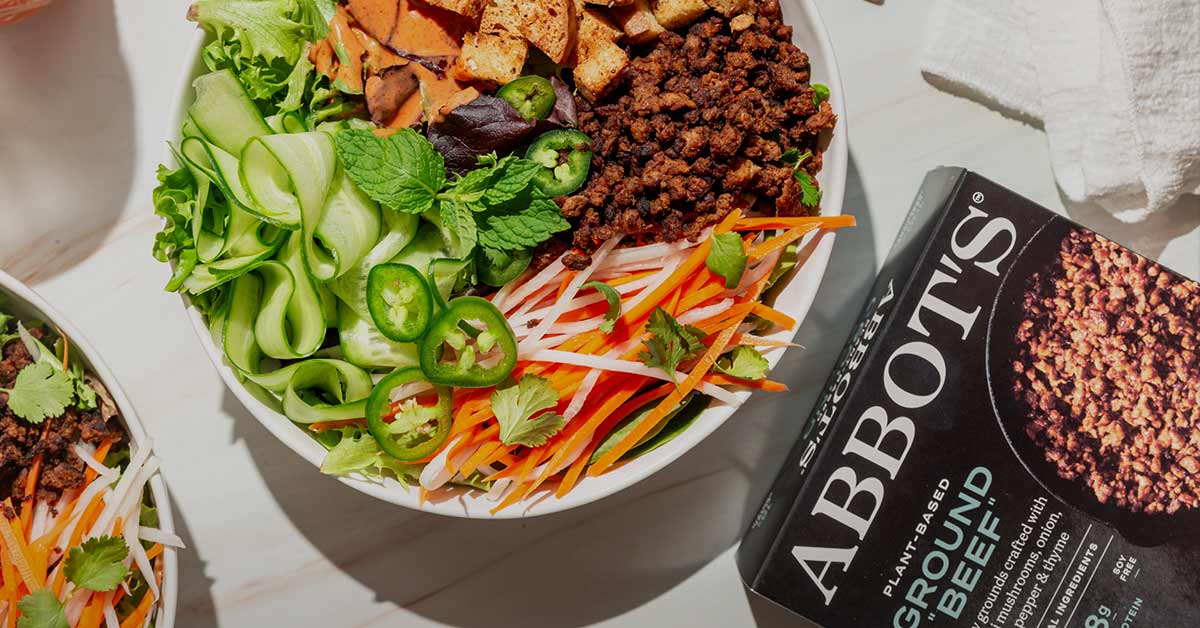
The plant-based protein category has ridden at least three innovation waves – the first brought about foundational products and players like tofu, tempeh and seitan and their CPG counterparts (read: Tofurky), then, years later came the “bleeds like meat” boom and bust with plenty of “me too” items getting sucked under as that wave crashed.
Now the market seems to be settling just a stone’s throw above where it originated and has largely left behind the heavily-contested formulations and product-type labels it created along the way.
Consumers are now prioritizing taste, nutritional integrity and price point with every alt-meat purchase, New Fare managing partner Elly Truesdell told Nosh earlier this year. That same shopper is not necessarily seeking out a plant-based product specifically, but rather another clean label protein source.
Abbot’s Butcher has ridden the ebb and flow of the market while holding steady on its products and position. “Our goal was never to be a meat analog,” founder and CEO Kerry Song told Nosh.
“I remember telling that to an investor in like 2021, and they said ‘Well, then we’re just not interested – you need some IP,” Song said.
Formulated with mushrooms, chickpeas, oats and chia seeds, among other whole foods, Song said all of the products were designed with “real foods that not only have flavor but also functionality.” That approach has also given the brand a leg up as it speaks to GLP-1 drug users who are seeking gut-friendly, high-protein products.
Around the 2020 plant-based boom, there was also a stigma that these products only had the capacity to convert younger consumers and would never truly be able to effect change since “America is just the meat eating country,” said Song. “We’re seeing in the data that that is completely false.”
“We’re never telling people ‘don’t eat meat,’” said Song. “The customer that we’re really speaking to is a customer who’s having meat a few days a week, but they don’t want to have it for every meal. They want to cut back and have something that they can feel good about after eating, feed it to their kids and it’s just easy to cook up.”
Abbot’s is also “overindexing” with high-income, aging consumers, specifically Baby Boomers, with VP of Marketing Alisa Pospekhova explaining that this demographic is most at risk to develop conditions like hypertension, high cholesterol and other chronic diseases. They are now adapting their diets and lifestyles, and Abbot’s is filling that need, she said.
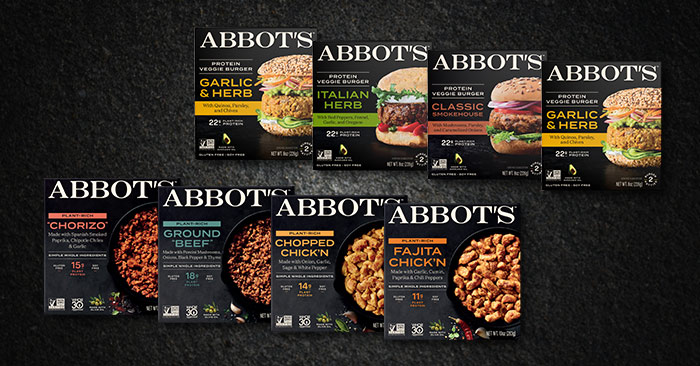
While the brand’s clean ingredient-first, gut-friendly and “intuitive to cook” approach may have been ahead of its time, it has generated steadily growing sales throughout its nearly 10-year history and allowed it to hold on to now-shrinking real estate in retail. The brand is now sold in 4,000 stores nationwide including Whole Foods, Target, Publix, Wegmans and most recently H-E-B and two regions of Albertsons.
“Fortunately, we built the data, and we’ve been continuing to grow, and have consistent growth across all time frames, which continues to help us earn more shelf space,” Song said. “But now, retailers are shrinking the shelf space because they’ve said they’re going to give more real estate to yogurt or strawberries or salad dressings, we’ve heard – it’s just a different conversation.”
But Abbot’s products are continuing to resonate with consumers at a time many others are falling off. The brand holds the top spot in the natural channel with dollar sales up 43% year-over-year in the last 24-week period, Pospekhova said, citing SPINS data. The company is also seeing success online with partners including Hungryroot, Misfits and Good Eggs and is accelerating its expansion in conventional retail, she added.
Song said that while Abbot’s is growing, she believes it will be a lot harder for earlier-stage, smaller brands that are just now trying to get into the market, noting that the brand’s sales data history has been its golden ticket with retailers in recent years: “if you don’t have that data they don’t want to take the risk.”
Speaking with potential retail buyers is “dramatically different” than it was three years ago, she added. Amid peak hype around category leaders like Impossible Foods and Beyond Meat, Song said one buyer told her they were moving 100 units per store, per week – “crazy velocities… now it’s a fraction of that.”
Retail remains the core of Abbot’s business, but sales in foodservice have also been complimentary and now mirror the shopping behavior and needs of customers in retail stores. The business sells to these accounts through distributors including Dot Foods and Webstaurant Store.
“There’s a lot of accounts that maybe picked up plant-based quickly, are using one of the more processed selections, and they’re seeing customers move away from that,” said Pospekhova. “They’re following where their customers are at, and they’re looking for alternatives that don’t just take them back to a portobello cap.”
She said conversations with both restaurant operators and retail buyers have finally reached common ground with both primarily interested in offering their customers healthy, clean label proteins. Now, they just need to show consumers that these options do exist.
“There’s a stigma right now about plant-based,” Song said. “How do we restore the health halo around the set? I know that goal also aligns with some of our key buyers. They desperately want to show people that this set used to be all about health, that it got away from it for a bit, but how do we get back there now?”
Explore the Nombase CPG Database
Head to Nombase to learn more about the tagged companies and their offerings.