Why ‘Plant-Based’ Might Disappear, And the Products That Will Thrive Without It

The plant-based meat market garnered billions in venture funding over the past decade, but many of those heavily-capitalized entities, including Beyond Meat, Impossible Foods and Meati, are now faltering. However, the market is still alive, it just looks a bit different now.
“Success in 2025 is building a loyal, repeat customer base through taste, nutritional integrity, and price point,” said Elly Truesdell, founder and managing partner at investment firm New Fare Partners. “Where the plant-based category faltered in the past is chasing a value proposition the consumer never asked for. The few brands that developed their own distinct offering, and have proven success through performance in natural and conventional channels, are winning.”
Like in many other packaged food categories, lengthy ingredient lists are out, and simplicity is in. Consumers by and large are moving away from products with complex formulations and synthetic ingredients that were key to the early iterations of Beyond Meat, Impossible Foods and Oatly products.
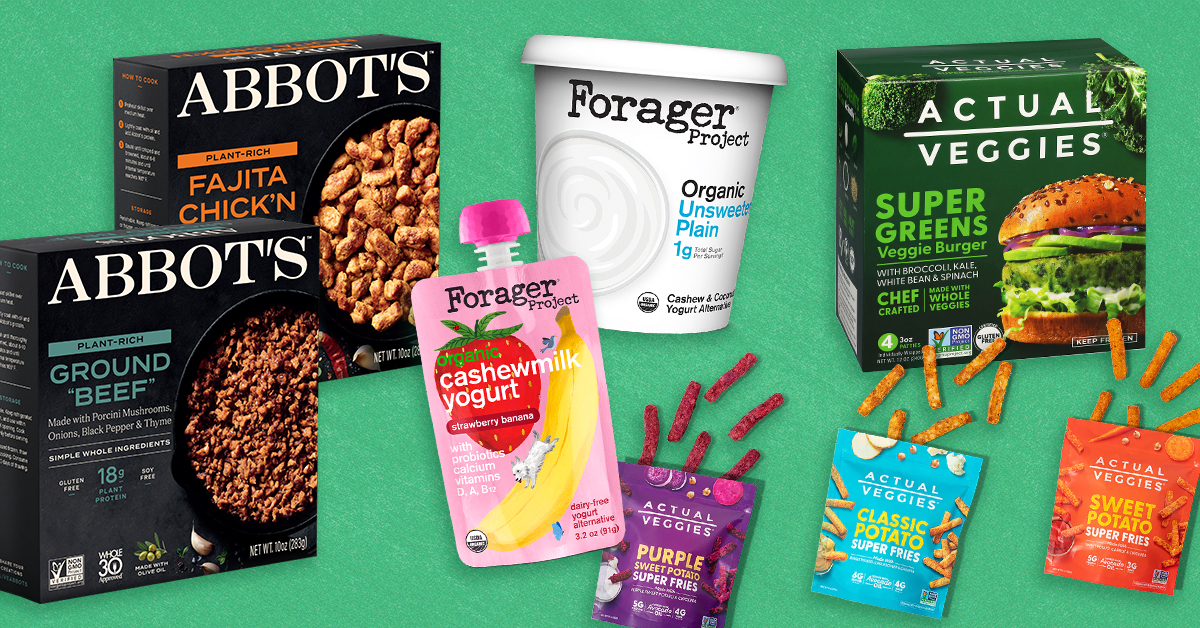
Take aptly named Actual Veggies as an example. The five-year-old company has doubled its door count in the past year with nationwide placement at retailers including Albertsons, Kroger, Whole Foods Market and Sprouts Farmers Market. Those steady gains signal that the product is resonating with consumers and “meeting the moment,” Truesdell said.
Actual Veggies has been strategic about its fundraising strategy as well, locking in $7 million in February with participation from Truesdell’s firm, on the back of a “seven-figure” round in May 2024. After closing the 2024 round, co-founder Jason Rosenbaum told Nosh the company had achieved profitability and was more focused on bringing in experienced individuals to support its growth rather than raise a large round that might be expected of the business at that stage.
Other plant-based brands like Abbot’s Butcher have also successfully built their platforms around alternative meat inputs made from “Whole Simple Ingredients” like porcini mushrooms and quinoa, finding success across natural, mass and conventional channels. The culinary-focused products are now sold in thousands of stores nationwide including Target, Whole Foods, Wegmans and more.
“Early plant-based brands led with ethics or environmental claims,” Truesdell said. “Today’s winners lead with flavor and texture. It’s interesting how much food and drink follows the cultural moment, and – for better or worse – the climate conversation has mostly vanished. Environmental messaging is doing little to convert customers these days, and when it comes to retention, taste is everything.”
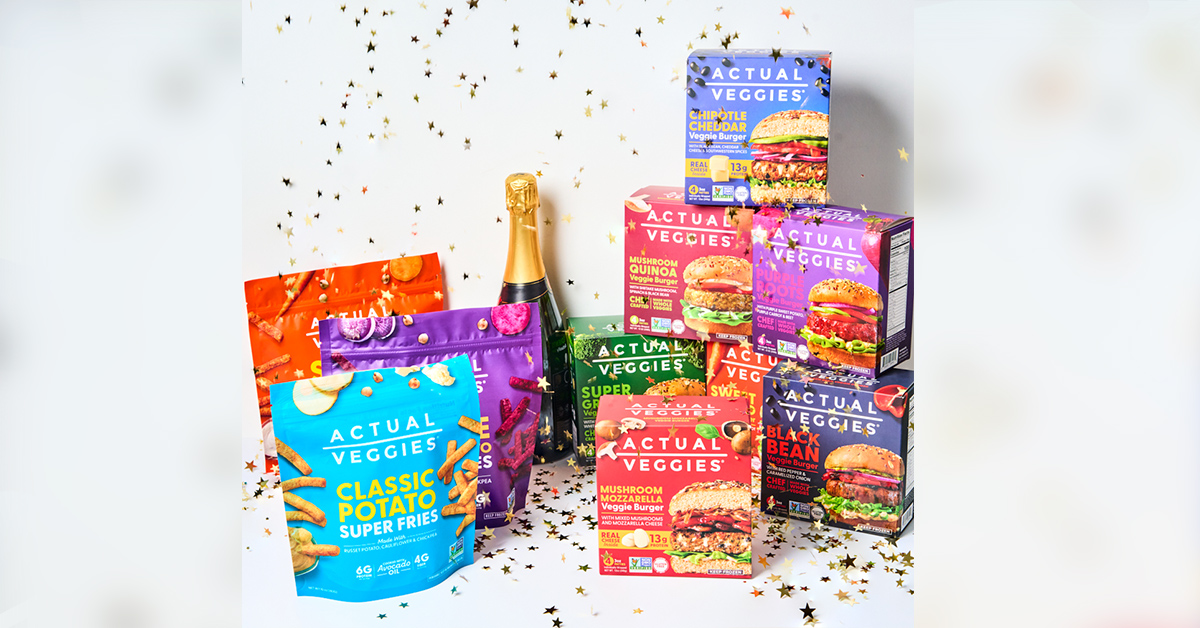
Both Abbot’s and Actual Veggies also sell into foodservice, with the former locking in a national distribution deal with Dot Foods in 2023 that has brought it to quick-service restaurant chains such as &pizza, Protein Bar & Kitchen and many more. Actual Veggies has also leaned into foodservice through a deal with Compass Group that has brought its items to schools, hospitals, and corporate offices like Google, Amazon and ESPN. Those partnerships are essential for building consumer interest as well as “propelling the business” forward, Truesdell said, by integrating the product into additional eating occasions.
“The long term success of any product is conditional to consumer demand,” Truesdell said. “For years, the amount of venture dollars in the CPG ecosystem meant investors and executives at the highest levels were driving new product development as a thought exercise. Innovation was completely divorced from the consumer, an agenda set by thought leaders and VCs. As many of those product concepts failed, the brands that persevered are the ones that set out to truly address a consumer want and need.”
This realignment in accordance with consumer purchasing drivers has also played out in the plant-based yogurt space. Earlier this year Forager Project introduced a new High Protein iteration of its cashew-based yogurt, telling Nosh at the time that the impetus for the product was to show all consumers that plant-based protein doesn’t have to be “rough.”
The company leaned into its hero cashew ingredient as the primary protein source and supplemented it with brown rice protein to get the offering to 10 grams per serving. That approach has been a mainstay across the brand’s portfolio with all of its formulations leading with taste and texture, Stephen Williamson, founder and CEO of Forager Project.
The sales data shows that approach is paying off. Forager is currently the leading independent plant-based yogurt company, falling in third in terms of total market share behind two Danone-owned brands, So Delicious Dairy Free and Silk, per Circana data viewed by Nosh for the 52-week period ending Jan. 26, 2025.
But, Forager’s dollar, units and volume sales have been steadily increasing over the past year and two-year periods while both category leaders are seeing those same metrics drop over the same period.
Truesdell made a prediction when it comes to the positioning and merchandising surrounding these products, another once-hotly contested topic that has largely fallen out as the core market faltered and certain products made it mainstream.
“The term “plant-based” is being used less and less, both by shoppers and by merchants,” Truesdell said. “I’d expect the sub-category will be slowly transitioned out, if not eliminated, in the next year. That’s not to say plenty of “plant-based” brands won’t endure. The ones that do and ones that continue to build loyal followings are built on fundamentals beyond being an alternative; they’re just great products.”
Explore the Nombase CPG Database
Head to Nombase to learn more about the tagged companies and their offerings.