Special Feature – Vertical Farming’s Fumbles: How Indoor Operations Are Rebounding From Early Struggles


Vertical and indoor farming is a standout symbol of food technology’s period of boom and bust. Founded on grandiose claims ranging from agricultural robotics and shipping container farms to greenhouse tech and AI software tracking genetics and growing conditions, “agritech solutions” became a figurehead for fixing a broken food system.
These Silicon Valley-inspired approaches to farming rode alongside other aspects of food tech like alternative proteins and precision fermentation, driving a speculative VC boom. Total food tech investment eventually peaked at $61.2 billion in 2021, according to Forward Fooding’s Foodtech 500 report.
Over the past four years, however, as all food tech funding has declined severely – it dropped to $16.1 billion in 2024 – agritech has been hit even harder. An AgFunder report tracking food tech investments showed investment declining between 2023 and 2024 in agritech companies working in areas like novel farming systems (down 53%), innovative food (20%), farm robotics (2%) and farm management (11%). That’s compared to a 4% decline in food tech overall.
So what went wrong in the ascent of vertical farming and other agritech high-fliers, and what needs to happen for those companies to realize the promise that created such early enthusiasm?
As with many parts of food tech – see: cell-cultured meat – these companies haven’t yet shown the ability to grow high-value products at a scale that can deliver for customers or for investors.
But as the speculative investment has dried up, agritech startups have started to refocus, learning to develop aspects of their businesses that can grow and hit realistic revenue goals. By taking lessons from adjacent food tech categories like alt meats, vertical farming startups are partnering with each other and with well-capitalized food companies to create specialty ingredients, increase agricultural efficiency and produce scalable sources of year-round, local produce.
Still, they had to burn a lot of cash along the way, with investors and companies adding to the flames.
Money Might Have Been Easy, But Indoor Farming Is Not
Like the boom period of alternative proteins, agritech startups counted on consumers buying vertical- or greenhouse-grown produce based on concerns for climate change; for many the test case rested on inefficiencies in growing commodity salad greens. Investors saw dollar signs. Lofty sustainability and social goals combined with a zero-interest-rate environment created a climate for over-investment.
But the available capital had a downside. Companies “raised too much money at too high of valuations,” said EcoTech Capital managing director Adam Bergman, who has invested in numerous indoor farming outfits. This put pressure on businesses to move too quickly, building numerous facilities simultaneously, instead of optimizing and solving problems in pilot projects.
“People don’t appreciate how difficult it is to scale a vertical farm facility,” Bergman said. “When you are building one of these facilities, it can feel like whack-a-mole at times: you know what the issue is, you hit it and something new pops up.”
Beyond that, they were scaling at a commodity level. Seeking speed, many startups went after the easiest produce products to grow indoors: leafy greens and herbs.
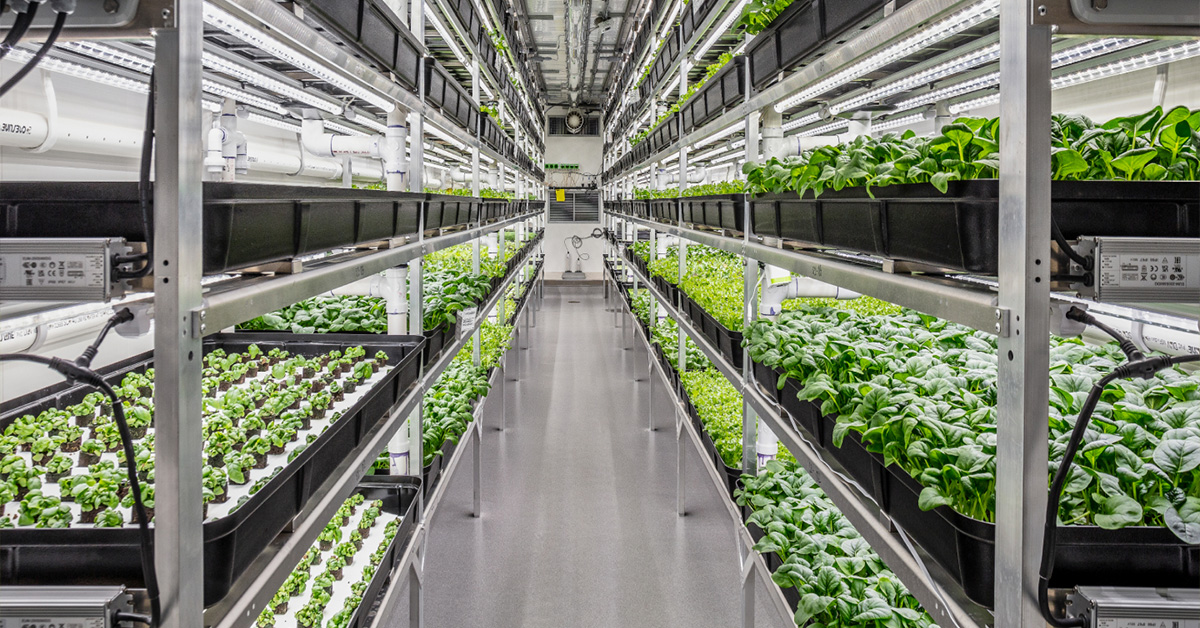
“What got overlooked was that traditional growing is far more cost-efficient, and so they picked the wrong battle,” said Rob Dongoski, global lead for Food and Agribusiness at management consulting firm Kearney. “As a consumer, what do I care about when I buy leafy greens? Every single time it’s about taste and affordability. The fact that it’s grown indoors doesn’t matter to me.”
While pesticide-free, organic, or locally grown value propositions are further down the purchasing hierarchy, they’re also available from a variety of sources. With the high R&D cost added into the agritech products, however, these innovative solutions ran up against a similar problem many plant-based or novel protein companies have when scaling: price-sensitivity. There is a limit to how much people will pay for a more sustainable option that looks and tastes similar to its conventional alternative.
Meanwhile, interest rates have gone up, hurting investment across a variety of sectors. As money has dwindled, a slew of high-profile businesses within vertical and indoor farming have either shuttered or been forced to restructure significantly. In 2023, Upward Farms and AppHarvest closed down. New York-based Bowery followed suit in 2024 – after garnering $700 million in investor support over its nine-year run.
Most recently, in March, Plenty, one of the most heavily capitalized vertical farmers of salad greens and strawberries, filed for Chapter 11 protection after raising nearly $1 billion. The agritech business appears to be taking a familiar route to other category outfits like AeroFarms and Smallhold, restructuring their respective technologies to focus on niche ingredients.
Should You Even VC, Bro?
Many venture capital investors are now questioning the wisdom of investing in vertical and novel indoor farming, even if they are still interested in food tech.
One problem is that agritech startups have a higher price tag for a longer sales cycle, said Brett Brohl, managing partner at Minnesota-based Bread & Butter Ventures. The VC firm recently closed a $40 million Fund IV and has invested in several “food commerce” tech startups as well as plant-based meat company Tender Foods. But farming is off the plate for Brohl.
“If you’re an actual farming company, it takes longer turns and longer cycles to validate whatever you’ve built because you have to grow things,” he said. “If you’re selling technology to a retailer to help make their inventory system better, you can iterate on that really quickly.”
For agritech, the initial promise may have been overstated: food systems are too complex and intricately woven within society to tear down completely and then build back up differently, said investor Lauren Abda, co-founder of Branch Venture Group.
“Food change will happen in collaboration,” Abda said. “Otherwise you have this challenge of integration and breakdown. And that’s not doing anyone any good. It’s wasting resources, it’s wasting money and it’s wasting time.”
Indeed, one avenue that’s helping agritech startups survive in their latest era is serving as a value-add to larger corporations. These multinational suppliers are looking for partners with the ability to reduce costs quickly, drive efficiencies and incorporate easily within larger structures.
Stronger Together
One area this collaboration is happening is in the area of sustainability, as agritech companies work with larger companies to fulfill environmental mandates.
Using an adjacent food tech category as a comparison point, San Francisco-based food tech company Voyage Foods announced an exclusive B2B partnership with Cargill after raising $21 million in December 2023. While Voyage Foods isn’t a vertical farming outfit, it is solving for a problem: creating solutions to high-demand ingredients affected by climate change by leveraging the scale of a larger food industry player.
On the agricultural front, Chipotle – through its VC arm Cultivate Next – took a minority stake in Plantible in January after taking part in the food tech’s $30 million Series B in November. The capital has not only provided a means to scale Plantible’s vertically integrated aquatic plant platform but also offers a potential future customer for the company’s novel duckweed product, Rubi Protein, at Chipotle restaurants.
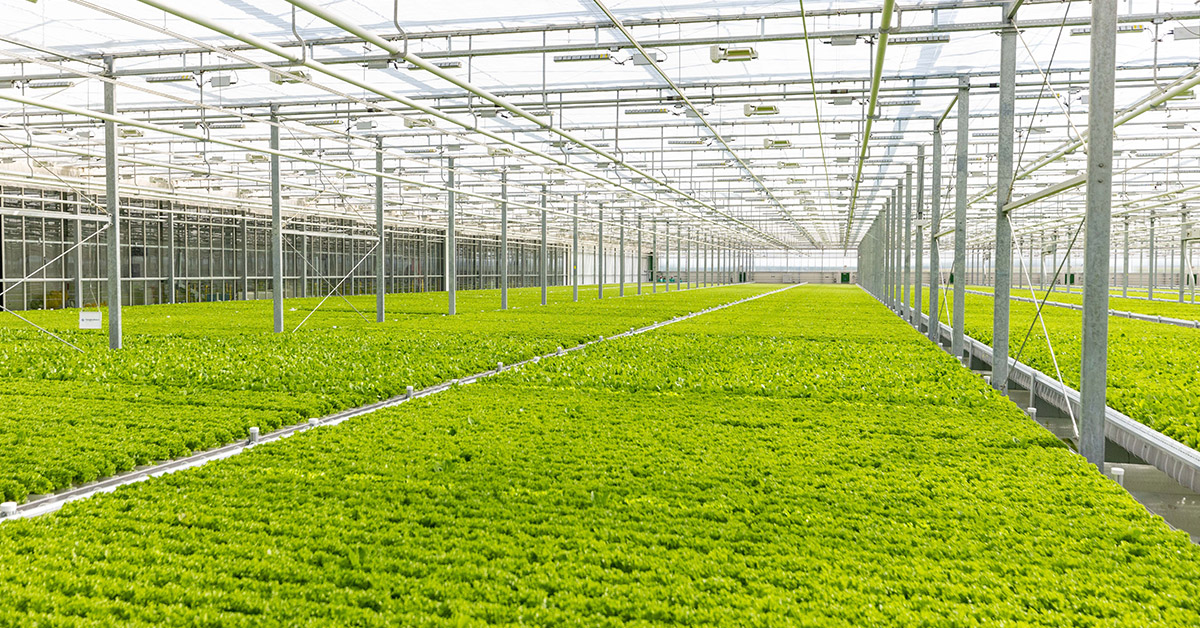
In a slightly more traditional M&A based approach, multinational Cox Enterprises’ Cox Farms subsidiary acquired indoor farming business BrightFarms in August 2021. Through a number of smaller acquisitions, Cox Farms, made up 60-year-old Canadian greenhouse vine fruit grower Mucci Farms and BrightFarms, has become the largest controlled-environment operator in North America. In December, BrightFarms expanded into a 1.5 million sq. ft. greenhouse in Lorena, Texas.
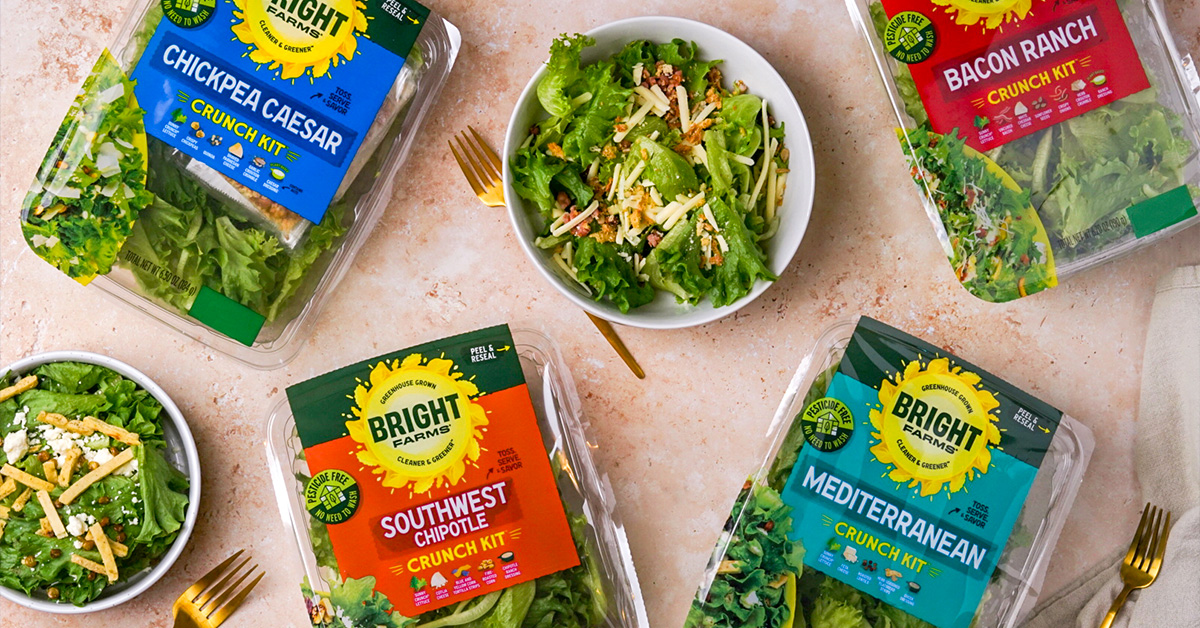
“There’s no reality that this would not have been possible without the support of Cox,” said BrightFarms CCO Abby Craig Prior. “Everything from the financial resources to the significant size of the organization that stand to support us. It is the greatest factor in our scaling plan.”
BrightFarms has been able to utilize the category and institutional expertise of Mucci Farms as well as leverage Mucci’s vendors and distribution network.
But BrightFarms isn’t food tech anymore, it’s now a “food company that leverages technology,” Prior said. That’s not to say that BrightFarms doesn’t use the newest tools available in climate control and other automation technologies to improve traditional hydroponic and greenhouse farming practices, but it’s part of a larger whole.
A ‘Speciality’ Future In Vertical Farming
BrightFarms’ evolution reflects that many of the stumbles in food tech grow from a common stem: prioritizing the technology over the root problem to be solved, said Kearney’s Dongoski. “I think a lot of folks started with: ‘Let me show you how cool it is that I can create technology and do something that hasn’t been done before.’ But that doesn’t necessarily mean you’re solving a problem.”
New Jersey-based vertical farming company Oishii has blended its specialized technology – bee pollination, automation and freight container farming – into a more easily understandable solution: offering locally grown strawberries year-round. The indoor berry producer launched in 2018, developing a market for ultra-premium berries sold for $50 per dozen. After proving there was a consumer appetite for the ultra-premium strawberries, Oishii was able to land a $50 million investment in 2021, and another $150 million in funding over the course of 2024.
It has since brought its prices down significantly and grown its footprint to other regions.
The approach is similar to what Tesla did with electric cars, Bergman said. “They didn’t come out with a $35,000 car to compete against mass commodity movement. They came out with a $100,000 car and they got some sales to help get their cost structure down. Then over time, they’ve gotten cheaper.”
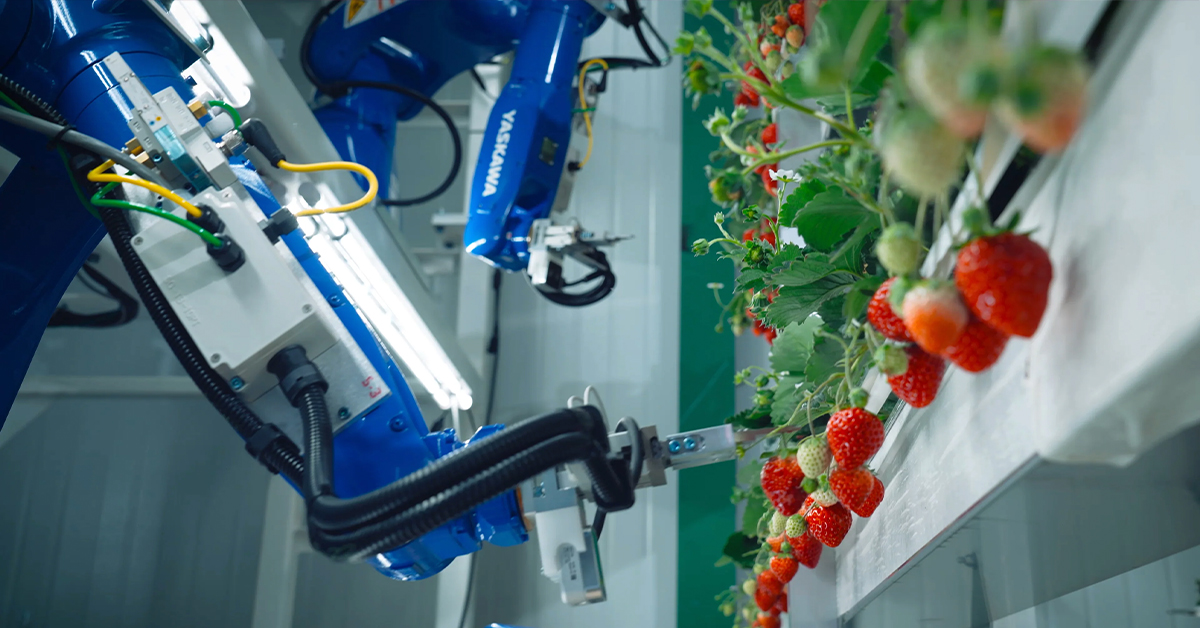
Most recently, Oishii has used its successful revenue-generating model to acquire farm robotics maker Tortuga AgTech. Pairing Tortuga’s IP, hardware, software and members of the engineering team will supplement Oishii’s own proprietary technology to scale on the back of fully autonomous harvesting.
Ohio-based startup 80 Acres Farms – which vertically grows microgreens, tomatoes, leafy greens and sells branded salad kits – has grown its footprint by leveraging the efficiency provided by its subsidiary Infinite Acres, a proprietary software and indoor agriculture automation technology. Capitalizing on some of the struggles by competitors, 80 Acres has been on a relative buying spree of other agritech and biotechnology companies over the last year.
In March, it added the IP and three indoor vertical farms from now-shuttered former vertical farmer Kalera. This follows on a $115 million round that included the acquisition of Israeli biotechnology company Plantae Biosciences, which specializes in plant breeding technology.
“Crops tailored for controlled environment agriculture can be a major unlock for the industry,” said Tisha Livingston, CEO of Infinite Acres and co-founder of 80 Acres Farms, in a statement at the time of the acquisition. “Using advanced plant breeding technology, we can begin to truly differentiate produce by optimizing for flavor, texture, and nutrition, unlike anything available in the marketplace today.”
Vertical farming will never be particularly cheap when taking into account infrastructure costs like electricity, water and commercial-scale warehouse space, said Bergman, the Ecotech investor. Companies that are strategic around where and what they grow will have a higher threshold for success than those that simply take aim at commoditized produce.
Many of the well-capitalized companies that have struggled in recent years are moving in this direction.
Aerofarms, which got a second lease on life after bankruptcy, is now focusing on growing microgreens, partnering with Costco to bring products to a broader audience.
Similarly, vertical farming business Square Roots, which downsized and closed a number of its stackable shipping container operations in January 2023, re-focused on partnerships that leverage its IP and software. It recently announced a new Japan division expected to grow specialty ingredients native to Japanese consumers.
Despite its recent Chapter 11 bankruptcy news and the closure of its Compton, Calif., berry facility, Bergman is still “a huge believer” in Plenty, seeing upside in its vertical strawberry farm in Virginia and a deal to bring locally grown berries to the United Arab Emirates.
Other low-volume, high-value commodities facing issues due to climate change like cocoa, coffee and vanilla, could be ripe for picking as vertical farming crops, said Kearney’s Dongoski.
“Cocoa would be a tough one, but not completely insurmountable,” he conceded. “There is the opportunity. Can indoor be the avenue to source these ingredients?”