Off-brand, On-trend: Retailers Plan to Invest More In Private Label

Grocery retailers are beefing up private label assortments with a focus on protein, global flavors and premium positioning, according to a new report from FMI – The Food Industry Association.
Eighty-six percent of retailers surveyed said they plan to moderately or significantly increase private brand investment in the next two years, identifying opportunities to align offerings with today’s consumer trends.
Value and price remain primary drivers of private label purchases; however, specialty and better-for-you items are seen as key to building shopper loyalty. Appealing to younger consumers is a top priority among retailers surveyed, who cited removing artificial dyes and slimming down ingredient statements as strategies for retaining relevance and competing with national brands.
Retailers reported private brands account for less than a quarter (22.3%) of total store dollar share and are seeking to increase that to an average of 25.6% during the next two years, according to the report.
While continued economic uncertainty is seen as a tailwind, retailers are emphasizing in-store and online marketing to accelerate private brand performance. Nearly 85% of private brand assortments are available online, and last year private brand online sales grew 5.2%.
“The growth of ecommerce has opened new avenues for private brands to thrive,” said Tom Cosgrove, director of industry relations at FMI, in a statement. “Retailers are not only expanding their online private brands assortments but also innovating how they engage with consumers digitally. This is a pivotal shift for the food retail private brands industry.”
Private brand products can be found in nearly 90% of households, per the report. More than half of grocery shoppers responding to the survey indicated an increase in private brand buying over the past year. Meanwhile, close to 20% of grocery shoppers said they reduced purchases of national brands. About half of shoppers said they are very likely to continue buying private brands regardless of economic shifts, noting taste and trust as top reasons, though buying behaviors vary by category.
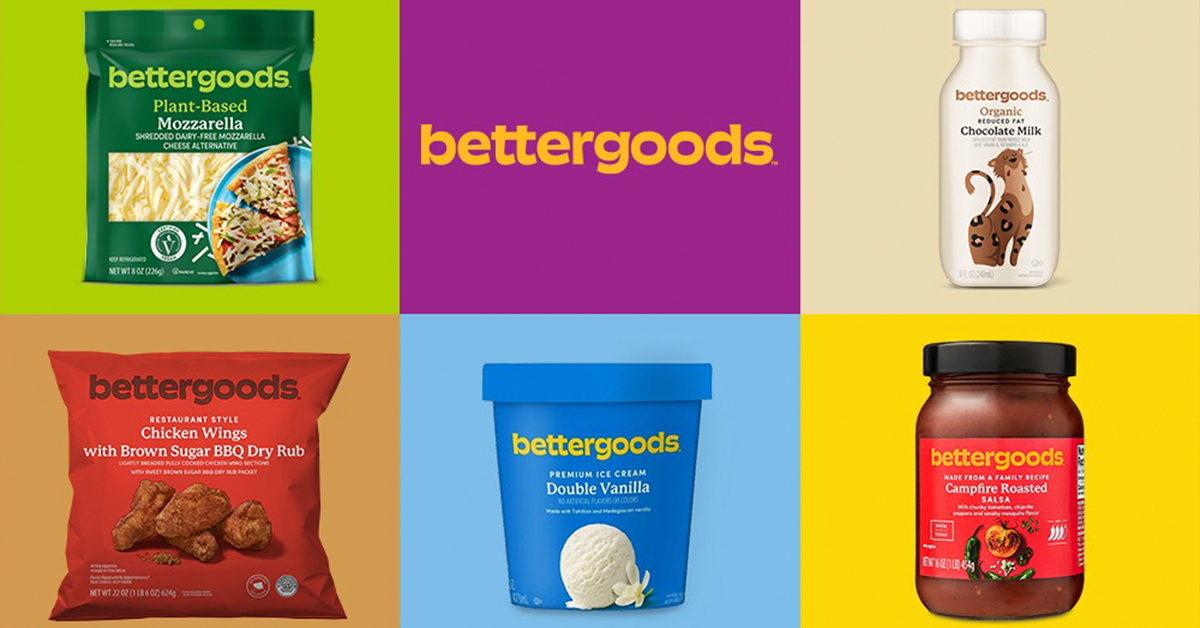
The private label renaissance of the past year may have shifted consumer perceptions. Walmart debuted bettergoods, a product line billed as “premium, accessible” with over 300 unique items spanning frozen, dairy, snacks, beverages, pasta, soups, coffee and chocolate. Target reduced prices on thousands of frequently purchased grocery products and expanded its Good & Gather and Favorite Day brands with the addition of 125 new food items. CVS introduced a revamped line of private label food and beverage offerings under its new Well Market brand while phasing out its prior banners Gold Emblem, Gold Emblem abound and Big Chill. And Amazon unveiled Amazon Saver featuring over 100 grocery items.
Earlier this month, Kroger shared plans to add 80 new protein-focused products including bars, powders and shakes to its Simple Truth line, noting the products are suitable for consumers using GLP-1 weight loss drugs.