A Year In Review: Private Label Proliferates

Grocery prices remain Americans’ top concern heading into 2025. While inflation has decelerated, after the economic roller coaster of the past few years it doesn’t appear those prices will be deflating anytime soon. That dynamic has put an onus on retailers to deliver value. While promotions, discounts and loyalty programs remain a common tool, many have looked in-house to better meet that demand on shelf.
Let’s take a look at the new private label entrants this past year, how the sector has performed and get a glimpse at how Big CPG is strategizing to stay competitive in the increasingly condensed market.
New Entrants to The Set
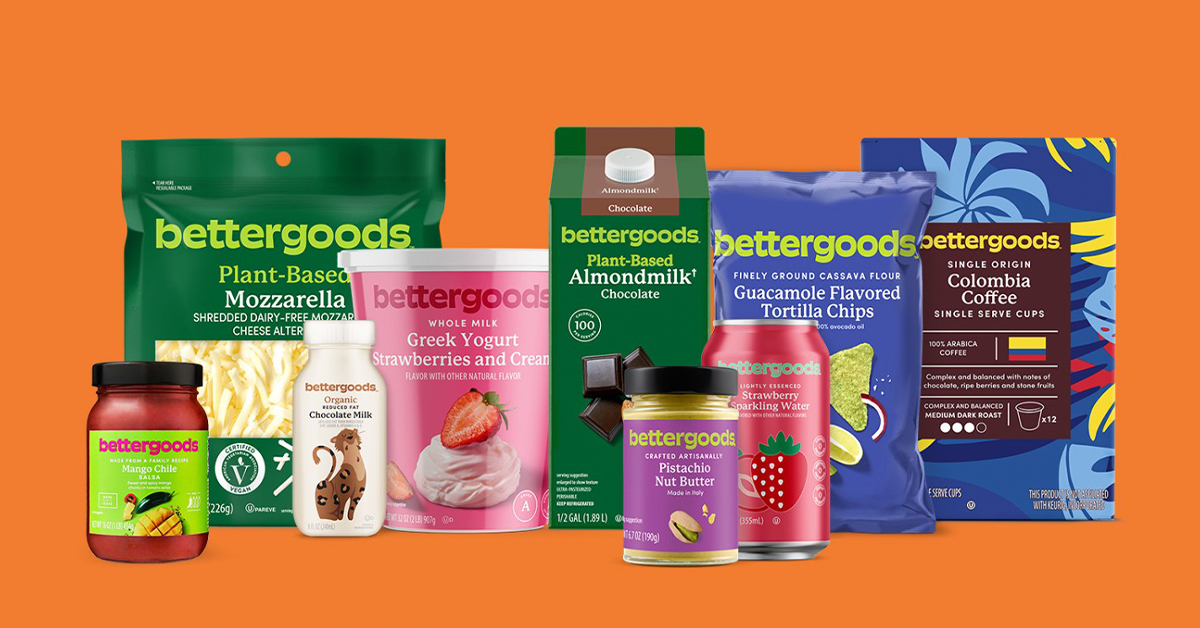
In April, Walmart set off what evolved into a private label renaissance (or store brand tsunami, depending how you’d like to look at it) with the debut of bettergoods. The new line was billed as “premium, accessible” with over 300 unique products spanning frozen, dairy, snacks, beverages, pasta, soups, coffee, chocolate. The items themselves also ran beyond the typical store brand gamut with three broad categories including Culinary Experiences, Plant-based and “Made Without.”
For the Everyday Low Price retailer, its pricing strategy also looked a little different, with items ranging between $2 to $15 as it looked to balance demand for upscale, premium food with the lower priced line. However, most bettergoods products are priced below $5, Walmart emphasized.
Just weeks later, Target announced in May that it would reduce prices on thousands of frequently purchased grocery products and expand its Good & Gather and Favorite Day brands with the addition of 125 new food items. That news was quickly followed when later in May drug retailer CVS debuted a revamped line of private label food and beverage offerings under its new Well Market brand.
The move saw CVS phasing out its prior banners – Gold Emblem, Gold Emblem abound and Big Chill – and begin integrating those products into Well Market. The lineup at launch spanned 40 products across categories, including chips, nuts, trail mix, popcorn, cookies, bottled water, hydration powders, oatmeal and veggie straws, among others, all priced between $2.99 and $8.99.
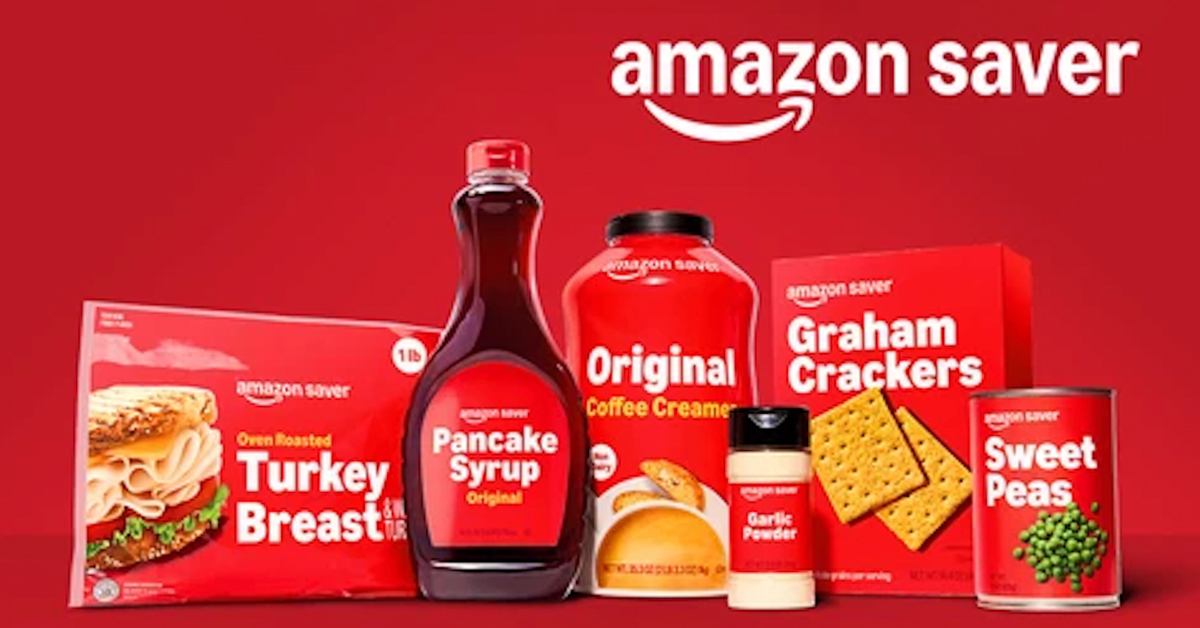
Come September, Amazon threw its hat in the ring with a counter to Walmart’s approach. Amazon Saver features over 100 grocery items that all come packaged in the same shade of firetruck red, and the vast majority are prices under $5 with Amazon Prime members getting an added 10% off that value. The line also appears to be essential to the revival of the ecomm giant’s brick-and-mortar Amazon Fresh chain where we recently spotted full aisles of red labels.
How Private Label Has Performed
For newer store brands and the old alike, 2024 was a banner year. As grocery expert Errol Schweizer put it at mid-year: “Over 98% of U.S. households buy them, over 55% of shoppers are buying more than last year, and 54% of shoppers plan to buy more store brands next year.”
That performance is also evidenced by sales data, which saw private label volumes grow 3% over the past year up at a time of 1% volume declines, on average, among branded players. Middle- to low-income consumers still account for a large portion of store brand purchases; however, Jefferies analyst Jeff Wojtkowiak noted during a webinar earlier this year that demographic has shifted a bit with some more affluent, “upscale” shoppers also reaching for the value-positioned products.
From a financial perspective, private label transactions accounted for a record percentage (25.9%) of deal volume within the manufacturing industry, and private label platforms have become increasingly successful in establishing “symbiotic relationships with leading retailers,” investment banking firm Capstone Partners reported.
This trend toward private label may be sticky as innovation among branded CPG stagnated while Walmart brought premium and differentiated options to the store brand sphere (and held onto a nearly 24% share of all grocery sales). In July, Mintel reported that only 35% of global CPG launches spanning the food, drink, household, health and beauty industries in 2024 have been genuinely new products – the lowest rate of innovation since the market researcher began tracking new products in 1996.
What’s The 2025 Outlook
As private label purchases tick up and retailers continue to invest in lines designed for value-oriented shoppers, let’s take a look at how CPGs are strategizing to stay competitive in 2025.
A quick note: while 2024 may have seen plenty of upward momentum in the private label sector, it did not all happen overnight. Big CPGs, retailers and market analysts alike began preparing for a store brand surge back in 2022 (remember when the idea of a recession was still looming?).
Amid those market trends, Big CPGs including Mondelez and General Mills are turning to strategic price-pack architecture and promotion cycles to close price gaps and continue to capture interest from price-sensitive shoppers. Mondelez claims that its cookies and biscuits portfolio continues to hold share against store brand options and will look to that category for future pack-size innovation.
Private label manufacturing leaders like Treehouse are betting on the segment’s long-term potential, stating in a second-quarter earnings report earlier this year that store brands have consistently gained share over the past two decades, believing this trajectory presents a “significant runway” for continued growth.
Treehouse executives highlighted that the price gap between private label and national brands, in addition to increased retailer investment in private label, has helped drive unit share growth across categories every quarter in 2024.
According to Capstone, that dynamic could shift soon as food prices have decelerated (up 2.3% year-over-year in the first six months of 2024 versus up 3.5% in the final six months of 2023). That could result in increased volume growth for both branded and private label players, the report claims.