How Celebrity-Founded Smash Kitchen Aims to Transform American Pantries

A pair of seasoned operators. A dash of star power. Could this be the perfect recipe for a smash success on supermarket shelves?
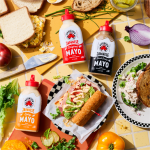
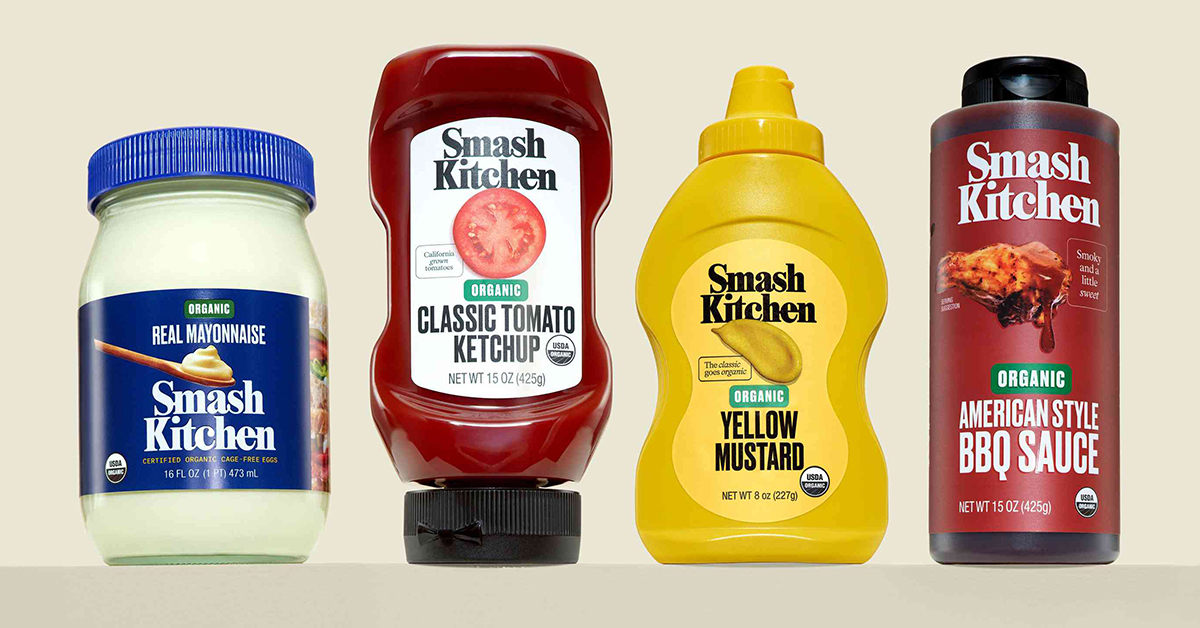
Since its springtime debut, Smash Kitchen has expanded nationwide into Walmart, Sprouts Farmers Market and Erewhon and launched over a dozen items ranging from organic ketchup to pure avocado oil.
The brand was founded by Sameer Mehta and Sean Kane – the entrepreneurs behind multimillion-dollar consumer products businesses including Jinx, Hello Bello, The Honest Company – alongside actor and producer Glen Powell. The trio aims to modernize American pantries by offering condiments, sauces and cooking oils that are free of fillers, artificial dyes, preservatives and flavors at accessible price points. A 16.9 oz. bottle of Organic Extra Virgin Olive Oil retails for $8.97 at Walmart, while a 16 oz. jar of Organic Real Mayonnaise costs $5.22.
“We’re really proud to be a brand that can sit within conventional mass grocery as well as natural grocery,” Mehta said.
In the first three months, the brand racked up $3 million in sales behind its philosophy of elevating everyday staples while prioritizing affordability. More recently, the startup forged a multiyear partnership with the San Francisco 49ers and will serve its Organic Tomato Ketchup and Organic Yellow Mustard in select Levi’s Stadium suites and clubs.
Smash Kitchen has raised a little over $10 million to date in a round led by Collaborative Fund, which has backed brands like Olipop and Magic Spoon.
Mehta and Kane sat down with Nosh to discuss the brand’s go-to-market plans, biggest challenges and celebrity influence. The interview has been edited for length and clarity.
Why did you launch Smash Kitchen?
Mehta: There are a ton of premium brands out there that are health-forward, but they don’t really taste like stuff that you imagine. And then there are the conventional brands that are filled with dyes, artificial flavoring and high-fructose corn syrup. We’re really proud of creating a line of recipes that not only is better-for-you and clean label, but also tastes really good.
Kane: Sauces are a part of everyday eating. And in terms of households that are fully organic or interested in organic, it’s a very easy step to take to say, “Hey, I’m going to start using an organic mustard or organic ketchup.”
When nine out of 10 other sauces out there probably include things that you know aren’t as healthy, it’s a no-brainer for people to take a small step and say, “Sure, I can afford $2 for an organic, non-GMO mustard.”
How long were these products in development, and how were you able to capture this taste profile that you feel stands out in the market?
Mehta: We probably have been tasting sauces for almost two years now. When we first kicked off, ketchup was the primary product that we were seeking to go out after, and so, between Sean and I, we tasted over 40 recipes until we got to one that we’re really proud and excited about. And we’ve been working with what we believe is the best team out there. We have really amazing folks from bigger brands like Post and Sovos and Rao’s who have joined the team and are on board with our mission of creating the perfect recipe.
How are you supporting these big retail launches?
Mehta: We are fortunate to have a co-founder like Glen Powell, who has an audience of millions across America, not only on social media, from TikTok to Instagram, but also he’s been in a ton of relevant movies and TV shows.
We focused heavily on digital marketing, so everything from social media to TikTok, where we’re the number one most talked-about condiment in the past three months. With our brand, we’re really focused on not only telling our ingredient and flavor story, but finding ways to create fun and engaging content.
How involved is Glen in the business? What is the key to leveraging star power in an authentic way?
Kane: You just nailed it; it’s authenticity. This is really the first thing he’s done outside of his entertainment career, and both he and his family are personally financially invested in the company, which is very rare. He’s authentically enthusiastic about health, about wellness. It’s a topic that he lives and breathes every day on set.
It really starts with authenticity. It starts with excitement and enthusiasm for what he’s doing. He’s on a daily basis in contact with Sameer and me about new products, new formulas, new marketing ideas, retailers and how he can support the business. He’s all in, and that’s when it really works.
He’s bringing us his mom’s recipes in other categories, and his sister, who wrote a cookbook. I mean, the whole family’s into it. We went to his ranch in Texas, actually, to film some of our launch videos. And the family invited us to stay for the weekend and have dinner with them and sit out by the dock and drink some wine.
How does foodservice figure into your channel strategy?
Mehta: We’re very excited about the potential of foodservice, not only from a revenue point of view because it’s a big opportunity and big business, but also from a marketing and trial standpoint.
Our organic and clean label story opens up a ton of opportunities as more and more restaurants and live experiences are looking for better quality food. We just entered into a few stadiums the past few weeks. We’re now serving our ketchup and our mustard at Dodger Stadium. We just entered into Levi’s Stadium, which is based in San Francisco, and we’re starting to get real life insights on how people are utilizing our products within these live environments, and we are definitely hoping to expand and scale pretty quickly.
Can you discuss the challenges you’re navigating currently?
Kane: What allows us the ability to launch a business like this in the way we did, and offer a price for organic mustard of under $2, is just scale. Walmart has given us the scale to provide prices that are our best in class when compared to what else is on the shelf. And that really is the secret; we have the scale to be able to get to the price points we need, and we don’t have legacy results that prohibit us from offering organic products.
You know, for another brand that doesn’t have a ton of organic on the shelf, it might be difficult for them to take a product off. They have to put another product on. That product has to have velocities that either match what they were doing before or be incremental to revenue. We don’t come with the baggage of performance year on year on year because we’re brand new.
But it’s rare for a startup to partner with Walmart and have this kind of scale right out the gate.
Mehta: We’ve worked with Walmart a few times in our past companies. Part of it is we’re really excited to partner with them because of the scale and the opportunity that we’re able to bring. From day one, our mission has been to improve the American pantry, so partnering with America’s largest grocer is really important for us, especially when we’re trying to bring an organic product at an affordable price point.
Kane: There’s probably a factor of trust with having done it before. We can drive positive results and positive change. The buyers at Walmart want to embrace products that are better-for-you. And we have the operational background and we partner closely in understanding the customer, understanding the dynamics of how they’re talking to the customer, and work collaboratively with them to make sure that we have a successful launch.
At the end of the day, the products are the most important thing. The products have the best ingredients and they also taste incredible. Anybody’s willing to try something once, but for them to come back and try it again, it has to speak for itself. And Walmart has trusted us to make sure that the products are good enough for people to come back and buy again.
Explore the Nombase CPG Database
Head to Nombase to learn more about the tagged companies and their offerings.