How Back To Nature Rebuilt With An ‘Insurgent Brand Mindset’

Back to Nature has reconstructed the basics of its operations while rebuilding its team and refining its approach to the better-for-you snack category two years after B&G Foods sold it to Barilla without a single team member.
After the brand unveiled a revitalized look earlier this year, we sat down with CEO Jennifer Jorgensen, the company’s first and only employee post-acquisition, to learn what’s changed and what’s next for the legacy natural foods company as it embraces an aesthetic reflective of the start of the natural foods movement and its own origin story while working to speak to the modern “snack surfing” consumer.
“[Our customer] is not the extreme tip-of-the-spear health consumer,” Jorgensen said. “They are trying to make better choices and surfing between conventional, natural, organic [while] trying to balance taste and health to make the best choices they can.”
Inside The Overhaul
Despite changing between Big CPG hands, Jorgensen felt it was necessary to emulate an entrepreneurial mindset for Back to Nature’s turnaround, spanning from its leadership team down. The brand had been under B&G’s ownership since 2017, but had fallen by the wayside as the company struggled to execute across its wide-ranging portfolio.
Hailing from General Mills, herself, where she moved up the brand management ranks during a 26-year-long tenure, Jorgensen said she “loves turnarounds” and leaned heavily on her network while hand-selecting each of the 30 individuals that now make up the new team. This is her first CEO gig, she noted, and she looked for individuals who were a fit from both an experience and a culture standpoint and who were primed to take on more of a leadership role.
“[I wanted] a team that knows what great looks like – best-in-class CPG experience – but also entrepreneurial experience,” Jorgensen said. “We’re licking stamps on the envelopes and we’re crafting a 10-year-plan all on the same day so if someone can’t get their hands dirty, they would not succeed.”
Next, Jorgensen got to work rebuilding all of the ERPs and supply chain tracking systems. None of these processes were part of the sale so the brand had to act fast to ensure it had accurate data to run its supply chain network and not do further damage to its customer relationships during the transition period.
“We had a lot of stabilizing the supply chain, building the infrastructure, because, again, we’re starting from nothing,” she said. “Then we [assessed] what did we just buy? It’s always different from what you thought you bought. And then [establishing] what is our strategy now?”
Jorgensen’s biggest learning as CEO so far has been the realized importance of day-to-day operational decisions, she said, and how the smallest tweaks to a system can “make or break your ability to act as a small, insurgent brand.” Although it is owned by Barilla – whose revenue is around the $5 billion mark – she claims to be running the business like a startup since it has been building its own infrastructure from the ground up.
“We’re really trying to take that insurgent brand mindset… not only commercially insurgent, [but also] operationally insurgent,” Jorgensen said. “You can’t do one without the other.”
Perfecting The Portfolio
Back to Nature is now working to rebuild trust with its customers. It is showing up with a “strong supply chain and the strong sales lens,” actively investing in the brand, promoting the product, ensuring it’s in stock and all the while listening to what its end-customer really craves, she said.
The product formulations have remained unchanged, and only a few manufacturing contracts were shifted “here and there,” Jorgensen said, noting that recipes were not meddled with “because the products themselves were fantastic. The taste was amazing.”
What did change was the portfolio makeup. Jorgensen’s team refined the “long tail” of products it inherited from B&G, discontinuing underperforming SKUs while leaving the core heavy hitters intact. The brand currently sells multiple SKUs in the cookies, crackers, nuts and granola categories with products such as Classic Round Crackers, Chocolate Chunk Cookies, Cranberry Pecan Granola and more.
On the innovation front, she believes there is plenty to still do in the categories it currently competes in, but also hinted at the possibility of a return to previous segments Back To Nature has tried out: “This brand has a proven ability to stretch across the grocery store.”
But that will only come after it executes this transition and hits key performance marks in retail and ecommerce. Jorgensen said Back to Nature does really well online so the team will also be putting more fuel into that channel to support its continued revival.
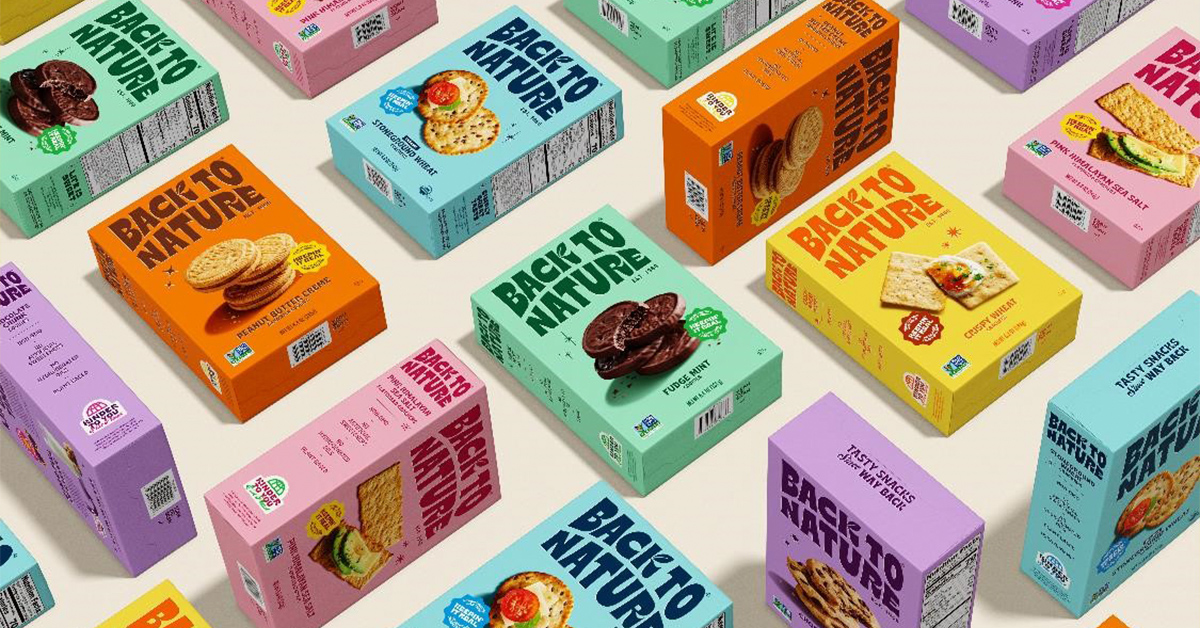
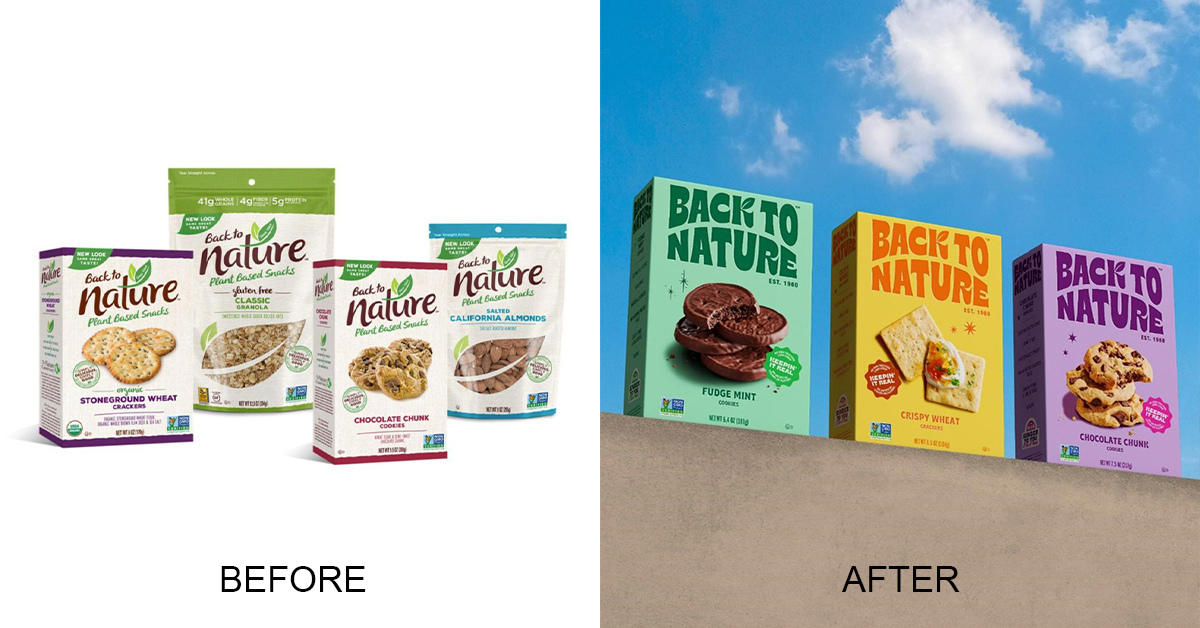
The new look is an integral component to its new sales growth strategy. Jorgensen noted that for some consumers, the previous look wasn’t “even neutral – it actually made people want to buy less.” She said the product experience and brand history was not coming through on shelf – two key focal points for its refresh.
“[What] we lacked as a brand before was distinctiveness,” Jorgensen said. “We did not have an ownable look and feel…especially on social [media], it’s hard to be powerful there, if visually, you’re not able to capture a consumer.”
It has slowly rolled out the new look across its social media channels as products reentered physical retail. As it looks to the year ahead, the primary focus will remain on reestablishing the brand within its customer base while also appealing to new audiences with its nostalgic look and feel.
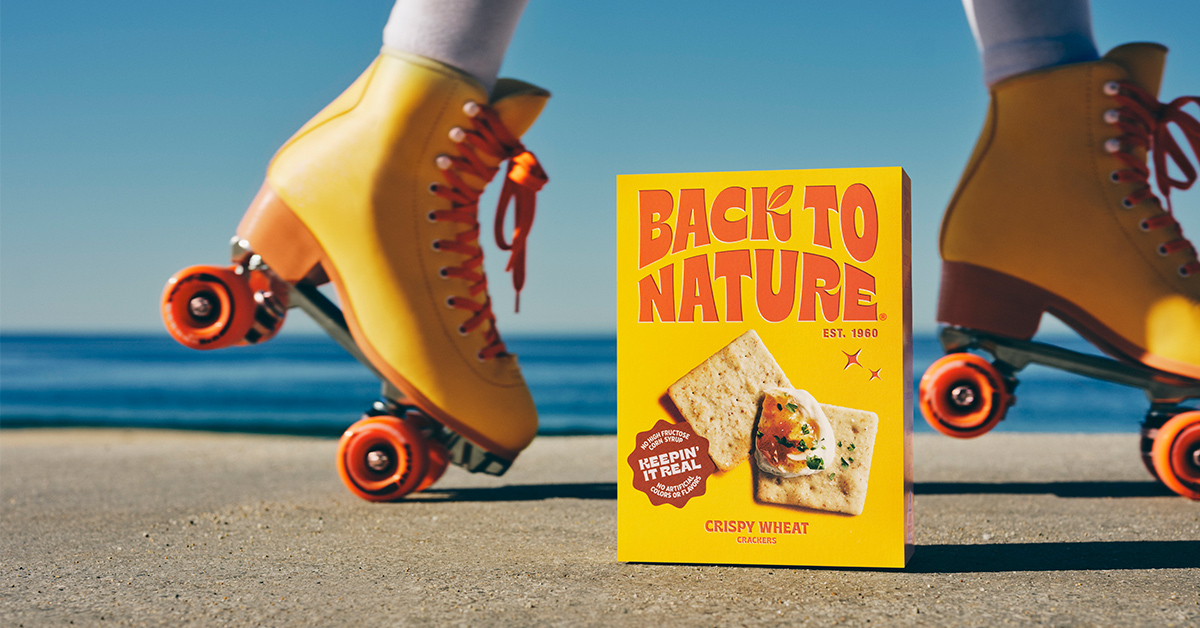
“We wanted to tap into that nostalgia, both the real story of it and the aura of this sunnier, free, happy time when snacking could just be joyful and you didn’t have to get mushrooms in your cookie or kale in your crackers to make you feel good about eating it.”