From Ocean Floors To Store Shelves: Seafood Accelerator Champions West Coast Groundfish Revival

While seafood lovers are increasingly searching for sustainable options, the nuances of bringing wild-caught West Coast groundfish to retail consumers is no small task.
This is why non-profit trade group Positively Groundfish has launched the Catch + Create accelerator program to bring more West Coast, wild-caught species into retail-ready formats.
Funded by the National Oceanic and Atmospheric Administration’s Saltonstall-Kennedy Grant, Catch + Create will offer five early-stage startups a six-month curriculum coaching founders in product development, mentorship in strategizing a retail launch, a marketing package and $20,000 to fund product development. Applications for the first cohort closed last week, with the accelerator running from November through May 2026.
A little history on West Coast groundfish to start:
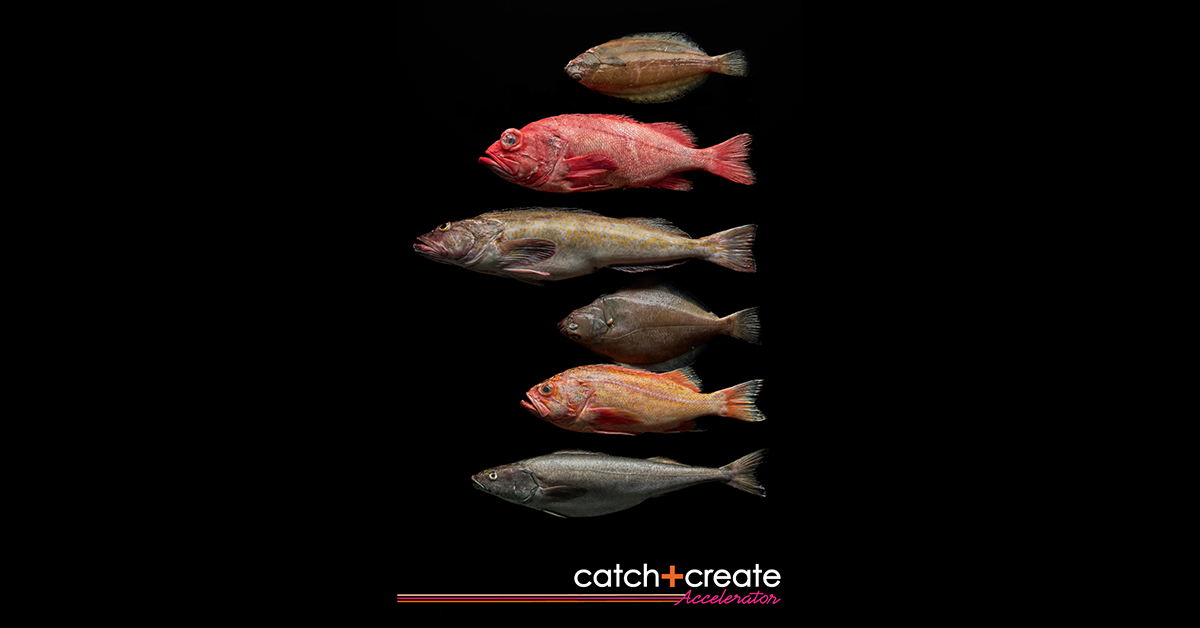
Groundfish is an umbrella term for multiple species of fish that primarily live near the ocean floor. The West Coast grouping, which includes many species of rockfish, sole, sablefish (also known as black cod), lingcod, Pacific cod, perch, flounder, skate, and Pacific sanddabs, among others, was commercially overfished throughout the 1990s.
As a result, the West Coast groundfish industry was essentially shut down during the 2000s to allow populations to rebuild. Now that populations have returned to sustainable levels, commercial fishing has restarted.
Positively Groundfish was founded to support local fishermen and women, as well as the associations, seafood processors, nonprofits and academics who worked on rebuilding the fishery.
“West Coast groundfish is one of the best ecological comeback stories, but it’s not an economic success,” said Positively Groundfish executive director Jana Hennig. “In the time that it took to rebuild this fishery, these species basically were not sold for 10 to 15 years, and markets disappeared.”
Over the ensuing years, West Coast groundfish were replaced by other species, some imported from abroad, at retail fish counters and seafood purveyors. Consumers became unfamiliar with the recently restored fishery’s options, choosing less sustainable and imported fish varieties.
Catch + Create startup accelerator is attempting to jumpstart the market for West Coast groundfish. The program is focused on giving California, Oregon and Washington state seafood stakeholders the tools to bring innovative, value-added formats like jerky, dips and tinned options to consumers.
“We need new blood. It’s an aging industry, so I want to see new people come into it,” Hennig said. “Right now, you can only buy groundfish as a fresh fillet at the seafood counter. I want to see groundfish represented in multiple parts of the store where it’s currently not.”
Working at Cadbury, Kraft Foods and Mondelēz earlier in her career, Hennig brings her own experience to budding seafood entrepreneurs and founders unfamiliar with the nuances of working in CPG. Hennig has designed the Catch + Create curriculum with a deep roster of speakers and experts to teach and consult with the accelerator’s first cohort.
The speaker series will be made up of food scientists, regulatory academics, sustainable packaging design specialists, branding experts, and marketing executives from “a large consumer goods company” who can all help with product development, brand building and storytelling.
Hennig sees the utility of Catch + Create in supporting early-stage seafood entrepreneurs beyond product development, offering support in navigating the regulations, marketing and the complicated task of a retail launch.
“Most accelerators get you to the point where you’ve pitched, and then that’s the end. There might be a pitched prize, but then bye-bye,” she said. “For us, that’s the middle. That’s the midpoint because we realize that the really tough part comes when you actually need to land it in retail.”
The accelerator will bring participating brands to trade shows where they can meet grocery buyers and talk to food influencers and journalists who introduce consumers to innovative products in service of a “greater environmental mission,” Hennig said.
“Part of the reason to launch an accelerator is to incentivize people to actually consider using these species,” she said. “Maybe someone wanted to make something with chicken, and they could figure out a way to do it with lingcod. Or maybe, they were making a salmon product and [the accelerator] could offer a way of using rockfish for that idea instead.”