Former FDA Commissioner Questions Agency’s ‘Ability To Function’

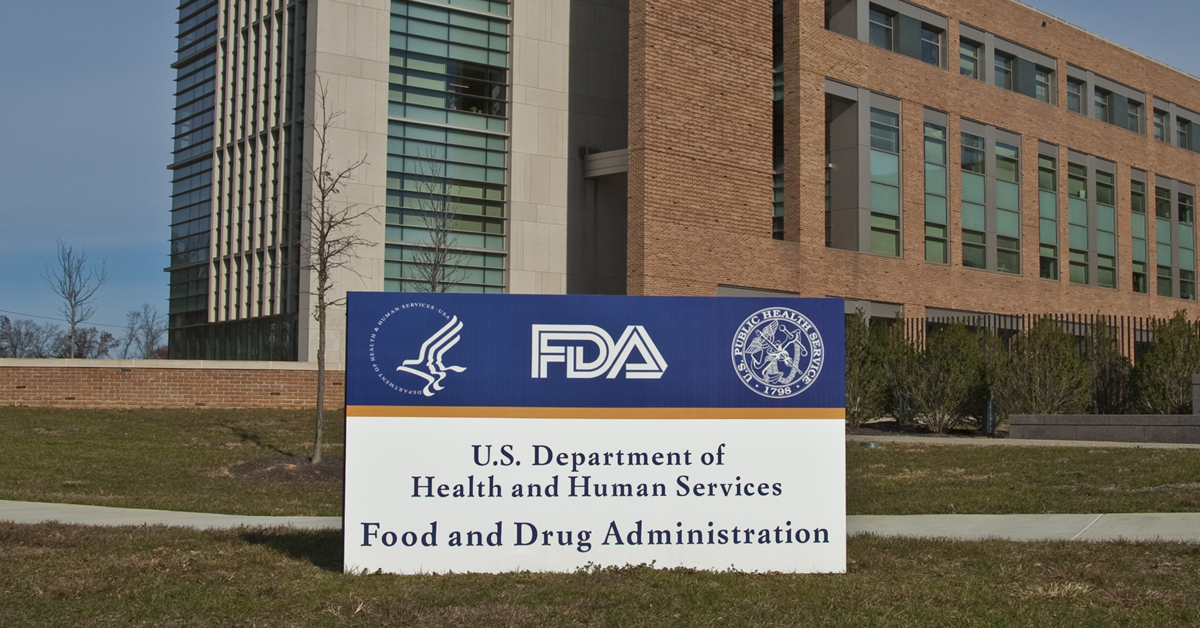
On Monday, a cohort of attorneys general from 19 states and Washington D.C., filed a lawsuit in a Rhode Island federal court over staffing cuts across the Department of Health and Human Services (HHS), claiming those reductions have destroyed “critical health programs.”
Later in the day, Michael Rogers, the U.S. Food and Drug Administration’s (FDA) associate commissioner overseeing inspection and investigations abruptly retired after nearly three decades at the agency, citing frustrations with the impact of staff cuts and increased demands from newly appointed FDA Commissioner Dr. Marty Makary.
But Rogers and the AGs aren’t the only individuals calling out the risk arising from the administration’s workforce reductions. Jim Jones, the FDA’s first deputy commissioner solely focused on the Human Foods Program (HFP), took an “early retirement” in February and pointed a finger directly at the indiscriminate approach to firings in his resignation letter.
“The idea that I would spend 10 hours a day dismantling something I just built, to me, was just not why I joined the FDA,” Jones said, during the Institute for Food Technologists (IFT) Food Policy Impact 2025 meeting last week in Washington, D.C. “And I think that what I expected was going to happen, has happened.”
During the administration’s first month in office, it eliminated probationary employees, who, Jones highlighted, “have the most recent education” and were likely hired to high-priority areas within the agency. These individuals were least likely to have “bought into old ways,” he added. Now, after eclipsing the 100 day mark, HHS has fired nearly one-quarter of its staff, about 20,000 employees.
Those cuts come on the heels of a massive reorganization at the chronically under-resourced FDA, an action spurred by the agency’s response and management of the deadly infant formula crisis in 2022. Over the past two years, the FDA retooled its approach to monitoring the human food supply, culminating in a newly-structured agency intended to better address high-risk areas.
The reorganized FDA and its newly established Human Foods Program (HFP) currently operates under the three overarching “pillars” of microbiology, nutrition and chemicals, explained Mark Hartman, Director of Office of Food Chemical Safety, Dietary Supplements and Innovation at the FDA, during the IFT meeting the day before Jones’ chat.
Laboratory operations as well as compliance and enforcement activities were brought under the HFP umbrella following the realignment efforts, which were made at the recommendation of the Reagan-Udall Foundation. The intention was to realign all agency functions dealing with food issues in a more efficient way, according to Hartman; the new structure also put a “new emphasis” on the Office of Post Market Reviews’ role in agency activities.
The reorganization and implementation formally began with Jones’ appointment, and was completed by the Fall 2024. Hartman joined the FDA, hailing from the Environmental Protection Agency where he had spent over 25 years overseeing chemical reviews, in December 2024. Hartman said he is “happy to be owning the implementation,” of this new structure.
But Jones believes that implementation is now adrift. The FDA has long been under-equipped to handle many of its core functions, including overseeing food safety and monitoring risks in the food supply. The widespread staff cuts have restricted the agency’s ability to execute core oversight and testing activities, Jones emphasized.
“When you get rid of the people who do human resources, contracts and budgets, it doesn’t mean that you don’t have to do those things,” he said. “What we’re going to see is that people with PhDs in nutrition, microbiology and toxicology – people who are focused on the core activities – have to divert their time to do administrative activities.”
HHS Secretary and MAHA leader Robert F. Kennedy Jr., has campaigned for his movement around the concept of “radical transparency,” but Jones highlighted the irony of those claims in relation to HHS’ elimination of administrative and communications staff. Jones emphasized that throughout his tenure at the FDA “there wasn’t a day” where he didn’t need to utilize the communications team.
“Let me start with the concept of ‘radical transparency,’ and getting rid of the communications staff,” Jones said. “For the human foods program at FDA, [this function] is very important. If something is going wrong, it’s really important the public be told so that they can protect themselves.”
Jones said that the cuts, over time, will “degrade [the agency’s] ability to function,” citing an instance from right before his departure, after DOGE orders were imposed on both staffing and budgets, where “highly trained lab technicians” were having to spend time writing up justifications “for why they needed to spend $150 to buy reagents to run a sample.”
“You have your most skilled health people working on things that a lower-graded person with less education [could be doing],” he said. “That will take time before this begins to play itself out… you won’t see that overnight, but it will over time.”
The administration has claimed that no scientists have been involved in the workforce reductions, but Reuters confirmed in mid-April that the FDA had suspended food safety quality checks, which involve scientists and researchers, due to the firings. Those activities will be paused until at least September 30, per the Reuters report, and efforts to improve bird flu testing in milk, cheese and pet food were also suspended as a result of the cuts.
According to Jones, the lack of food safety oversight presents the biggest risk to both the agency and public health. Food safety monitoring represents nearly 80% of the HFP’s resources, he said, adding that he believes that is why the administration took aim at this critical department.
“It requires a lot of infrastructure, and I think that infrastructure is being degraded,” Jones said. “That’s where the reductions are largely going because that’s where the resource is. It’s very nearly impossible to predict when it will happen. But if you degrade that ability to detect and respond, you will find yourself in a situation where an outbreak goes on longer than otherwise would have needed to. It is not trivial.”