BeanStalk Targets Foodservice After U.S. Retail Gains

China-based MetaMeat International is working to build a new plant-based brand platform in the U.S., leaning into its manufacturing power as well as its international restaurant and retail experience to create a roadmap for a soy-based, broad-reaching product line under the name BeanStalk.
Jen Gabel, president of President Encompasssales LLC, has been leading those efforts in the U.S. for the past two years, in coordination with business partner Heather Henning, BeanStalk’s New York-based CEO Michael Chen and the brand’s in-house chef Christian Fisher. The brand is already sold internationally as well with a presence in Spain, Portugal and the U.K.
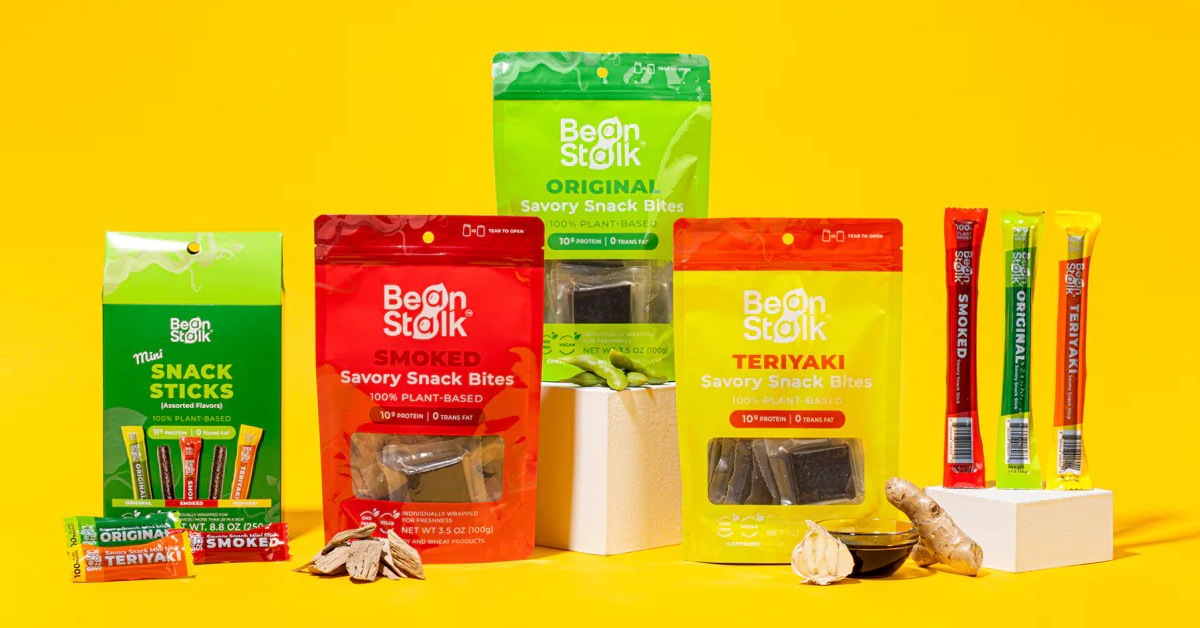
The brand first debuted stateside with a lineup of vegan meat sticks in Smoked, Original and Teriyaki flavors in 2023, later expanding to a mini bite format (which has since been discontinued due to low demand) and savory alt-meat protein bars in Jalapeno, Char Sui BBQ and Thai Curry flavors. But the brand’s latest product rollouts will bring them closer to their strategic aim at the foodservice space.
In the past six months, Gabel has helped launch a 8-SKU lineup of frozen products spanning from vegan pastrami and fish fingers to seafood rings, burgers, meatballs as well as pulled alt-meat shreds and crumbles. The latest launch, a vegan bolognese tested at Connecticut Italian restaurant Portofino, is set to be its most successful product yet, Gabel believes.
“We took our vegan soy protein and we put it into a bolognese sauce [at] a restaurant here in Connecticut – all of the Italians love it,” Gabel said. “[I thought] if I can make a sauce that the Italians will eat that’s vegan – I’m going to taste test [it] and we’re going to figure this out. They don’t know the difference, none, not a single one.”
The brand is sold in about 600 stores across the country including Bristol Farms, Lassens and Market of Choice, but Gabel said the Midwest, where its brand presence is largely concentrated among independent retailers, has emerged as its highest performing region so far. Gabel, who has worked in CPG marketing and distribution for nearly three decades, emphasized the importance of brands to grow with a regional focus.
BeanStalk’s products fall in line with category pricing norms with its snacks ranging from an SRP of $6.99 to $14.99 and its frozen items retailing for between $5.99 to $8.99. The brand’s new sauce comes in on the more premium end of the pricing spectrum at $15.99 with Gabel emphasizing the sauce itself is a “complete meal.”
That sauce product, alongside its frozen offerings, will be a cornerstone to the company’s foodservice strategy. In the past two months, BeanStalk has onboarded with foodservice distributors including Aramark, Compass Group and US Foods as it works to build up on-premise momentum on college and university campuses.
The plan is for that presence to then parlay the brand into the restaurant space, Gabel said, where the company has visions to begin operating quick-serve plant-based restaurants as it already does in mainland China.
“The core focus on the retail side is really to delve into multiple channels [since] we have manufacturing, which makes it really easy for us [to grow],” Gabel said. “But also on the foodservice side of the world – making sure that we’re in the restaurants and all foodservice campuses and then going into restaurants [and] having our own vegan restaurants.”
While upstart plant-based protein brands have struggled to make margins work as they scale up product assortments and sales, BeanStalk’s lofty aims may be cushioned by the manufacturing power of its parent company, offering it greater flexibility and an established supply chain compared to that of most emerging brands in the category.
Manufacturing power has been the driving force behind the creation of plant-based holding company Ahimsa, which has scooped up brands including Wicked Kitchen, Good Catch, Simulate and Blackbird Foods over the past year. Ahimsa’s overarching goal has been to create a plant-based protein platform that is able to unlock synergies for its roster of brands as they scale, and the company recently invested $12 million into improvements at a manufacturing facility it acquired from Gathered Foods in 2024.
Explore the Nombase CPG Database
Head to Nombase to learn more about the tagged companies and their offerings.