How Sunnie Navigated Co-Man, Quality Challenges

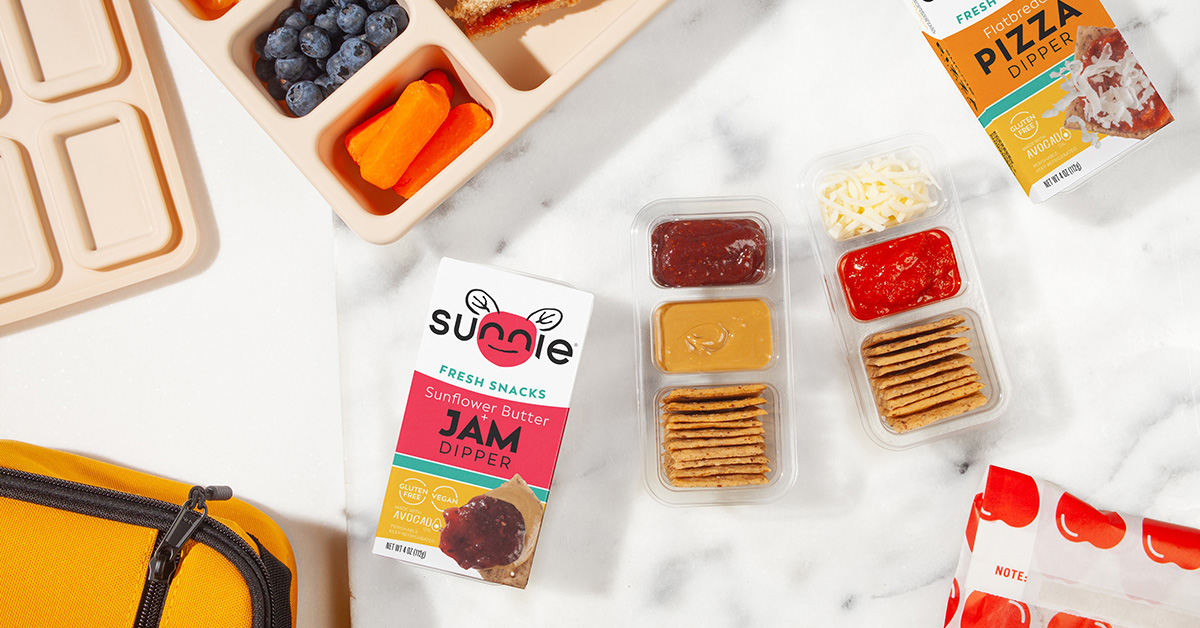
Amid a significant period of growth, snack pack and cracker brand Sunnie is working to recover from a setback caused by supply chain shifts that resulted in lower product standards, a return to its former production model and a plethora of learnings on how to scale the business for co-founders Katy Tucker and Lisette Howard.
Founded in 2020, the company began by self-manufacturing snack packs in a shared, commercial kitchen space before steadily scaling up to work with a network of co-manufacturers across the country over the past two years. While its crackers were made in the Midwest, the various other inputs, including jams, hummus, sauces and other dips, were made by an expansive network, and then shipped to California for assembly.
“We wanted to test how it would be if we just had it all central, so we moved it all to the Midwest right before we had a lot of growth” said Howard. “Not only did we move our manufacturing, we exploded in growth this summer with Sprouts and Costco…our business 5X’d in a three-month period.”
Piloting New Production Plans
But, while the centralized production helped reduce the company’s shipping and logistics costs, the co-founders said the shift led to a lower quality product that did not meet their standards. That experience ultimately pushed the emerging brand to retool its scale-up strategy with quality at the forefront and brought a shift back to a more complex co-manufacturing network.
“We have taken this time to really reevaluate who can manufacture for us now [and] who could possibly manufacture for us later at the scale that we would need,” said Howard, in response to a question about the potential for the company to self-manufacture again in the future. “I only say never say never, because who knows? We did it once, but there was a reason that we stopped doing it.”
Four-year-old Sunnie makes a variety of snacks, each requiring unique inputs also made by the brand in-house. According to Tucker, producing those inputs rather than outsourcing them is extremely important to the brand’s commitment to nutrition and clean ingredients.
“It’s all very intentional,” said Tucker. “The way our product is manufactured and distributed definitely makes it very complicated for us to make it, but it’s also our moat.”
Another piece of that moat is the company’s production equipment. Tucker and Howard emphasized they are extremely grateful they decided to invest in their own equipment before the shift, allowing them to more easily flex back to the old network by simply moving the expensive machinery without the significant losses they would have incurred if they had invested into the co-man’s lines.
After navigating through the production reversion, Tucker and Howard still felt there was one missing piece to fully solving the problem: addressing the issue with consumers.
“We wanted to address the elephant in the room. We knew it, we felt it and we had customers who were reaching out,” said Howard. The duo posted a series of pictures on Instagram where they explained the issue and offered to make it right for customers that had been impacted.
“We were having a meeting at my house, and we’re like, let’s just take a picture of us in real life, in our sweatshirts, and let’s just post about it,” added Tucker. “It’s on our minds and hearts and we felt the need that either consumers saw it and maybe would stop purchasing it, or maybe we were able to win them back because we were being honest about it.”
That act of transparency paid off with both co-founders noting that the brand has received a flood of positive comments and assurances from its customers that they’ll stick by the brand as it sorts things out. Now, with this latest challenge behind it, Sunnie is mapping out future expansion plans to reach more of its loyal base.
Growing Up Sunnie
In terms of regions, Sunnie is eyeing opportunities on the East Coast like Wegmans and Giant in addition to the Midwest where it has identified significant “pockets” of consumers. It is also prioritizing a continued expansion in the natural and specialty channels with Sprouts and Whole Foods. Sunnie is currently available in about 800 retail doors nationwide.
Howard said that while currently the brand has about two to three SKUs on shelf at key accounts, in the coming years it hopes to build out a bigger block with four to five varieties. All of that growth will also see Sunnie grow its pack size with Howard and Tucker sharing that it is eyeing a new “larger format” to extend the snacks line.
The duo is also keeping a close eye on top performing channels, including alternative segments such as meal and grocery delivery platforms like Hungryroot and Sunbasket where they said it performs “really well.” As retailers across the country work to meet consumer demand for fresh food and extend their sets, Sunnie is well positioned to capitalize on that expanding perimeter-store shelf space, having secured placement in a variety of segments spanning deli, dairy, bars and grab-and-go.
“We’re innovating in a space that hasn’t changed in 30 years, and nobody’s really addressing that gap that we fill,” said Howard. “Even all the news right now about Lunchables declining 12% in the past year because of all the issues and all the bad press that they’ve gotten further puts a spotlight on the fact that the fresh segment has not really changed, and the modern consumer wants better, and that’s really where we’re looking to come in as the brand [is] primed and ready to take up that shelf space.”