Changing Habits Chop Into Thanksgiving Spending

Consumers may still have complaints about grocery prices, but they aren’t shying away from the shelves ahead of one of America’s largest food holidays, which is expected to drive a $2.1 billion boost in grocery sales this year, according to financial services company CoBank. But that doesn’t mean some may still fare better than others…
Winners: Semi- or fully-prepared foods have won a greater share of the (pumpkin) pie this Thanksgiving as consumers increasingly view these items as more budget-friendly than even scratch-made meals, FMI reports, while citing NIQ data that showed a 1.4% increase in the sector in 2024.
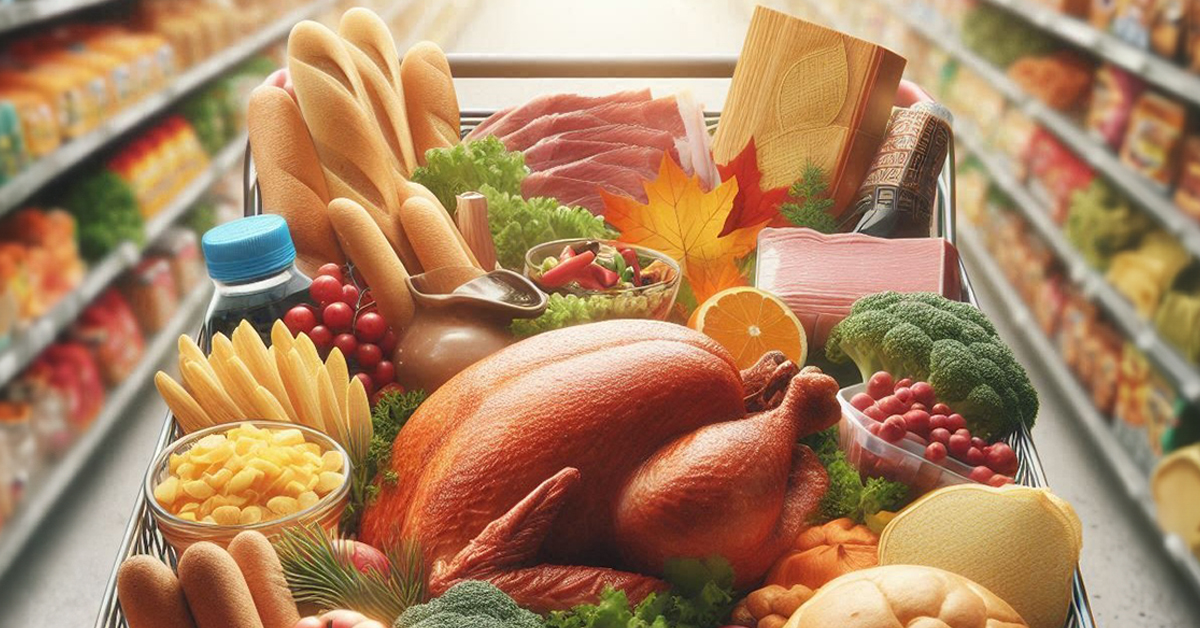
Certain brands see a large spike in household penetration in the two weeks leading up to Thanksgiving, Numerator claims. Stove Top (4.7x), Cool Whip (4.1x), French’s (3.4x), Jiffy (3.4x), Butterball (2.9x), Reddi-Wip (2.9x), Carnation (2.8x), Ocean Spray (2.7x), King’s Hawaiian (2.5x) and Martha White (2.5x) have long been amongst the cornucopia of consumer carts.
Losers: However, the holiday’s shining star – turkey – is seeing a decline in consumption and wholesale pricing (down 50% year-over-year to an average of $0.87 per lb) despite this being the one day a year most Americans would ever consider cooking a whole bird. While changing consumption habits play a role, CoBank noted the turkey industry is also grappling with the lowest reported inventories in four decades due to high operating costs, labor shortages, regulatory challenges and the impact of outbreaks of two highly contagious avian diseases.
Changing Habits: FMI found that 85% of shoppers feel they have some control over grocery expenses and are ready to tackle the holiday season. Whether that optimism stems from a growing preference for private label products, the impact of promotional waves from large conglomerates this quarter or an uptick in scratch cooking and partially-prepared convenience foods – it is likely each consumer has their own recipe to make it work.
Fifty-nine percent of shoppers want to buy a combination of prepared foods for discounted prices and are hopping between retailers in order to do so, according to FMI. While a Market Force survey found that grocery leader Walmart is consumers’ lowest pick when it comes to satisfaction or trust, the convenience of expansive offerings and low prices allows it to remain the apple of a cost-constrained consumer’s eye. The mass chain is doubling down, offering a full Thanksgiving meal that feeds eight people at $7 per head.
Promos remain important, particularly as we look ahead to additional feasting occasions this holiday season. Numerator found that 28% of consumers say they plan to spend more on Thanksgiving food this year so discounting will be especially important to draw shoppers to the shelves and keep them coming back for seconds.