A Bite With… Mez Foods Co-Founder Ben Schultz

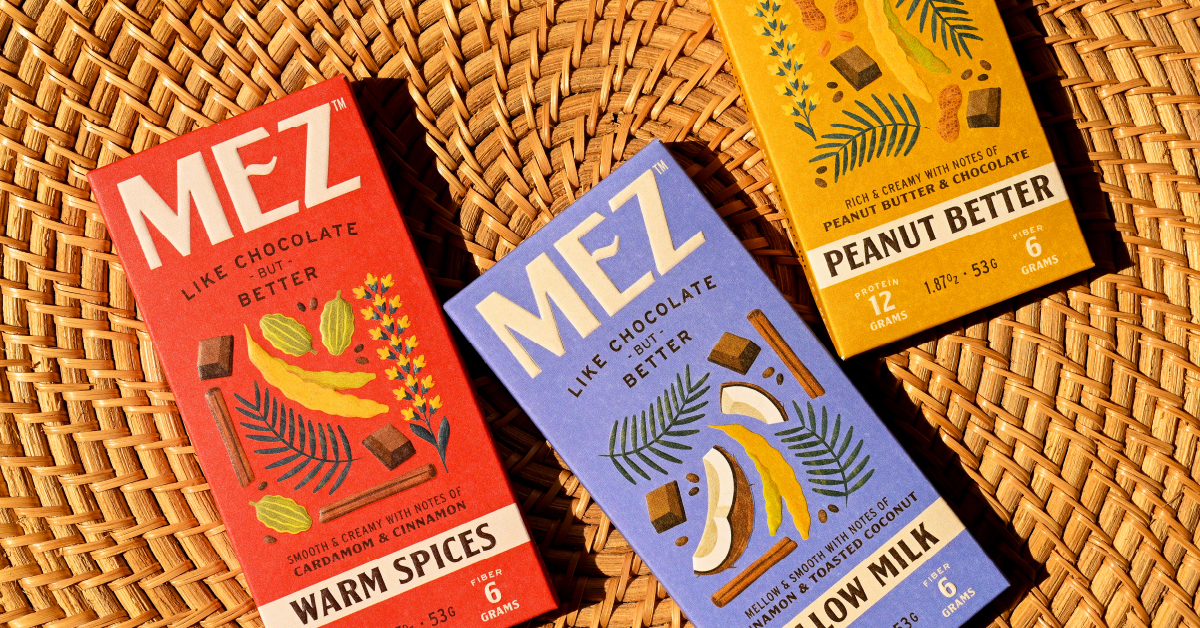
Mesquite may be best known for barbecue, but the plant also produces nutritious pods that can stand in for cocoa beans in chocolate recipes. Enter Mez Foods, a Chicago-based startup that is championing the ingredient in a line of premium tablet bars that are made with mesquite bean flour, plus illipe butter, chufa flour, pea and rice protein fermented by shiitake mycelium, sugar, carob powder and oat fiber.
The brand was launched last year by brothers Ben and Bob Schultz, respectively a hardware designer and a food scientist, who recognized an opportunity for Americans to embrace a native, regenerative crop packed with protein, polyphenols and minerals. As a bonus, mesquite does not contain caffeine or theobromine, the compound in chocolate that is toxic to dogs.
As soaring cocoa prices threaten the global chocolate supply, investors are backing high-tech alternatives including lab-grown options. Could mesquite – a staple of Indigenous diets for centuries – become a viable solution for the cocoa crisis?
While the ingredient offers potential, Ben Schultz anticipates challenges in gaining consumer acceptance and establishing a supply chain. In an interview with Nosh, he discussed the benefits of mesquite and how to market an unconventional concept to mainstream shoppers.
Responses have been edited for length and clarity.
Why mesquite?
It has a lot of the same micronutrients as cocoa, a lot of the same polyphenols, non-polyphenol antioxidants, as well as iron and some other minerals, which makes it really in many ways, one-to-one comparable with a lot of the benefits that you’re going to get from cacao in its raw form.
We’re continuing to realize that this plant pushes beyond sustainability into regenerative in a lot of ways. Because it’s a desert-native and arid-climate tree, it naturally needs very little water to grow and fruit each year. It’s also self-fertilizing. It’s in the legume family, so it fixes nitrogen into the soil. It actually regenerates and improves soil quality where it is planted.
What have you learned since launching the product?.
Nobody’s asking for cocoa-free chocolate right now. Maybe a few people are starting to because of the cocoa prices, but we knew when we went into it, we had to figure out why would somebody choose to try a cocoa-free chocolate beyond just that there’s no cocoa in it – that’s not going to be enough to get people super excited in the long term.
We’ve seen a couple of other companies that are doing cocoa-free chocolates as well. They’re heavily basing it on just the fact that “cocoa is evil, and you’re evil for liking chocolate.” And, surprisingly or not, it doesn’t really work that well.
Our goal is really much less talking about why you shouldn’t eat cocoa and much more about why you should eat mesquite. And so you’ll even see in our marketing, we never say anything explicitly bad about cocoa or the supply chain.
What is your go-to-market strategy?
Our retail entry strategy is actually running through foodservice first. We’re really inspired by Oatly. Oatly became everybody’s oat milk because they realized that it was the only non-dairy milk that actually tastes good with coffee. And so they went to coffee shops and made sure that Oatly bottle was prominently present every time somebody tried a different milk. And that was a huge avenue for them.
For us, what we really want to do through the foodservice offering is give people an opportunity to encounter the product and try it without necessarily having to make a purchase intent around our brand.
The other thing that’s happening, and why we’re really focused on this direction right now, is that the cocoa price spikes that have been happening this year have not hit consumer chocolate yet, but they have hit foodservice chocolate. And we’re talking to some folks in very small businesses in the Chicagoland area that are like, “We just got told that … our chocolate prices doubled, and that we should expect further price increases through the end of this year.”
And as you probably know, restaurants are not high-margin businesses. Big changes in cost, even for an ingredient you don’t use a ton of, can make a huge difference in what you’re able to bring home at the end of the day.
What are the biggest challenges you expect in scaling the brand?
Mesquite’s never been agriculturally produced at a scale anywhere near what cocoa has been produced. Even today, the mesquite that we purchase is largely handpicked, and something that draws the line in between foraging and agriculture, I would say.
There’s a lot of things to figure out. How do we transform mesquite into a true agricultural product? How do we plant it? What do the orchards look like? All of that stuff. Mechanical harvesting has not quite been created for mesquite yet, and there’s elements of the tree that make existing mechanical harvesting methods potentially not useful for it, which is an opportunity for us as a company.