‘Not Diet Burgers’: Blended Meat Evolves As A Middle Path

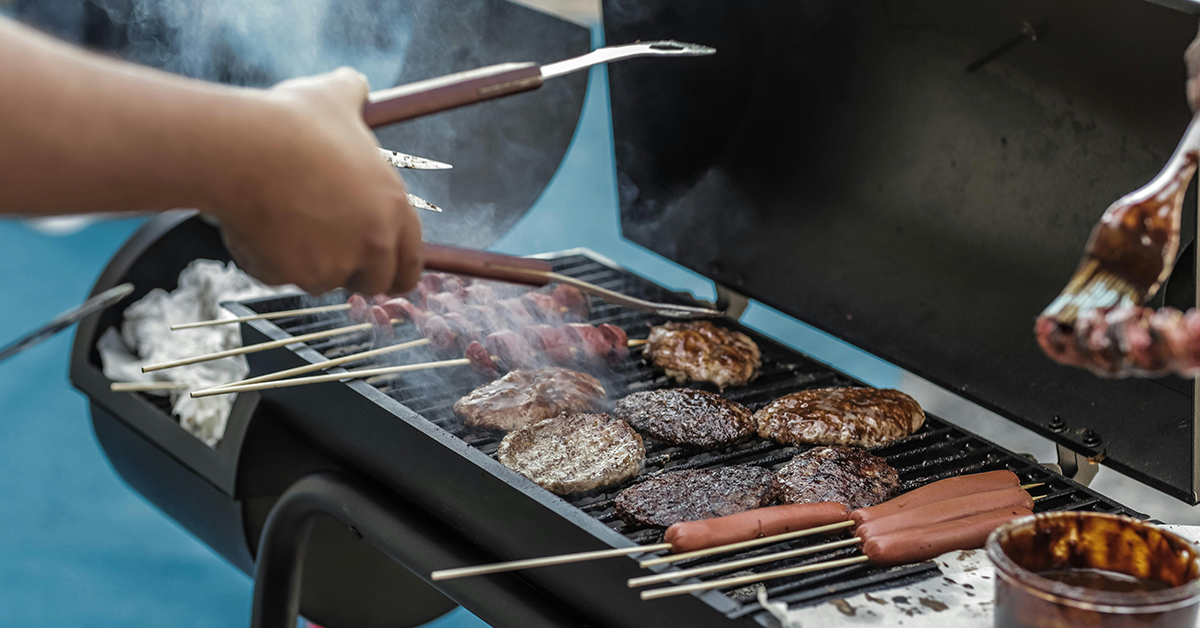
Blended meat was once touted as the midpoint between plant-based and conventional animal protein products, yet the category has struggled to find momentum in retail.
Balanced protein – as some stakeholders are now calling the set – is establishing a foothold in foodservice and sharpening its message away from environmental sustainability while doubling down on health benefit claims.
Only a few years ago enthusiasm surrounded meat products that incorporated vegetables and plant-based protein into familiar applications like burgers, meatballs and sausages. From Tyson’s first iteration of its Raised and Rooted line to Hormel Foods brand Applegate Farms’ Well-Carved, large meatpackers were jumping onboard the hybrid meat trend.
Along with the big meat makers, Teton Waters Ranch – which specializes in grassfed beef – was innovating into the category along with emerging brands and well-capitalized food technology startups like SCiFi Foods.
Of the examples above, all have either pivoted out of the set or closed down completely, but that’s not to say that the category has imploded.
Solving For Past Missteps
“The opportunity still exists, the need is still out there,” said Tim Dale, category innovation director at sustainable food non-profit Food System Innovations (FSI). “Other [meat] alternatives haven’t yet cracked the code on appealing to a broad audience.”
Dale, who worked for plant-based meat companies Prime Roots and Impossible Foods before leading research into blended meat at FSI, believes that the category can still bridge the gap between meat-reducing consumers (or flexitarians) and carnivores.
The plant-based meat category hasn’t quite found the right mix of price point, flavor profile and sales velocity metrics, Dale said, and “balanced proteins can address all of these.”
Brice Klein, who co-founded blended meat brand Choppy! (formerly Paul’s Kitchen), has a more blunt assessment about why the category’s growth has stalled.
“The alternative meat category has shit the bed,” he said. “Hundreds of millions of dollars were poured into vegan chicken companies from venture capital firms because consumers allegedly want to save the planet through food, but there’s actually no data that substantiates that they do that with their dollars.”
What has happened since is the venture capital market has contracted and investment has dried up in adjacent alt-meat companies, he said.
“VCs don’t want to go back to their LPs (limited partners) and say, ‘Hey, I know we already lost $5 million to $20 million on these other vegan companies, but this one’s gonna be different; trust me.’”
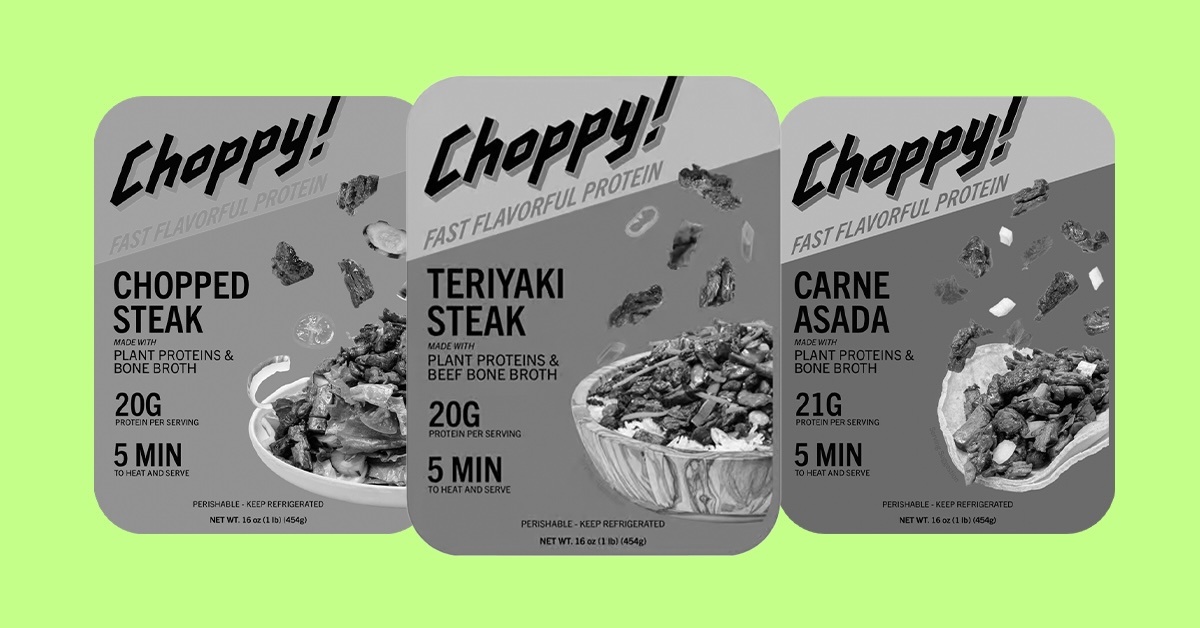
Choppy! was one of those companies that failed to find new funding and had to shutter at the beginning of the year. The brand made plant-based protein products mixed with bone broth and beef tallow that targeted meat-eating consumers in U.S. heartland regions like Nebraska, where plant-based was a harder sell.
“It’s not so much that the consumers aren’t asking for this or not wanting it,” he said. “It’s that it’s really hard to tell that story to a broad enough set of the consumer base to prove it out to the investment class.”
Sneaking Veggies Into Foodservice
The investment landscape might be lean, but there is one significant channel that is proving to be fertile ground for blended meat to prove itself: foodservice.
Dale is “bullish” on that segment because it drives more trial among potential consumers who might hesitate to buy a new product category in retail.
Launched at the end of 2020, 50/50 Foods landed a big foodservice partner last year when it brought its half-beef, half-veggie BOTH Burger to Disneyland eateries.
In retail, its marketing approach is grounded in not trying to be another alt-meat company.
“We’re not Beyond [Meat] or Impossible [Foods],” said co-founder and chief brand officer Stephen Theiss. “We are a healthier-for-you meat product.”
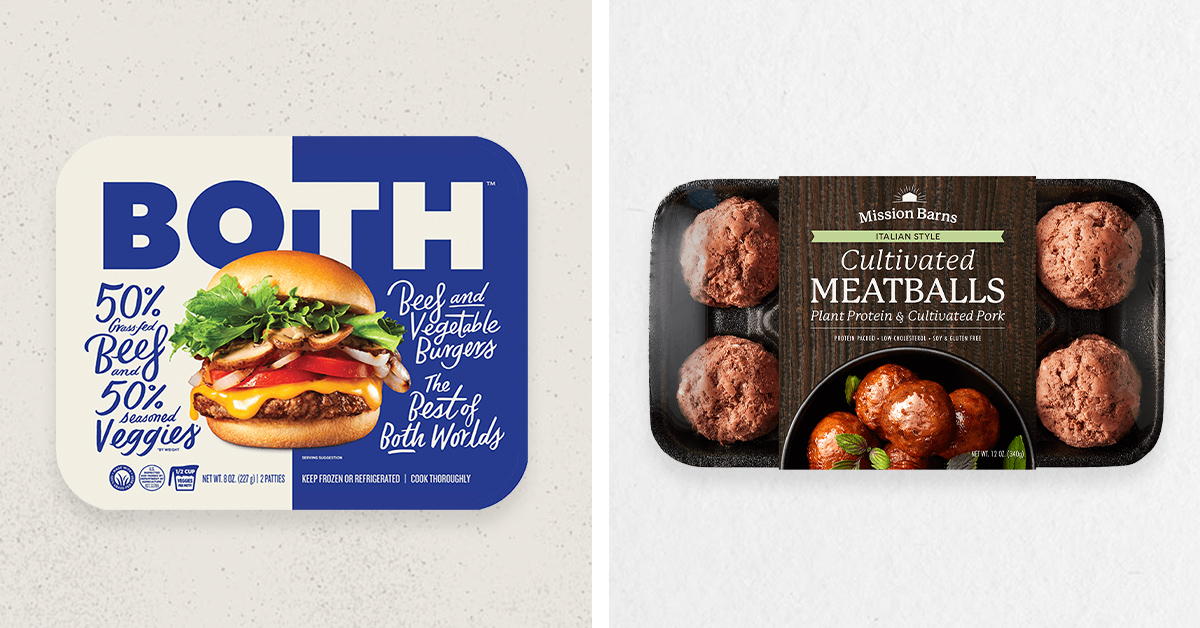
Part of that positioning has come from the fact that it is hard to tell the story of what blended meat is. BOTH has rallied around it being a “by-weight” burger with 50% vegetables and 50% grass-fed beef. Consumers struggle to understand the value proposition from the “blended” category name, and retailers often merchandise it with other plant-based alternatives rather than slotting it next to meat, where it offers optionality to flexitarian consumers, Theiss said.
This might be why Food Solution Innovations has been at the forefront of renaming the category “balanced protein.”
Using a foodservice route to market, Mush Foods launched its “restaurant-ready” mushroom and mushroom root blend product 50CUT last January. It followed that up in April with a partnership with New York meat purveyor Pat LaFrieda on a 50CUT blended burger that is offered to the meatpacker’s network of over 1,600 accounts.
“Nobody wants a diet burger,” said Parendi Birdie, co-founder and CEO of pre-launch blended meat company Asentia.
What has been missing from the category is an understanding of the subtle psychological reasons consumers are drawn to eat meat in general, Birdie said.
“We’re motivated by cognition and this deeper unconscious desire for satisfaction,” she said. “Previous blended companies did not do a good job emphasizing the sensory experience. It ended up feeling a bit more like a compromise as opposed to an elevated product.”
A New Frontier For Blended
Food technology companies are using fermentation and cellular agriculture to offer a fresh angle for growing the blended meat set.
The Better Meat Co. has been scaling its fermentation-produced Rhiza mycoprotein product by partnering with big meat purveyors like Hormel Foods and Maple Leaf Farms.
Recently, cell-cultured pork maker Mission Barns became the third company to receive FDA approval to sell a cell-cultured product in retail and foodservice. Mission Barns plans to launch retail products like sausages, meatballs, sliced pepperoni and bacon using its cell-cultured pork fat blended with plant proteins. The food tech company is also working with San Francisco-based Italian restaurant group Fiorella to showcase the products in blended applications.
Success for the blended meat set depends on moving away from what the plant-based category established early on and serving as the middleground between meat-free and conventional animal protein, Dale said.
“How do you tell a story that this is a meat product for meat eaters, but has been improved with plant-based ingredients as opposed to becoming less than [its meat-only counterparts]?” he said.