2025 Trend Forecast: Is CPG Entering the Ozempic Era?

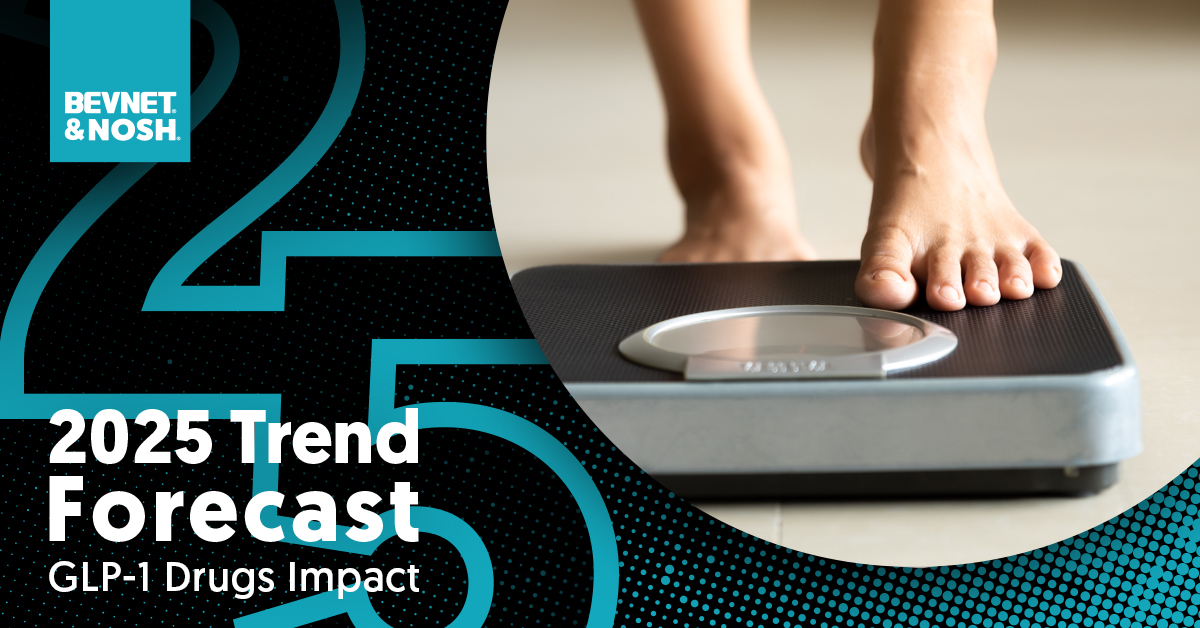
At the start of what is sure to be another eventful year in CPG, BevNET & Nosh reached out to individuals from across the industry to hear their thoughts on what’s making them optimistic about the future, what’s keeping them up at night, their general impressions for the new year and how they plan on tackling (or avoiding) some of the biggest questions on their plate at the start of 2025. In some cases, responses have been edited for clarity and space.
See other articles from our 2025 Trend Forecast series:
- Is Retail Consolidation Reeling?
- Will Trump’s Promised Tariffs Tamp Down Growth?
- Is Grocery Inflation Here to Stay?
The packaged food and beverage industry continues to contemplate shifts in consumer eating patterns driven by expanded usage of appetite-suppressing GLP-1 medications like Ozempic and Wegovy.
Several frozen meal makers – notably Nestle and Conagra Brands – are already capitalizing on the trend with new product launches and marketing efforts. Meanwhile, some brands are benefiting from complementary positioning; products that deliver high protein, fiber, hydration and gut health benefits are poised to capture demand among weight loss drug users as well as ordinary wellness seekers riding this latest wave of America’s anti-obesity obsession.
Many of the experts we surveyed view the rise in GLP-1 drugs as an opportunity for innovation rather than an existential threat to the industry, as previously perceived. Yet with long-term impacts still to be seen, there is still an element of risk involved.
The GLP-1 drug market is anticipated to grow 20% annually for the next few years… Is that influencing your business plans for 2025? Why or why not?
“The growth in GLP-1 medications will significantly influence food and beverage product development. We’re already seeing brands like Conagra implement special labeling, with increased focus on portion control and satiety-enhancing ingredients.” – Nate Rosen, founder of Express Checkout
“We are actively working to onboard brands which are high in protein and fiber, in response to shifting consumer demand with the proliferation of GLP-1.” – Peter Gialantzis, Chief Merchandising Officer, Pod Foods
“I believe it will influence the CPG landscape in terms of product innovation, cleaner ingredient labels, global-inspired flavors and textures, and more savvy consumers.” Julie Suntrup, Chief Strategy Officer, Center for Culinary Development & Innovation (CCDI)
“We are closely monitoring what CPG companies and foodservice operators are doing to address the needs of these patients, but as of today, it’s pretty sad. There’s a lot of demand and almost no supply. We are talking to clients about focusing specifically on the brands in their portfolios that might be relevant and primed for a renovation in the weight health space. We are bullish on F&B as a solution to a very real consumer need.” – Barb Stuckey, Chief Innovation & Marketing Officer, Mattson
“Consumers are going to start making better snacking decisions and this will end up being a wash. There is an obesity epidemic in the United States and there are many ways to address this without it having to negatively impact multiple touchpoints that are trying to improve healthy lifestyles.” – Laurel Orley, Cofounder and CEO, Daily Crunch
“Anything that shifts consumer behavior needs to be considered. That said, there are mixed signs about the influence GLP-1s are having, so far. We should all be watching closely.” – Scott Marcus, CEO, Blue Zones Kitchen
“No, [GLP-1 drugs are not influencing business decisions], because in my opinion, the natural food market [which is my primary area of work] will likely not be catering to customers that are interested in GLP-1.” – Lonica Kufner, Founder, Clean Label Consulting
“The growth of GLP-1 drugs is something we’re keeping an eye on because it’s already shifting consumer behavior, especially around food choices. We’re looking for brands that can respond to this trend — think smaller portion sizes, more nutrient-dense foods, and products that deliver satiety and functional benefits. Staying ahead of these changes will be key for brands to win in this new landscape.” – Genevieve Gilbreath, Managing Partner, Springdale Ventures
“This is a real threat over time, but something that won’t change our short/medium-term business strategy. The good news is that over 90% of the U.S. population eats a BBQ flavored [food] once a week, so there will be plenty of relevant occasions for Low and Slow to capture.” – Jared Drinkwater, founder/CEO, Low and Slow
“Expect to see more brands call out GLP-1 attributes or reformulate to do so. The teenager’s legal case against [ultra-processed food] makers will also be huge. It also depends on what the regulators do to enable such trends, either through SNAP cuts/expansion or healthcare spending, as well as nutrition guidelines, product labeling requirements and ingredient bans.” – Errol Schweizer, Grocery Retail and CPG Strategist, Author of “The Checkout”
“GLP-1s often come up in conversations with more established brands who see the projected growth of the drugs as an opportunity to expand existing product lines. We’ve yet to see many emerging brands rally around this project, but it’s only a matter of time. At Integral, we’re staying close to the GLP-1 evolution as it can be a sandbox for innovation strategy.” – Rifle Hughes, Co-founder, Integral CPG, Inc.
“We started Equitea to be a low-sugar, low-calorie functional tea. Type 2 diabetes and obesity are both lifestyle diseases, so we plan to put more effort and attention into our partnerships and market strategy to reach consumers who struggle with access to healthier products.” – Quentin Vennie, Founder and CEO, Equitea
“The growth of GLP-1s is influencing our investment strategy. The explosion in GLP-1 usage for weight loss and diabetes is a paradigm shift that will reshape food and health. We’re investing behind complementary nutrition products that work synergistically or in lieu of GLP-1 drugs, as well as ‘maximum nutrients for minimum calories’ to align with changes in consumer demand.” – Ashley Hartman, Managing Partner, Bluestein Ventures
“The uptick in GLP-1 drug usage is part of a larger aspect of people looking to expedite wellness. Convenience is always a major factor for CPG Food & Bev development as folks lead busy, demanding lives; they look to CPG to add self care to their routines with minimal effort and time. We’re seeing this in trends like gut health sodas, protein in every format and greens powders.” – Charlotte Mizrahi, Co-Founder & Director of Formulation + Herbalist, Ley Line Labs
“While the impact of GLP-1 is very real and growing, it’s somewhat category specific for now (eg, snacking, confections), and not necessarily going to impact all brands in 2025. That said, brands should be carefully looking at portion sizes and portion control. A premium chocolate brand that sells a 70-80g bar might want to consider launching a 25-30g bar as well (as Hu has just done).” – Rob Leichman, Founder, The Lyric Group