Search across the BevNET CPG Media network including BevNET, Nosh, Brewbound, Taste Radio, Nombase and CPG Jobs.
Pitch Slam Finals Part II
Transcript
Note: Transcripts are automatically generated and may contain inaccuracies and spelling errors.
Speaker 1 [00:19] All right. Welcome back. It's now time for part two of the Nosh Live Pitch Slam, and I'm very excited to introduce our first presenters of this round. Ava Luchco and Bianca Fernandez of Oh So Easy. Come on up. My goodness, we can do better than that. OK, microphones, you're a clicker, and please keep an eye on your timer.
Bianca [00:56] Hi everyone, so let's go take a trip down the grocery store aisles today, more specifically the baking aisle, and this is what you would likely see at your local grocery store, the same old boring flavors and low quality brands that haven't changed in decades. Meanwhile, in bakeries across the country and in viral social videos, vibrant cultural flavors have taken America by storm. Oh So Easy is bringing this movement into the grocery store. We are the first ever globally inspired baking mix brand in the US working with immigrant and third culture chefs to create the classics you haven't tasted yet. I'm Ava, the founder and CEO behind Oh So Easy. I came to the US from the Philippines when I was 10 years old. I've also been in the CPG industry for the majority of my career, mostly in finance and operations roles where I learned how to scale multi-million dollar CPG brands, and I'm Bianca. I am the co-founder. And head of R&D of Oh So Easy. I'm a Filipino American baker and the content creator behind the wildly popular blog Bites by Bianca. Over the years, I built a super engaged, baking obsessed community that brings in over 2 million views a month across platforms, giving Oh so easy immediate reach that most early stage CPG brands simply don't have. And as soon as we identified this massive opportunity, we immediately conducted research to see what consumers are actually demanding from the baking aisle, and we learned primarily three things. First and foremost, consumers crave convenience and flavor above all else. Nearly. 70% of our survey respondents want to consume more interesting baking mix flavors, and nearly 94% of them also want to consume more global flavors. And in fact, most of our survey respondents actually didn't identify as minorities. Over half of them identified as white. And lastly, dessert buyers don't care about better for you promises. They just want their desserts to be delicious. And with these insights, we crafted convenience, globally inspired baking mixes. They offered the convenience of a Betty Crocker mix, but with the beloved flavors that are selling out nationwide. Our first products are an ube blondie mix, a miso caramel brownie mix, and a spiced yellow cake mix, unique but familiar takes on the classic desserts Americans already know and love. And in a world where gaining relevance is an uphill battle for any brand, our strategy is simple enlist the people who led the global flavors movement in the first place, aka the viral influencers and content creators. In fact, one of them is standing literally right here, Bianca. Pioneered global flavors on social and with her at the helm of the strategy we've built a ride or die community of influencers and ambassadors who are bringing Oh So Easy to national brand awareness and the best part is our products truly live up to the hype. Oh So Easy makes bake shop quality, chef crafted mixes. That taste like the pastries you line up for on a Saturday morning. Every mix is created with intention, tested by real consumers, and perfected with actual food science. Our miso caramel brownie is the perfect example. Getting that savory, sweet balance and gooey texture. We're full of scientific breakthroughs. You literally cannot find anything like us on shelves today. And as American palates shift towards more global flavors, the baking aisle is truly the last frontier with baking mixes projected to reach a $2.7 billion market share by 2030. There is a massive unmet opportunity for Oh So Easy to become the new household name in baking. Thank you.
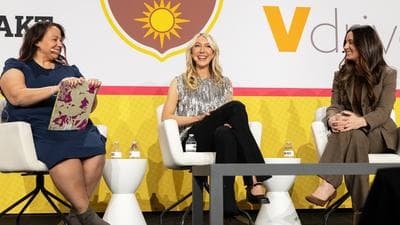
Speaker 1 [04:56] Well done. You guys can slide over here so the judges can speak with you. Hello, Ava, not Ava. My apologies. Yes, Ashley, let's start with you, uh, unique but familiar. I think that's so important for any brand. Do you see that? No, so easy.
Speaker 3 [05:09] I do. So I was just with Sprinkles Cupcakes. I helped them launch their entire CBG line into, um, retail, and we actually tested baking, and I can tell you right now there's massive innovation that needs to happen in the baking set. And the buyers are looking for it. So a lot of times I talk to products and they're, they're, and brands are me too brands, but like I truly feel like you guys could build out innovation in that category, and I agree it's ancient, it's archaic, and it needs to be disrupted.
Bianca [05:38] Thank you so much. Yeah,
Speaker 1 [05:39] well, we see a market opportunity slide right here, at least $100 million brand. Oh, so easy. Do you see that pathway?
Speaker 4 [05:46] Come to me for the numbers slide. Uh, I think there is certainly opportunity in this category. Like Ashley said, I think being able to demonstrate incrementality to the, to the current buyers in the, in the category will be key in gaining distribution. So it looked like it was not moms and families, mostly it was younger consumers, which is probably a new consumer in that aisle. So that'll be great for the retailers. My concern though is just it is a slow turning category. Um, it's so for. And it's a double-edged sword because it means that the incumbent brands can protect their share. Because it'll, they'll, they'll be displaced lower than if it was a fast turning category and so it's gonna take time in retail to I think build up a, a real toehold. I do think one thing you could do, which you're already doing, um, I've seen brands have incredible success in leveraging consumers, not only on TikTok but also in Facebook groups and having them involved in sort of like the product innovation and having limited, limited time flavors or some sort of insider group where you can get them involved and Uh, they become an affiliate, so to speak, but it can be really powerful, um, so think about that as you scale up.
Bianca [06:57] Yeah, I just want to comment on that. So, um, before we even developed our flavors, we actually, so we've, we've, I've been building the brand for a little over 2 years now and we, the, the survey that we were mentioning in our pitch actually, um, we from, from the people who took that survey we. Crafted a beta test group of people basically we sent out around 300 baking mixes over the course of 2 years to heavily test our flavors. So yeah, we are exactly doing what you're saying, which is crafting a group of people to really help with product development and that's actually also how I met Bianca so she could share a little bit more of her experience. You go
Speaker 4 [07:35] like overnight oats or oats overnight. They've done a great job at this type of sort of strategy. It can be a real. Uh, propellant for you. Yeah,
Speaker 1 [07:44] agreed, Jackie. Oh So Easy, is it? Oh, so delicious?
Speaker 5 [07:49] It's definitely delicious. I love what you're doing. I love the flavors. I guess my main question is, what is the key value proposition or positioning? I think the name is cool. It stands out like the packaging stands out, but can you own easy, or should you be leading with the third culture global flavors?
Bianca [08:07] Yeah, that's a really good question. I think it can be both again like what we mentioned there's really no innovation at least flavor innovation in the baking aisle, so I think we could be a really good representative to be owning both flavor and easiness um if you look at the back of our packaging it very much, you know, the instructions very much mimic how you would expect to bake goods out of a baking mix so, um, you know, consumer, when, when consumers grab our product. They can expect to have kind of a similar baking experience to, you know, if they were to bake out of a Ghirardelli brownie mix or Betty Crocker mix, but you know where we really differ is our flavor innovation and our ability to work with chefs from various cultures to bring, you know, unique but familiar takes to the baking aisle and I just wanna add that as a baking blogger all of my recipes are super easy to make so and I add global flavors to it so it's just a simple way for me to join this company and share that with other people.
Speaker 1 [09:05] Yeah, Luke, you get the last word. I, I, I gotta ask though about your stance or your thoughts on no BFY. This is not a BFY product and that kind of positioning and how you think that. Would play with retail buyers. It's interesting because you're right. I think people are looking for more like the flavor or texture. It certainly could affect you in certain channels like, like natural and especially like maybe, maybe more of a supernatural retailer. And I also may be echoing um one of the other comments here. I'm just a little worried that we're missing maybe the global flavor aspect. Like I, I, you know, the brand name. And then the packaging itself, I kind of missed the ube for example, and I think that's something maybe for you to consider there because I, it definitely gets my attention, but I don't really know what it is without a little bit more research than maybe I'd like to have to have to have to do as a consumer. Got it. All right, feedback, great feedback, great job. Well done. Thank you so much. Thank you. Well done. Thank you so much. All right. Up next, we have Natasha Brow from Shuka sauce. Come on up. Good to see you. Microphone clicker. And your timer.
Speaker 6 [10:20] Hi everyone, my name's Natasha, founder of Shua Sauce. You may not have seen my logo or company yet because I was actually just asked yesterday to pitch today in front of you. So hi, here I am, but I'm a CPG founder. Thank you. And CPG founders jump at the right moment and take those opportunities when they know it's right, and that's what I did with my business Shuka. So shakshuka is that dish that you have with your loved ones who warms your soul. You rip off pieces of crusty bread, hands going in the pan, scraping up that sauce. It's a warm spiced tomato and bell pepper sauce with eggs poached right in the pan to enjoy. It exists in almost every country amongst the bottom of the Mediterranean Sea, but it's different everywhere you go. So no matter how you have it or how it's prepared, it's still shakshuka. The word literally means all mixed up in Arabic, and it's a symbol for cultural cooking creativity. This is a big cultural moment for this dish. In the last 10 years, menu appearances of shakshuka have risen over 170%, with recipes being featured on the Today Show, Real Housewives of New York, even being served on United Airlines flights. It's not a niche anymore. It's part of the American food conversation. It's trending, however, there's still a gap. It's still not that accessible to consumers off the shelves and in their homes. As you've heard yesterday and today, consumers right now want fresh, healthy, and convenient meal options and want global flavors to enhance their experience in the kitchen. This is not a small shift. Global ethnic sauces is now a $52 billion category. Kahey says that multicultural cuisine is presenting a powerful opportunity right now to connect with consumers in a more multicultural and meaningful way. Mass retailers are tapping into this as well. They're no longer isolating ethnic foods to one shelf. They are bringing ethnic skews into their mainstream shelves and retail stores. Consumers driving this are adventurous, young people, convenience oriented, who want those global flavors. That's why Shuka is positioned perfectly right now. We created a food brand that celebrates the mixing and melding of cultural flavors to promote creativity and cooking in the kitchen. Shuka is a Mediterranean spiced tomato sauce inspired by shakshuka made for everyday. Shuka is just the sauce. You add the eggs or mix it up and shuka your way by adding sausage, cheese, chickpeas, herbs, and more, or even changing the eggs. People who know this dish appreciate the convenience this product holds, notice the outstanding flavors and ingredients, and even prefer it over other shakshukas they've had at home or in public. Amongst a few of us on shelves right now, community engagement and brand differentiation are incredibly important, but we are still the only ones focusing heavily on educating about shakshuka and what that dish holds and what it can bring to your kitchen. We're also the only ones pushing past authenticity, so we believe that food innovation lies in exploring your cultural differences and cultural flavors. We should not shy away from that. I am starting small, building a strong foundation before expanding, growing regionally. I'm online and independent stores. I recently just moved home over after 7 years in upstate New York in school, and I wanted to be closer to a community like this to tap into my resources like Shelf Made, startup CPG Nosh, and all of you. So thank you so much for having me here today. It's an honor to be pitching to you. I want to bring multicultural flavors including shakshuka to your table and make it less daunting and more accessible. So show me how you shuka. Thank you so much.
Speaker 1 [14:19] If I look confused, it's because I am. That was really impressive, especially because you only had 24 hours to prepare. Really well done. Great job, really. Thank you so much. Um, you can slide up to 6. There we go. Uh, Luke, let's start with you. Do you see a future, hopefully in the near term where you're going to see things like shuka next to other tomato sauces in the grocery stores? I sure hope so. And I also wanted to congratulate you as well. Your presentation was amazing. As questions were coming in my mind, you were answering them one by one, and I am noticing shakshuka on, on menus. Like I had it on a breakfast a couple of mornings ago. It's exciting to see how that's proliferating. And yet I live like in San Diego. and I'm curious, like, are you doing things or how are you working through social media and other means to raise awareness of what you're doing and about the product?
Speaker 6 [15:05] Absolutely. So social media is an incredibly important tool. So we're doing a lot of recipe content, a lot of explaining what Shakshuka can be and where it can lead to, and a lot of in-person activations, pop-ups, sampling demos. But like you said, a lot of the education is actually already. Happening in person, so a lot of the people are already clicking in their minds. So that first piece is there, and I'm just adding to that conversation and recipes, blogs, that's where people can really start to get their own creativity.
Speaker 1 [15:35] Fantastic. Thank you. Yeah, Jackie, we didn't have any eggs. We did have some tortilla chips and some dips going on, but what do you think of shuka sauce when you tasted it?
Speaker 5 [15:43] It was really good, but that leads me to my question. So Shuka, does that pigeon you to just shakshuka, and are you, you know, explaining to the consumer different use cases because I think some people don't know what shakshuka is. They might just, you know, pass that by. But if you could communicate that, like, is that part of your messaging?
Speaker 6 [15:59] Absolutely. So that is why I named it Mediterranean spiced tomato sauce and not shakshuka sauce like you'd see on shelves because that avoids the consumer seeing shakshuka going, I don't know what that is. I don't know how to make it. So that's the first part that we're doing, but also, you know, this could pigeonhole me if I didn't navigate it the right way, but Mediterranean tomato sauce allows me to innovate within flavors. It allows me to innovate within sauce and also stay close to my mission where this was born off of shakshuka. So I have flavor. in the works right now. We just completed our second SKU innovation with a comman, and then you know from there it still allows innovation past Shakshuka, and I did that very strategically when first creating the brand.
Speaker 4 [16:44] Do you view the innovation across flavor profiles with this base, or is it different? Products that are adjacent to shuka. What's the sort of dimension?
Speaker 6 [16:53] So first, I'd like to innovate in shakshuka sauce without labeling it a shakshuka because I think there's so much to still be done in terms of on shelf products and really you haven't seen like a green shakshuka in restaurants yet. If you have, it's very, very minimal. So. That's the first thing I really wanna do. But it, like I said, I do view this as a long term brand and growing foundationally. I do wanna, wanna innovate pasta sauce.
Speaker 4 [17:19] I would challenge you to think about how big, so shakshuka itself is not gonna be big enough to build a, you're gonna have to convince consumers this is more versatile than that, which I think you can. And then like the gold standard for that would probably be look at what Rao's has done for tomato sauce, right? And so. The flavors, the premium price point, how do you want to sort of slot in and broaden the category and lead it, but um, I, it is, as today has been consistent, I agree that today, you know, it's a niche sort of part of the set today, and so how are you gonna Innovate your way to broaden it is going to be my big question. Yeah,
Speaker 6 [17:52] absolutely. Like I said, the flavors are going to be really exciting and then again, I would really love to push past shakshuka and stay aligned with our mission.
Speaker 1 [18:01] Yeah, Ashley, yeah, I'm sorry, go ahead,
Speaker 3 [18:03] um, I, I love what you're doing, and I know how hard it is to get up here. So congrats on doing that, um, last minute. I mean that's, that's huge. Um, I have a question for you. So packaging, have you thought about packaging it in something different than a sausage jar? I almost feel like that doesn't do it justice, like, kind of how Graza put their olive oil in a squeeze bottle. Like, could you get more creative with the packaging? And then that would give you more room to speak about and educate people on how to use the product.
Speaker 6 [18:35] Yeah, absolutely. I have explored some options. I'm not like married, but I think I have gotten attached to what we look like right now because this product is preservative-free and it's hot fill. So the acid in the tomatoes and what we use instead of preservatives, which is an all natural ingredient, requires a product, a packaging that will hold up to that heat and the Canning capabilities. So glass is really the first option. If I were to go with pouches, normally they have to be refrigerated, um, which, you know, down the line if I do expand and that is something my coman is capable of and it would say take down costs or make things more accessible. I'm not opposed to it, um, but right now glass is the most kind of accessible and I
Speaker 3 [19:19] get it from a manufacturing standpoint, yeah,
Speaker 6 [19:21] yeah, yeah, and it's sustainable glass.
Speaker 1 [19:25] Yeah, really great stuff. I wish we'd keep going, but I'm being told to wrap up here. So, but we're really well done, Natasha.
Speaker 6 [19:31] Thank you so much for having me. Great job.
Speaker 1 [19:34] Thank you so much. All right. Our final presenter for this year's edition of the Nosh Pitch Slam is Kaya Wingfield of Kaya's Snacks. Come on
Speaker 3 [19:45] up. I don't have that one, right?
Speaker 1 [19:50] Good to see you again. We'll do that, yes. And I've brought you your microphone.
Speaker 3 [19:59] That was smart.
Speaker 5 [20:03] Thank you.
Speaker 1 [20:06] Thank you. Thanks, thank you. I'm saying, please keep an eye on your timer.
Speaker 5 [20:18] So this all started when I married a white guy. I'll get to that. I know. So I was born and raised in India in Bombay, and I've been in the US for almost 20 years now. I'm not a CPG person. I'm a pastry chef. I've been running a custom dessert studio for the past 15 years, which is really funny when I say it because before I moved here I had never seen an oven, and now I'm a Food Network baking champion. So thank you. COVID happens and we pivoted to making modern Indian American to go meals. With those meals, I would send teeny bags of Bombay spice chips as a thank you for letting me pivot. Not even a week later, customers are calling to order just the chips, and I'm like, the chips, they're not for wait a minute, how many do you need? So for 4 years we hand produced, hand packaged, hand delivered these things, couldn't keep up with demand anymore. So in February of this year we relaunched with professional packaging, single origin organic spices directly from India, potatoes from America, a fantastic co-packer, um, and now we are in 1600 stores nationwide and counting. But remember that white guy I mentioned earlier? Yeah, him, well, he didn't like Indian food. What is it gonna do? So the Bombay blend that's on the chips right now, I used to make that for myself because I was so homesick. I'll put it on eggs and tacos and salads. Um, one day I took his favorite snack, which is a basic salted potato chip, go figure, put it on there and gave it to him, and it did the trick, and that was a massive aha moment for me as a chef. Like this is the way to bridge the gap and to bring. Uh, you know, bring innovation into this category. By the way, nobody gave me the clicker, right? Oh my gosh. You had one job. OK. Thanks. OK, fine. Alright, um, our award winning chips come in two flavors in two sizes. We've got Bombay spice and black salt. Uh, the sizes are snack size and family size, very competitively priced at 249 and 549 MSRP. Uh, our Bombay spice blend has no colors, additives, fillers, dyes, preservatives, no monkey business, just pure spice and perfectly balanced. We want to take our innovative, disruptive packaging, um, apply a omni-channel sales strategy, and really fill in a massive white space in the flavor category. So who exactly is eating these chips? Well, it's the savvy flavor seekers. Did you know that more than 50% of Americans identify as foodies? The rest of y'all, I'm going to pray for you. No, but really, American households are increasingly diverse and blended, and multiple cultures live under the same roof, and we're just answering to that reality. There is a massive tipping point coming for Indian cuisine, the same one that came for Thai and Mexican cuisines, and we're at the forefront of it. Since our launch in February we have been crushing velocities. We have reorders from every channel, from every door that we're in. So what's next? Well, we have a third flavor coming, of course, um, and when time is right we would love to expand across flavor categories, snack categories, you name it, um, and truly maintain our cultural POV. Many companies have a philosophy we have a war cry. We like to say we're anything but boring. Can you say it with me? You got that. And as for me, I'm just here to live my Indian American dream. Thank you for having me. Beautiful.
Speaker 1 [24:10] Great job. I can take the clicker now. Yeah, there we go. Yeah, I, you can pull up to the X here. OK. Uh, Ashley, let's start with you. You know, uh, when you see the packaging, it's almost like, I, I gotta try this, right? What do you think of the potato chips?
Speaker 3 [24:22] I, I like the packaging a lot. I think that that's where we're gonna have some conversations, but I, I personally love the packaging. I think that's one of the things that's working with you for you. I'd maybe move the logo to the top and the flavor at the bottom, but I also know what it's like to have a salty snack brand and then have the shelf cover the flavor, so the hierarchy is important. Um, I mean, having a salty snack brand, so Spudsy, I did that for about 5 years. Um, I can tell you right now you're going to be up against the sunflower oil on the product. That's something that I'd probably get ahead, especially if you want to focus on natural and independent accounts. The buyers are not. I don't want a seed oil. Um, I like Spudsy got discontinued out of doors because we were unable to switch to an avocado oil or a non-seed oil seed oil, but I mean, I love what you're doing and I really love your branding. Thank
Speaker 5 [25:13] you. Thank you. Can you, can I show you what's on this bag? OK, tell me what it says. Tell me what it says. Oh, perfect.
Speaker 3 [25:19] There you go. She already did it. Avocado
Speaker 5 [25:21] oil. I knew you were going to bring that up. This is an avocado oil chip that we, I love it now developed because I knew what Ashley was going to tell me.
Speaker 3 [25:30] Keep it going just for you,
Speaker 1 [25:32] uh, Will, what do you think about the mainstream opportunity for a brand like KS Snacks?
Speaker 4 [25:37] I think I, I, I love this. I also, I think the packaging. Does jump off shelf and does help you get the consumer's attention in aisle. I had a couple of observations on the packaging which are sort of secondary, but I would just say. You have more than enough culture and flavor to have that have, you don't have to say good, you know, based on culture based on flavor. I think that should be self-evident and it is, so I probably wouldn't market that, um. And I think the mainstream opportunity, like this is a huge category, um. Always looking for new flavor profiles, bolder flavor profiles, different ways to get consumers to try. I, I think there's an opportunity for it. The Indian flavor profile, those palate, you know, there hasn't really been a breakthrough. There's been a few that have sort of teased. You know, breaking through the mainstream, but it's been tough, um, and I think it's, we're ready for that, um, so I'm,
Speaker 3 [26:33] I'm like you said, I feel like there's white space in the category for the flavors for sure.
Speaker 4 [26:37] I like that diagram you have behind you. I would, I would use that and talk about the flavors and what the spices and things that make it different because, yeah, also the imagery, there's no imagery of the chip, and so I'm not sure my mind kind of goes, oh, an Indian chip, is it a what does it look like? And that kind of helps. Yeah,
Speaker 5 [26:53] OK, noted. Thank you,
Speaker 1 [26:54] yeah. Jackie, what do you think of Kaya's presentation? Do you have any questions for her specifically?
Speaker 5 [26:59] Yeah, so obviously you have so much personality. I love the storytelling, the branding. What is your D2C strategy? I feel like you'd probably crush it online. You know, that's a great question. So we don't have a D2C strategy right now because people don't have the habit of buying potato chips online. Um, and the other issue is the freight because while it's a light product, the volume is a bigger concern. You're shipping, yeah, exactly right. So when people are paying $10 for two bags of chips, which we sell two bags at a time, they're also paying $10 for shipping. That's a massive concern for me. So when we have more sense, sense, you know, people, smarter people on our team, we'll figure it out right now I have no idea.
Speaker 1 [27:39] Got it. Thank you. And Luke, I think you, uh, have tried these chips before, but what do you think of the flavor and do you, what do you think about again this opportunity between natural mass mainstream retailers, yeah, uh. Yeah, they do taste great. You did a great job, and you also, to me, I, I talked about how important it is so often about the founder and their personality and, and you came through fully today. I was smiling the entire time you're presenting. You are amazing, and you were gonna drive this to success, and I echo everyone, everything everyone said here. You have so many things on your side talking the channel strategy side. I think I read on the back that you have organic, uh. Seasonings and then you're non-GMO and if those things aren't on the front and as I think about it like maybe a more natural consumer that could really help you, especially in this super competitive space. Yes, there's a white space, but we need to address it in a way where we're communicating in 3 seconds to the consumer who you are and why you're so special. You announce it.
Speaker 4 [28:35] You should think about, sorry to answer the question one other way. I'm just Dots Pretzels comes to mind and see things on that was a that was a. Innovation in pretzels and it broke through in the mainstream way because the seasonings were so delicious and consumers knew about it. How do you do that with your flavors? I don't know. It's like the picture on the front of the Dots pretzel bag is cues your sensors, you know, so it gets you ready for it, and I
Speaker 5 [28:56] think you can, so my brother designed all the packaging. You can just call him directly. I have nothing to do with that.
Speaker 1 [29:03] We need his phone number, but after the show.
Speaker 5 [29:07] He lives in Hong Kong. He's not going to answer.
Speaker 3 [29:08] Agree with the certified non-GMO though. Get a certified non-GMO on the front.
Speaker 5 [29:12] Got it. And just real quickly, I know we're running out of time. We. Um, we, um, are very consumer forward brands, so that's kind of why the name of the product, I mean the, the, the flavor is on top because I don't care right now if they don't know my brand name. I care they know what they're getting out of it, so that's a very conscious effort towards that and then the photo of the, the chip is in the back that's my daughter's hand holding that is because every. Every product we saw had pictures of the product in the front and we just, you know, you know what, what was our war cry, right? Any anything but boring we just wanted to kind of get away from the norm if you will, but these are fantastic. Feedback. Thank
Speaker 1 [29:51] you so much. Yes, indeed, great insights, great feedback and great presentation. Well done. Thank you so much. I have stickers waiting for you. Oh, thank you so much. I appreciate that. I can take your microphone. Oh, there I go. Outstanding stuff from all six brands and brand founders. I feel like it's going to be really difficult for the judges to pick a winner, but pick a winner, they will, and we're going to announce that winner at 12:45 p.m. You don't want to miss it. Now I'm going to turn over the stage to my colleague Jeff, but we'll be back here at 12:45. Don't miss it.