Search across the BevNET CPG Media network including BevNET, Nosh, Brewbound, Taste Radio, Nombase and CPG Jobs.
Livestream Interview with Matt Clemens & Claudette Munroe of Contrast
Transcript
Note: Transcripts are automatically generated and may contain inaccuracies and spelling errors.
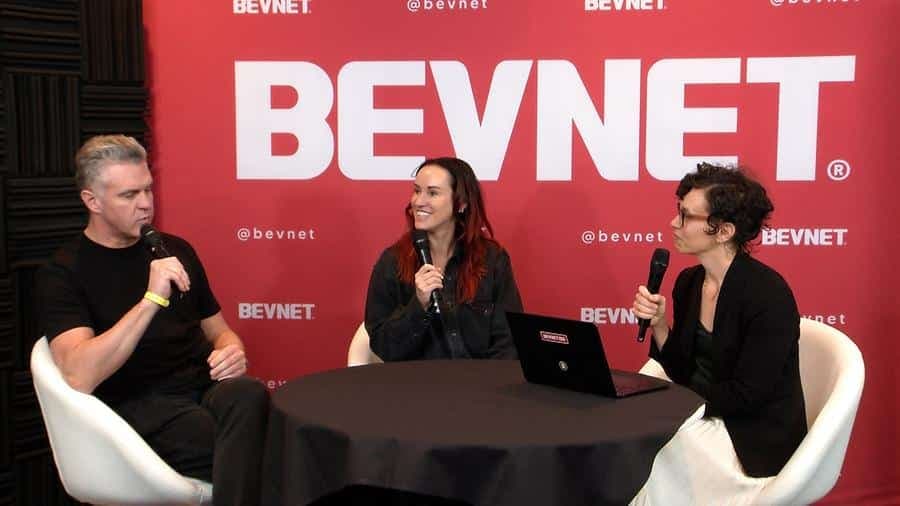
Speaker 1 [00:09] Well, I am super excited about our next guests, Matt Clemons and Claudette Monroe. Please come on down from Contrast. So nice to have you here in the live stream studio. Thank you, thank you for having us. So we had a chance to catch up a little bit outside, but you know, please tell our audience out there a little bit about contrast and what you do, how you focus on consumer packaged goods.
Speaker 2 [00:37] Yeah, so we have been in the industry for quite a while, but you know we both come from different regions. Claudette's in the UK and London, um, obviously we're in the US based mostly out of Chicago. Um, and we just sort of realized that there was an opportunity, um, coming from global agencies to sort of bring something different to the table, so that's why we named ourselves Contrast, um. And we like to think of ourselves as an agency that has big global brand experience, um, but acts as more of a mid to smaller size, uh, agency for a lot of reasons. It, it, it's, we're more nimble, we can, you know, change with our client needs. We can do a lot of different things that global agencies can't do. So that's sort of our niche and how we sort of fit into, uh, the agency world.
Speaker 1 [01:25] And can you talk a little bit about having folks in the UK and in the US gives you a unique perspective and really helps inform not only the work that you do but your brand partners and how they're running their businesses.
Speaker 3 [01:39] Yeah, so I can talk to that a little bit so. I think what we know, we've all identified is that humans and consumers, we're all much more globally connected these days, whether it's through social media and the internet, and, you know, there's so much similarity now with what consumers are looking for. And I think working in a connected way with two studios across a big ocean, we, we, we're able to kind of influence the work, the, you know, um, design work. So, you know, With the UK office brings much more sort of European aesthetic, but we also tap into US trends and some US aesthetic as well. So there's a lot more connectivity and it's sort of, it works really, really well, I think. Yeah,
Speaker 2 [02:23] again, I, you know, not to beat up on other agencies, but a lot will say that we've got offices in different regions and we, we partner with them and but we truly do. We, we actually purposely build our teams so that we are using design talent from the UK as well as the US so that we bring that diverse. Offering to our clients and like Claudette said tapping into trends and different things that happen in the region, um, is huge. It's for our clients. It's hugely beneficial for them to understand. Unfortunately, the US is a little bit behind uh the UK in terms of design trends. It's been like that for a long time, but um
Speaker 3 [02:57] it's definitely changing.
Speaker 2 [02:58] It is definitely
Speaker 3 [02:59] changing. You can see that today at the show. Absolutely there's there's much more personality and much more sort of um. Emotion in in in what you're starting to see now, which is really good to see.
Speaker 1 [03:10] It's so valuable for your brand partners to be able to have eyes outside and to be able to see beyond what we're doing here. You touched on this just a little bit, but human centric design is a big piece of what contrast focuses on. Can you tell us a little bit about what human centric design is?
Speaker 3 [03:28] Yeah, so before we do any piece of work for any of our clients, um. We don't, we don't want to just pull ideas out of the sky. Um, what we always do is we make sure that our work's really rooted in what consumers, you know, want, what consumers are thinking, what they're feeling. So we always do a piece of work, which is really straightforward, but looking at exactly culturally what's, what's, um, affecting the way consumers are spending their money. You know, what's what's changing their needs, what they're looking for, um, and we make sure that we really understand the sort of those foundations before we do any form of design, because it really helps having that strategy in place so that you keep the project on track. All stakeholders involved in any project know exactly what their sort of end game is, what the objectives are to really make sure that you are really appealing to your consumers to sort of choose you over the competition. Um, and, and a lot of that is really understanding culturally what's happening and what's, what's affecting their choices and the choices that they're making.
Speaker 1 [04:29] So you're almost starting with the user and the use case, so that when that product does get on shelf, you know it's going to jump off.
Speaker 3 [04:37] Absolutely. I think that connection on shelf um is hugely important and um contrast, we've always, we, we have a legacy working with a lot of retail clients as well as CPG, but You know, really, truly understanding that moment of purchase, whether it's online or or in a supermarket is, is hugely important because at the end of the day, you know, it's all about selling more things. Um, yeah, and, and then something that is, is imperative to, to, to growth for any brand.
Speaker 2 [05:05] I think the other thing that sort of sets our, our, our work up for success is a lot of times with our clients, we always do consumer validation, right? So we'll develop concepts based on a brief. And then later on down the road, we end up, you know, putting in front of consumers, doing validation and testing to understand, but what we've done is we've sort of cracked that egg at the onset, you know, it's giving us a little bit more of a leg up to understand all of those nuances so that once we get to that testing. Um, it becomes a little bit more, uh, I guess successful because we've understood all those needs from, from the beginning.
Speaker 1 [05:37] How much iteration would you say that there is between when you start consumer testing and then when the brand and the product is ready to launch?
Speaker 3 [05:48] Um, a lot of that's to do with kind of senior leadership, um, and sort of going through the internal sort of stakeholder process. But I think, you know, when, when, because we have that strategy in place, it really streamlines, um, that, that, that side of. Things, because rather than things being subjective and people just choosing things that they like the look of, it's all grounded in in factual, you know, human centric data to to to really validate already the work that the work that's going through, and it just makes it a little easier for everybody.
Speaker 1 [06:20] You will see so many brands, both on the emerging side and then well established. Can you think of any examples where using human centric design has really shaped the way your design strategy has come together?
Speaker 3 [06:33] It's that's a really good question, and I think, you know, there there's quite a few brands that I think have done that really well, you know, you, you talk about liquid Death. I know that was a great success story when it came to thinking outside of the box and, and really, you know, tapping into a new way of um connecting with consumers and understanding culture. Um, I know in the UK and I'm not sure if you have it here, there's a brand called Oatley. Which is a plant-based um uh milk alternative product, and I think what they did is that they really understood the values and the things that people who, who want to make a different choice and, and opt for a plant-based diet, they understood the values and the personality and almost that irreverence behind that whole world, and they read the design around that was done brilliantly, and I think what they did is they went into market, they completely contrasted from everybody else. And, you know, they're snapping at the heels of the the market leaders straight away, you know, I mean, that's just such a great success story to really understanding consumers and culture and making sure you're designing against what is actually happening in the outside world.
Speaker 1 [07:40] Absolutely. Um, and, and I'm sure I, I know we were talking about this before we hopped on, but you are not only a design firm and help with brand strategy and design, but you also give your brand partners plenty of advice outside of just the design piece of it. What's we, we have so many brands in our audience who are listening and watching and are really trying to get as much information as possible to make as few mistakes as. Possible and just launch with the best face forward. Can you think of any pieces of design advice or, you know, just brand strategy that would help folks who are maybe just in the emerging phase?
Speaker 3 [08:19] Yes. I think this is something that we, we really work with um, with our, with our partners and clients is, is actually understanding when you look at consumers and, and, and humans in its entirety. Um, inclusive design, um, is something that's really, really important, you know, I think, you know, globally there's 350 million. Um, people with visual impairments, you know, or 1 in 5 people have got some form of dyslexia. So when we actually design, we make sure we're, we're, we're thinking about inclusivity. So if we're, if we're talking about typography, for example, we make sure it's as legible, if not as beautiful as it can be, so that you're actually including as many people, human beings as possible to connect with your brand and. You know, understanding color contrast or understanding um legibility and, and really just using that as a, as a, as a standard layer for any products is, is, is really important because there are so many consumers out there who are just forgotten about when it comes to design, um, and we think it's really, really important for for growth.
Speaker 2 [09:25] Yeah, I think, you know, several years ago it used to just be sort of a buzzword, right? And I think now it's, it's table stakes and I think a lot of uh CPG and even own brands, they're expecting their partners to, to take that into account, you know, they're expecting them to understand some of the, the outages, you know, I think as much as I love it, there's always been this design trend that minimal is the way to go and that, and of course that's how you get more premium at times, but. You know, having typography that is extremely thin and lots of negative space, you're only capturing a certain part of the market when you do that. So, understanding those nuances, you can still be a beautiful premium package, but making sure that you take that into account, you know, other things like the use of iconography, so making it easier for people that may not understand all languages can, they can see it visually to help them register exactly what the, the benefit of that product is. Um, communication hierarchy, making sure that you're extremely clear, you know, size and navigation through that so that they can get through that rather than standing there and sort of being confused and not understanding what, what it's gonna do.
Speaker 1 [10:39] I can see how you are incredible. The folks that you work with and how you are great resources not just for design but overall strategy and I just wanna thank you so much for being here with us at Nosh Live in the live stream studio and our event Matt Clemens and Claudette Monroe what a pleasure you both are from Contrast.