What’s Accelerating The Organic Market?

Consumers may still be feeling the squeeze from inflation, but that doesn’t mean they aren’t willing to spend more on “cleaner” products – a sentiment that’s carried over into the organic marketplace.
Organic food sales totaled $65.4 billion in 2024, and over the past two years, they’ve grown more than twice as fast as the total market, according to the newly released 2025 Organic Market Report by the Organic Trade Organization (OTA). What’s behind the growth?
One key sales driver – which has been gaining major traction since the pandemic – is shoppers’ increased desire for cleaner ingredients.
- That means seeking out “free from” foods, such as “free from” chemicals, toxins and pesticides, hormones and antibiotics and dyes and unnecessary additives.
- Additives becoming a political talking point may also contribute. See: Health and Human Services (HHS) Secretary Robert F. Kennedy Jr.’s efforts to phase out eight synthetic dyes used in thousands of food products by 2026.
The price gap between conventional and organic shrank across categories in 2024, allowing more consumers to shop organic. That led to an uptick in organic purchases at mainstream grocery retailers, where shoppers tend to be more price sensitive, per the report.
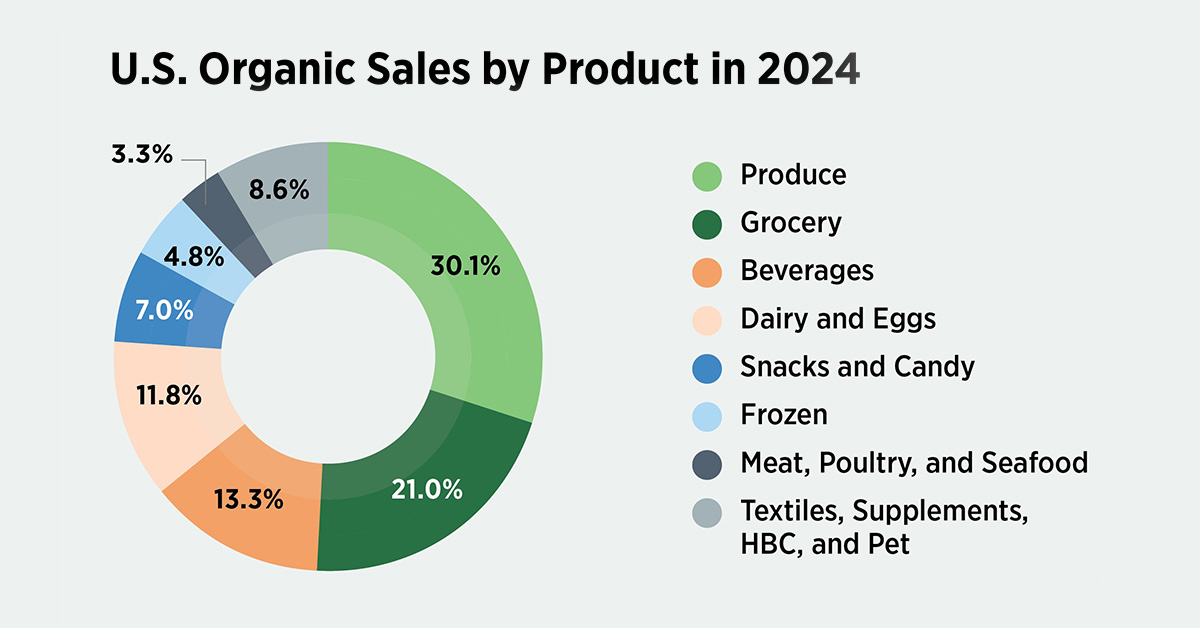
- Organic produce held the top spot in the market, with $21.5 billion in sales last year, accounting for 30.1% of total organic sales. Berries were the star of the category.
- However, not all produce performed well. Organic packaged salad sales fell 4.5% while other greens grew a modest 0.8%.
- Grocery – which encompasses bread, dry breakfast goods and baby food – was organic’s second biggest winner, with sales of $15 billion in 2024. Bakery and fresh bread led this growth.
Amidst a growing sea of labels and claims in grocery aisles, the report claims the USDA Organic seal has remained a “constant source of trust and confidence.”
“The key takeaway is that organic has high consumer recognition and the highest level of trust in a certification. To increase adoption of organic, we need to enhance our consumer education, which could be strengthened by adding product attributes to the USDA Organic logo,” said Matthew Dillon, co-CEO of OTA, in the report.
Looking ahead, an uptick in consumers seeking GLP-1 compatible food products and momentum from the “Make America Healthy Again” movement are expected to power Organic to a CAGR of 5.1% through 2029, adding $18 billion in sales by the decade’s end. However, growth may be challenged by emerging inflationary pressure, stemming from looming tariffs and labor shortages.