Ultraprocessed Food: What The Science Says, And Where It Falls Short

As the industry navigates emerging scientific, regulatory and industry-centric approaches to the Ultraprocessed Food debate, Nosh is diving into how each sector is addressing the challenge.
In a typical food regulatory environment, legislators often look to federally-funded, clinical studies to inform industry guidance. But when it comes to ultraprocessed talk, many of those gold-standard studies – long-term, comprehensive and double-blind clinical trials – are just getting started.
That’s because the term “ultraprocessed food” (UPF) itself wasn’t coined until 2009, when the NOVA Food Classification system was developed; that tool remains the best standardized metric to determine whether or not a product is UPF.
But food has been processed for safe storage and consumption since virtually the Stone Age. With the advent of industrial-scale food manufacturing and all of the ingredients created with it, shelf-lives got longer meaning that food could be distributed further.
With terminology less than two decades old, but an industry nearly a century in operation, the science is now rushing to catch up with a concept as broad and complex as the ingredient lists it has become synonymous with. Here’s a look at what is known about ultraprocessed food, and what scientists are still trying to figure out.
What We Know
Ultraprocessed foods are characterized by long, complex ingredient lists often offering lackluster nutritional profiles. These products are typically devoid of significant fiber content and often high in sodium, added sugar and fat. They are also associated with inclusions of synthetic additives for preservation and flavor. It is important to note that while the term UPF specifically calls out food, beverages can also be classified as UPF.
As a guideline, nutrition scientists claim that if an item contains an ingredient that would not be found in an average consumer’s pantry, then it is likely UPF. Take potatoes, for example. In its raw, uncooked form, a 5.3 oz. potato contains 110 calories, no fat, no sodium, 26 grams of carbs, 2 grams of fiber and 1 gram of sugar.
However, when turned into an ultraprocessed food, in this case, Pringles chips, the product contains nine ingredients, 750 calories, 45 grams of fat, 10 grams of sodium, 80 grams of carbs and 5 grams of fiber per 5 oz. serving. Comparatively, a 5 oz. serving of Unsalted Kettle Brand potato chips, made from just potatoes and cooking oil, contains 10 grams of fiber per serving.
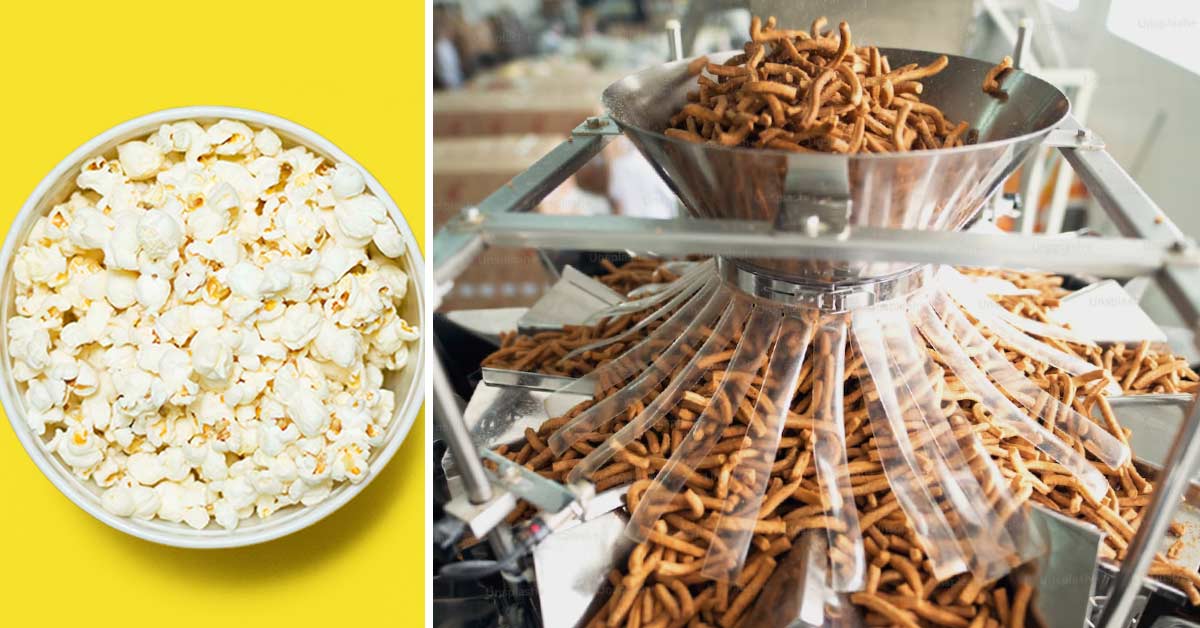
Rather than use the whole potato, sliced into chips, Pringles utilizes a Dried Potato ingredient so that the product can be extruded and fried while maintaining a standard shape, all while depleting the natural fiber of the base input.
According to the American Medical Association, regular consumption of UPFs can increase the risk of cardiovascular disease, certain cancers, obesity and type 2 diabetes. A 2018 study in the British Journal of Nutrition found that frequent consumption of UPFs was associated with a higher risk of all-cause mortality in a representative sample of U.S. adults.
While fledgling scientific findings are beginning to paint a more complete picture of the impact of UPF consumption on human health, researchers at the National Institute of Health (NIH) have already narrowed in on a few theories regarding one of the most common concerns about UPFs: their addictiveness.
The NIH found that there is no significant relationship between the consumption of ultraprocessed food and dopamine levels in the brain, a common test to measure the addictive qualities of other substances such as cocaine.
Kevin Hall, a researcher who focuses on metabolism and diet at the NIH, said during a presentation at the Consumer Federation of America (CFA)’s food policy conference in early March that while these foods are commonly associated with their hyperpalatability, the institute has not found evidence to support the notion that they have been specifically formulated to be addictive.
“This doesn’t mean that some people aren’t addicted to ultraprocessed foods,” Hall said. “They might be. There’s a huge amount of variability in our study, but on average, they’re not causing this outsized increase in dopamine in the brain you clearly see when you give somebody a stimulus like cocaine.”
What Is In The Works
The NIH currently has multiple, ongoing studies that will continue to track and quantify key concerns surrounding ultraprocessed foods such as their relationship to weight gain, Hall said, “as long as we don’t get shut down.” This week, Health and Human Services Secretary Robert F. Kennedy Jr. announced that 1,200 NIH employees would be part of a larger, sweeping cut to the health department, but it remains unclear what projects would be impacted by those firings.
Nonetheless, Hall shared some intermediary findings on the role between the nutrient density of food, consumption habits and weight during the CFA conference.
During a clinical trial conducted by the NIH, when an individual is on an ultraprocessed diet, researchers found they consume about 1,000 more calories per day than when that same person is provided with a minimally-processed diet. The scientists believe this points to a possible correlation between the hyperpalatability, energy density, overeating and subsequent weight gain.
When the hyperpalatability of a diet is decreased, but the energy density remains high, the individuals on average consume about 200 calories fewer per day; when both the hyperpalatability and the energy density is reduced, calorie consumption goes down by an additional 630 calories per day. This was true when individuals were on both the ultraprocessed and minimally processed diets.
“These are huge changes in people’s calorie intake when we’re manipulating their food environment in this way,” Hall said. “It just goes to show that our food environment has a huge effect on how many calories we choose to eat, and these properties, in particular, energy density and hyperpalatable food seem to play a big role in that.”
Hall explained that the researchers have found “no significant differences in weight loss” when individuals are eating food that is both low in energy density and hyperpalatability across both the ultraprocessed or minimally processed diets. He did note, however, that throughout the study thus far, only the minimally processed diet has led to significant body fat loss among participants.
What’s Coming
As we’ve outlined from various angles, there’s still a lot we don’t know about UPFs, including how different forms of processing as well as the ratios of fat, salt and sugars impact consumption habits and how products are metabolized. That means there is a lot still to come as formal definitions, industry guidance and regulatory policy are developed.
The latest push for clean label, synthetic additive-free products sweeping across the CPG food ecosystem adds another layer of complexity to determining which processes, inputs and end-products should be limited.
But industry groups, scientists and state and federal regulators, as well as legislative bodies, have put their minds to the task, and we expect to see a working framework from the non-UPF standard by the end of the year, generated by insights from the industry as well as regulators and nutrition scientists. Regulation at the federal level will likely be on the docket as well. Whether or not those federal mandates take these other conversations around UPF into account remains to be seen.
As Hall’s presentation came to a close, he emphasized the importance of relying on science when taking any food regulatory action and outlined the various studies the agency has and is currently conducting in order to assist the federal government as it narrows in on a definition for this broad-reaching, yet opaque group of foods.
“We still have a lot of work to do. We still have some science to figure out,” Hall said. “I think we’ve done a good job of explaining some of the differences in calorie intake, but the effects on body fat are still a mystery.”











![[Exclusive]: Leaven Foods Rises with TIME Best Inventions Honor as It Seeks to Scale Sourdough](https://d2azl42aua8mom.cloudfront.net/wp-content/uploads/2026/10/14180815/Leaven-970-150x150.png)