Stick-ing The Landing: How KRAVE Is Muscling Into Meat Snacks’ Hottest Segment

Consumers are snacking on protein more than ever, driving significant demand for premium meat sticks and jerky.
Dollar sales for the category were up 6.4% year-over-year, according to SPINS. The meat stick segment – which also includes bites, nuggets and bars – is up 11.9%, while jerky tallied a minimal 0.5% gain.
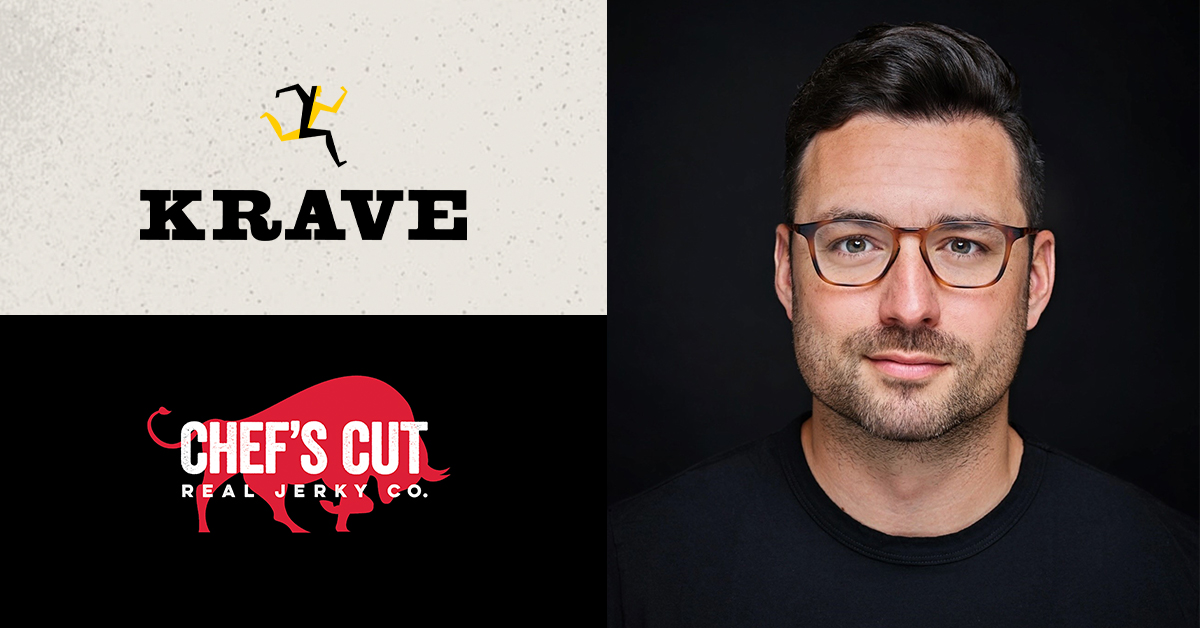
KRAVE Jerky was founded in 2009 by Jon Sebastiani. Hershey acquired the brand in 2015 only to divest it back to Sebastiani’s Sonoma Brands in May 2020. Sonoma Brands added jerky competitor Chef’s Cut to the portfolio two months later to form the Triple Peak holding company.
In March 2023, former Guayaki (now Yerba Madre) executive Andrew List took on the CEO role at the consolidated meat snack platform just as demand for sticks was beginning to take hold.
List spoke with Nosh about his role in bringing KRAVE to the sticks category, how the two brands create synergy in building across four quadrants of meat snacks, and how retailers are evolving merchandising strategies amid meat stick tailwinds.
—
KRAVE and Chef’s Cut were founded as jerky brands but both have moved into the meat stick set. What opportunity are you seeing in meat snacks at-large and how have you positioned these brands to seize on the elevated consumer demand?
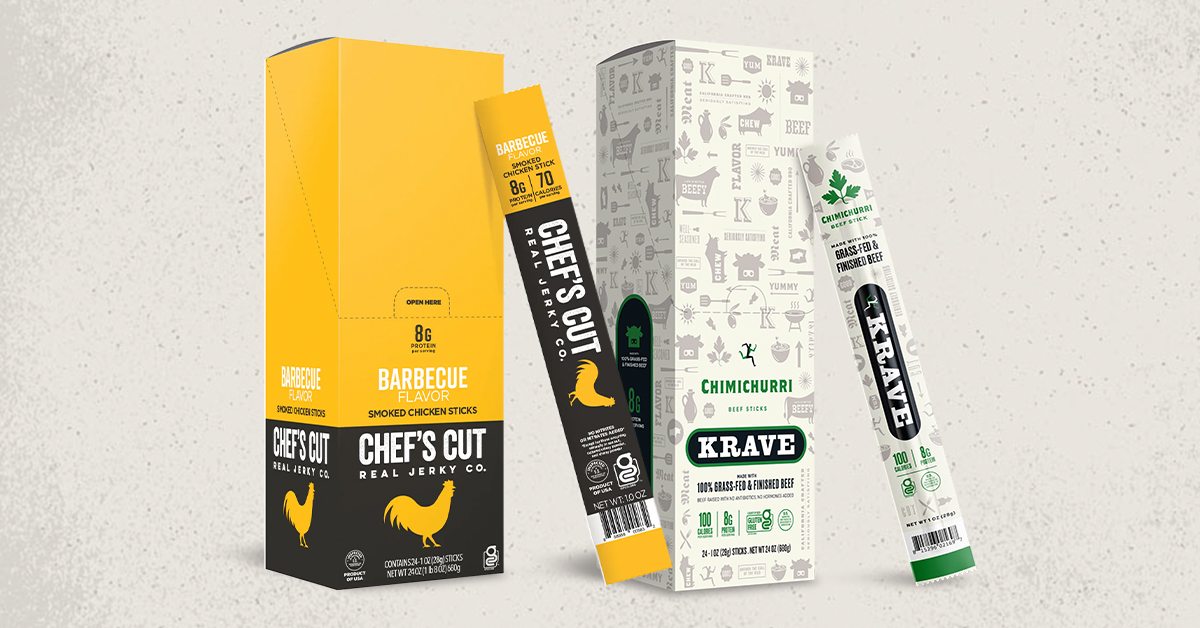
The meat snack category is seeing a lot of significant tailwinds driven by GLP-1s and other trends. We’re seeing a lot of that growth concentrated in sticks. Chef’s Cut has had a stick platform since 2016 that is significant to that business. KRAVE is newer to sticks; when I joined two years ago, I saw an opportunity to participate in the higher-growth segment of the category.
KRAVE had made other big bets around plant-based jerky. We had really looked at Chef’s Cut as our key player in the stick space, but I just felt that the trends were so overwhelming in terms of growth, dollar share and my expectation of what sticks could do. I had a lot of conviction in taking KRAVE into sticks.
Why were you convinced that KRAVE could authentically succeed in sticks when jerky has been its mainstay for so long?
Where KRAVE has a distinct advantage is its 15 years of brand-building history where it’s really a pioneer in premium meat snacking. We’ve earned the trust from the consumer and the right to innovate, whether it’s a bar, a bite or a stick. KRAVE is a brand platform that has allowed us to participate in this high-growth segment authentically, not opportunistically.
Tactically speaking, it was the know-how and the relationships on the supply chain side through Chef’s Cut’s participation in sticks that have allowed us to execute so quickly with KRAVE.
Sticks are broadening the consumer demographic in a traditionally more male-dominated category. We’re seeing consumption shift towards the female consumer and the youth consumer whether it’s on-the-go or in a kid’s lunch box.
With sticks primarily driving the tailwind for meat snacks, how do you still support the jerky segment for KRAVE and Chef’s Cut?
When KRAVE and Chef’s Cut launched in 2009 and 2012, respectively, they were pioneers in the premium meat snack space. Since then, the landscape has continued to evolve, but we still believe there’s a loyal jerky consumer out there. We look at sticks as accretive to jerky rather than replacing jerky.
As meat snacks continue to outpace adjacent categories, retailers will continue to allocate greater space to the category. A lot of that will go to sticks, but some of that will also go to jerky. For that reason, adjacency to the extremely high-growth stick segment will continue to benefit jerky.
Are sticks cannibalizing the jerky set in certain channels?
It’s a really interesting moment from a retail and merchandising standpoint, as we watch this inflection point shift from jerky to sticks or at least making sticks more significant. It has started in the natural channel. Obviously, this is a smaller addressable market, but for every premium brand, it’s a very significant place to start, both on jerky and sticks. It drives a lot of trial.
Jerky continues to represent a significant role in these sets, more in Whole Foods than in Sprouts, which has shifted to a more stick-dominant planogram. What grocery is grappling with right now is how to effectively merchandise both product lines.
What have you noticed in the merchandising shift as sticks have gained prominence in various channels?
It’s particularly challenging for grocery retailers where sets are still pegged, because you’re trying to solve for merchandising single sticks in-line. Where there is a shelf set, it’s a little bit easier to swap in some of your space from jerky to sticks.
We’re seeing retailers overcome this by leaning towards merchandising stick multipacks in-line and reserving the front ends for single sticks. That allows a grocery retailer to participate in this stick segment with minimal shifts from a merchandising standpoint.
Target, being the most significant example in mass [channel], has leaned heavily to premium sticks and the multipack format. Beyond that, club has been a very significant channel for this category, typically allocating six-to-10 pallet positions to meat snacks. We’re seeing premium sticks get an increasing allocation of those positions, particularly at Costco, driving a lot of that growth.
Premium brands have started turning their focus and attention to drug and c-stores, looking at those larger addressable markets where consumers are seeking better-for-you options.
Tagged Brands (2)

Explore the Nombase CPG Database
Head to Nombase to learn more about the tagged companies and their offerings.