Mamame Raises $2M To Fuel Expansion in Modern Tempeh Snacks

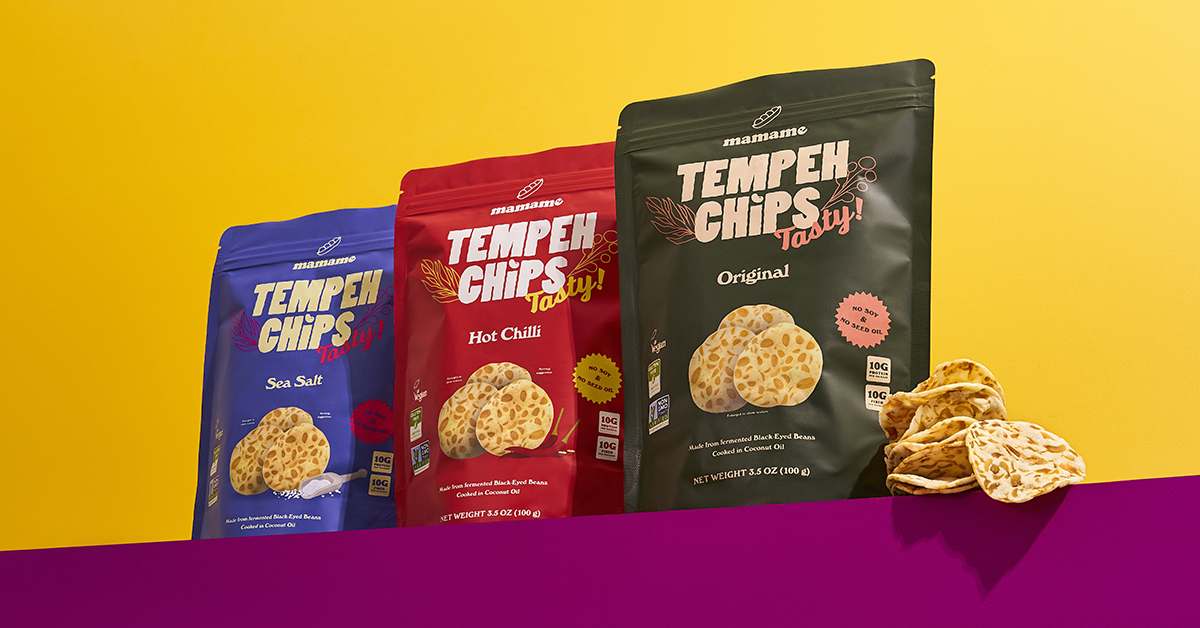
Tempeh snack maker Mamame Whole Foods has raised $2 million in a funding round led by Granite Asia, a multi-asset investment platform headquartered in Singapore.
The family-owned and operated startup has translated a centuries-old superfood into a modern on-the-go snack that entered the U.S. market last fall. The brand’s line of tempeh chips is made with black-eyed peas, coconut oil, tapioca flour and a beneficial fungus that ferments the beans. Varieties include Original, Sea Salt, Hot Chili, Rosemary, Cheese and Barbecue.
The patented recipe is free from soy and seed oils, and a serving delivers more protein and fiber (3 grams of protein and 3 grams of fiber per 28g serving) than leading conventional potato chips (2 grams of protein and 1 gram of fiber), according to the company.
Mamame Tempeh Chips are available in multiple international markets including the United Kingdom, Germany, Lithuania, Singapore, Korea, Portugal and Hungary. The company’s retail partners in North America include Erewhon, Mother’s Market, Bristol Farms and Metropolitan Market, in addition to corporate offices including Meta. The brand also was available at Sprouts Farmers Market nationwide for a quarterly rotation in the innovation set earlier this year.
In its raw block form, tempeh is a regional staple with limited mainstream adoption, says founder Liz Kang, a former media sales executive who launched the business two years ago with her mother, Alvina Chun.
“By putting tempeh through a production line that can transform this raw ingredient into a protein-packed chip, we’re able to reach a massively incremental customer base,” Kang said in a statement. “We see tempeh as a commercial cousin to acai, akin to the raw acai berry-to-blended-smoothie-bowl pipeline.”
The new funding enables the company to quadruple its production capacity as it expands to meet burgeoning private label demand, adding a 60,000 sq. ft. facility to its existing manufacturing operations in Indonesia, near some of its raw ingredient suppliers.
A key focus area for Granite Asia is food systems and sustainability; the firm previously backed plant milk maker Oatside. Jenny Lee, senior managing partner, described Mamame Whole Foods as a “category-defining brand” that brings together “authentic storytelling, nutritional innovation, and a clear understanding of today’s consumer.”
Still, low consumer awareness in the U.S. remains a major hurdle for the mother-daughter duo.
“Tempeh is the national food of Indonesia. It’s been around for centuries, and academics say that it has a longer history than that of tofu,” Kang told Nosh, adding that, while tofu is widely familiar in the U.S., tempeh is not.
She continued, “These are whole fermented beans that carry all of the protein claims, the fiber claims, and even the probiotic properties of tempeh in this snack form. We really like to break it down for people and see their reaction. But nothing beats their reaction until they’ve put it in their mouth.”