Is There A CPG Manufacturing Gold Rush Building? It’s Complicated.

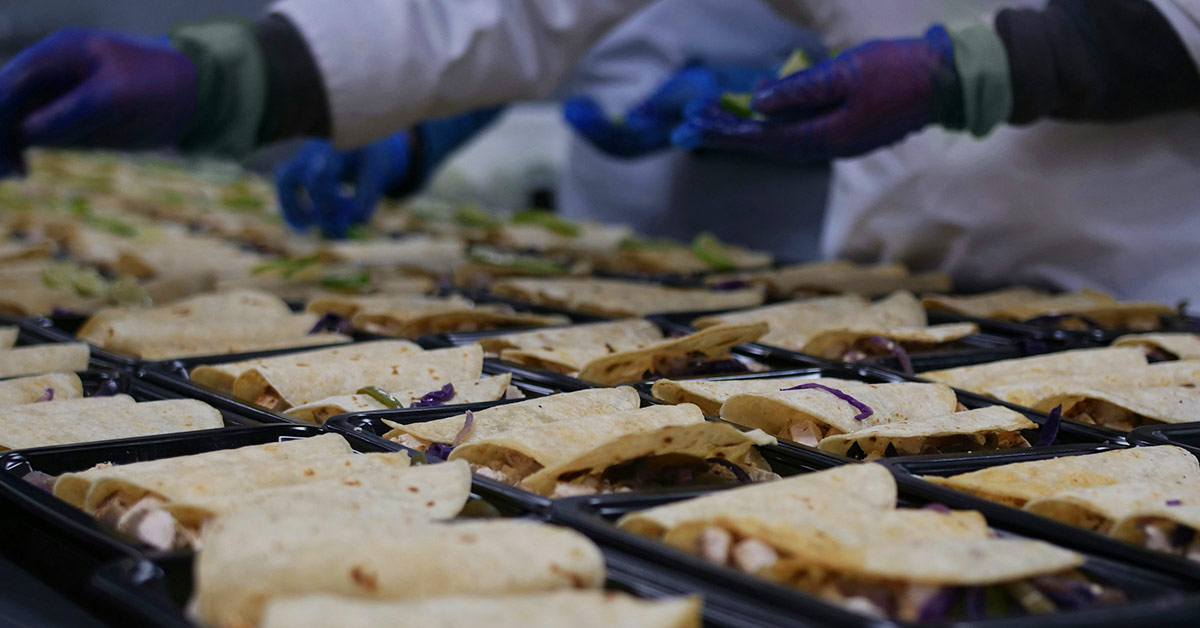
Food manufacturing is having a moment as brands across the spectrum of categories and growth stages seem to be prioritizing their production and, in many ways, taking the capital-intensive, in-house approach.
In March, Chobani announced a $500 million expansion of its Idaho plant, followed a month later with the announcement of a new $1.2 billion, 28-line facility in New York. Mars, Inc. made news last week with a $2 billion pledge to increase its manufacturing capacity. Later in the week, additional, smaller food and beverage brands — Traditional Medicinals, Kervan, Starco Brands and others – announced their respective moves to invest in production.
Is self-manufacturing having a moment?
On the surface, the investment uptick in production may appear to be an emerging trend, but the truth is a touch more complex than that.
“Post-COVID, you saw a lot of push towards self-manufacturing,” said Craig Albert, co-founder and CEO of Saphineia Manufacturing Partners. “Businesses saw how stressed supply chains were and they weren’t getting the capacity, the quality, or the reliability they needed from their co-mans and outsource providers. A lot of people were buying in. What I’m asking myself right now is: Are we in a trend or is this episodic?”
In 2023, 64 new food manufacturing building projects were started, according to a Global Locations Strategies report. While that number rose to 90 projects in 2024, employment has continued that trajectory.
According to Bureau of Labor and Statistics (BLS) data, food manufacturing employment in July was nearly flat from the year-ago period. The unemployment rate ticked up to 6.2% in July, the highest it has been since May 2024.
Pair this data with news that some food makers like Utz, Post Holdings and Tyson are shrinking their production footprint, leading back to the big question: What is happening in U.S. food manufacturing?
It all shakes down to how much “control” a company wants over its supply chain and its capacity, said Rifle Hughes, co-founder of consulting firm Integral CPG.
“Companies are seeking consistency through greater operational flexibility—whether through multiple suppliers, geographically diverse partners, or by maintaining larger inventories of key materials. Better margins may be a goal for some, but I don’t believe that’s what’s driving the shift.”
Tariffs are just the latest challenge to controlling a business’s margins. The last six months of import taxes on ingredients and packaging materials yield uncertainty. In a time when profitability is key and margins are scrutinized by potential investment partners, taking on the cost and logistics of managing a production plant could be a solution or a poison pill, depending on the brand’s trajectory and business model.
“Owning manufacturing introduces significant operational and even managerial overhead. Between working capital, managing labor, equipment, certification, compliance, and logistics, not all brands are equipped to handle it,” Hughes said. “What begins as added control can quickly become a distraction from core strategic priorities.”
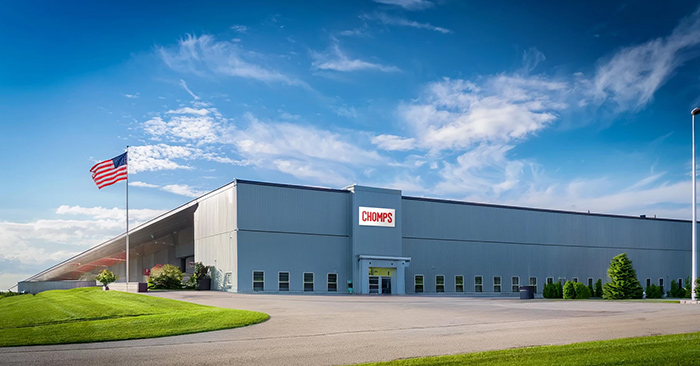
For meat snack maker Chomps, it’s about marrying the two approaches in a hybrid model. While owning a meat processing plant outright might be a cost-intensive and regulatory nightmare working under the purview of the USDA, investing in a dedicated plant with an experienced co-manufacturing partner could be the best of both worlds.
Chomps and Western Smokehouse Partners announced the opening of their co-invested facility in Mexico, Mo. The new facility “will play a significant role” in increasing the Chomps’ overall capacity, said a company spokesperson, without having to take on the added burden of operating a meat processing plant alone.
This is a slightly different approach than category competitor Archer. The meat snack maker is embracing the cost that comes with control by building its second production plant, focused primarily on meat sticks.
For the most part, as brands grow, scaling into more operational control can benefit profit margins and allow for bigger innovation swings as long as the risk of product recalls, equipment costs and upkeep, and the additional labor requirements are met, Hughes said.
Put simply: “The goal is to remain agile in an increasingly unpredictable world.”
Explore the Nombase CPG Database
Head to Nombase to learn more about the tagged companies and their offerings.