Hershey: Cocoa Pricing Dominates Q2 Earnings, Outlook

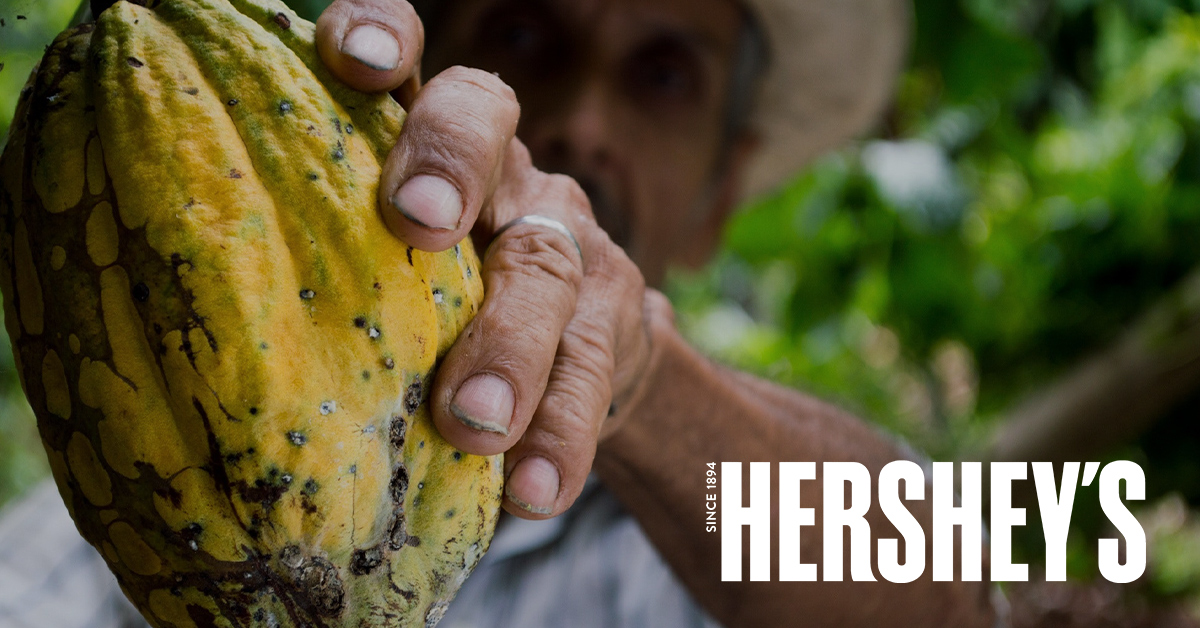
The Hershey Company reported net sales growth during its second quarter, while net income and adjusted earnings per share (EPS) both declined amid a “volatile” cocoa pricing market.
In president and CEO Michele Buck’s final earnings call after 20 years with the candy and salty snacks maker, the company addressed how the cocoa costing is playing into long-term forecasts.
“We have taken pivotal steps toward mitigating cocoa inflation through enhanced productivity,
technology-enabled efficiency and speed, and strategic pricing,” Buck said in prepared remarks.
While commodity prices have “retreated year-to-date” and “cocoa market fundamentals remain encouraging,” the chocolate producer has introduced various hedging strategies to offset higher input costs and plans to institute “similar strategies” in its 2026 hedges.
Part of that hedging strategy has included investing resources toward better farming practices at West African supplier farms and pivoting to new cocoa sources outside of the region.
With that news, Hershey updated its outlook for reported EPS growth to around 50% (up from prior guidance of high 40%) and adjusted EPS growth to 36% to 38% (up from mid-30%). The Pennsylvania-based multinational also announced it was expecting tariff-related expenses of approximately $170 million to $180 million for the full year.
“Given the unique circumstances surrounding cocoa, which cannot be grown in the United States, we remain hopeful that tariffs on our largest exposure will improve as trade negotiations continue, though this will likely take time,” said SVP and CFO Steve Voskuil in prepared statements.
While the company wouldn’t disclose any specifics, Buck responded to an analyst question that she was “optimistic” and “increasingly comfortable” that the government is taking into account the impact of tariffs on cocoa, hinting that an import tax exemption could be possible.
Net sales were up in Hershey’s two largest segments, North America Confectionery (32%) and North America Salty Snacks (8.8%). Both arms of the business are also home to the two newest brands in Hershey’s portfolio, LesserEvil and Sour Strips.
Acquired in November, candy brand Sour Strips (which could be seen as a hedge against cocoa pricing and an expansion into the growing sour sweets segment) is anticipated to add an approximate 40-basis-point benefit to net sales growth over FY2025.
Looking toward its Salty Snacks portfolio, Hershey leadership reported an expectation of gaining momentum in the third quarter with innovation, media investment and new product rotations. Additionally, the company hinted at a whitespace opportunity in merging its sweet and salty brands after initial success of the Reese Peanut Butter-Filled Pretzels rollout.
Adjusted gross margin was 38.1% in Q2, down from 43.2% in the previous quarter last year. Hershey reported that margin was higher than expected due to the timing of cocoa hedges, higher volume leverage and lower-than-expected tariff expenses.
The company did not comment on its bid to dismiss a lawsuit over a teen’s death in relation to the “One Chip Challenge” social media trend. The case in a U.S. District Court for the District of Massachusetts alleges that Hershey and its two subsidiaries, Amplify Snack Brands Inc. and Paqui LLC, were aware of the dangers of the viral trend and were promoting it on social media platforms.
Explore the Nombase CPG Database
Head to Nombase to learn more about the tagged companies and their offerings.