From Midwest Secret To Inc. 5000: How Toom Is Making Garlic Dip A Staple

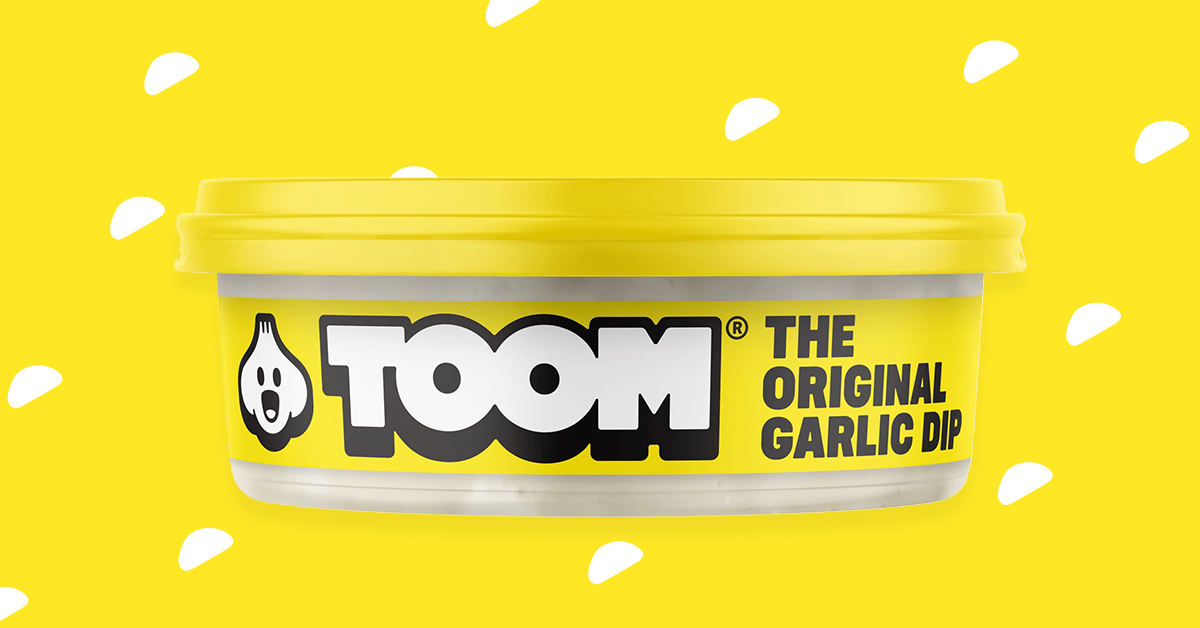
Despite its simplicity in ingredients and preparation, Lebanese garlic and lemon dip toum is not an easy product to commercialize, yet one brand has spent the last 14 years quietly tinkering until it got the formula correct.
Minnesota-based brand Toom has flown under the radar for over a decade, slowly building a retail footprint in the Midwest as it continually reformulated its processes to be ready for mass distribution. Last month, the brand was named one of Inc. 5000’s fastest growing brands as it surpassed 6,000 retail doors and a viral following online.
Founder Matt Joyce grew up with toum as a staple in his mixed Lebanese and Irish family household. After graduating from Boston College with a degree in finance, he decided to employ his entrepreneurial ambitions towards making the versatile dip, or “healthier version of ketchup,” a more recognizable option in the refrigerated section.
In the midst of a minor packaging refresh that includes adding a new smiley-faced garlic bulb, Toom is available in 8-, 16- and 22-oz. tubs as well as pretzel and toum snack packs. After diversifying into other flavors like Buffalo, Chipotle and Basil, Joyce made a “strategic decision to go all-in” on Original this past year.
Traditionally made with just four ingredients – fresh garlic, lemon juice, salt and oil — toum is simple but difficult to scale at a price point and capacity that is commercially viable as a mass-produced product.
The challenge derives from the nature of working with fresh California garlic and finding a stable emulsion to extend shelf-life without adding artificial preservatives, Joyce said. “Typically, when you see garlic products, it’s some type of garlic powder or dehydrated garlic in it. Maybe there’s a little diced and flash-frozen garlic.”
Yet Joyce’s approach was about patience and “continually iterating” it to find the formulation that worked.
Toom hit its “inflection point” in June 2022, Joyce said, when Whole Foods moved it from a Midwest regional brand to nationwide distribution.
“I don’t think we would be here without Whole Foods,” he said, attributing the brand’s expansion in the last three years to the “stepping stone” that the natural retailer provided.
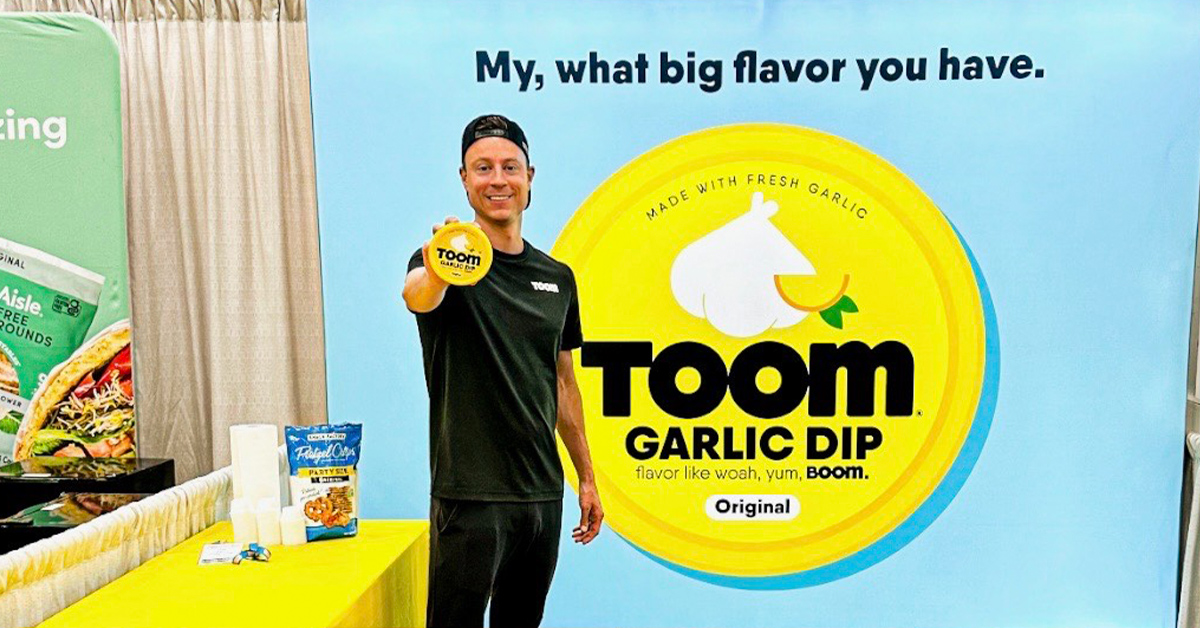
“They do three really important things,” he said. “They give brands enough scale for production runs. They tell other retailers: ‘We’ve done our due diligence, we have high standards, the product quality is good.’ The third thing is the amazing access to really granular data, which allows you to A-B test and experiment, cutting out things that don’t work and doubling down on things that do.”
After the brand went “global” with Whole Foods, it landed a chainwide deal with Publix and key accounts with Hannafords, Wegmans, Target, H-E-B, Giant and nationwide in Costco.
Toum is another example of how hummus has evolved the demand for refrigerated dips in the U.S. Last November, PepsiCo took full ownership of dip maker Sabra, signalling its aim to be a major player in the $1 billion hummus category.
Despite its dominance by private-label options and major players Sabra, Boar’s Head and Cedar’s (who recently released a toum SKU), insurgent brands are gaining share as demand continues to climb in refrigerated dips. Sales were up for brands like Ithaca Hummus (41.3%), Baba’s Hummus (55.2%) and Little Sesame (110.2%) in the 52-week period ending June 15, according to Circana tracking.
Thanks to the success of the chickpea and tahini staple, other culturally significant refrigerated dips have been able to introduce themselves to U.S. consumers.
But there is a limit to how much consumers will pay for a new product category, Joyce said, after years of finding a sweet spot in retail for Toom.
“People will balk at a refrigerated dip that has a ‘six’ on the front of the price,” he said. “This isn’t hummus; fresh California garlic is a lot more expensive than chickpeas, but we still need to be accessible.”
For the time being, Joyce is keeping his product accessible by running a lean and efficient business where he handles the majority of sales and marketing as opposed to paying for brokers or hiring a sales team.
“We’re still 100% family-owned. We are self-sufficient and do not need to raise money,” he said. “But if I believe that’s the best decision for the company to add extra fuel to the fire, it’s something I am definitely thinking through.”
Tagged Brands (1)

Explore the Nombase CPG Database
Head to Nombase to learn more about the tagged companies and their offerings.