First-Gen Brothers Launch Southeast Asian Condiment Line

Spurred by higher levels of at-home cooking amid inflationary pressure, the once-sleepy condiment category is experiencing a renaissance characterized by global flavors and innovative formats.
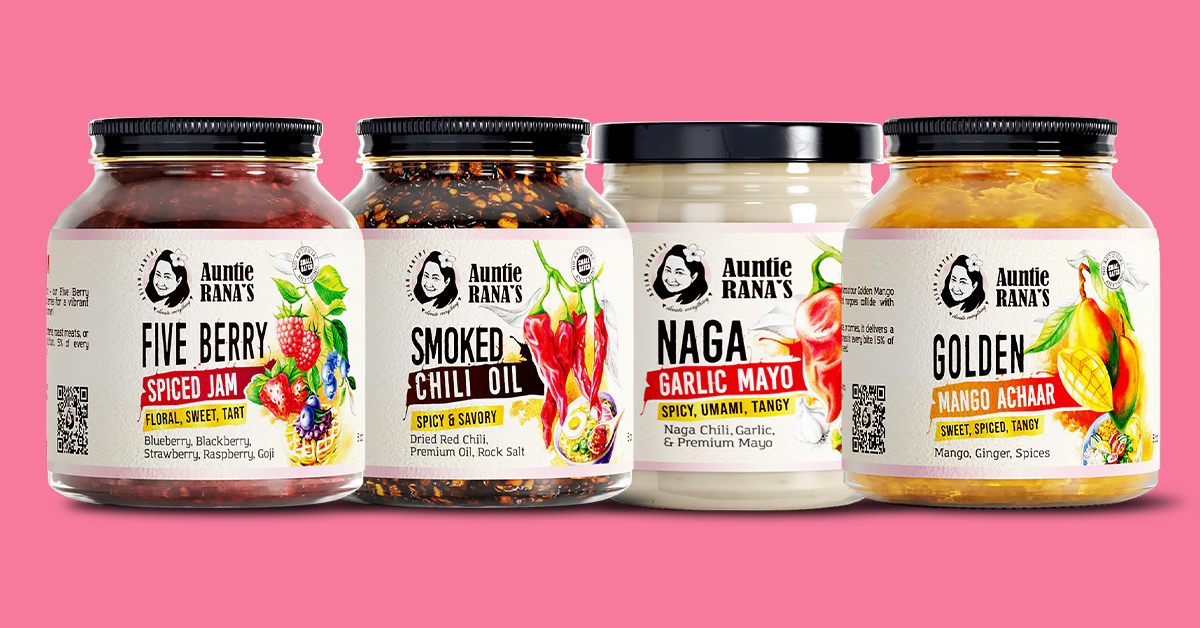
The segment’s newest entrant is Auntie Rana’s, a Bangladeshi condiment line aiming to become a leader in Southeast Asian-inspired pantry staples. Its debut lineup, set to launch on the brand’s direct-to-consumer website on October 30, comprises four SKUs: Naga Garlic Mayo, Smoked Chili Oil, Golden Mango Achaar and Five Berry Spiced Jam. The condiments have a SRP of $15 per jar.
Naga Garlic Mayo is the first product of its kind to hit the U.S. market, according to the company. Its hero ingredient is the protected, GI-tagged Naga Morich chili pepper from the Himalayan foothills of Bangladesh.
Behind the company are brothers Syed Khaleque, a former Procter & Gamble vet, and Amer Rabbi. The duo, who grew up in California, Bangladesh and Southeast Asia and now reside in Canada, are the children of Bangladeshi immigrants. The idea for the brand stemmed from their mother, Rana’s, cooking and their father’s role in the CPG industry as part of Anchor Dairy.
Auntie Rana’s pays homage to regions like Singapore, Malaysia, Indonesia, Vietnam, Myanmar, India’s Seven Sisters region and Bangladesh, which Khaleque and Rabbi say are “almost entirely absent from American grocery shelves” despite the fact that they have a combined diaspora of approximately 6.7 million in the U.S.
“We saw opportunities in the condiment market to make something that is authentic to us. We found that a lot of South Asian or East Asian condiments [on the market] have stale ingredients. You don’t know what’s in them, and they’re mostly imports. There’s no direct competitor who makes products like ours,” said Khaleque.
“We’re taking our ethnic recipes and rare ingredients that aren’t yet available in North America and putting them in North American staples. It’s not fusion, it’s an authentic representation of who we are,” added Rabbi.
The launch is being supported by an undisclosed amount of pre-seed funding from Robuso Ventures, a Canadian boutique investment syndicate specializing in early-stage companies in the digital, hospitality and lifestyle sectors. The firm’s portfolio also includes Vietnamese coffee shop Fifth Sip and Yoshoku-inspired dining bar Nomonomo.
On the production side, Auntie Rana’s has partnered with Beth’s Farm Kitchen in New York, Organic Food Incubator in New Jersey, and Hinkle Foods in Ohio. The latter is expected to help the brand expand into big box stores, with the ultimate goal of securing partnerships with prominent retailers like Walmart and Target.
Prior to launch, the company encountered several hiccups, mainly attributable to issues with customs and tariffs imposed by the Trump Administration.
“We have two main facilities in New York and New Jersey, but since they were delayed in production, we started doing samples here in Canada. But then a lot of what was coming out of the U.S. administration caused confusion at the border, causing further delays,” explained Khaleque.
The situation has since been rectified, and the company doesn’t anticipate any additional challenges with tariffs, with the potential exception of its chilis from India’s Seven Sisters region.
“We recognize that certain chilis come from certain regions and, long term, we’re working with our farmers and partners to ensure they can be sustainable and protect the single-source ingredients,” said Rabbi, adding that the company is working on the genetics to be able to grow the chilis in the U.S. if issues arise.
In addition to its direct-to-consumer website, Auntie Rana’s products will be available on Amazon U.S. within the next few months, followed by Amazon Canada in early 2026. The brand is utilizing a hybrid fulfillment model to optimize pricing, inventory control and promotional flexibility.
The global condiments market was valued at $94.9 billion in 2024 and is projected to reach $153.9 billion by 2032, according to market researcher Fortune Business Insights. North America dominated the market in 2024, with a market share of 32.8%. Recent launches in the category include Fly By Jing’s Chili Crisp Ketchup, a Sichuan-inspired twist on an American staple and Heydoh’s “all-purpose workhorse” soy sauces.
Seeking to carve out space in the increasingly crowded market, Auntie Rana’s will partner with 300 influencers across food and lifestyle categories – with a combined reach of over five million followers, targeting 10 million consumers in the months ahead.
“We’re looking to drive influencer reach because virality, especially in the social media space, provides awareness and gives your brand legitimacy. Those two things are really important,” said Rabbi. “We also want to achieve a certain amount of sales so that we can keep this thing going and set up for retail.”