Chef-Led Brand Ripi Takes Aim at Frozen Pasta Disruption

Upstart, restaurant-inspired brands are reinventing the freezer aisle. Collectively they aim to shift consumer perceptions of the set from cheap, convenient and additive-laden items toward premium, clean-ingredient offerings.
Asian frozen food platforms like Laoban and MiLa have successfully made the jump from foodservice to freezer shelves, and now upstart stuffed pasta maker Ripi is homing in on that same chef-quality positioning – but hurdling the checkered tablecloths and heading straight for stores.
“If you can create products that are sophisticated and elevated, but approachable and fun and all packaged up to this brand that really resonates and has a really unique voice on social – that’s a really interesting proposition,” said founder and CEO Ian Tecklin, a former investment banker-turned-“pastaprenuer.”
Tecklin first began working on the concept during the COVID-19 pandemic, the golden era for frozen foods’ revamped reputation, after feeling “uninspired” by frozen pasta options. He then “diligenced the hell” out of the market opportunity and began putting together his pitch deck.
“I had seen TRUFF take off and Fishwife take off and Graza take off and Sauz,” he added. “I thought the frozen pasta could be that next frontier that’s right for disruption, and I want to be that next big challenger brand.”
Americans eat a lot of pasta, averaging 20 lbs per person annually, Tecklin emphasized, citing data from the National Pasta Association. The pasta market is valued at about $9 billion with the refrigerated and frozen segment coming in at over $2 billion. On social media, Tecklin found that pasta searches overindexed across all search key performance indicators relative to other CPG categories.
With his pitch now taking shape, Tecklin sent an Instagram direct message to “Top Chef” competitor Joe Sasto, who happened to live just down the street from him in Los Angles at the time, and the duo spent the next six months developing the products that would later become Ripi. Though they had a book of recipes at the ready, the world was still “upside down” due to the pandemic and Tecklin shelved the idea.
“I have always felt like I had this entrepreneurial bug,” Tecklin said. “I have always been passionate about the food space and was a bit envious, even though I’m not a jealous person, of the founders and early-stage operators I met along the way [as an investor]… [but] I told myself I would never leave a comfortable position to dive into this crazy world unless I had a high level of conviction around the opportunity, and Ripi is just that.”
In September 2023, Tecklin dusted off the idea and decided to make the leap full-time into building the business. Over the next three months, he raised about $1.2 million from a combination of venture funds, family offices and angel investors. By January 2024, Tecklin started the long R&D process of scaling up the recipes with its co-packing partners. It also contracted design agency Truffl to build out the brand strategy, visual identity, logo, as well as the packaging and web design.
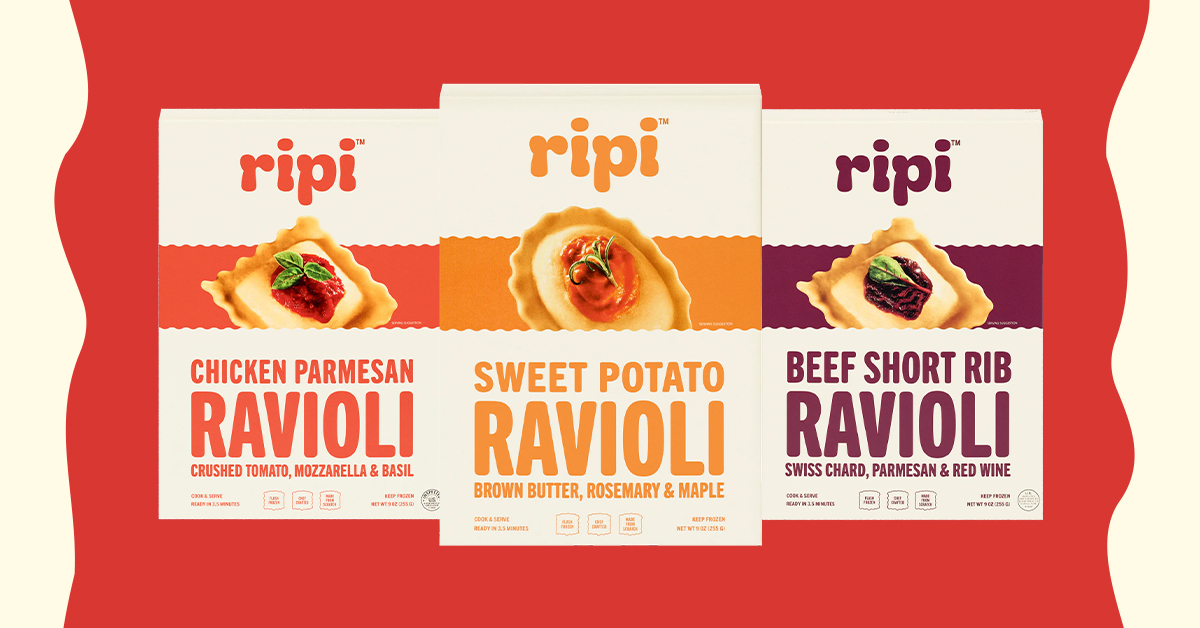
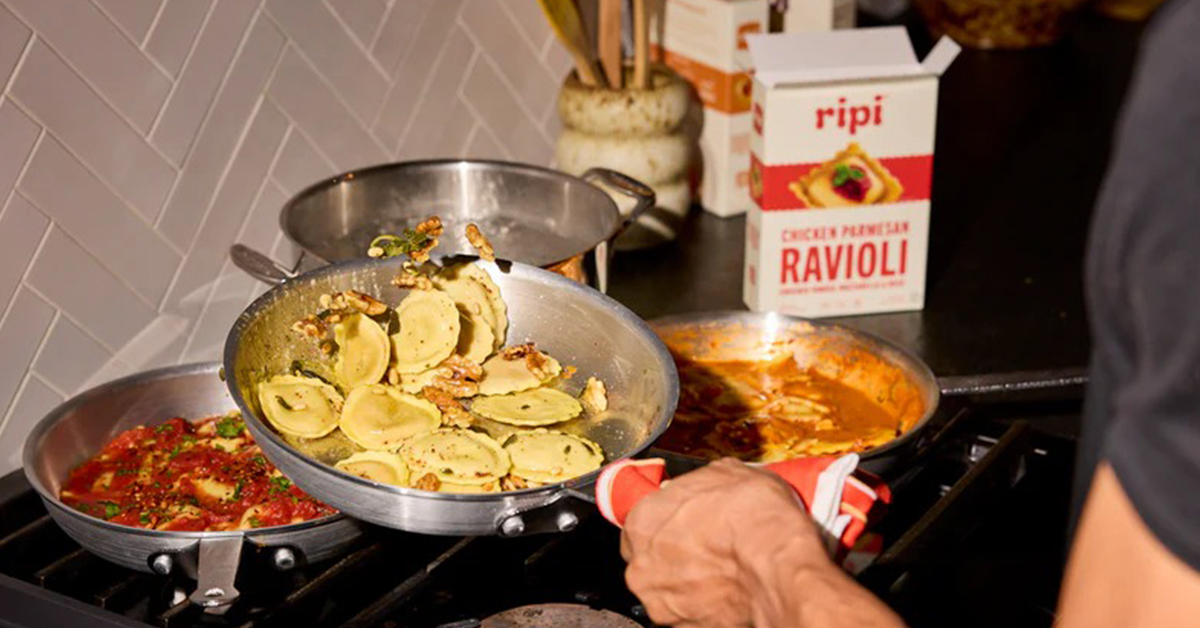
The brand now sells a 3-SKU line of frozen ravioli in Chicken Parm, Sweet Potato and Beef Short Rib flavors for an SRP of $9.99 per 2-serving box. The chef-crafted, flash-frozen products can be prepared by boiling for 3.5 minutes and contain between 7 to 15 grams of protein, depending on the flavor.
Though Ripi has now only been on the market for five months – initially launching into 35 stores and has since grown that count to about 150 doors – Tecklin believes the brand will reach 1,000 points of distribution by the end of the year, which includes a major chain retail rollout in the fall. The company is also preparing to turn on direct-to-consumer and Amazon sales in the coming days.
Ripi faces little competition in terms of its approach and positioning, with frozen products from Campbell’s-owned Rao’s and Michelangelo brands being the closest competitors; however, the brand will need to prove to retailers that it can hold its own in the frozen category, where shelf space itself is limited and often dominated by legacy brands like Bird’s Eye, Stouffers, and Lean Cuisine, all of which are owned by large conglomerates.
The company also faces the challenge of competing with regional, refrigerated pasta brands such as La Pasta, which sells in Whole Foods stores on the East and West Coasts, in addition to training consumers to look for fresh pastas in the frozen set. Tecklin believes that by leaning in and investing in the brand, as well as tapping into Sasto’s social media base, which now totals nearly 500,000 followers (Sasto is also the founder of puffed pasta chip brand Tantos), he can do just that.
“People going to the freezer aisle today are very mission driven, meaning they’re going for the frozen veggies, frozen pizza or ice cream,” Tecklin emphasized. “How do you reshape or retrain people’s minds to view the freezer aisle as a destination for delicious food?”
As he maps out future growth plans, Tecklin believes the Ripi platform will give the brand plenty of room to play in frozen stuffed pastas as well as adjacent categories like appetizers, prepared meals like lasangas, manicottis and soft shells. Family-sized packs, gluten-free and dairy-free iterations are also on the roadmap, he said.
While Tecklin claims that Ripi is not an “Italian brand, per se” – though its name is short for the Italian word Rippiano, which means “filling” or “stuffing” – he sees the business’s future built around frozen pasta and extensions of that set. He emphasizes that Ripi will not get into Italian pantry staples, jarred sauces and the like.
“On the record, we will never launch a protein ravioli or like a superfood ravioli [either],” he said.