Nosh Live Day 1 Recap: How Simplicity and Focus Can Be Rocket Fuel For Early Stage Brands

Nosh Live Winter 2024 kicked off on Thursday in Marina Del Rey, Calif., with panels, presentations and conversations that pieced together fundamental components of successful CPG businesses and offered brands advice on how to navigate current economic headwinds, shifting consumer habits and prepare for an uncertain landscape in the years to come.
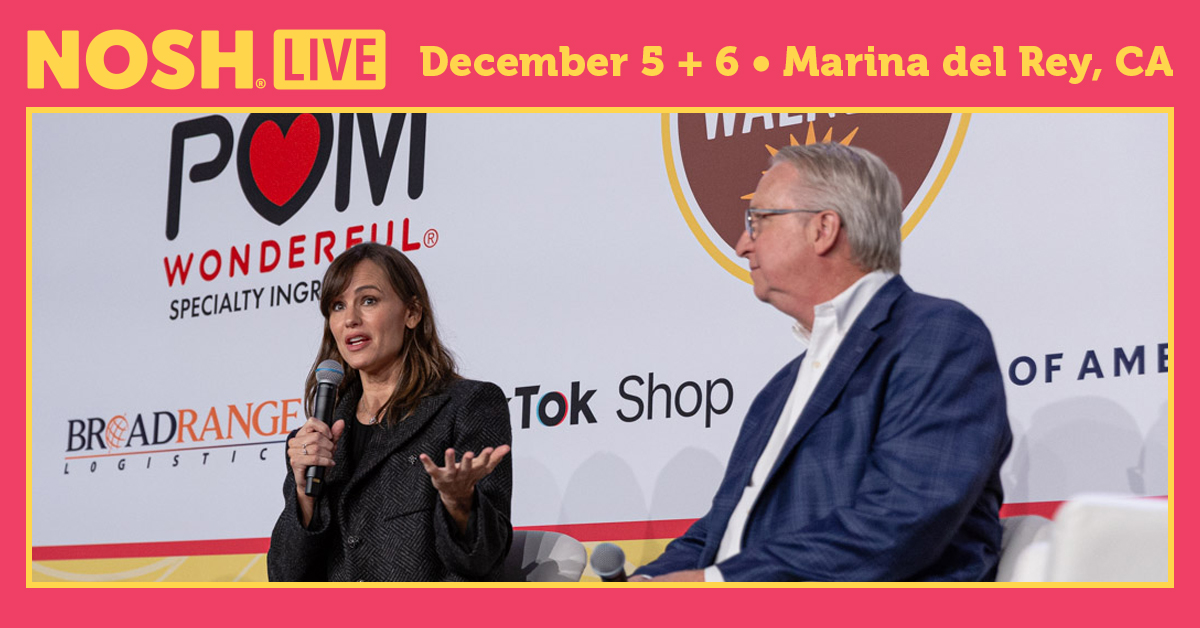
Lessons From A Celebrity Farmer
Building a fresh, whole food focused baby food brand might not be the flashiest feature of Jen Garner’s resume, but for her and co-founder and CEO John Foraker, growing Once Upon A Farm beyond its pouched product origins into new categories and age groups has created a roadmap for why a brand should solidify its mission early on, how to create strong retail partnerships and what value celebrity and well-timed innovation can do for its growth goals.
During the first session, Garner and Foraker explained how the team’s early idea to “Fresh Pet” the baby food aisle allowed it to not only differentiate itself within a stale and stagnant category, but also secure early buy-in from its retail partners. Now, “every major retailer” is scaling coolers as demand for fresh products grows, said Foraker.
This past year, OUAF launched nine new products and he claims six of those SKUs are the fastest selling dry baby snacking items across “the entire MULO universe… I’m talking [about] Gerber, Nestle, everybody.” That fast growth was made possible because the brand was clear on its mission from day one, he said.
“When you’re an emerging brand, and you hammer your core, and you build a loyal audience of millions of households, and then you launch some great innovation that they view as additive to building the brand. You can get that innovation to go really big, really fast,” Foraker said.
Early success in Whole Foods’ dairy set also informed their early growth strategy, which was cushioned by its foundational brand guardrails, allowing OUAF to tell the story of why they were different from the sugar-laden products in the yogurt set at that time. After successful trials in the retailer’s Northeast region, Garner and Foraker “flew all over the country” to tell others about the results and those efforts pushed the brand from 300 doors in 2017 to about 8,500 by August 2018.
“By the way, that [rate of growth] is the worst thing you could possibly do as a CPG brand – I don’t recommend it to anybody, and I knew that even then,” Foraker said. “I knew that the opportunity for us to do that was risky. My first letter to shareholders was ‘this is going to be really risky, it might not work, but we’re going to go big.’ It ended up working. It took us a couple years once it was out there to get going, but then it really took off, and it’s just been a rocket ever since.”
While she may be best known for her roles on the big screen, according to Garner, her celebrity works for OUAF’s in some less visible aspects. She emphasized that learning about the industry has naturally ingrained her within the business’ day-to-day – from “meetings I don’t even know about,” Foraker joked, to becoming a Slack expert in the post-COVID era. By working to understand the business and its objectives she brings not only a familiar face to consumers, but also an authentic layer of social capital not often achieved by most celebrity brand figureheads.
“John, Cassandra and Katie and the whole team – that’s what works,” said Garner. “You can’t tell a baby, ‘Hey, hi. I was on Alias.’ I mean, they don’t really care so I can only take so much credit… You can either look at it as, ‘Okay, I’m having this celebrity join the company, and they need to do X many posts, and they need to try to get this much earned media,’ there’s value in that, I know that is what I’m here for, but at the same time, all of that is external.”
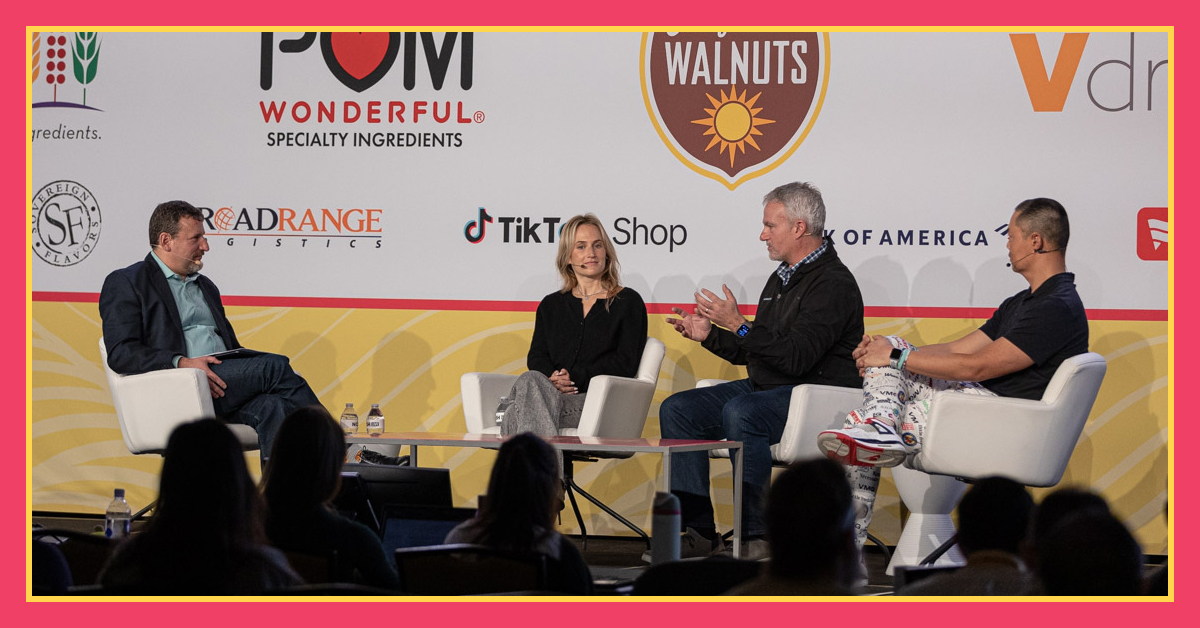
State of VC Investing
Tinned fish, cottage cheese and sparkling water are the apple of some VC’s eyes, at least according to Rachel Hirsch, managing partner at Wellness Growth Ventures, Steve Young, managing partner at Manna Tree and Wayne Wu, general partner at VMG partners, who praised their investments in fast-growing brands Fishwife, Good Culture and Spindrift, respectively.
While the trio took to the stage to share their thoughts on the state of VC investing, they also emphasized the importance of not taking on institutional capital unless absolutely necessary. Hirsch detailed how despite being a venture firm, Wellness advocates for its portfolio brands to explore the many forms of non-dilutive capital that are often untapped, particularly among its core focus on women-owned businesses.
For those in need of capital, panelists put a heavy emphasis on why simplicity, focus and strong gross margins remain essential to getting investors to buy in. Wu believes that despite the environment being tough, there’s more early stage capital available to food and beverage brands today than there was 20 years ago, adding that interest has shifted back onto those with less aggressive go-to-market strategies, simpler teams and focused product portfolios.
The panelists also emphasized that the conversation about how to build a successful business has also evolved where the goal should no longer be “as linear” as simply seeking an exit.
“We need [exits] for the companies we’re investing in, but not all companies need to go public [or] need to be acquired, they can be really successful, self-sustaining businesses. I think that, again, goes back to the type of capital for partners to bring on that matters, and that will matter to us as well.”
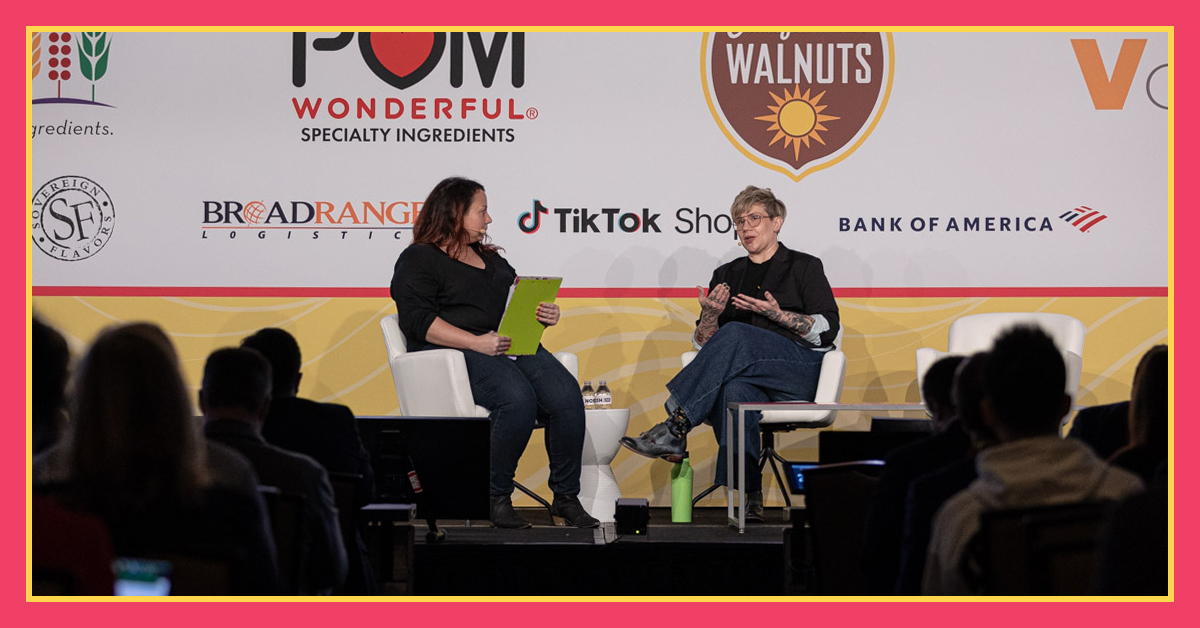
Growing In Whole Foods
Getting a foot in the door of Whole Foods Market stores can often be the first drop of fuel in a brand’s path to scale. The natural retailer’s executive leader of local and emerging brands, Casey Gaston, said that environmental sustainability, ethical sourcing and on-trend innovations have become increasingly important as buyers evaluate potential suppliers, adding that it looks for the “brands of tomorrow” that will push those standards Whole Foods has built its own brand around, forward.
She explained that one of brands’ most common misconceptions about getting into Whole Foods is that it must play in the premium space and cater to premium-seeking consumers. Gaston emphasized that the retailer has invested heavily in its pricing so that consumers now view Whole Foods as offering both quality and value in its assortment.
“What we know is that price is the biggest barrier to entry for our customers,” said Gaston. “They love quality, they love coming to Whole Foods, but what they want to see is a really great quality product at our price that is approachable. They want to be able to get it into their basket. We have done a lot of work to invest in our pricing and can see our shopper perception scores change in a way that they see the value [we bring].”
The retailer brings that same level of focus and commitment to its supplier partners including collaborating on exclusive innovations; Gaston noted “if you are investing in us we can invest in you.” That level of involvement allows the retailer to help brands build beyond its doors, giving them a foundation to generate awareness in new channels, while also scaling the standards and core values that Whole Foods subscribes to.
More notable takeaways from Day One:
- Be weird, be fun, and remember “buyers are people, too.” That’s the message shared by Goodles co-founder and CEO Jen Zeszut and Springdale Ventures co-founder and managing partner Genevieve Gilbreath,who discussed how the brand has scaled with profitability and velocities as their north stars and worked to become a strategic partner to retailers with promises to bring incremental revenue to their mac and cheese sets.
- Diverse opinions within a company’s leadership can be an emerging or reemerging brand’s great asset. Rudi’s CEO Jane Miller and chief innovation and strategy officer Justin Gold shared how their decades-long relationship helped shape Gold’s eponymous nut butter brand as well as Miller’s past ventures. The duo also dove into how they are embracing value-added innovations to build Rudi’s “street cred” back up to its former glory.
- Afia Foods founder Yassin Sibai, Keychain co-founder and CEO Oisin Hanrahan and Saphineia Manufacturing Partners founder Craig Albert closed out the day by diving into why self-manufacturing is all about adding incrementality to a business. While it is extremely difficult, and can introduce plenty of complexities to the business, if it is done right, the panelists emphasized that manufacturing can become a company’s greatest competitive advantage.