Beyond Good Finds ‘Skeptical Optimism’ In Facing 47% Tariff

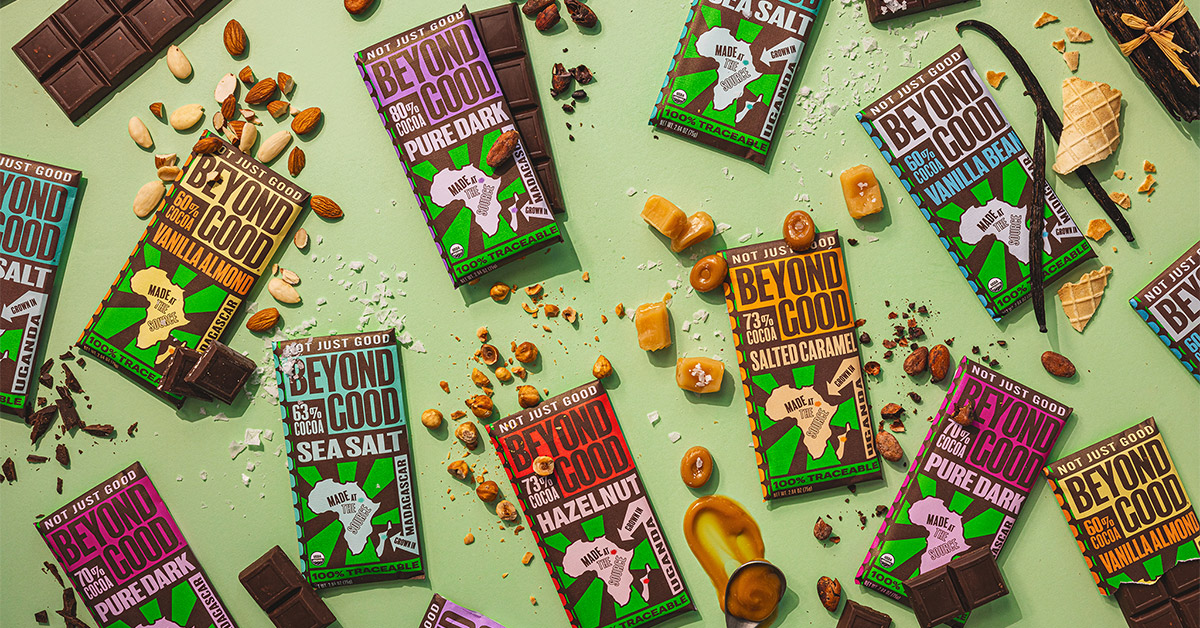
Food business entrepreneurs navigate internal crises everyday. But with the economic climate continuing to mount external pressures and political sucker punches flowing from Washington, D.C., identifying obstacles early and understanding the full context has become an essential element for keeping any upstart business alive.
Founder and CEO of Beyond Good, a single-origin chocolate and vanilla producer, Tim McCollum told Nosh on Friday about how the latest shock – President Trump’s “Liberation Day” tariffs – instigated a week-long rollercoaster emblematic of all of the trials and tribulations of entrepreneurship, but has left him inspired with a sense of strength and “skeptical optimism” in the business he’s built over the past nearly two decades.
“I’ve never been more optimistic in my life about the business,” he said, two days after Trump backpedaled and paused all of the Liberation Day tariffs for the next 90 days, leaving only a 10% universal reciprocal tariff in effect, with the exception of China. “It’s been an interesting week.”
‘Liberation Day’ Arrives
Let’s rewind to April 2, when the President applied, seemingly at random, a slate of tariffs to every country across the globe. From that announcement, McCollum learned that Madagascar – the site of his company’s factory and source country of 100% of his chocolate and vanilla company’s products – would now be subject to a 47% tariff.
“There were 48 hours of shock to the point where we couldn’t even process it,” McCollum said. “[We thought] this must be a mistake and then realized – when we dissected the formula they use to apply the tariffs – it was a mistake… No one knew the formula they used to calculate a deficit. It’s so easy for me to visualize the intern, who copied and dragged the formula down 180 rows, and no one [stopped to ask] why are we doing 47% on Madagascar?”
McCollum explained how that announcement hit many of the world’s poorest countries with some of the highest tariff rates, including Madagascar which had a $523 GDP per capita as of 2024, alongside others such as Laos (58% tariff) and Lesotho (50% tariff). He said that after the period of shock, the Beyond Good team took a moment to get “some real information” and understand exactly what was happening.
By the following Monday, the team was calling on “some really good relationships” it has built over the years including the U.S. ambassador to Madagascar, as well as the Madagascar ambassador to the U.S., followed by the U.S. trade representatives for the African nation. Looking forward, McCollum said the company is going to be keeping a closer eye on what’s going on in Washington day-to-day.
“There’s a paralysis in decision making [that] happens when you actually don’t know what’s going on,” McCollum emphasized, explaining that by calling on these contacts, the company was able understand that the 47% fee was not going to be a “forever and always” thing, allowing it to begin making a strategic assessments and deciding on next steps.
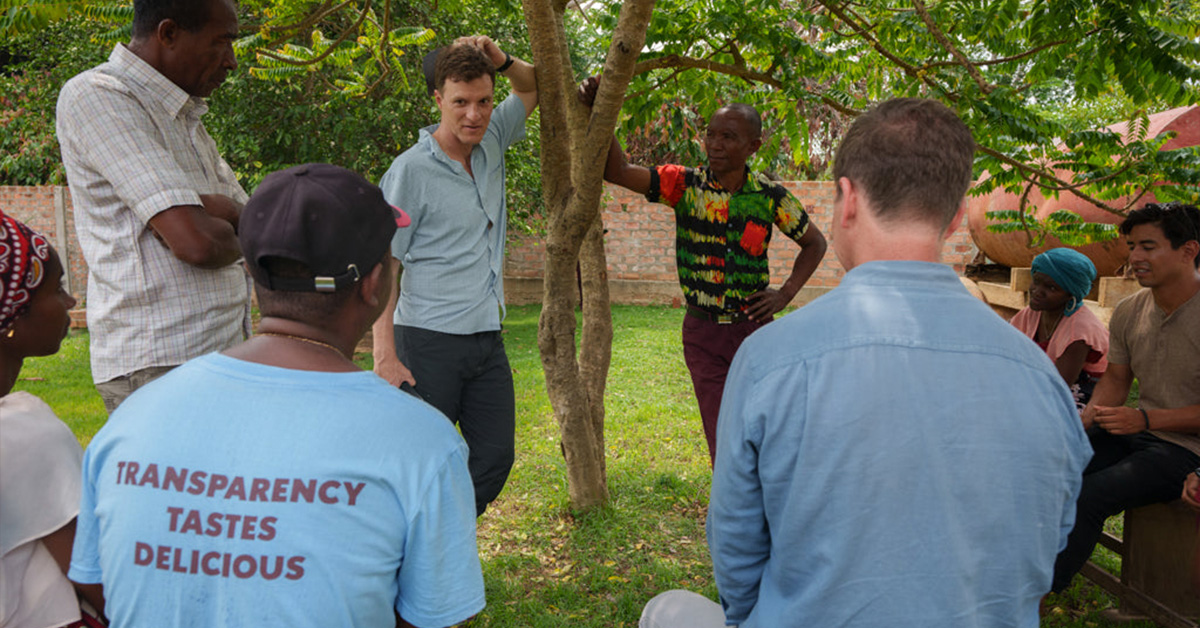
However, McCollum said he believes during this second term, the Administration will come to its senses, if it hasn’t already, once it realizes there are items the U.S. simply cannot grow and produce, like cocoa, coffee and mangoes. He believes that tariffs on those types of goods will go away completely sometime between now and when the 90-day pause is up.
“Because [Madagascar] has all of the world’s vanilla, the U.S. has to buy it from there – there’s really nowhere else to buy it,” McCollum emphasized. “Obviously you’re not going to handicap U.S. manufacturers who now have to buy a global commodity at 47% more than a European counterpart.”
Controls In A Crisis
The remaining 10% universal tariff won’t impact Beyond Good’s business, McCollum said. But the prospect of dealing with the 47% fee helped identify strengths and weaknesses within the business he was not previously aware of, including within its vertically-integrated supply chain, unique sourcing principles and end-product pricepoint.
“A crisis will shock you, and then it forces you to – once you get through the shock – to really look at things very critically within your own business,” he said. “We’ve always built in with our brand positioning, that this is affordable craft chocolate… Even if we’re looking down the barrel of a 47% tariff, we lose some of the affordability of the positioning, but we’re still a really incredible, sustainable craft chocolate company.”
Beyond Good’s chocolate sits on shelf for $4.99 per 2.64 oz. bar. The company has raised prices only once in the past 15 years, back in 2023, and has reduced its pricepoint twice during that period, McCollum said. Its SRP has become one of the brand’s secret weapons for sustaining itself against commodity market-sourced competitors.
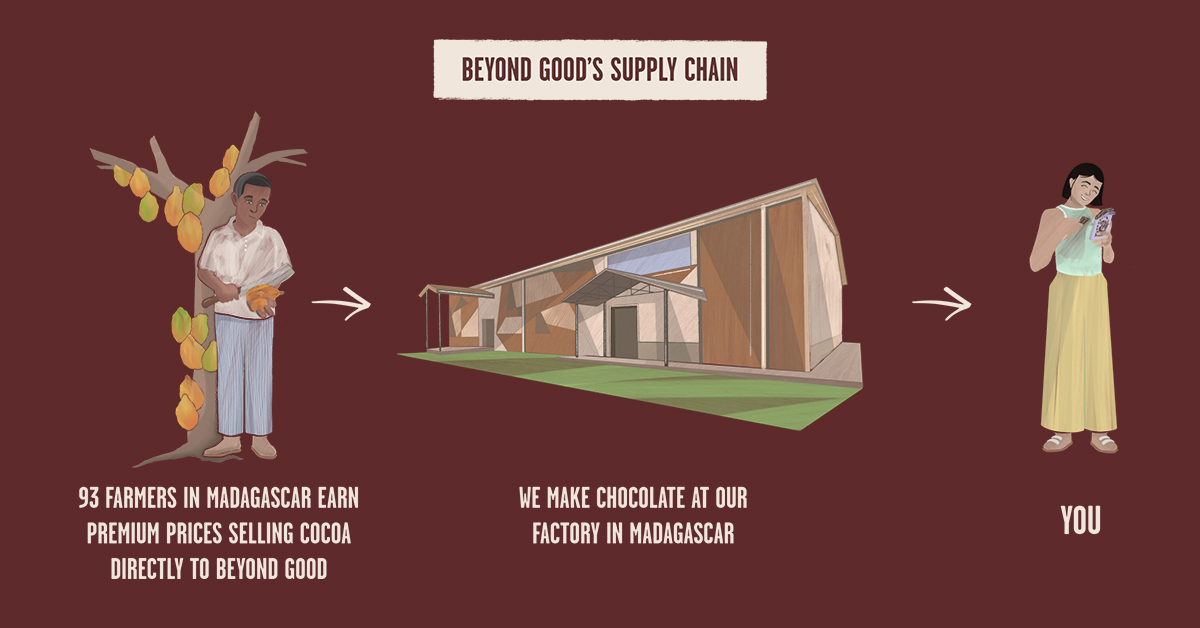
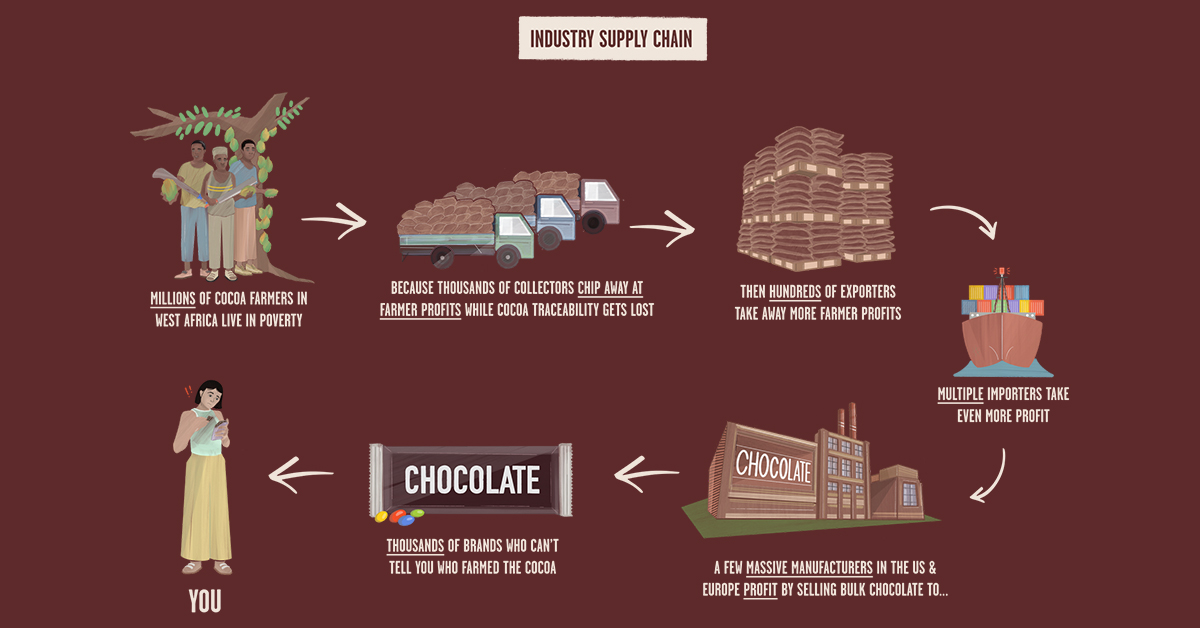
The company sources the “incredibly rare” Criollo cocoa variety from its biodiversity-supporting small farmer network in Madagascar, which now spans over 90 farms. Beyond Good farmers are paid nearly four to five times the global average for their cacao harvests, McCollum explained.
Due to the variety’s uniqueness , McCollum believes that a $7.99 pricepoint could also be a “strategic decision” for the business, explaining that after the 47% tariff event, the company decided it will raise prices once again in the future. While it has not yet decided how much it will add to the price tag: “There’s a lot of strength just in us having that choice.”
But the business’ unique strength – its single-origin sourcing and production – also doubled as a significant weakness during this specific circumstance.
“I [realized] this probably impacts us more than any brand in the industry because 100% of our product comes from Madagascar, not just our raw material – our finished product – and Madagascar has one of the highest tariff rates in the world. We’ve been through a lot… and we’ve done a couple of things that would border on virtually impossible.”
Beyond Good’s decision to raise prices will bring it “up market a bit” while still maintaining the product’s competitive position, he said. Back in 2019, the company opened its own factory on the African island nation, a challenge in of itself considering the country’s economy, lack of infrastructure and that it is located 8,000 miles from the U.S., where the products are then sold.
That factory is now the source of all of the brand’s products and employs about 100 Madagascan residents. McCollum identified that internal infrastructure as another strength during times of crisis, explaining that if the brand’s products had still been produced by a co-manufacturer in Madagascar, it would have lost a key piece of its competitive advantage.
‘We Are Literally On An Island By Ourselves’
As the years have worn on, the crises have increasingly moved beyond the business’s control. But this latest obstacle had McCollum questioning, for a moment, if Beyond Good should even be making chocolate and vanilla in Madagascar: “Has [the past] 18 years been a complete wild goose chase?”
“COVID was the first [major] crisis, but that was an even playing field where everyone had to figure it out. Then last year… we had the cocoa crisis where cocoa went up, for us, about 350%. I thought, Well, at least that’s an ‘everyone-in-the-chocolate-category-crisis.’ And then with 47%, we realized, no, this is just an ‘us crisis.’ We are literally on an island by ourselves.”
That prompted a “moment of deep reflection” followed by clarity and commitment to the company’s mission that he believes is essential to the survival of any entrepreneurial company. He said that as long as “you know who you are as a business” and have a strong foundation, it shouldn’t matter if the costs go up 47% or 50%.
“When there’s depth to the brand and the business, and it’s got dynamic positioning, or there’s a real, true competitive advantage – [I’d say] don’t panic. All those foundational things to building long-term businesses shine through in a crisis. Unfortunately, there are a lot of brands, and maybe perhaps the majority that don’t have that.”
The Trump Administration will likely continue to put guardrails on to curb globalization and McCollum acknowledged that all food producers will feel a strain. However, he said he is optimistic the industry will preserve.
“When someone immigrates to another country, the first part of their culture they lose is the language, [by] the second generation [it’s] the music, [but] the food never goes away… It is such an international part of our culture, more than electronics or apparel or anything else.”
Explore the Nombase CPG Database
Head to Nombase to learn more about the tagged companies and their offerings.









![[Exclusive] Feel Good Foods Goes Deeper into Breakfast, Takes Target Partnership Nationwide](https://d2azl42aua8mom.cloudfront.net/wp-content/uploads/2026/04/15110135/Feel-Good-Foods-970-150x150.png)