Looking to Acquire Brands, Canadian Grocer Rebrands as ORAGIN

Canadian independent grocer Organic Garage has rebranded its parent company as ORAGIN Foods, stating that the change will clarify the goal of the publicly-traded business for shareholders as it works to build out an independent, M&A-driven CPG platform alongside the expansion of its retail division in Ontario. The company’s brick and mortar locations will continue to operate under the Organic Garage brand and the company’s current and future acquisitions will also retain their respective branding and management.
Organic Garage, which first went public on the Toronto Stock Exchange in 2016, began trading shares in a middle-tier OTC equity market (OTCQB) in the U.S. last February. While honing its focus on organic, plant-based and all natural products, Organic Garage has created a network of discount-style, better-for-you-focused grocery stores throughout Ontario since opening its doors in 2006.
“Our focus [now] on the CPG side is no different than the Organic Garage side,” said Matt Lurie, President of ORAGIN. “We focus on organic wellness and plant-based and, because most brands start in companies like Organic Garage, I’m at the ground level, seeing what brands are coming to market before they get to it.”
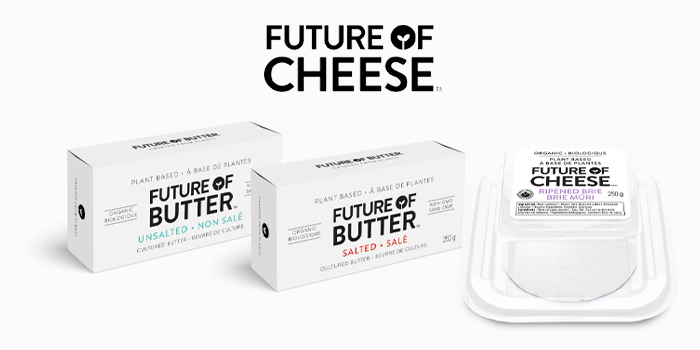
In March 2021, the retailer made its first acquisition – plant-based dairy maker Future of Cheese – and accelerated the brand toward its first product launch in October with dairy-free butters and a vegan-friendly ripened Brie.
“It’s become very apparent to us that there’s a tremendous amount of growth opportunity on the CPG side as CPG companies are valued much differently than bricks and mortar businesses, so the valuations are much higher,” he said.
The U.S. market will be a main target for expanding its newly-formed CPG division with Lurie noting that, from a public market perspective, “getting listed in a large retailer in the U.S. is viewed much differently than it is with a large retailer in Canada.” To him, that difference is a more positive “bang for the buck.” As of now, he noted that the company does not plan to expand its retail division stateside, but rather continue leveraging that entity to inform its M&A activities.
“I’m seeing [young] brands being pitched [to Organic Garage] and that gives me the insight to be able to present it to our CPG side of the business and say look, I got pitched this cool brand… it’s small, but the product is fast growing vertical, maybe there’s some interest there and turn it over [to the CPG division],” explained Lurie.
This informed-advantage on emerging trends and products, coupled with the success it has seen with Future of Cheese since its launch, pushed the company to rename its “public vehicle.” Lurie claims this change would allow both divisions to grow without creating confusion regarding the ownership, affiliation and purpose of each respective business and cited feedback after its Future of Cheese acquisition, noting “the story was not always 100% clear, there was some doubt like, what are these guys doing and what’s Future of Cheese? What’s happening?”
Now that the story has been clarified, Lurie is aiming for the company to approach the CPG industry by following the same model as multinational corporations like Unilever and General Mills where they buy, grow, and sometimes sell brands based on their respective “portfolio mandates.” ORAGIN Foods’ M&A portfolio mandate is centered around plant-based, organic products as Lurie said the momentum in this space is “not going away, it’s not a fad.”
He also highlighted Coca-Cola’s $4 billion vitaminwater acquisition as the lesson that informed its acquisition strategy, which is simply: “we can’t wait till they’re huge because the cost is going to be astronomical.”
“We feel we have a unique insight into the market that we can be in a position to acquire brands at a young stage, but provide them with all the tools to be able to grow it to a level that, eventually might make sense to sell it to a much larger company that can do more than what we can with it.”
However, unlike a large corporation, ORAGIN doesn’t plan to serve as an investment platform, but rather an incubator that either fully acquires or takes a majority stake in the business. Minority investing won’t give ORAGIN the level of control it is looking to exercise in order to provide additional value and returns to its shareholders, Lurie said.
“We’re not interested in acquiring factories and manufacturing facilities and all that we want brands where we can leverage co-packer relationships to help scale brands and it makes it less capital intensive and allows them to focus more on the growth than it is about managing infrastructure.”