Search across the BevNET CPG Media network including BevNET, Nosh, Brewbound, Taste Radio, Nombase and CPG Jobs.
NOSH Pitch Slam 10 Semi-final Round

Transcript
Note: Transcripts are automatically generated and may contain inaccuracies and spelling errors.
Ray Latif [00:06] Good afternoon and thanks for tuning in to NOSH's Pitch Slam 10 semi-final round. I'm Ray Latif, the editor and producer of Bevnet's Taste Radio podcast, the number one podcast for the food and beverage industry. Sponsored by 301 Inc. the venture capital arm of General Mills, the NOSH Pitch Slam gives 12 early-stage and promising brands the opportunity to present their business plans and products to a panel of expert judges and the audience watching on our live stream. The winner of the two-day competition will receive a $10,000 ad package. Join a shortlist of brands that have triumphed in the competition, including Becccon Ice Cream, Creation Nation, Elite Sweets, Triboli, and Bronx Hot Sauce. Let's talk about the rules for the semifinal round. Each of the 12 brands will have 2 minutes to present and receive 2 to 3 minutes of immediate feedback from the judging panel. The judges have already sampled the products. After all the brands have presented, the judges will pick 5 brands to move on to the final round, which takes place on Wednesday. The 6 finalists will be chosen by audience vote at the end of today's semifinal round. We're going to show a list of all the participants and a number next to the brand name. Live stream viewers will have an opportunity to vote by texting the number corresponding with your favorite brand or their favorite brand to a phone number that we'll provide. You can also call the phone number to vote. We're going to show that phone number and we're going to show that list at the end of the semifinal round. You'll have until 5:25 p.m. Eastern time to vote, and we'll announce our six finalists at 5:30 p.m. Eastern Time. Let's now meet our panel of esteemed judges, beginning with Alexander Hendricks, who is the marketing manager for 301 Inc. a role in which she supports the full 301 Inc. portfolio across brand strategy, innovation, and consumer insights. Prior to joining 301 Inc. Alex led the Laraar brand and created Ratio, a snack brand targeting the keto consumer. Alex, so great to see you once again. Hi Ray, thank you. I'm so excited. I am as well. Up next is Trevor Smith, who is the founder and CEO of Snack Jones, a next generation e-commerce platform that markets a curated selection of healthy snacks. A longtime digital and ad agency professional, Trevor is also the founder of bottled cold brew coffee company, Secret Squirrel, which he successfully exited in 2016. Trevor, great to see you. Thank you, Ray. Pleasure as always. Uh, next up is Carol Ortenberg, who is the editor of NOSH, a role she's held since the site's inception in 2015. Carol previously worked and consulted for several consumer goods companies, many within the food space. She was also on the marketing team for Whole Foods Market in the North Atlantic region. Carol loved the glasses.
Speaker 2 [02:51] Thanks so much, Ray. Uh, it's exciting to be here for yet another pitch slam.
Ray Latif [02:57] All right, uh, definitely a power-packed judging panel, uh, and uh I'm sure you guys are gonna have a lot of great feedback and advice for our semi-finalists today. Speaking of our semi-finalists, I think we should get started and get to our first brand of the competition. That's Honey Child Artisan Pops. The co-founders are Damien Thompson and Sarah Thompson. Damien, Sarah, how are you? How are you doing, Ray? Good to see you. Good to see you. Great to see you guys. Uh, really excited to hear about Honey Child. You have 2 minutes. Are you ready to present? We are ready. All right, your 2 minutes are going to begin now. We're Honey Hut Child Artisan Pops, and we're bringing a fresh dose of innovation to frozen novelties. Our pops are made with whole blended fruits, plant-based proteins, superfoods, and adaptogens. They are packed with nutrients, are dairy-free, and do not contain white sugar. Oh, by the way, they're delicious. They're like a smoothie on a stick. We started Honey Child after a chance encounter with an ice cream truck. Our family loves frozen treats, but we knew everything on that menu was going to cause a sugar rush followed by a crash. So, a former professional dancer with a background in herbal medicine and a food photographer and CPG went on a mission to create a variety of products that satisfied the needs of conscious consumers like us. So our pops are broken into two categories play and power. Our clay pops are made with whole blended fruits and are sweetened with honey or maple syrup. Power pops add on to that idea, incorporating plant-based proteins, superfoods, and adaptogens. We opened for business in 2019 selling from one cart at local farmers' markets and events. In 2020, we launched at Whole Foods in Ohio. We currently have four skews on the shelf. Super Greens is like a delicious green smoothie. It contains three kinds of greens and tastes like banana, pear, and ginger. Awake shake is a plant-based mocha protein pop. It has 35 calories per pop and no added sweetener. Matcha mango is a sophisticated combination of matcha green tea and perfectly ripened mango, and blueberries and cream is a decadent and dairy-free delight. That's right. With so much variety, flavor, and function, there really is a pot for just about every occasion. So go ahead, try a pot for breakfast. Imagine the potsibilities. Thank you. Thank you very much. I'm imagining so many possibilities right now. Um, but I think our judges probably have a few things they'd want to ask you guys, or I'm sorry, they'd want to comment on in terms of your pitch. Um, Carol, let's start with you. Um, did you get a chance to try these products? I mean, you know, functional popsicles, um, sounds like it could be kind of an interesting, uh, product, but what's your take?
Speaker 2 [05:50] I really enjoyed them. I personally liked the fact that they were lower sugar, kind of lower calorie. I think the only thing in terms of the taste was they could be a little firm at times, and, you know, at first glance it was a little hard to tell which ones were kind of the fun flavors. I think you guys call them like play pops versus the more smoothie functional ones, which I think are the power pops.
Ray Latif [06:19] Yeah, Alex, certainly the season for pops, um, but in terms of positioning, uh, is this the type of brand that you would look at and say, OK, they are significantly differentiated from what I'm seeing in the freezer aisle and in a way that's going to put them Uh, that's going to separate them from what's currently available. I do think it's very different. I think what I like about it is that you have a lot of attributes going for you that really are pulling you apart. I think what I might suggest or just consider is which attributes most important, because you have a lot of stuff. You've got plant-based protein, you've got adaptogens, you've got superfoods, and then you also have flavors that aren't necessarily like the most. Common, so mocha mango I thought was kind of an interesting combo. Um, so, so yes, very differentiated. I think then it's how do you think through what is the right level of differentiation, um, to really appeal to a broader market. All right, and Trevor, we only have a few seconds left, but I'd love to hear your take on Honey Child in terms of uh a potential e-commerce brand. I mean, obviously Frozen is tough when it comes to e-commerce, but, um, you know, do you see yourself ever picking up a brand like this for Snack Jones?
Speaker 3 [07:45] Um, and it's going to be a challenge for them. And I'd say to them when they do do that, they should really stick to their, their area or their region. Uh, and, and really develop, develop their, uh, their audience, uh, that way. I mean, I wouldn't go national because it, you know, it's even much wider than where they live right now. Um, I do have a couple of notes for them. Um, one, I, I want to piggyback on what Alex was talking about, um, in terms of, um, um, and also, uh, Caroline, in terms of not being able to tell the difference between the, uh, the play and the power pops. It'd be cool if they were all just one type and if they were all, if they were good for parents and kids. Um, always. And if not, then really make it clear like contains caffeine, which is the first thing I looked for when I was serving them up to the kids. Um, and one other note I want to give, um, is around trademark. One thing I always do when I'm looking at new brands is I go straight to the trademark, uh website and I look up the name and I, I want to see if they've handled their IP and, um, I don't believe Honey Child has. I'd encourage you to, to get on top of that, um, now, um, because you, you'll pay for it later.
Ray Latif [08:51] All right, great feedback. Uh, great work, Honey Child, for the folks from Honey Child, Damien and Sarah, thanks so much. Let's move on to our next semi-finalists. They're the folks from QAli, Janine Mendoza Cruz and Rodrigo Cruz Ayala. Janine Rodrigo, great to see you. Hello. Hi, how are you doing? Good. How are you? Good, thank you. All right, uh, folks, we are actually going to do something a little different for this presentation in that we're going to be giving, uh, Janine and Rodrigo, uh, an extra, a little bit extra time because they are going to be, well, one of them is going to be speaking in Spanish and one's going to be translating during part of this pitch. So, uh, I'm excited to hear it and I'm excited to hear from you guys. Are you ready to pitch?
Speaker 4 [09:36] We are, we are.
Ray Latif [09:37] All right, let's do it. Your 2+ minutes begins now.
Speaker 4 [09:41] Gracias. Olavimvenidos Awai. Welcome to CAli. I am Yanin Mendoza Cruz. This is my husband Rodrigo Cruz Ayala, the mastermind behind our salsas. I am the daughter of Mexican immigrants, and Rodrigo immigrated to the US 15 years ago from Mexico City. We are an artisanal Mexican salsa business. We make over 15 fresh salsas. And two varieties of salsa matcha. As two Mexicanos living in the US, we have never been satisfied with salsa outside of our home, so we decided to do something about it. For Rodrigo, making salsa was a way to connect with his mom, who stayed in Mexico when he immigrated. His salsas offer a reconnection to our culture, family, and beloved country of Mexico. Salsa and Mexican culture is a part of every meal. We believe salsa is life. Salsa sold in the US market has never looked or tasted authentic to us or our community. They always lack flavor, complexity, and they aren't spicy. All of our salsas have both flavors, are blended with three or more chilies, so they all have a good kick. Qualli is here to provide you with a more authentic and unapologetic salsa experience. We are also here to disrupt the US narrative that salsas are simply red or green. There is more depth and complexity to Mexican salsas. Rodrigo will now share more about salsa matcha, which is the salsa you tried and it's also our bestseller. OK. Salsa matcha, um, uh, Vienna de Veracruz, Mexico. Yes una salsa e chabasa chile secos, yaete perotaminosamouna sal quescosechamano que importamos de colima, Mexico quelasabor increbil la vida denaquel deste proto esasaunano. I um uh esthetiposalsa lopes a companar con cualquetipoe comida detu preferencia e tamela puesusar para marinaricosinar. Salsa matcha comes from the state of Veracruz in Mexico and was a staple in Rodrigo's home growing up. It is an oil-based salsa shelf stable and will last up to a year. 8 ounces of the salsa retails for $18. It is crafted in small batches. It's gluten-free, features a unique blend of Mexican dried chilies, seeds, and we proudly use hand-harvested sea salt from Colima, Mexico. Our target customers are Latinas, 30s, 40s, either first generation or immigrants who miss the authentic flavors that they grew up with. We are currently carried in specialty shops in Northern and Southern California. Nostrosclintosa stra salsa is especial authentica traditional emo chan casa. Our customers say that what makes our salsa special is that it is truly authentic, traditional. It feels like home, and it's made with love. While we have the privilege of having this platform today, we'd like to state that the only name for salsa is salsa. We do not call it sauce. Let's honor and respect the name of this Mexican product, Mil gracias. Thank you.
Ray Latif [12:29] Outstanding, very well done, Janine and Rodrigo. Thank you so much. Um, you know, I, I've had experience with salsa, and I don't know if the salsa that Janine and Rodrigo create or the salsa that I know, which is probably a bad thing because that, as, as they mentioned, there is only salsa, right? Um, that being said, uh, when you're talking about authenticity, and, and they mentioned the, the phrase truly authentic, um, But for an oil-based salsa, do you think there's going to be a little bit of a disconnect? Do you think that might be a little bit of a leap for consumers when they are seeing this product? Um, Probably. Uh, I think there's quite a bit of education that needs to happen generally around this brand, but I, I like that. Um, I think what I'm really impressed with is the, the authentic founder story and the fact that they're not willing to compromise on what is true from this region. Um, I think, I, I really like that. My bigger question is around price point. Um, I think you have the hurdle of this doesn't look like the salsa that we're used to, which it doesn't make it bad or good, it's just different, and so there is going to be that hurdle of adoption, but then the price point feels very high, and, and I, I can understand the reason for that as far as the ingredients and the batch process, but In order to drive that trial, I think that's going to have to come down quite a bit. So I'm curious, and I don't, maybe now's not the right time for how, what the plan is to have that happen, but that's probably my biggest piece of feedback. Yeah, well, if they make it to the next round, I'm sure the judges can ask some questions. Unfortunately, there's no Q&A between the judges and semifinalists in this round. That being said, um, I, I have a question about taste, and, uh, Trevor, did you get to taste these products? And if so, I'm sure coming, you know, having lived in and currently living in Southern California, you probably have a perception about salsa. What is your perception in terms of flavor, taste, texture for this product?
Speaker 3 [14:35] Absolutely right. And you're right. In Southern California, every type of salsa is here. Um, and I found this salsa to be delicious. Um, um, it was great. Um, however, um, I was a little bit intimidated by, by the product itself, right? Because it is oil-based. Um, it's all, it's all very, all very separated. I wasn't quite sure what to do with it. And I also, um, and, and to that point, um, you know, education is going to be a big, a big consideration here because it says salsa and all I kept thinking was, salsa, it's not salsa, right? Cause I was thinking, I'm thinking about what she said, red and green salsas. So I feel like maybe there needs to be some more explanation, um, on the packaging to, um, to begin the education process. And you can tell they're very new into this process and creating this, a real, a true passion product and it's high quality, um, but we'll need to. They, they'll need to work on some of the basics around, um, uh, you know, we need nutrition statements on the packaging, um, and just a more explanation for why it's authentic and, and all that sort of thing. And also, um, I'd encourage them to also, uh, tighten up their IP trademark specifically.
Ray Latif [15:49] This is a very differentiated product for sure, and I think all the judges have talked about that. Um, but Carol, does differentiation give you license, um, to, uh, introduce consumers to, uh, a new type of salsa? I guess what I'm asking is, is differentiation a good thing even though this isn't the salsa that people know and, uh, more than most people know.
Speaker 2 [16:11] I mean, I think differentiation can sometimes mean, like a lot of our judges have said, you need to do a little bit more education. Um, but I look at other condiments like the meteoric rise of chili oil, which we've seen a lot of brands really launching new products in that space and consumer excitement around it. So, you know, one thing I think the pandemic has done is made everyone cook a little bit more at home and be more excited to experiment with things in their home kitchen and bring a little bit of that, um, you know, global. Travel into their kitchens. So I see condiments such as this as being a really exciting way. And yes, the price point is a little higher, but you know, if I'm cooking something at home and I'm not going out to dinner, am I willing to splurge on that? I think so sometimes. You just have to make it compelling enough through the packaging and through your social media that people are, you know, willing to take that risk on the shelf.
Ray Latif [17:10] All right, great feedback. Well done, Janine and Rodrigo. Let's move on to our next semi-finalist for this round. That's Kevin Bratcher, who is the director of operations for Beyond the Equator. Kevin, how are you? Hey, Ray, doing great. How are you? Doing great. Great to see you and, uh, repping the brand. I really appreciate that. Well done. Are you ready to give your 2-minute pitch? I'm ready. Fantastic. Your 2 minutes begin now. All right, so I'm Kevin Bratcher, the co-founder of Beyond the Equator. Uh, we started in 2015 as a farming operation in Bolivia. We're growing superfoods, chia seeds mostly, but also quinoa and mung beans, uh, other types of foods. We're exporting them wholesale to Europe, Australia, and Asia. Um, in about 2017, we started developing ingredients from these seeds and grains. Um, so we started making flour and oils, protein powders, uh, in 2018 we launched our first retail product, which is, uh, 5 Seed butter. We launched the creamy version. In 2018 it won Best New Product at the uh specialty from the Specialty Food Association, um, at the Fancy Food show. Uh, to date, we have a crunchy, a creamy, a sugar-free, and a chocolate version. They're all, uh, high protein, low carb butters, and the biggest selling point is they're free from the top 8 allergens. So they're safe to take to school, uh, anywhere that there are food dietary restrictions, um, and about 30% of schools have banned peanut butter and almond butter at this point. So it's a good alternative for, for all of those schools. Uh, earlier this year, we launched a line of single seed flowers, um, so they're all one ingredient flowers, pumpkin. Sunflower, cranberry, watermelon, and chia seeds. Uh, the cranberry seed flour, all of the flowers are gluten-free alternatives. Uh, they're low carb and they're single ingredient. They're also all top eight free as well. The cranberry seed flour is a partnership with Ocean Spray, and in that same partnership, we're also launching cranberry seeds for them as a smoothie, salad topper, uh, high dietary fiber additive. Um, so that's kind of our main product lines. Everything. Is non-GMO, gluten-free certified, um, kind of all the, the vegan, paleo, ketos, um, and it's also most importantly, free from the top 8 allergens and also sesame, which has now been named the 9th allergen, so safe for everybody to take wherever they need to go. And, um, right now we're in about 1000 retail stores and we sell on our website on Amazon. All right, well done, Kevin. Thanks so much. Carol, you know, when you think about a brand like Beyond the Equator, which started out with its backstory, um, you know, uh, Bolivian-based brand or at least Bolivian-based ingredients, um, does that, does that message have to translate now into the front of pack, into the, into the packaging, the labeling itself, or is it something where, you know, this is the kind of brand that can stand on its own because of its allergen-friendly status, because of all the other, uh, great attributes that it has?
Speaker 2 [20:17] Well, I think one of the nice things about appealing to the, you know, allergen-free community is that they do do a lot of research, so you have more time on the website to sort of tell your story, and then I think the key, you know, goal would be to take that group and turn them into brand advocates and have them tell your story, you know, to a wider audience beyond just the sort of allergen-free community. I do think some of that does need to be conveyed through the front of the pack, but it doesn't have to be too in your face. I think of someone like a health warrior where there was a little bit on the packaging, but certainly a lot more of the story behind the scenes.
Ray Latif [21:00] Um, Trevor, I'm curious as to your thoughts, uh, uh, on these products, uh, in terms of their taste. I mean, these are, um, allergen-friendly and, uh, seemingly better for you. Um, sometimes it doesn't necessarily mean better tasting, but what's your take?
Speaker 3 [21:18] Um, unfortunately, I wasn't able to taste this particular product. Um, but I will tell you, after, um, the past couple of years of literally trying hundreds of products, um, there's an equation that I've, I've learned. Um, it's like the law of CPG. Um, and what it is, is that if the, uh, if the branding is solid and, uh, uh, consumer communications is, is really, is done really well, chances are it tastes great. Um, so, um, I'll leave it, I'll leave it at that. I didn't get a chance to taste it, but um, chances are it's a great tasting product. Um, one thing I'd want to add here is, um, you know, I like their focus on the allergen friendly thing. It's nutrient dense, sustainability is, you know, is big and they have a lot of control on that, it seems, given they're actually Um, in close relationship with growers, I think. Um, but one thing I really liked was, um, their sampling approach. They're really working to bridge the divide between, um, uh, the consumer at home and the brand, um, that's away, um, in that, um, they have a sampling program where you simply donate $1 and they'll send you a sample of the product. And that's huge because oftentimes you can't taste the product. And you don't want to spend $35 for the minimum order. Um, so they've managed to find a simple way to get a sample. So I love that and may have to copy it.
Ray Latif [22:42] Uh, Alex from 301, um, we only have a few seconds left, but I'd love to hear your thoughts in terms of the sort of overall strategy, uh, for a brand like Beyond the Equator. Yeah, so I did try the product. Um, I thought it was wonderful, and I am very skeptical of hemp in particular, and the taste of hemp, so I was thrilled. Um, I would also say just on a personal note, I live with someone who is very allergic to nuts, and it is really annoying. So it has a big impact on me, even though I'm not allergic. So when you think of like market size and potential. I actually think there's a much bigger range than just people who are allergy free. It's people who are impacted by being by others who are allergy-free. So I'm very bullish on this. I thought it was a great product. Um, I do think that Beyond the Equator needs to be a little bit more front and center for why that's the brand name. I wasn't clear on that until your pitch, candidly, so that's just one piece of, um, piece of feedback. But overall I thought it was a great product and a and a strong strategy. Great. That was strong feedback from the judging panel. Thank you so much and well done, Kevin. Let's move on to our next semi-finalist for this round. That's Toyen Kolewale, who is the founder and CEO of EA Foods. Toyen, how are you? I'm good. Can you hear me? We can hear you. Yes, OK. All right, uh, you have a 2-minute pitch waiting in the wings. Uh, are you ready to give that pitch? Yes, fantastic. All right, your 2 minutes begin now. All right. Hello everybody. My name is Tori Kalawawe, founder of EA Foods based in Illinois. Growing up in Lagos, Nigeria, food family and entrepreneurship were always at the center of my life. So it's kind of natural that I would start a business highlighting the diverse flavors and the plant-based ingredients that I grew up enjoying with my family. Um, I founded EA Foods to share my delicious flowers, baking mixes, and spices with the world. For example, like cassava flour, which is one of the fastest. Is growing plant-based, gluten-free, super flour alternatives in the US today and retails for under $5. Uh, innovative process at EO Foods centers around three key pillars. First is nutrition. Food is meant to nourish, so this is at the core of who we are at EO Foods. For example, uh, fonio flour, which is a tiny grain native to West Africa. Fonio flour has 3 times the fiber and protein of brown rice. It has half the calories of quinoa and has And has the highest calcium content of all grain. Number 2 is taste. As a mom of two teenage boys who are brutal in their food feedback, great tasting food is not an option. This is why our food tastes great. For example, a cassava cauliflower baking mix which retails for under $4. It makes delicious cupcakes but tastes just like cupcakes, but just made with better for you, um, ingredients. Last year we launched this product. We did about 300 units in. One month. This year we've done over 300,000 units. Third and very important to our growing success as a small business is functionality. We put our customers first by making sure our foods are instinctive, easy to use, and solve everyday food problems for our immediate customer focus here in the United States. Our flour, baking mixes, and spices are everyday pantry items, perfect for better for you cooking for everyday Americans looking to enjoy a delicious, nutritious meal. Thank you. Very well done, Toyen. Thank you so much. Um, Toyen, uh, described this brand as, uh, having the potential to appeal to everyday Americans. Do you see it that way? I do with a little bit more explanation because it was interesting you listed um kind of the reasons to believe, right? And your first one was actually the nutritionals like the macros, um, talking about, you know, this has less carbs, this has more fiber than traditional, and that doesn't really come through on front of pack, and I actually think that could be very compelling for people. Particularly those who have left the baking or flour aisle because they have some sort of carb aversion or the keto diet has, you know, permeated into their life in some way. So, um, so I think it does have broader appeal if you can kind of bring out some of those reasons to believe more front and center. Yeah, and, and trying it is part of what Snack Jones is all about. You were trying to introduce healthier snacks to uh more folks in the uh in the community, um, particularly as it relates to e-commerce. Um, Trevor, that being said, are you, uh, are you interested in a product like this? Is this the kind of product that your cust that your customers are looking for?
Speaker 3 [27:07] Uh, yeah, absolutely, because it's fitting into that, that, that better for you category, um, you know, unique, unique ingredients. And, you know, and we'd present it at Snack Jones in ways in explaining ways they could, one could use the product, um, um, and by creating recipes and even merging with other, other snack products, what I call snack hacks and presenting that to consumers. Um, I'd say also on on another note though, Um, they have a lot of products, right? And I always go to a brand's website to get an understanding for how they're wanting to present themselves to consumers and to the world. And, um, I would recommend that they would really get some real focus on a particular set of products because they have a lot of, a lot, a lot of products, right? I mean, we have 6 flour, 88 baking mixes, 11. Veggie powders, 11 seasonings, 17 spices. It's a lot of stuff there. And I learned more about her passion behind the product in her, in the quick pitch and about the products than I had on the entire website. Like, I didn't know cassava flour had those particular benefits or the other flour that you mentioned. So I'd recommend some focus so people can have something to hook onto around what, um, what the brand is all about and that would just help them in the future, I think.
Ray Latif [28:27] Carol, did you get to make any of these products? Uh, did you get to make any, anything with the flowers, uh, that Toy Yun sent you? And if so, you know, what do you think of what you tasted?
Speaker 2 [28:36] I, I think the products are really interesting. I think part of what surprised me was that there wasn't maybe as much taste appeal, um, from the packaging. You know, I talked a lot about the nutritional benefits, but, you know, if you're not familiar with some of these flowers. What am I kind of going to get? Is it going to taste great? Is it going to look delicious? And so I think maybe dialing that in either on the packaging or as Trevor said, maybe a little bit more of that brand story and recipe and storytelling through the website or social media could be another way to approach that.
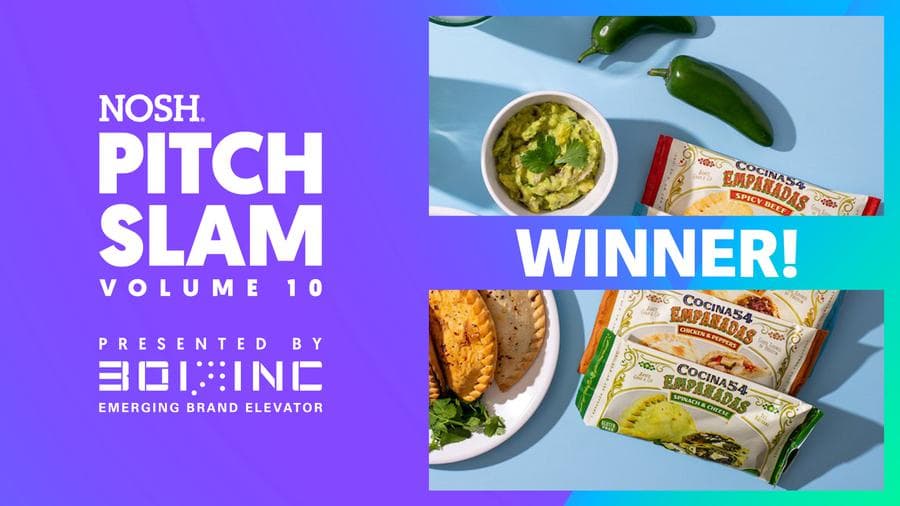
Ray Latif [29:13] All right, great feedback once again. Well done, Toyen, thanks so much. All right, on to our next semi-finalists for the, for the round. That's Cecilia Penicelli, who is the founder of Coscina 54. Cecilia, how are you? Doing great, doing great as well. Thank you. Now you didn't ask me how I'm doing, but I'm just telling you how I'm doing. How are you? I'm doing well. Thank you so much. All right, uh, I'm sure you've been preparing for this. Uh, are you ready to give your two-minute pitch? Ready. Yes, fantastic. Your 2 minutes begin now. OK. Hello everyone. I am Cecilia, co-founder of Costina 54. We are headquartered in Austin, Texas. We are a new generation of better for you Latin American flavors. We started Costina 54 to build a heritage-inspired brand that share our Hispanic roots. Our first product had to be Latin America's favorite snack, empanadas. Today, we are part of the $1.9 billion handheld category that last year grew more than 14%. We currently have 4 empanada flavors, all made from scratch with fresh vegetables, antibiotic-free meats, and they are certified gluten-free. Even better, they are microwavable. But the real question is where are we going? Multicultural consumers are the fastest growing segment in the US population, and they are looking for better for you products, but they are not willing to sacrifice taste or convenience. They want products that fit their busy lifestyle. Truly, there has never been a better time to be part of the better for you ethnic category. COVID has accelerated our growth. Today, we are in over 800 stores including HEB, Walmart, Central Market, Target, Fred Meyers Online, D2C, Amazon, and Gopath, and we are a profitable business and we have done all this growth without raising any capital. I lead an incredible team. I have over 15 years of experience in the CPG industry from marketing and sales roles in Nestle to small entrepreneurial settings such as Stubb's Barbecue. At Costina 54, we are building the future of food that is diverse, has better ingredients, and is convenient. Muchas gracias. Thank you very much. Uh, that was really great. You know, Costina 54, uh, they, they mentioned they're already in 800 stores. Cecilia mentioned they're already in 800 stores. When you are evaluating a product or a brand, um, how much do you base your interest on their ability to get into, say, 800 stores, you know, even as an early stage brand? I, I think it's important to have a healthy number of store accounts that you can actually service and where your turns are strong enough to validate expanding. So I, I liked the number of stores because I actually thought that seemed appropriate, um. And I think a regional focus for this product is probably the right way to do it. So like I liked the HEB, uh, example, for instance. I think that makes a lot of sense, um, for a product like this, and then really continue to kind of grow um in those regions and then. I, I personally found this to be a product that I think would make a killing in Costco. I'm just throwing it out there, so think about it as an option, um, but I, particularly if you're already making money, I think that's excellent. So that's, I, I found this to have a really interesting play that I don't know if everyone will buy every single day, day in and day out, but could be a really interesting treat. And so some of those treasure hunting retail markets would be interesting. That was not what you asked, right, but that's the answer I gave. Well, I like your answer about Costco. I'd buy a 10 pack of uh empanadas any day of the week, and, uh, I, I haven't yet had a chance to try these products. Carol, um, in terms of, you know, what Cecilia was talking about, that Americans aren't willing to sacrifice on taste or convenience, does that statement apply to this brand? Do you, would you agree with that?
Speaker 2 [33:34] I mean, I certainly didn't feel like I was sacrificing on taste in any way. I've been to Argentina several times, and this took me right back there and was kind of the empanadas I'd been looking for. I liked that they were really flaky but not greasy. It also was Really nice that you could kind of start them in the microwave, finish them in the oven for that kind of in-between option, and still, um, which probably was not the cooking instructions my husband followed when he made them, but you still got a really great empanada in the end, um, that, yeah, tasted fantastic.
Ray Latif [34:13] Mm. And Trevor, you know, from a brand and packaging standpoint, Um, I know you've done your research on these brands. Um, you know, how do you evaluate? How do you evaluate a product like this in terms of what else you currently see in the frozen aisle as it relates to empanadas in similar positioned products?
Speaker 3 [34:31] Um, well, you know, again it comes back around to branding, you know, and is that, is there a branding and communication an emotional connection. Really, that's the first thing I get. It's like, wow, what's that? You know, uh, and they're really good. They have a nice, uh, you know, image on the front of the package. Um, it's very, it's simple and straightforward. It's really, you feel like, you feel like it's authentic and you, and it, and it looks delicious. So, so it, it makes you want to scoop it up. Um, so.
Ray Latif [34:58] All right, great feedback and well done, Cecilia. Alright, on to our next semi-finalist for the round. That's Laurel Orley, who is the co-founder and CEO of Daily Crunch Snacks. Laurel, how are you? Hi, I'm good. Thank you so much for having me. Thank you so much for joining us. Daily Crunch snacks. I've seen this brand. We've talked to you guys on our Elevator Talk series. Excited to hear your pitch. Are you ready to give it? I'm ready. Fantastic. Your 2 minutes begin now. Hi, I'm Laurel Orley, the co-founder and Crunch executive officer of DailyCrunch Snacks. Daily Crunch Snacks is a superfood-infused, sprouted nut snack company that launched in March of 2020. We put raw nuts through a 4-day signature process, which sheds the phytic acid that otherwise inhibits our natural digestion. The results are sprouted and dehydrated nuts that are more nutrient dense, easier to digest, and uniquely crunchier than raw or roasted nuts. Daily Crunch Snacks is revitalizing the trusty but dusty nut aisle by carving out a new category, the Sprouted category, with our innovative process, superfood flavors, and breakthrough packaging. We are giving snackers the crunch they crave in flavors that beat highly processed potato chips or dusty roasted nuts. We flavor our snacks with real ingredients, nothing you won't recognize or can't pronounce. Our products come in five flavors sprouted, cacao, coffee, turmeric, and cherry berry. We have a 5 ounce bag that's for 749 cents and a 1.5 ounce grab and go for 299 cents. Our products are featured on our website and Amazon in over 300 independent stores and recently launched in CVS, Meijer, Kings, and Urban Outfitters. Behind our award-winning products, we are non-GMO, vegan, women-owned certified, and we're actually one of the first snack companies to source 100% of our almonds exclusively from certified bee-friendly farms. At Daily Crunch snacks, we believe that mental health should be as much a part of your daily life as the food you eat, so a portion of our proceeds go to the support network, which advocates for mental health awareness on college campuses. We recently, and these are in the July issues, won the Best Snack Awards for Prevention Magazine and Good Housekeeping. We cannot wait for you to experience the crunch and feel the difference with daily. Crunch snacks. Thank you for your time and get crunching. Well done. I think everyone should do that. Everyone should take a bite into their products, uh, at the end of their pitch. I definitely got the crunch. Um, I've tried these products. Carol, I, I think you've tried these products as well. I, I hope you have given that there were samples sent to you. Were they uniquely crunchy? Are, are, do they live up to their billing?
Speaker 2 [37:45] They are definitely uniquely crunchy. Um, I also really liked the way the flavors were super integrated and really satisfying, so you got that punch of flavor for a lot of them, and which meant you, you know, kind of didn't need as many or do as much mindless snacking, at least for me, um, because it was just really a more intense experience than some other flavored nut products.
Ray Latif [38:14] And, uh, Alex, you know, I tend to think of these of almonds as uh sort of a commodity brand, a commodity product. I think, you know, there are some branded almonds out there, um, but when it comes to Daily Crunch snacks, it almost seems like they're playing in a different kind of category in a lot of ways. Um, do you see it as sort of playing in that space? Do you see it as a brand that can grow well beyond just almonds? Yeah, it definitely seemed like they were trying to take some fun from the candy category and bring it over into nuts, um, which I appreciate. I think I agree totally on the breakthrough packaging. I was very, um, impressed with that. I think what I actually feel like is more interesting is the bee friendly commitment and the mental health partnership, um, because that's really Uh, crunch is one way to differentiate for sure. Although I, I think it'd be hard for people to really wrap their head around like how is this crunch different, but making a brand around a mission, around the sourcing of ingredients, I think that's actually Really compelling because now I have a choice at the shelf. I can buy my generic almonds or I can really support something, and I think that's a very different question and a different um consumer choice that they're making, uh, as opposed to just the taste distinction. Trevor, um, I think you know this brand pretty well. Um, tell me a bit about your interest in a, in a product like this, in a brand like this. You know, what makes it so compelling for you? Sure,
Speaker 3 [39:55] well, this is a brand that just, it checks all the boxes in, in my mind. Again, we go back to brand, consumer, uh, brand, uh, consumer communication and taste. Um, it's just You know, um, the fact that their product line literally uh appeals to every, um, taste you could think of, from an unsalted almond to my favorite turmeric or a sweet version with, with the cocoa. Um, they're doing a great job with that. The site, their website is, uh, is attractive and informative. Um, their social media, uh, reflects. the same. Um, so, you know, I think for this brand, the sky is the limit, uh, in a lot of different ways. My, my only, um, the only thought that keeps coming to my mind about their product is that, you know, in California, we're going through a drought, right? And I, I've already started hearing people, this happened a few years ago too, and I can hear people starting to talk about it again and it's a fact that almonds take a lot of water. Um, it takes a lot of water to grow an almond, right? Like 1900 gallons for a pound or something, something like that. Um, so I, I, I want them to be prepared to respond to that, um, if it becomes a bigger issue moving forward.
Ray Latif [41:09] So, that's a great feedback from the judging panel. Well done. And well done, Laurel. All right, let's move on to our next semifinalist for the round. That's Miriam El Ghani, who is the founder and CEO of Merriam's Garlic Goodness. Miriam, how are you? Hi, Ray, I'm doing well. How are you? I'm doing well, thanks so much for asking. Uh, you got a 2 minute pitch coming. Are you ready to give it? I'm ready. Fantastic. Your 2 minutes begin now. Hi everyone, my name is Miriam, and I'm the founder of Merriam's Garlic Goodness, where we produce Lebanese garlic dips, also commonly known as tomb in Arabic. So they're a plant-based, prebiotic, gluten-free, sugar-free, ketogenic snack that is better for you and doesn't compromise taste. We use 100% locally sourced raw garlic from the garlic capital of the world, Gilroy, California. Uh, this product line grew out of a family restaurant and has been sold to the local community in the Silicon Valley since 2008. Because of the growing popularity, I decided to bring it to market and serve communities outside of the restaurant's immediate area and have been doing so since 2018. Currently serving 80 markets in California, Southern and Northern, and retails at 699. Uh, similar to hummus, these garlic dips are a Middle Eastern staple. They're added to poultry, meats, vegetables, and used in cooking instead of peeling garlic by hand. Uh, to me, garlic represents survival and healing. And in the Mediterranean, we use it not only to add flavor to our foods, but also as medicine to heal our wounds topically and internally. The general demographic of our consumers and our California residents, 45% male, 40% female, 15% non-binary between the ages of 25 and 35. We're a woman-owned, minority-owned company, and we also are mission driven. We're dedicated to giving back goodness into the world, and that's why I donate a percentage of my net profit to the Joyful Heart Foundation, where survivors and those struggling still with PTSD get the help that they need. Thank you. Well done. Uh, Alexandra, you know, mission-driven is something you mentioned, uh, about an earlier pitch, you highlighted from an earlier pitch, um, in terms of Miriam's garlic goodness, uh, is that also an important component, um, or would you focus a little bit more on, uh, sort of introducing, uh, what is a, a staple in other parts of the world in the United States where they may not as be as commonly known? I think mission is important when it's important to the founder, um, and you commit to it. So I, I, while I'm not. As educated on PTSD and, and the mission around that, I think that's an excellent choice for the brand if it matters to you and if you wanna make it central to your brand moving forward. Um, I do think on this one, I see, I loved the translation from a restaurant to actual CPG retail. I thought that was really interesting, um, and something that I would play up because I think it gives a lot of credibility, um, when people really do want that restaurant experience at home, and I think that's what you're trying to give. I think. That's, um, particularly coming out of COVID really interesting. So I'd actually recommend playing that up. Um, and then I think that can kinda help bring to life all of the uniqueness of the brand that you talked about, um, but kinda under that like restaurant premium nature. Um, I think that could be very interesting. Mhm. Trevor, um, you know, do you see a broad opportunity for this type of product? Uh, Maria mentioned hummus in her pitch. When hummus is pretty ubiquitous in the United States, it is ubiquitous in the United States. Do you see the potential for garlic dips available across the United States?
Speaker 3 [45:01] Um, if people love garlic the way my family loves garlic, then absolutely. I'll say, um, these products were like really high quality. I don't know what I was expecting, um, uh, but I mean, they're just so, they're so creamy and, um, the structure is so good. Um, but the flavor is intense, right? I mean, that first bite, you're like, what is going on? What have I gotten myself into? And then you try the other and try the other. And then it was funny that once your tongue adjusts to it, And then you take the 4th or 5th bite, it's like, wow, this is, this is incredible, right? So it seems, and I was using it as a dip, right? So it seems to me that one thing, um, they might want to focus on is, um, the how to use the product aspect, right? Because maybe dips, dips might not be the way to use it. Um, I imagine maybe they're not demoing it directly as a dip, um, for people because I mean, it's really intense right out of the gate, um, uh, flavor wise. Um, so maybe talk a lot, they should maybe talk a lot about, um, how to use the product and that might give them that, you know, that, that huge opportunity to, to be, to be a more mainstream product.
Ray Latif [46:15] Uh, Carol, obviously this is, you know, uh, an ethnic food play, and, uh, we've seen a lot of different ethnic foods plays just in this pitch slam alone. Um, you know, in terms of strategy, in terms of things that have worked and the things that you've seen, uh, brands be successful with, is Miriam, uh, Miriam's Scarlet Goodness on the right track? Um, if not, you know, what would you tweak? What are some things that you've seen in other brands, successful ethnic food brands that they can incorporate into their strategy?
Speaker 2 [46:44] Yeah, I mean, I'm really excited by all the brands we've had in the pitch slam and the parts of the globe. I got to travel with their samples. I think for me, you know, I agree with Trevor. This is less of a dip and more of a sauce or a spread. And I think you looking at your Instagram and your website, that seems to be how you utilize it more. So I'm wondering if the tub is even the right form factor for it. Like, should it be in more of a squeeze pouch or a squeeze bottle? I think with a product that's new to consumers, that packaging. can tell you a lot about how to use it, and when I see it in a dip, I think I'm supposed to take a big old scoop of it and eat it. And yeah, that can be an intense experience. If it's in that squeeze bottle, it kind of tells me, OK, you know, try a little bit of this on it, put it in a dish, cook with it or as a spread, and I can always add more because I wouldn't go like heavy handed with, you know, mustard or mayo, maybe sometimes, but not, not all the time.
Ray Latif [47:42] Well, I think if you took a scoopful of garlic sauce and just ate it, that would be good for keeping that 6 ft, uh, social distancing rule, right? In fact,
Speaker 2 [47:53] it was very helpful for that, I will admit.
Ray Latif [47:58] Well, uh, I'm excited to try these products when I have an opportunity to, uh, Miriam, great pitch. Well done. All right. Up next is Trishna Seigel, who is the CEO of Down to Cook. Trishna, how are you?
Speaker 5 [48:09] Great. How are you doing,
Ray Latif [48:10] Ray? I'm doing well. Great to see you. You too. Um, like everyone else, you got 2 minutes. Are you ready to, uh, use those 2 minutes?
Speaker 5 [48:17] Absolutely.
Ray Latif [48:18] Fantastic. All right, that, uh, your 2 minutes begins now.
Speaker 5 [48:23] Hi everyone, I'm Trishna. I'm the founder of Down to Cook. We make a plant protein mix called Add a Veggie. The way it works, you take your veggie that you've chopped or riced, add it to our mix, form it into patties, meatballs, or leave it as a crumble, and pan fry, so you can essentially use it any way you would a ground meat. So I'm a food product developer. I've previously worked at other companies making meat analogs, and I've personally seen kind of the overprocessing and excessive ingredients that go in a lot of those products that one makes them some of them not very healthy, but then also very expensive. So I saw an opportunity to take a different approach, and that really leads to our mission which is to make plant-based food that is both healthy and inclusive. So I designed this as a dry mix to just give people the essentials, have them add the veggie as the healthy base, so I'm not adding in fillers, making a preformed patty by refrigerated supply chain, or you know adding water weight. I've truly found a solution that has given people a healthy solution that is cost effective. Now the mix itself, it contains pea protein, spices, and fiber that is specially designed to add delicious texture to veggies. So the mix adds a nice chew and crisp and also holds in any healthy fats that are added in. So this added texture plus the protein are what takes veggies from the side to the center of your plate. And also the mix is very versatile, so you can use a lot of different vegetables and different form factors. So it allows for the ability to fit into a variety of cultural cuisines. And also we have 4 flavors. Each box feeds a family of 4 and retails for 699 cents. We take an omni-channel distribution approach. We're heavy in e-commerce right now. We partner with Imperfect Foods and Good Eggs, and then in retail, we have a strong presence in Northern California and Natural Independence, and then we're launching later this year into food service. Our consumers are healthy cooks. They're actually split between vegans and flexitarians that are looking for a whole foods approach to plant-based eating, and we hope to bring more people into being able to access plant-based food. Thank you very much.
Ray Latif [50:23] All right, thank you very much. Trevor, uh, I think I heard someone describe this as sort of, uh, uh, a hamburger helper for the modern world, um, you know, my mind, OK, well, yeah, I mean, uh, talk a bit about that. I mean, you know, what do you think about at a veggie as sort of that new hamburger helper.
Speaker 3 [50:46] Absolutely. It's so convenient, right? I mean, it's a simple little box. They keep things, it's really focused, um, in the, in the design and, and, and in the communication. There's, there's no, this, this product is a lot of things, but they keep it really focused on, on just a couple of things. Um, and I cook all the meals in, in my household, especially since COVID kicked off, breakfast, lunch and dinner, and this was an excellent. convenient option for me. We're a flexitarian household and I'm always looking for new recipes and things and, uh, and it's whipped up. I mean, in a, in a flash, you know, the instructions are direct and clear. My only challenge was I didn't know what ricing is. Ring a vegetable. So anyway, but I got the idea. I just grated some broccoli into it, mixed it all up, made, made little balls out of them, and the kids popped them in their mouth, didn't question it one iota. So. Um, yeah, great job. And you say that that it's like a, um, a next generation hamburger helper is exactly what I've been thinking, uh, since the day I, I, I experienced the product.
Ray Latif [51:54] Well, there you go. But is that as intuitive to, uh, other consumers, uh, of this brand, potential consumers of this brand? Alexandra, um, you know, do you see Ata veggie as, as something that someone could pick up and pretty much instantly know what it is and what it's all about? I think the name is super intuitive, um, so I did, I, I like overall the positioning. I think it's, I think it is clear. I think my question is actually more around, um, I, I think that, um, she's right in that the Uh, Beyond Meats, Impossibles, those are not always the healthiest, actually, when people really do look and dig in. The issue that I have is that now this product Out of Veggie has half the protein amount of um Beyond Meat, for example. So thinking about getting those potentially closer so that it is really an apples to apples comparison because there is a bit of a macro trade-off with this product. Carol, you know, I think Trevor touched on the taste of this product. Um, are the functional attributes just as important to the end consumer? Um, and if so, is that something that you're seeing in terms of the positioning for this type of, for this brand? Are, are you seeing enough when it comes to, is this going to do something for me?
Speaker 2 [53:23] Yeah, I mean, I think the packaging's really colorful and it stands out on shelf. I think in terms of the functionality, you know, less about the product attributes and more for a consumer with a meat-free product. It's how does this fit into my life. And it was a little, you know, curious. I think a lot of products focus on the patty or the nugget or the crumble. And this was kind of like choose whatever you want, and I wonder if maybe, you know, focusing that in the name would help the consumer figure out how they're supposed to use this. Also, you know, can you only use one vegetable from the front of pack, or can you use multiple? Can you kind of take some liberties and be creative with it? Just explaining that through a little bit more.
Ray Latif [54:11] All right, great feedback. All right, up next we have Beth Anderson, who is the founder and CEO of Grateful Snacking Company. Beth, how are you? Hi, Ray. Thanks. I'm doing well, thank you. You have 2 minutes to pitch. Are you ready to give that pitch? I think so. Thanks. All right, your 2 minutes begin now. Hi, my name is Beth Doody Anderson. I'm the founder of Grateful Snacking Company, where we make healthy, delicious, freshly baked snacks in Columbus, Ohio. I was born and raised among foodies, restaurateurs, and entrepreneurs. So food is in my blood. And as a personal trainer and health coach, nutrition has always been a big passion of mine. When I started my ketogenic journey, I couldn't find snacks that fit mine or my clients' healthy lifestyles. I love to cook, so I thought I'll bake my own. I started baking out of my kitchen, sharing my creations with family, friends, and clients, and after a lot of great feedback and encouragement, Grateful Snacking was born. I was in search of a yummy, healthy, clean snack that fueled our bodies properly while helping with cravings for sweet and savory, crunchy snacks. Our crisps and granola bites are made with real whole foods like nuts and seeds. Well, I'm ketogenic. I'm a big believer in bioindividuality. What works for me may not work for you. So, as I created my recipes, it was important to me that I appeal to a wide range of lifestyles. This is why all of our products are low carb, grain-free, gluten-free, paleo, vegan, keto, and soy and dairy-free. Our, our snacks are loaded with healthy fats, fiber, and protein. So they fill you up and they don't, they don't affect your blood sugars. Our snacks are free of preservatives, additives, artificial flavorings, and sweeteners. And sugars and unhealthy oils. But grateful snacking is much more than just healthy snacks. It's about helping people feel and live their very best by supporting them, mind, body and soul. All right, let's hear from the judges. Uh, Carol, let's start with you. Uh, crisps and granola bits, um, you know, I think we've seen an uptick in terms of both, in terms of availability of these types of products. Um, you know, what do you think of snack, uh, Grateful Snacking in terms of, uh, what's already currently out there in the market? Does it have enough, uh, to separate itself from what is already available?
Speaker 2 [56:58] It's certainly a unique product in terms of texture. I think for me, I might strive to make some more approachable flavors. Some of them were a little bit more adult maybe in what they were aiming for. I also think It's unusual to have a brand kind of hitting both the savory and the sweet right off the bat, and I wonder if focusing on one to start would let you kind of build out a bigger brand block and presence before you, you know, start thinking about more sort of sweeter type products.
Ray Latif [57:37] Yeah, and you know, the dietary call-outs that Beth mentioned, um, it's a pretty long list. Um, Alex, I mean, do you think that uh consumers are looking for products and brands that can uh appeal to a broad range of consumers in terms of their dietary needs? Yeah, I think, I think the list is really long, right? But that's also kind of the world that we're living in now, where things need to appeal to someone who's on paleo, and someone who's on keto, and someone who's just trying to figure out their flexing across all of them. So, so I think that I actually appreciated how thoughtful the ingredient choices were, the macro makeups were, all of that. Um, I agree on the flavor piece. I thought, um, I, I quite liked the granola bites. Um, I found the, the cocoa one to be a little bit strong, um, on that. So just a, just one piece of feedback. The other thing is, I think there's Calling it grateful snacking, there's clearly a story there, um, and I was kind of curious how that came to be, um, cause that is a very, like, very prominent on package. Um, it says made with love and gratitude, and I think there's a little bit more that could really pull the brand apart from just how, how many other granola or seed, um, cracker brands there are. So, just a thought. Yeah, and following up on that, I mean, there are, as I mentioned, you know, quite a few granola and snack brands uh on the market. Um, Trevor, you know, in terms of your platform, is this something where, you know, you'd say, OK, this does have something different, this is something that my consumers are looking for, um, or is it, or is it still at an early stage where they need to develop a little bit more and, and if so, what, where would you develop the brand?
Speaker 3 [59:29] Got it. Um, well, uh, first of all, I don't know if you noticed, but she looks just like her logo. There's a cool, there's a cool cowgirl on the logo with the big, big sunglasses on, um, which is pretty, pretty awesome. Um, yes, I do think this product is, um, uh, significantly differentiated in, in some ways, um, and, and more successful in one product line than in the other, in my opinion. Um. So I really liked the crisps, right? The the seed, those seed-based crisps were like delicious. They can be a little bit crispier, but, um, they tasted great to me and the fact and their packaging is very different differentiated from what you see in stores. Now, I, I end up tasting a lot of different seed crackers because that's what my, my wife likes. So I'm always like, man, man. Well, I got, I got a hold of these and it was just one after the other, right? I really appreciate that. Um, um, for the granola, I like, I love the form factor, the little, little squares are great, but they turned out to be a little too crunchy for me. Um, and I think I'm like low key, uh, down low against, I don't like stevia, right? Like if I don't like it, especially if I can taste it, right? So, and that that taste came came across really strong. Uh, uh, to Carol's, um, Um, concern around starting with a sweet and savory, I'd be like, why not just start with the crackers? I mean, to me, that's a really standout product. My final note is, I think it'd be great if they called out the fiber in this product. They have a lot of different attributes here, but fiber seems to be a trend that's been coming on for a while and it's still, it's just getting stronger and stronger. And I think that could really be a highlight for them because it's it's a significant source of about 20% daily value there. So per serving.
Ray Latif [1:01:15] All right. Up next we have Anna Peck, who is the CEO of Chia Smash. Anna, how are you? Good, thank you. All right, thanks so much for joining us today. Uh, you have a two-minute pitch to give. Are you ready to give that pitch? I am. Fantastic. All right, uh, your timer begins now. Hi everyone, my name is Anna Peck and I'm the founder of Chia Smash and we're working to reinvigorate the outdated and sugar-filled jelly aisle. So I'm a big health nut and Chia Smash was actually something that I made for myself to top my overnight oats and my yogurts. As a very health focused consumer, I've seen this kind of massive shift in the food industry towards better for products and in particular this big focus on sugar reduction. It felt so striking to me that, you know, categories across the board have really exploded with all this incredible innovation, yet nothing had happened in the jelly aisle. It's a household staple, consumed by nearly 300 million Americans, yet the products are packed with sugar, and you've got the same set of old school brands from like 30 years ago. So at the end of 2019, I launched Chia Smash. It is a superfood fruit spread. It's made with just four real ingredients, berries, chia seeds, dates, and lemon. It has no added sugar or preservatives, it's keto and paleo-friendly, and with a very natural taste and swellable texture. I like to say that it's much more than just the partner to your peanut butter. We have 3 flavors currently, strawberry, raspberry, and wild blueberry, and are about to bring out a 4th cherry pomegranate in partnership with Misfits Market. They're all made with fruits but don't meet the grocery specs, they're a little small, wonky, or blemished, but still perfectly delicious, and we're just kicking off the process for the new upcycle certification. To bring some excitement to the jelly category, which I don't need to tell you what it needs, um, and to really have consumers looking for our innovation, we're taking an omni-channel approach. So we're working to really educate and build brand awareness and community through our own online. Channels really stand out where people are shopping in grocery with bold packaging and off-shelf promotions, and then show up in retail where there are more opportunities for discovery with the ability to kind of search products by an array of attributes and values. On the retail side, we have some really great partners like Whole Foods, Thrive Market, Foxtrot Market and FreshDirect, and Cheers Smash Retails for around $6.99. All right, Anna, well done. Um, Alex, uh, you know, I, I wonder what you think in terms of, uh, Anna's statement that the, uh, jelly and jam aisle, uh, is in need of, uh, innovation, that there, it is in need of a boost. Um, is Chia Smash that boost? Is it that, is that that brand that can really invigorate some life into, uh, or, or, uh, boost some life into that aisle? It's, it's interesting. I have not been to the jelly aisle in like 10 years, so I would say that I was very impressed, uh, with this product because I, I thought the four real ingredients, I thought, um, the packaging was really breakthrough, very taste forward, um, and I liked the taste of it. I thought that was great. Um, I think generally, um, I would think about all of the communication that's on the pack. There's a lot going on. You've got jam 2.0, which I didn't really know what that meant. Deliciousness meets nutritionist, which is cute, but do you need it? Um, are there other pieces that actually might be better, like the only made with four ingredients or for real ingredients? Like, what is really driving purchase intent? Um, so those are just some slight tweaks that I, I might consider, um, but I really, I, I do think it's breakthrough, um, and I'm, it's gonna make me go to the jelly aisle for the first time in a long time, so yeah, well, you don't necessarily need to go to the jelly aisle because you can, you can shop online. There you go. Um, that being said, Trevor, um, you know, with people shopping online more and more these days, um, you know, do you see Chia Smash as a product? Um, that more people are looking for online and more specifically related to their key ingredient, their primary ingredient, chia, um, you know, do you see chia as having, uh, a resurgence because we did see a lot more products with chia a few years ago, um, not so much nowadays,
Speaker 3 [1:05:44] right, right, yeah, with the beverages a while ago, um. So, uh, yes, yes, I do. And there needs to be some innovation in, in the jam and jelly aisle. And, um, unlike Alexandra, um, I've lived there. I live in the aisle. I have 5 jammed jellies in my refrigerator right now. Um, So, you know, with kids and cooking everything here, I just, I, we need variety. Um, so I, so I'm very aware of all the different brands and the textures and I learned the difference between jelly and jam and spread. OK? It's all, it's all, it's a whole thing driven by the FDA. Um, so Gia Smash test all the ingredients, um, to, to all the building blocks to be great, obviously, right? I mean, again, they have great branding, um, the products, um, look great. My only, my only nitpick, right? Um, it has to do with, um, their callout for no sugar added, right? Um, and also, oftentimes when I see no sugar added, I assume there might be a non-sugar in there, right? Um, like a sugar alcohol or stevia or something like this. And they didn't do any of that. That's great. Um, but there is a sweetener. It's date syrup, right? So I just always feel like I'm a little, I was like, I feel a little misled because there is something in there. There is actually a sweetener in there. And that's OK. Um, but I think, uh, for communication, maybe they could say something more like, you know, uh, 2 times less sugar than your standard jam or something like that. Something that's more, more transparent, uh, in my opinion. Um, but other than that, um, it really looks like a great product and definitely differentiated in a category that that needs, needs it.
Ray Latif [1:07:26] And Carol, you know, for people who have had chia seeds before, I think there's a perception of, um, you know, what they taste and their texture. Um, how does chia fit into a jam or jelly like chia smash? Is it something that you can see appealing to a broad set of consumers?
Speaker 2 [1:07:40] The good thing is that, you know, chia is kind of associated with that jelly-like texture naturally, so if you're opposed to that, you're probably not in the jelly aisle to start. That said, you know, I do think there are probably a significant amount of people who like more of a strained texture, especially among kids, and want that smoother jelly. Um, aspect. I think for me the question would be more, as somebody who doesn't, unlike Trevor, have a shelf of jellies in my fridge. In fact, I usually open a jar and it sits there for a while. Is, you know, how the brand plans to encourage, you know, maybe faster turns or drive more consumer consumption by saying, here's how you can eat it beyond a PB&J. I think also with that, we'll also start to sort of maybe justify that slightly higher price point because you are in a category where you know you have a bunch of raspberry jams all kind of at varying ends of the spectrum, and this is probably going to be a little bit more expensive online. I think it was like $8 a jar, um, about why you should have this beyond just the ingredients.
Ray Latif [1:08:51] All right, solid feedback once again. Thank you judges and thank you to Aina. All right. Our next semi-finalist is John Arbuckle, who is the co-founder of Singing Pastures. John, how are you? Wonderful. How are you? I'm doing great. Another veteran of our elevator Talk series. Thanks so much for joining us for that show and thank you for joining us today. You got 2 minutes this time though. It's, it's a quick pitch. Are you ready to give it? Yes sir. All right, your 2 minutes begin now. Hey friends, my name is John Arbuckle. I'm a 9th generation family farmer and a co-founder of Singing Pastures Farm. Our hero product is Rome snack Sticks. It's the only pasture raised pork snack stick that's nationally available. We started Rome snack sticks because I realized that there were lots and lots of grass-fed beef sticks out there in the world, but there were absolutely no pasture raised pork snack sticks. A lot of the consumer reports that we were reading seemed to show that people who love grass-fed beef would also love pasture raised pork. So I thought, why not make a bacon snack stick? We've got three flavors. It's bacon, pineapple, and jalapeno. The MSRP is 233 a stick, which is a little bit higher than conventional gas station sticks, but the flavor and the texture make it really superior. Broomsticks are unique because they are meaty and savory and juicy without being dry and chewy, and there's a couple of reasons for that. The biggest one is that we use premium heritage breed pork. They are all raised on green grassy pastures. They are also fed a non-GMO diet. We use artisanal processes of preservation like fermentation and slow smoking with real hickory wood. Currently 85% of our sales happen online. We're on track to do a million dollars worth of sales this year, and we're really excited to say that we've gotten there with zero business debt and no investors. Uh, we really need to farm like the world depends on it because it really does, and the best way to get people to support better agriculture is to share some delicious food with them that's easy to integrate into their lives. We do all of this for you and for the planet so you can feel really good about what you eat. All right. Well done, John. Um, I'm excited to hear from, uh, Alex because I think You know, when you think about the meat snack aisle, it has gotten pretty packed. It's gotten pretty competitive, and standing out among all the new brands and all the products that are available seems like it's an uphill battle. That being said, do you think Singing Pastors has a shot, and if so, why? So, I do, and, and everything that you just said, Ray, is right. It's a very competitive, um, market right now. So, General Mills owns, uh, Epic, which is a meat snacking company as well. Um, so, I think what was most compelling to me in the pitch was the explanation between grass-fed beef and this pasture-raised pork. Um, I did not. I, I don't know enough about this to know what the differences are and, and how a consumer might be interested in both, so I like that. Um, I think What I might consider is, um, roam sticks is not necessarily the most taste forward name for a subline, um, or for a product, so maybe there's something that might be, um, a little bit more taste forward, um, particularly because you do have the clear packaging, so you can see the product, like. Really being forward with what the benefit is, I think will be, will help differentiate um in, in a category that is getting pretty crowded. You know, Trevor, I, I feel like, and I think, you know, John spoke to this, is that this is a product and this is a brand that could do well and, and excel online. Um, Still, there are, you know, a lot of meat stick and pork sticks. Uh, there are a lot of meat-based products on the market, meat snack products on the market. Um, what do you like about John's pitch, um, and what do you see in this brand that, um, you know, might Uh, compel you to carry this product at, uh, at, at Snack Jones. Got
Speaker 3 [1:13:26] it, got it. Um, what I like about this product is that it is differentiated a bit and that it is pork, right? There aren't, there really aren't a lot. I mean, you could find them, but there aren't a lot of pork meat sticks out in the marketplace. There's a lot of beef sticks and there are a lot of other, um, types of, uh, from other, other meats like, you know, fish and that sort of thing. So I think that it stands out for that. And then you add on the fact, the pasture raised aspect, um, and, and that, that lifts it a bit. Then when you layer on the whole better agriculture or regenerative agriculture, that, that's, that's another thing, right? That, that touches on sustainability, right? And you know, as flexitarians, you know, we don't want to feel guilty about eating, continuing to eat meat, right? When it seems the whole world, this is moving on to, uh, to plant-based. Um, these things, I think those things, uh, matter a ton. And, uh, you know, They have a great story. Also, you know, 9th generation family farmers. Wow. Right? Um, they have some great, great writing on the site, you know, wildly regenerative. What farm to door. Um, maybe that, that grown stick thing was, is not hitting, but, um, I think they have a lot of things going for them. Excellent branding. The website's very informative and communicative. Um, I think they're on the right track.
Ray Latif [1:14:48] Yeah, well, being on the right track, um, can also mean, you know, hitting a trend at the right time, at the right spot. Um, Carol, you know, based on your, uh, observance and reporting of the food industry, um, is this the right time for a product like this? Um, is this the right brand for, uh, the, you know, for the meat stick category, for the meat snack category, um, particularly as we are seeing more plant-based options available within jerky and, and beyond.
Speaker 2 [1:15:16] I think it's a really good time for this. One thing I hear from a lot of brands is that it was really hard to enter some natural retailers because they just didn't have merchandizing opportunities for sticks. It wasn't like a convenience store where they were used to putting Slim Jims in. So now that there's this set, it's a little easier to, you know, figure out, pack and get on the shelf in a way that works. Um, I totally agree though that I don't know if you need the Ram sub-brand. You could just stick with Singing Pastures because you're kind of, you know, on shelf trying to build two brands, the Singing Pastures brand and then the Rome brand as well. Um. I think my question though for the brand is, again, another thing I hear from a lot of meat snack companies, which is that there are these really big players in the space, and that if they want to come out with a better for you pork stick, they will. So it's just good to know what that moat is that you plan on developing to sort of keep your unique nature, uh, and, and fight back against those larger players.
Ray Latif [1:16:26] All right, our final semi-finalist for this round is Taul Garden, who is the founder of Fun Sesame. Taul, how are you? I'm fantastic. How are you? I'm doing great. Thank you so much for your patience. Excited to hear your pitch. Are you ready to give it? Yes. All right, your 2 minutes begin now. Hey, we all know we should eat healthy, but what about making your healthy fun? I'm Tao, founder and CEO of Fun Sesame. We bring to the world a Mediterranean culinary staple, tahini. I grew up in a poor family where my mom was working 3 to 4 jobs a day. We came home from school, put our backpack, and joined her cleaning huge commercial kitchens and office buildings. That being said, we were spoiled at the dinner table. Food was always fresh and colorful, and tahini, tahini was always part of our meal. We spread it on our bread, use it as a salad dressing, or just dipped our veggies in it. Two years ago, on my Sunday routine, I started with the local farmer's market and then continued to the local store. I decided to buy ready to eat food instead of making it all from scratch since I just had my 3rd baby. And I bought things like peanut butter, mayo, instead of making them. But something was missing, the tahini. I couldn't find a ready to eat tahini. Anywhere. I went to 8 different stores, nothing. 2 hours later my husband calling, is everything OK? After sharing my adventure, he said, You could have made a ton of tahini by now. Come, we'll make it together. Remember those days when you would go to your local store and then need to go to your local authentic store to buy things like ghee, kimchi, salsa, or even hummus. But today, today we can find all of them anywhere in different size, brands, even flavors. Same will happen with tahini, and we are here to make the fun and healthy way, offering 4 clean, colorful, and delicious, ready to eat tahini. Just like home. All right, well done, Taul. Um, Trevor, let's start with you. Are you familiar with tahini as a dip, as an ingredient, um, and if so, um, you know, what do you think of fun sesames?
Speaker 3 [1:18:47] Um, I, yes, I'm very familiar with, uh, tahini, and I, I love it. Um, love, uh, sesame in general. And I, um, I like this brand. Um, I like, um, one, I like how they focus on the uses for the product. And when you go to their website, it's like really in your face. It says dip spread dressing, right? There's, there's, there's no ambiguity about it. It gives you a lot of different, um, um, ways to use it, right? Um, they're also allergy friendly. Um, the branding is interesting to me because it feels, um, it feels authentic, right? It feels like it's, it's from somewhere else, um, but it's here, but all in a good way, right? Um, and, and also they, they have a number of different attributes, um, as a lot of these better for you products do. I mean, you know, let me see here. Uh, sugar-free, nut-free, gluten-free, GMO free, blah, blah, blah, blah. But they are focused, right? They literally say two things, non-GMO and keto. I love that. It just keeps the front of the package so simple and clean and you know, they're just really focused, focused on, it's all about the flavor of the product and the authenticity.
Ray Latif [1:19:55] Alex, uh, Tom mentioned that she'd been looking for a tahini, a packaged tahini, she couldn't find one, so she made her own. Uh, I guess the bigger question is, are more Americans are Americans in growing numbers looking for a tahini on the store shelf? I think particularly, uh, we've talked about it before, but um I think COVID forced a lot of people to get more adventurous at home, um, with different recipes. We are a multicultural, uh, community and, and, um, and culture, so I think for sure, tahini has a place. Um, what I thought was interesting about this product, I really liked all of the different flavors. Um, I think when I looked at, when I opened it, I was like, oh, the brand name is tahini. That's gonna be tricky, um, and then I realized the brand name is actually Fun Sesame, but Tahini was so large and it almost felt like Fun Sesame is a tahini brand, and it will be difficult to expand from there if you don't establish what Fun Sesame is as a brand. So that's just a consideration, um, because I, I think it's very clear what the product is, but you're gonna need to bring the brand along with it. Carol, uh, you know, you've seen the emergence of, uh, many different food categories, um, and I wonder what your thoughts are on the emergence of tahini as a potential category and Fun sesame as the captain, so to speak, of, uh, of this category. Do you think it, it can sort of lead this evolution of this tahini space?
Speaker 2 [1:21:27] Well, I will tell you, uh, I had a conversation this week with a major retail buyer, and they said, what's the one flavor you want to be hot in 2020? And I said, tahini. So I'm a little bit of a tahini addict, um, and I loved this. You know, I rarely go. Through a tub of dip in a week, went through, uh, yeah, this was gone very quickly. I just found what I liked was that it was really versatile. It worked on a bunch of different dishes and in a bunch of different ways, and is slightly addictive. Um, you know, I think the point about the branding is great, um. And you know, I think a good thing it has going for it is that it is slightly similar to hummus in that you can use it in a lot of the same ways, and tahini is an ingredient in many hummus. If it's more authentic, I'd say. And so this is a nice way, I think if you can pull that hummus consumer over or to that keto consumer who says, I don't want hummus anymore, it's kind of a nice group that you can, you can bring along, and I assume this would, you know, therefore have also faster turns than just like. jar of tahini on the shelf, so I could see that being really, you know, appealing to retailers in that it does bring this flavor, global flavor like Alexandria said, into their stores in a product that, you know, consumers may go through and put in their basket several times in a month instead of once every couple months.
Ray Latif [1:22:58] All right, good stuff. It's all well done. All right, we got through all 12 and all 12 were pretty amazing. Um, I'd love to just quickly debrief with the judges in terms of, you know, some general things that you saw these brands do really well and some of the things that they all need to work on perhaps in terms of their pitches, their branding, their overall business strategy. Um, Trevor, let's start with you. You know, again, in general terms, what are some of the things that you really appreciated about these pitches today? And what are some of the things that you think they might need to work on?
Speaker 3 [1:23:32] Um, what I, what I appreciated about their pitches is that they were also, they're focused and, uh, and informative, right? Um, there wasn't a lot of fluff. And of course, you get, when you give only 2 minutes, that really, that really hones things in. So, um, kudos to them for that. Um, across the board, um, as I mentioned, the things I look for, like, you know, how's your IP looking, right? It's so important. I've been down this road. Um, you should not under. Um, underestimate how important it is to make sure your, your trademarks and all that sort of thing are handled. Um. And, and the other thing I noticed is that the branding is so much better these days, um, than when I, when I started, right? I had masking tape on a bottle, right? And that's what we went to market with. And now these guys, they come out so polished, it's just literally a matter of a few tweaks, um, and you know, they, they could be on their way. So those are the three things that come to my mind. Mhm.
Ray Latif [1:24:27] Alex, I saw you nodding about the branding part or the branding mention that, uh, that Trevor just gave. Um, that being said, you know, In terms of where these brands should accentuate their branding, some of the things they need to be highlighting again in a general sense, you know, what will separate the brands that are successful in that regard versus the ones that, you know, continue to need work and may not make it. Yeah, I was nodding because I think um everyone's products are really beautiful, which is so great. So it's, it's fun to see, and I think that um that adds some stopability, um, particularly when you think about these in a retail context, um, instead of just e-commerce. Um, I would say what I appreciated was everyone was very intentional with their products. Um, everything was made with a very focused effort on ingredients, on macros, on all of that, um. I think then from a branding perspective pick 1 to 2 things that you think are really going to drive that purchase intent and put those on front of pack and everything else can kind of be tertiary on the back maybe on the website um part of just more of the brand story um. So that's guidance from branding um and then I would just say I I think um for those moving on it'd be good to just know a little bit more about the channel strategy and around um the pricing and what aims people have to either bring pricing down or make it a little bit more approachable for people. Yeah, and I think that's a, that's a great point. It's a great question for Carol. You know, you have done both sides of this, of this pitch slam, semi-final round and final round. You know, what are you looking for in terms of what to hear, what these brands should be communicating in this next round? What should they be highlighting, and Potentially for the winner, um, what are you most interested in?
Speaker 2 [1:26:22] Well, I think brands that have been ultimately successful in the pitch slam have been able to communicate how they're going to go after the goals that they've stated. So if it's to make something more accessible or make this the next flavor or make them the next, you know, top seller in that category, really laying out a path to achieve that goal, and that ties back. To Alexandra's point about not trying to do too much, you know, figure out what that goal is. I also think while being focused is very important and the judges want to see that you have a plan and you want to stick to that plan, a little tease as to where you think the company can go is also beneficial, especially if you're focusing. On, you know, a more specific segment of consumers or a very specific flavor profile showing how do you broaden this, how do you maybe enter another category or where do you see this possibly going in the future and balancing that, you know, focus and goals and plan with, you know, what the future could look like.
Ray Latif [1:27:25] Great stuff, uh, great advice. And, uh, thank you so much to all the 12 semi-finalists. Really great job. I thought everyone did really, really well. Thank you so much to our judges. They have a tough job ahead to pick, uh, the finalists, but the audience has a job as well. As I mentioned at the top of the pitch slam, you have a role. Um, you will help pick one of the finalists that moves on, uh, pick one of the brands that moves on to the final round. Right now, we're gonna show a screen. Uh, with all 12 brands and a number that corresponds to each of the 12 brands, just text or call the number at the top of the screen, and you will be voting for that brand, your favorite brand. You can vote more than once, but you only have until 5:25 p.m. Eastern time to do so. So vote now, vote often, and hopefully your brand will make it into the final round. Uh, until then, thank you so much for joining us today and, uh, stay tuned to find out who makes it to the finals.