Search across the BevNET CPG Media network including BevNET, Nosh, Brewbound, Taste Radio, Nombase and CPG Jobs.
NOSH Pitch Slam 10 Final Round

Transcript
Note: Transcripts are automatically generated and may contain inaccuracies and spelling errors.
Ray Latif [00:07] Good afternoon and thanks for tuning in to the final round of Nash's Pitch Slam 10 competition. I'm Ray Latif, the editor and producer of Bevnet's Taste Radio podcast, the #1 podcast for the food and beverage industry. Presented by 301 Inc. the Naj Pitch Lam gives early-stage and promising brands the opportunity to present their business plans and products to a panel of expert judges and the audience watching on our live stream. The winner of the two-day competition will receive a $10,000 ad package. Join a shortlist of brands that have triumphed in the showdown, including Beckon Ice Cream, Elite Sweets, S Savoly, Creation Nation, and Bronx Hot Sauce. Out of the 12 semi-finalists presented on Monday, 6 have made it to the final round. Let's talk about the rules for the final round. Each of the 6 brands will have 5 minutes to present and receive 55 minutes of immediate feedback from the judging panel. After all the brands are presented, the judges will convene, and we will announce a winner after 5:00 p.m. Eastern time. We'll also have a short interview with the winner just after the announcement. Just to note, there's no audience voting in the final round. All right, let's, let's introduce our esteemed judges for the finals, beginning with Jackie Dunkla, who is a co-founder and principal at Aria Growth Partners, a consumer growth equity firm that provides capital and elevated partnership to extraordinary consumer brands. Aria typically invests between 5 and $30 million for minority stakes in growth stage consumer brands. Prior to AA, Jackie was an investor at Kabu Venture Partners from 2016 to 2020. Where she helped oversee investments in the Better for you food and beverage space. What a resume. So happy to have you with us, Jackie. Thanks, Ray. Great to be here. Great to have you. Up next is John Haugen, who is the founder and managing director of 301 Inc. John has led, uh, driven innovation and growth during his thirty-year tenure at General Mills. In his role, he's led strategic investments in Beyond Meat, Rhythm Superfoods, Kite Hill, Farmhouse Culture, Purely Elizabeth, Urban Remedy, Good Belly, Good Catch, and most recently, Potts and Co. Quite a list of esteemed brands indeed. John, thanks so much for being with us. Thanks, Ray. All right. Up next, we have Erin Cabre, who is a staff reporter with NS. Aaron's been with Nosh since 2019 and joined the company after interning at Nylon in Untapped, New York, while a student at Fordham University, where she graduated with a BA in Journalism in 2018. Erin is one of our finest reporters in the food industry and we're so lucky to have her join us in this final round. Erin, great to see you. Thanks for having me, Ray. All right. And last but certainly not least, is Ellie Truesdale, who is a partner with Almanac and uh Almanac Insights, where she brings deep experience across verticals of the food and beverage industry to the sourcing, diligence and management of potential and current Almanac investments. Ellie spent nearly a decade at Whole Foods Market as the global director of local brands and product innovation, where she supported the growth and national expansion of dozens of today's most beloved brands, offering expertise in retail strategy, brand development, supply chain, and product innovation. Ellie, we are honored to have you. Right, great to be here. All right. Uh, as I mentioned, uh, just, uh, a rockstar panel of judges. I know our finalists are excited to hear your feedback and advice. Speaking of our finalists, I think it's time to introduce our first, that's Kevin Bratcher, who is the co-founder of Beyond the Equator. Kevin, congratulations on making it to the final round. All, Ray, thanks. Uh, a little bit more time than last time, 5 minutes. So, uh, are you, uh, ready to go? Do you have your presentation all set? I do. Let me share my screen. All right, I am Kevin Bradsher, co-founder of Beyond the Equator. So we started in 2015 as a farming operation in Bolivia, outside of Santa Cruz. We're growing superfoods, mainly chia seeds, but we also grew mung beans, quinoa, and a few other things. And we exported them wholesale to Europe, Australia, and Asia. Uh, in the picture, that's my co-founder Carl with a farming background, uh, and then on the far right you'll see Andres, who ran our operations in Bolivia, recently moved up to New Orleans to help me with the retail brand. Uh, in 2017, we started making uh ingredients out of the seeds we were growing, so flowers, protein powders, oils, uh, butters, things like that. Uh, and then in 2018, early 2018, we launched our first retail product which is called Five Seed Butter. Uh, it's a nut-free alternative to peanut and almond butter made from chia, flax, uh, pumpkin, sunflower, and hemp seeds. Uh, all of our butters are free from the top 8 allergens, and sesame, which has recently been named the 9th allergen. Um, they're all non-GMO certified, gluten-free, vegan. Um, they're nutritionally superior to most of the products on the market with lower carbs, higher protein. Our creamy variety won Best new product at the 2018 Fancy Food Show, uh, and then last year, Kay named the crunchy variety one of the on-trend award winners. Um, earlier this year he won a Mindful Award for sustainability. Um, and our products to grow the seeds for one jar of our butter, uh, takes about 80% less water than it takes to grow one jar of almond butter, and we know there's a lot of issues with water out in California where our almonds are grown, so that's, uh, that's a little bit more sustainable piece for us. Uh, earlier this year, we launched a line of seed flowers. These are single seed ingredient flowers, um, that are low carb, gluten-free. Uh, these are pumpkin flower, chia seed flower, sunflower seed flour, watermelon, and cranberry. Now these are high oil seeds that are, are difficult to mill in a traditional stone mill setting. Um, so we have a proprietary milling process, um, that allows us to release less oil and, and avoid rancidity, uh, and kind of extend the shelf life on some of these seed flowers. I mentioned the cranberry seed flower is a is a partnership we're doing with ocean spray. That'll be launching in July. We'll also be launching cranberry seeds, which are a nice topper for smoothies, salads, acai bowls. They have a nice aesthetic appeal. Um, they're very dense, uh, nutritionally and high in dietary fiber. And they're also non-GMO certified, gluten-free, um, and they're actually upcycled from Ocean Spray's traditional products of cranberry juice, uh, cranberry sauce, so it's also a sustainable product. Uh, and I want to briefly touch on our target market, so all of our products are top 8 free, safe for kids to take to school, um, but it's also a bigger market than you might think. 30 to 35% of school districts have banned peanut and tree nut butter, um, so it's not just the kids going to those schools, it's, it's not just the kids who have the food allergies, it's all the kids that go to schools in those districts. Um, we, we're trying to create a product that is not just for those kids, but also for their parents. We find a lot of families have a, a high sugar, nut-free product for the kids, and they have a, a $15 almond butter for themselves. We want to be the product that is the one they buy for the whole family, so it's delicious, nutritious, but also safe to take to school. Um, our products are also for the health enthusiast crowd, uh, the hikers, the bikers. Any of the, the trendy diets, the ketogenic diet, the paleo diet, uh, we have great products for them. Anybody looking for a very low carb product, uh, with high protein and, and utilizing superfoods. And then the last crowd, which is kind of an even broader crowd, is somebody who just wants to cut back a little bit on sugar. Uh, we sell our chocolate, uh, 5 seed butter, we compare it to Nutella. Uh, it has 85% less sugar, but still has that great chocolatey taste. Um, so those are, those are the kind of the three markets we're targeting, and it's, it's a lot broader than you might think if you just see, um, you know, a top 8 allergy-free brand. Um, right now we're in about 1000 retail stores across the country. Uh, we sell our products on Amazon, uh, Amazon Prime, and also on our website. And I'll, uh, I'll take any questions. All right, well done, Kevin. Uh, yeah, let's hear from the judges and hear if they have any questions, uh, for you. Ellie, let's start with you. Um, Kevin outlined the target market for Beyond the Equator, uh, folks with a food allergy, uh, health enthusiasts, the cutback crowd. Um, do you think that's the appropriate, uh, focus for them when it comes to trying to attract the brand to, uh, new consumers?
Speaker 2 [08:55] Yeah, Kevin, great job. I love the pitch. Um, I think that is appropriate. I also loved you talking about, um, making an option available to the whole family. I sort of call that the Pixar effect when you can get to both the parents and the and the kids and they're equally as happy, um, with the offering, and I think You've targeted 3, as you said, sort of bigger, uh, consumer segments that might first come off the cuff, and I think the allergen, um, segment is a big one, as you said, with schools right now, it's not just people who can't eat it, it's also you can't go to school anymore bringing peanuts, so you've got to have some options for your, your family. I think it's great you're attacking those three.
Ray Latif [09:34] Thanks. Yeah, uh, John, you know, in the semi-final round, it seemed like the judges were interested in hearing more about Beyond the Equator's, uh, partnership with Ocean Spray. Um, how much does alignment with a strategic like that impact your decision in terms of aligning your organization with a potential, uh, early stage or emerging brand?
Speaker 3 [09:55] Well, I, I think it's an interesting, um, thing, I guess, I mean, before I get to that, I just, you know, I'm, I'm, one of the things, and, and Kevin, I just say also a great job as well. Um, as, as I think about the Beyond the Equator brand, part of me is also kind of looking a little bit for the compass here, relative to, there's a lot happening here. Um, I know that you guys have a really, having looked at your website and, and, and spent a little time with the brand, uh, there's, there's, there's an origin story here, there's an allergen story here, there's a sugar story here. So I think Um, one of the things that I'm, I'm gonna ask you in return is just to, like, how do you think about when you compete in this category, cause it's a really competitive category. How do you think, what's the, what's the thing that's gonna stand out the most? Great to answer your question really quickly, um, I think that, you know, from a mainstream, uh, you know, legitimizer, I mean, obviously, Ocean Spray is a very strong and venerable brand in the marketplace. Um, you know, I think from a consumer, um, mainstream and, uh, adoption perspective, I think it can be great. I also think that it, it may create something else for a strategic to contemplate if there's a pre-existing relationship there as well. So it'd be just a consideration, I would think at this point.
Ray Latif [11:05] And Kevin, go ahead and, uh, if you'd like to address John's question about, you know, the, the competitive nature of the butter category. Sure, and, and I kind of view our, our brand and our products as a seed-focused. So that's our first initiative is taking these nutritionally dense seeds and making them more useful to, uh, consumers. So, uh, uh, when I started, a lot of people ask us, what do you do with chia seeds or what do you do with flax seeds. So we're trying to make them a more Uh, palatable everyday use products that that people already know how to use, and so that kind of goes back to where we started in South America, where the name comes from and really kind of started with the chia seed, um, but then while we were working through those processes and, and the R&D for those products, we realized we don't need to include allergens in any of this. We're already starting with the seed, let's stay with the seed and make sure the whole supply chain is also, um, top 8 free to also include that community. Aaron, I'm curious, you know, is this a, is this a brand? Is this the type of product that you yourself are looking for? Um, you know, uh, Kevin mentioned that these are more nutritionally dense than other seed butters out there. He also mentioned regarding the chocolate variety that, uh, it's reminiscent or better than Nutella. Do you, do you see it that way? Have you had a chance to taste that chocolate one? I'm very curious.
Speaker 4 [12:22] Yeah, I mean, I've tasted um all the flavors, and they're they're really great, and um, I think, I mean, I personally am not, uh, I don't have any food allergies, but I think that the food allergy aspect of the product is um really great, and that that space is really big right now. It's getting a lot of um investment and shelf space. It's something we've covered a lot recently, um, on Nosh, so it's definitely a big market there, and if that is a main focus of the brand, then I would just recommend, you know, doubling down and really even front of packs saying that. Um, I know there's nut-free, but definitely sharing that it's top 8, and now top 9 allergen-free is definitely important cause there's a huge market for that right now.
Ray Latif [13:03] Yeah, and Jackie, you get the last word. I mean, everyone's kind of talked about the fact that there are a lot of nut butters out there, that it is a competitive category. Uh, based on what you heard today and based on what you've seen with Beyond the Equator, do you think this brand has enough to differentiate itself from what exists currently on the market?
Speaker 4 [13:21] Yeah, well, I think Kevin, you, um, you have a really good advantage in that you're kind of, it seems like you've launched on Amazon and DTC and I think that's a channel where you have these enthusiasts that you're trying to, to target, right?
Ray Latif [13:34] You have
Speaker 4 [13:34] moms specifically Googling allergen-friendly products, you know, people looking for keto. So I think that's, that's a good strategy that you've employed, you know, going online first, getting those, um, super enthusiasts, and then kind of from there, building out your audience base.
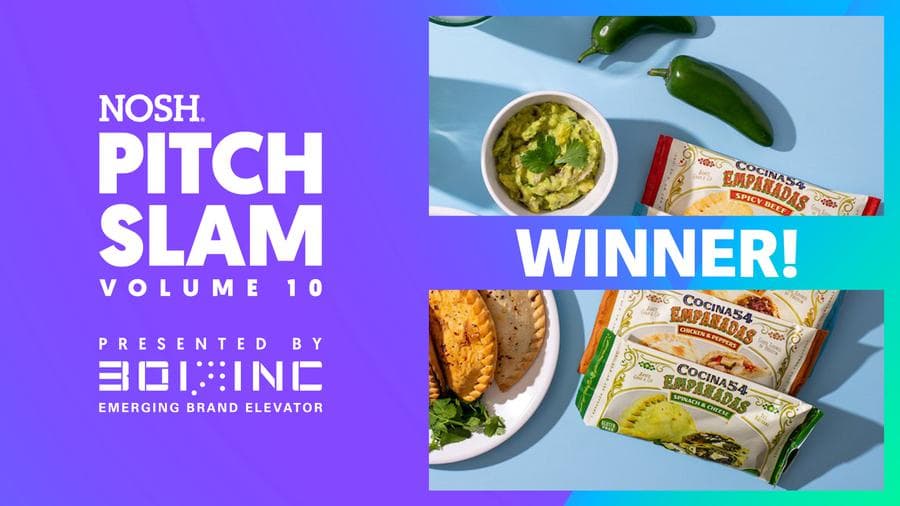
Ray Latif [13:51] All right, great feedback, great advice. Uh, Kevin, thank you so much. Great presentation, and, uh, I look forward to talking to you again soon. Awesome. Thanks, Ray. All right. All right. Our next finalist for the round is Cecilia Penicelli, who is the founder of Cocina 54. Cecilia, great to see you again. Good to see you too, Ray. Uh, as I mentioned to Kevin, you know, you got a lot more time than you did in the semifinals, which was a barn burner. It was a, it's a high pressure, uh, round for sure. Uh, are you ready to give your presentation for the final round? Yes, totally ready. And how are you doing? I'm pretty good. I'm pretty good. Yeah, yeah, it's very hot here in the Boston area, but other than that, I'm very good. And we are here in Austin, Texas. OK, we're both experiencing it then. All right, uh, your 5 minutes will begin now. Well, hello, everyone. Thank you, Naj. I'm Cecilia, co-founder of Coscina 54, headquartered in Austin, Texas. We are a new generation of Better For You Latin American flavors. We started Coscina 54 to build a heritage-inspired brand that share our Hispanic roots. Today, we are part of the $1.9 billion handheld category that last year grew 14%. In just 3 years since we started this company, we have grown to over 800 stores with double-digit velocity year over year growth. And something that you don't hear very often in the CPG industry, we are a profitable business. But the real question is, where are we going? Multicultural consumers are the fastest growing segment in the US population, and they are looking for products that connect and relate to them. Truly, there has never been a better time to be part of the Better for you ethnic category. Because beyond the personal ties that we have with Latin flavors, we know that there is tremendous market opportunity. Ethnic items are fueling the growth of the frozen category with specialty items outpacing the total market by about 4 times, and everyone wants to be part of it. But let me give you some further validation because we are not the only ones noticing this. A year since we launched our brand, Rassie Bytes, backed by a big San Francisco VC and uh Sweet Earth owned by Nestle, both launched their own own empanada lines. So, Why empanadas and why us? Well, it is no secret that empanadas are Latin America's favorite snack. We, 15 years ago, my husband and I came to the States from Argentina, where our go to weekly meals were empanadas. We loved it here in the States except We could not find good empanadas in supermarkets anywhere, so we would make them ourselves, put them in the freezer, and save them for busy weeknight dinners. We would bring them to the office, share them with friends, and everyone loved them. And at that point we knew we were onto something. We realized consumers were looking for better for you products, but they were not willing to sacrifice taste or convenience. They want products that are real food, wholesome vegetables, gluten-free. They also want grab and go items that fit their busy lifestyle, and finally, bold international flavors. So, how are we different? How are we different? We have 4 empanada lines, uh, 4 empanada flavors, all of them made from scratch with fresh vegetables, antibiotic-free meats. They are all certified gluten-free. We bring a heritage-inspired brand that share our authentic story. And, unlike many others in the market, our empanadas are microwavable. You can put, because they can pre-baked, you can put them in the microwave, and they are ready in 2 minutes. Today, we are in 800 locations from national retailers such as Target and Walmart to strategic regional retailers such as HEB, Wegmans, and Fred Meyers, among others. And like many other brands, since COVID, we have seen an impressive growth in with e-commerce partners such as Gal, Amazon, and even D2C. We know now it is our time. We have heard from press and our most raving fans. Uh, in 200 in 2020, HuffPost named Cocina 54 empanadas as one of the best gluten-free frozen foods you can buy. And last March, Forbes chose Cocina 54 as one of the best snacks from around the world that you can enjoy without leaving your home. But I truly love what, when we see our funds that are truly obsessed about them. Luckily, we are not doing this alone. We have a supporting group of mentors from the Choban Incubator, the target Hispanic Council, the National Minority Council that which we are certified. And a truly hardworking lean team with lots of passion. I have over 15 years of experience in the CPG industry, work at Nestle and Stubs Barbecue, and uh my partner has been the mastermind of the financial success, allowing the company to be profitable while growing exponentially. Thank you for your time, everyone. All right, well done, Cecilia. All right, there, there was a mention of, of, of a word twice during that presentation that we don't typically hear when it comes to early-stage brands and that's profitable. Uh, John, how much does that move you? How much does that interest you when you are evaluating early-stage brands?
Speaker 3 [19:49] Well, I think, um, I mean, I think it's huge, you know, relative to thinking about just the fundamentals of a business. Um, I think, um, So having a, having a business model that is sustainable, that you can scale, you know, we've, we've, we've certainly been in business, uh, uh, in, in worked with other brands that you sort of wince every time their sales go up because you know, they're gonna lose more money. So, I'd be happy to receive the monthly forecasts and results from you because obviously, things are trending in the right way. I think the biggest thing is, as you guys are continuing to make those strategic investments in the brand. Is balancing um those good fundamentals with also, you know, taking advantage and seizing the opportunities. One question I have on that is that it looks like you're across a number of different banners. Um, how it, it, have you thought about the, the, the idea of, of depth of one retailer versus breadth across a number of different banners? I'm really excited that It sounds like you're getting early-stage wins in across a number of different formats. But, um, have you thought about also just making sure you're doubling down in a specific channel to make sure that you have a really strong velocity story to continue to expand?
Ray Latif [21:01] Yeah, we are seeing strong velocities in, in our current retailers. Uh, we, with the COVID, um, I think that we weren't thinking about going into a different channel in terms of like going into e-commerce. Uh, it certainly kind of like pushed us into that direction. Um, and so since then we were like, OK, we need a, a, a 3PL, we need to really invest on this, uh, and what I love the most about the G2C aspect is, uh, that you can really connect with the customer in a completely different level that, uh, when you do with brick and mortar. So whenever we, we talked with the different retailers, and we have said no to a lot of retailers because, uh, not having. Um, like funding behind us, like makes us, to be, make us, uh, have to be very, very selective with where we go. Um, and it mostly has to be, has to be a partnership. The retailer has to understand where the place where this product needs to be placed, um, that it cannot go with the 30 cents burritos, and so, uh, it has to be with the better for you category. Thank you. Yeah, Jackie, I, I see you're nodding your head about that, you know, and, uh, Cecilia mentioned that, uh, you know, why empanadas, she discussed that in her presentation. Did she convince you as to why empanadas can fit into this sort of next generation frozen uh aisle?
Speaker 4 [22:27] Well, I, I'm personally I am a big empanada fan and uh they were delicious. So thanks for sending that over, uh, to me and, and congrats. I think you had a great pitch and a lot of success to date. You should be really proud and excited. Um, yeah, I mean, I think, uh, it's a great, I think. Try for the brand and it's a very well-known product, um, especially in the American market. I'd be curious to hear more about what your kind of product development roadmap looks like and if you feel like, you know, the brand can really be a platform to, to broader frozen or, or broader Latin food.
Ray Latif [23:00] Yes, yeah, definitely, that's, that's what we see. We see that we could be a, a broader platform for better for you Latin foods. I always say, like, think about Goya, but for the millennial customer right now, like, just like something, if you look at our packaging, it has all these swirls, and they are based on a type of art unique to Argentina that is called filete porteno, and so, When we um created the brand, it was not only about like a product that was like Latin America's favorite snack that had the flavors, but also that where we could share a little bit of the culture behind it.
Speaker 4 [23:34] Are you thinking shelf stable? What's your, your thought about the categories?
Ray Latif [23:38] Yes, we, we have, we have certain line extensions that are ready to go, that are going to the, keep going into the frozen category, uh, mostly with like maybe breakfast empanadas, but I cannot say a lot because this is a public life. Uh, um, uh, that it is going to be broadcasted, uh, and then we do have shelves, uh, stable, uh, with very unique things that you will find in Latin America that, um, that are like, will bring incredible flavor to the American table. Erin, Cecilia mentioned that this is our time, as in this is Cocina 54's time. In the context of your reporting about this better for you ethnic category, do you, would you agree?
Speaker 4 [24:20] Yeah, I definitely agree, you know, um, especially we've seen during the pandemic, consumers are definitely looking to try new things, you know, expand their horizons, and while still looking for better free items, so this, this product definitely checks all the boxes, and on top of that, it's really delicious, um, and then in In terms of the frozen food category, you know, that as well has just really um picked up a lot of momentum and consumers are really embracing it a lot, um, even more during the pandemic. So, um, definitely have a lot of, um, attributes going your way with this product, um, and it's great. So congratulations.
Ray Latif [24:53] And Ellie, we don't have a lot of time left. I'm gonna throw two questions at you. You've tasted thousands, if not tens of thousands of products in your career. Uh, I, I wanna ask you about taste and convenience and, and whether or not you feel that Coscina 54 does not sacrifice on taste or convenience. And number 2, you know, as an investor, how much, uh, stock do you put into Cecilia's, uh, discussion about the experienced team they have behind Cocina 54?
Speaker 2 [25:18] Sure, um, I mean, ultimately taste is everything, and I thought your product was great. Um, I also really loved that it had the two options of like if you're in a, in a real hurry, you just throw it in the microwave and that's one experience, but if you actually have time to toast it, um, I thought that was a great just work around and, and in either case, a really fast, easy option. So excellent product. Um, and, and product quality as far as, um, investment and taking into account your team, I think that means the world, you know, seeing your experience, the number of years you've been in CPG, it, it's half the battle, like, you know, you've got the product, you've got product market fit, and you really rely on the team in terms of what you're investing in.
Ray Latif [26:01] All right. Once again, great feedback. Cecilia, well done and uh Let's talk again soon. Thank you. All right. All right. On to our third finalist for this round. That's Holly and John Arbuckle, the co-founders of Singing Pastures. Holly, John, how are you? Awesome. Doing great. Great to see you, John. Uh, we only met you in the final round. Great to meet you, Holly. Excited to hear your presentation and your pitch. Are you ready to give it? Absolutely. Fantastic. All right, your 5 minutes begin now.
Speaker 5 [26:33] What if there was a way to improve how we produce pork in this country, so that it tasted better, was healthier for the consumer, and it was also a lot better for our planet. We'd like to tell you a story about how we're doing precisely that and pushing the envelope to make the most unique pork snack stick on the market today. My name is John Arbuckle, and I'm Holly Arbuckle, and we are the co-founders of Singing Pasture's Farm. We're a 9th-generation farm family who used to work primarily at local farmers' markets. After a while, I realized that so many of our customers were telling me that the world was full of grass-fed beef sticks, but they couldn't find any past-raised pork sticks. So, we saw an opportunity. We thought, let's make a premium gourmet pork snack stick from the pork we raise on our own farm, and eventually incorporate with other family farms that follow our strict standards. Our farm and brand is Singing Pastures. Our hero product line is Rome Snack Sticks. We own all the associated trademarks. There are 3 flavors, a savory, sweet, and spicy, corresponding to bacon, pineapple, and jalapeno. All of our pork is heritage breed, which means it's rich and juicy and flavorful. It's kind of like the difference between an heirloom tomato at the farmer's market and a white hard tomato from the grocery store. People ask us why the name roam sticks. We say that there are two reasons. The first is that our pigs like to roam on green grassy pastures under the blue sky. The second is that people, human beings like to explore and adventure and roam. We use these pictures of our children to show that part of the reason we farm this way is because we want everyone's children to have access to healthy land, clean rivers, and oceans. Our MSRP is 233 a stick, which is higher than our competitors, but our quality is also higher. Um, in addition to the quality of our meat being very high, the way that we craft it using traditional methods is a big deal. It's fermented, making it more similar to like yogurt or sourdough bread, and it's slow smoked for 16 hours with real hickory wood. The result is a pork stick that's fresh and juicy. The flavor is complex with a savory base, and it's layered in with a hint of smoke and tanginess. When we thought about our branding, we realized that a lot of the meat brands on the, on the market are really macho. So we wanted to do something that was really positive for women also, hence the name Singing Pastures. We have 3 main uh target audience. First, healthy moms that are looking for uh Clean protein snack for their family. This also includes a lot of people that are doing less meat, but better meat. Second is fitness people who are counting macros. Third is conscious consumers. These are like your farmer's market people that want the very best quality of food, but they also want ecologically minded farming practices. And with that, one of the feedback, uh, things that we hear a lot is that your sticks taste really good and I don't normally eat snack sticks. Here are a couple of other reasons why people love us. We, they have 1 g of carb, making them keto and low carb friendly. Consumers realize it's better for the earth, it's healthier for the consumer, and customers feel good because they know that they are supporting family farms that practice, uh, high integrity farming and not big industrial farms. So this gets us to where we sell. We actually had started looking at brick and mortar stores, and then COVID hit. So we pivoted to online. 85% of our sales are online. You can see some of the places we sell there. We're also on our website. Um, we have dipped our toe into brick and mortar. We're with 3 distributors, 2 grocery store chains, 250 independent grocery stores. We are on track for a million dollars in sales in 2021, and we've done it without any debt, and we are a profitable company. For expansion, we have a line of pastorate a lot preparing to scale, possibility of adding other proteins to our rum sticks line. And in closing, I'd like to say that you can't have healthy food without healthy land, and you can't have healthy land without people like us who are out there trying to make a difference. By supporting Rome sticks, you support better farming in America. Thank you.
Ray Latif [31:27] And thank you. Very well done. Uh, a lot to unpack there. Um, Ellie, I'd like to start with you. Um, You know, we heard about grass-fed beef, um, and the momentum that grass-fed beef has had in America. Um, do you expect that we'd see sort of some sort of, uh, equitable response by consumers as it relates to equitable, uh, as it relates to grass-fed pork?
Speaker 2 [31:54] Yeah, I think it's an interesting proposition. Um, I think number one, there's major attention on beef and its impact, and so you're offering something that's hopefully an alternative to people but still meeting that need and getting sort of that meat fix, which I love. Um, just one question for you all, but you said you might be, you're considering going into other proteins and considering other animals. Would that be in partnership with other farms, or, or is that also, um, coming from, from what you guys raise?
Speaker 5 [32:23] So currently, we raise a portion of the meat that goes into roam sticks. So just for clarity, and then we source from other independent farmers. That is possible because we've just been in the game so long and we've actually done aggregation with other, you know, for white label for other brands that we just have the connections and relationships with other grass-fed beef producers. That is not immediate though.
Speaker 2 [32:45] Yeah, just one comment. I think it's really smart and great to sort of establish your brand as a pork only, and because it's differentiated, it's gonna attract a new customer, hopefully offer something new, and then start to move into those new proteins.
Ray Latif [33:00] John, uh, a couple of points here. Uh, number one, Holly and John talked about, uh, their sales, 85% of their sales, uh, coming from online, from e-commerce. Um, how much, uh, stock do you put into that when you are evaluating brands? And two, you know, the name of the game in, in food and beverages scale. Uh, do you see Singing Pastures as a scalable opportunity?
Speaker 3 [33:26] Yeah, well, uh, I tell you, relative to the online sales, I care a whole lot more about it now than I did 18 months ago. I'll say that much. Um, so I do think that, um, I mean, the way modern brands are being built is definitely to think about it from an omni-channel perspective. Um, I mean, I think it's, I mean, I was, I was, I was a little skeptical when you talked about the 3 targets. Um, because I think, you know, relative to, you know, really, really trying to break through, this is a, this is a, such an ultra-competitive space, um, and has been for a while now. And really, I, I think what you're looking for is that, how do you unlock that passion with that target consumer who's going to carry the message of Rome snacks going forward. Um, you have a little bit better, uh, possibility to target, um, very, in a very focused and narrow way when you think about it from an online perspective. Um, but I would really be pushing hard as you continue to move forward and continue to have success to really figure out who is the, who is the core target that's really gonna pay the bills for Rome snacks as you guys are continuing to grow and scale.
Ray Latif [34:31] Yeah, Jackie, uh, John mentioned, and I think we can all agree, this is a very competitive meat snack category that Singing Pastors is playing in. Um, but as, as Holly mentioned, um, you know, there might be an opportunity for differentiation via appeal to female consumers. Um, did you get that in the branding, packaging? Did you get that from the pitch that you heard today?
Speaker 4 [34:57] Yeah, I thought, um, I definitely think that the kind of the female consumer in meat snacks has largely been kind of like, um, I don't know, under targeted because a lot of time you think the traditional meat snack is a male going to convenience stores, you know, wants a slim Jim. So I, I do feel like there's a, uh, a, a target there that's, that's been underserved. And I think especially even like, you know, for kids, would I rather give my son, um, A cookie or would I rather give him protein, probably protein. So I think that's, you know, females and moms could be an interesting target for you guys. Um, that doesn't jump out to me in, in the packaging. So I don't know if there's maybe more messaging around that. Um, if you guys do decide to go down that path, you know, maybe it's, uh, more targeted towards mom or some sort of like multi-pack for snack that you can have in the household as snacks, you know, put in your kids' lunches, that sort of thing.
Ray Latif [35:51] Thank you. Yeah, and Aaron, you get the last word. Um, the, in terms of the varieties that, uh, John and Holly talked about, you know, they had, uh, a sweet, savory, and spicy line, um, and, and also, you know, this, this type of product addresses a lot of diet trends that they that they pointed out to in their pitch. Um, all that being said, uh, is this meeting the modern consumer where the modern consumer is going?
Speaker 4 [36:19] I think it is, and I think the flavors are really great, and I mean, kind of going off what everybody else has said, you know, women have not always been the most included in meat snack marketing, and I personally have never really been much of a meat snack um consumer myself, but I really was pleasantly surprised with the product, and I, I really did like it. So the Flavors are definitely great, and I like that there's a variety, you know, the, the pineapple is really fantastic, and kind of going off that, I think that kind of flavoring will definitely help to bring in that, that audience that, that you're looking to bring in that's kind of not been as much um included in, in other meat snack products, um, marketing. So I think that You know, if, if the singing master's name is something that you think will help with that, I think maybe emphasizing that versus, you know, know how necessary the sub-brand of of rumstick is, um, and maybe even kind of altering that rom can really create less of a distracting kind of thing from, um, the the brand name and kind of keeping it simple with a product name that demonstrates more clearly what the product is could really help like bring in that that consumer that you're trying to target.
Ray Latif [37:27] All right. Great stuff, great feedback. Thank you, Holly and John. And just a note, just echoing what Aaron mentioned, uh, uh, a pineapple, uh, a pork stick, it just reminds me of a Hawaiian pizza. So I, I'm gonna have to go find one of these in the office and, uh, and snap into a singing pasture, so to speak. Thank you so much. All right, on to our next finalists. Those are Sarah and Damien Thompson, the co-founders of Honey Child Artisan Pop. Sarah, Damien, so great to see you once again. Great to see you. How are you? I'm doing great. I'm doing great. I'm excited to hear your pitch. Uh, 5 minutes feels like a lifetime in comparison to 2. is your presentation ready to go? It does. Your 5 minutes begin now. We are Honey Child artisan pops, and at first glance, these look a lot like the ice pops we grew up on, made with juice, water, and sugar. However, we like to say that in pops and in life, it's what's on the inside that counts. Packaged in a familiar form steeped in nostalgia, our whole blended fruit pops are dairy-free and contain superfood ingredients, plant-based proteins, and adaptogens. They're like a smoothie on a stick. No blending, no mess, simply delicious. Let's start at the beginning. It was a warm spring day back in Chicago and we had just picked up our daughters from school. We turned to walk home and that's when we noticed that we were trapped. At the end of the block was the ice cream truck. We searched the menu for the least troubling option, but we knew that anything we chose was gonna cause a sugar rush, followed by a crash. We walked home, treats in hand, considering the alternatives. We wondered, why can't we have frozen treats that are delicious, that don't contain all the bad stuff? And not only that, but why can't we find alternatives that are full of the good stuff? We couldn't find what we were looking for in the market, so we got to work. We dove into the data and uncovered a few key points. The frozen dessert market is expected to hit 82 billion by 2028, with 45% of global consumers attempting to avoid frozen treats that contain artificial flavors, sweeteners, and preservatives. We believe there is significant white space for innovation in the category, and Honey Child is well positioned to fill the gap. We've separated our pops into two categories, play and power. Play pops start with whole blended fruits, so the fiber remains intact. They're sweetened with a touch of honey or maple syrup because we can use less to achieve the same level of sweetness as sugar, reducing glycemic impact. Power Pops build on the idea, incorporating plant-based proteins, superfood ingredients, and adaptogens. They taste great and are fun to eat. They are often the first thing I'll eat in the morning or later as a midday pick me up. With power pops, we're setting the bar for better for you in frozen novelties. We say our target consumer is women ages 18 to 35, but our pups have an appeal that extends well outside of that. Our data tells us that we're hitting the mark with mission-driven millennials, who are our biggest consumer. They're drawn to the sophisticated flavors and fun, fresh aesthetic. Health-conscious moms are attracted to our pops for the sneaky veggies and the delicious flavors. Fitness enthusiasts love the superfood ingredients and plant-based proteins, and baby boomers are nostalgic for the flavors of their youth but are changing their diets to decrease sugars and increase nutrients. We opened for business in 2019 with one cart serving up pops at local farmers' markets and events, and our early customers understood the concept immediately. They connected with our branding, loved the flavor profiles, and were excited and intrigued about power pops. We knew we were on to something. Later that year, we discovered we were discovered and brought on by our local Whole Foods and have seen steady growth ever since. You'll find these 4 unique flavors currently on shelf, with several more in development. Super Greens is like a delicious green smoothie. It contains 3 kinds of greens and tastes like banana, pear, and ginger. Awake shake is the Cafe Mocha protein pop. It has 35 calories per pop and is simply sweetened with bananas and dates. Matcha mango is a sophisticated combination of matcha green tea, and deliciously ripened mango, and blueberries and cream is a decadent and dairy-free delight. Our SRP is currently 750 for a box of 4 pops. Definitely a premium price point for the category. We plan to democratize the cost as we sell through more doors and increase volume. It's an exciting time for frozen novelties and at Honey Child, we're just getting started. We are inspired by our customers to continue to bring fresh new ideas to this category and beyond. We hope you'll come along for the ride, Pops in hand, and imagine the Popsibilities. Thank you. Thank you. Well done. All right, let's hear from Jackie. Um, Jackie, uh, Damien and Sarah talked about, uh, frozen facts. They outlined that on a specific slide and, uh, they said that Honey Child is well positioned to fill the gap, uh, within that category. Do you see it that way based on what you heard today?
Speaker 4 [42:54] Yeah, first, uh, congrats. I mean, great presentation. I, I love the, uh, the drawings. Hopefully your kids did that or something and added, added the value, um, and the pops were delicious. I mean, I, I tried them at home. I, I loved every flavor. I think there definitely is, um, an opportunity in the market for what you guys are doing. I think especially around the fact that you're saying. OK, I'm sneaking in vegetables here into these pots for your kids. I mean, that's like, you know, the holy grail as a mom. Like how do I get my kids to, you know, eat more vegetables. So, so I love that you're doing that. Um, I actually think in your, in your pitch that could be, uh, super helpful to see kind of like how you guys lay out against the competition in terms of calories. Uh, you know, sugar, whatever, whatever superfood or like benefits that your pops contain compared to others because I think that really, I mean, you know, for investors or consumers or whoever, even on your website would really lay it out and spell it out to consumers as to why I should buy your guys' pops and, and pay the premium versus, you know, anything else that's available in the market.
Ray Latif [43:56] Aaron, we're seeing entrepreneurs infuse function and functional ingredients into a wide range of foods. Um, to my knowledge, uh, this is the first time I think I've seen function infused into, uh, a pop brand, a frozen novelty brand, um, and specifically talking about the power pops, uh, side of what Honey Child is doing. Are, are, are popsicles, are frozen novelties the right? Category 4 function? I mean, is it, is it something where consumers are sort of expecting something like this in the frozen aisle at this point?
Speaker 4 [44:32] I think it, I think it probably depends on the function, um, but I think that they've got some great ones here that are a little unexpected, but great. Like I think that there's definitely a caffeinated bar is definitely an intake, and I think, um, you know, some flavors that you it with, it's like coffee chocolate great flavor, and I think that there's a for that, uh. I do think with those phones, so it would be kind of be helpful to kind of content, especially if product that is um marketed to kids or moms might be giving their kids just so they can kind of be more aware of if they should be giving to that the product to them or not. Um, that was really my my biggest takeaway from the from the function of the products, but they're all delicious.
Ray Latif [45:20] Mhm. Ellie, like a lot of early-stage brands, uh, Honey Child cut their teeth at Whole Foods. I'm sure you're happy to hear that. Um, but it's 750 for a 4-pack. Um, that seems like it might be, uh, a little less accessible for some folks. Um, is that OK right now? Is this, is that, is that a price point at this point where, you know, they can still, they still have a runway for growth and runway for trial?
Speaker 2 [45:45] Yeah, I think it is OK for right now, and certainly in terms of the integrity of the product and what you're offering, I, I think it would be really helpful, Jackie's suggestion of almost getting one of those, um, lineups to see you compared to the competition, but I have a feeling like your inputs, your, you know, Using honey and maple syrup over cane sugar, um, using superfoods, of course, those add up. That's a higher, uh, bill of goods than than a lot of these competitors. So I think you've got, you do have to start thinking about that. How do you scale, how do you decrease those, um, Cost of goods as as you grow, but I did just want to make one comment cause I just think your brand is really hitting it, like you've really harnessed that nostalgic whimsy in a way that somehow tells your story on Pack, which is so hard to do and and very rare. I just, I was really compelled by your branding and then in reading your story, it just felt like it really lined up, um, which is pretty, pretty tough challenge, so great work.
Ray Latif [46:42] Thank you so much. Yeah, John, John, you get the last word. Um, two distinct product lines. Um, in your opinion, is, is there a, a specific path? Is, is there a path where both lines can thrive or should Honey Child be focusing on one versus the other?
Speaker 3 [47:03] Yeah, I mean, you, you, you, I think you anticipated my question. Quite, so quite honestly, uh, so I tried all four pops, so thank you. My family enjoyed them. So it's, it's uh, served us dessert last night, so I very much appreciate that. Um, I did not see the difference, frankly, between play pops and power pops until I went on your site. Um, and so that those, and it looks like maybe a future build out possibly in sort of the adult, uh, sort of adult beverage with the party pops as well. Um, but holding that aside, uh, it, it was, it was unclear to me that the distinction between play pops and power pops, I mean, you might consider. Um, just having a distinctive pop, it's always a, you know, it's a pop that has a pop, like there's always something that's distinctive about it. And that, um, and that distinctiveness, and let the consumer kind of take it. If they wanna play, if they wanna play with a matcha bar, that's great. Um, and just think of, cause I think that additional hierarchy of communication, after we'd sampled the product, it was a little bit confusing to me. So that, um, but I agree with all the other comments about, you know, I think the branding, and it's an inherently fun product. I was excited to try it.
Ray Latif [48:15] Outstanding. Thank you so much. All right, Damien, Sarah, thank you so much. Great pitch. 4 really great pitches. I'm so excited to hear 2 more. Uh, this has been a great competition so far. We'll keep it going with Trishna Seigel, who is the CEO of Down to Cook. Trishna, how are you? I'm great. Thanks, Ray. All right, Trishna, you will have 5 minutes for your pitch, and your 5 minutes will begin now. Awesome. Uh, hi, everyone. I'm Trishna. I'm the founder of Down to Cook. We make a plant protein mix called Add a veggie. Uh, the way it works, you simply add a fresh vegetable to our mix to make a delicious ground meat alternative. Now the plant-based food market is growing at enormous rates, and the number one reason consumers are seeking plant-based food is for the health benefits. However, a lot of the products that are in the market are not very healthy. Um, so I'm a food product developer and I've previously worked at other companies making meat analogs and cheese analogs, and I've seen kind of the overprocessing and excessive ingredients that go into some of these products. So in the end, they're not always healthy, but then they're also very expensive. So I saw an opportunity to take a different approach. Um, and this really is what fueled my mission of making plant-based food that's both healthy and inclusive. So the way we're doing this, we make an out of veggie protein mix that um is an innovative line of products that really take veggies from the side to the center of your plate. We have 4 different flavors. We have an original blend, an herby roasted garlic, uh, Indian masala blend, and a chipotle adobo. So the way it works, you take a vegetable, you rice it or chop it, add it to our mix, form it into patties, meatballs, or leave it as a crumble, and then pan fry. So you basically use it in a meal any way you would a ground meat. Um, so the, the reason I just, um, designed out a veggie to be a dry mix is I wanted it to be shelf stable and just give people the essentials. So they add the fresh veggie as the base, but the mix itself, um, is just what they need to kind of make the fully formed patty, as opposed to, if I made a patty and sold it, I would be adding in fillers, um, paying for a refrigerated supply chain. So this approach is really what allows us to deliver something that's both healthy and cost-effective. Now, the mix is a a mixture of pea protein, fiber, and spices that's specially designed to add delicious texture to veggies. So the mix adds a nice crisp and chew, holds in any healthy fats that you add in, and the fresh moisture of the veggie. So the protein in the mix plus the, the textural elements is really what elevates vegetables from the side to the center of your plate. And we're also gluten and soy-free, so that gives us an advantage over many vegan products as well. Now the mix is highly versatile. You can use a lot of different vegetables and different form factors to make so many different meals that it fits in a different cultural cuisines. So, I've shown just a few examples here, but like on the top left is a traditional Indian dish that's usually made with ground lamb called kema, and I've made it with our out of veggie mix and cauliflower. We've made, um, you know, veggie kebabs. Those sloppy joes are made with our mix and cauliflower, um, mushroom tacos, eggplant meatballs. So the varieties and possibilities are endless. And then also you can use any veggies you have left in your fridge, so it helps to uh reduce household food waste and also stretch people's budgets. Now, on the price point, Ata veggie retails for 6 to 6.99, it feeds a family of 4, you have to go buy the vegetable, a carb, and potentially a sauce. Now, if you compare that to meat analogs and meal delivery services, we're 2 to 3 times more affordable. And then if you compare to hamburger Helper, which is It's kind of the ultimate like affordable product. Um, it's $1.50 but then you have to go buy the ground meat for $6. So the total meal cost ends up being very similar to Ata veggie. So this gets me really excited because just think about all the people we can reach with plant-based eating just based on price point alone. Now, the way we're gonna reach people is through an omni-channel distribution approach. We're having e-commerce right now, um, and then we're growing in retail right now, we have a strong, um, presence with natural independence in the Bay Area and plan to grow to mass merchandisers so we can be an accessible points of distribution, and we're launching in food service later this year. We've launched in 2020 and have 10xed our revenue in the first quarter of this year already through strategic partnerships like Imperfect Foods and with our retail partners. We have a, a great team with many years of experience in the food industry, kind of covering all the major pillars of marketing, sales and operations, and a wonderful team of advisors with a lot of experience in the food industry. And I would just like to thank you for your time. Thank, thank you, Nash, and I welcome any questions. All right, I have a question. How hard is it to get a PhD in chemical engineering from from Carnegie Mellon? That seems pretty difficult. I wouldn't even think about that. But anyway, well done on that and well done on your presentation, Trishna. Um, Ellie, let's start with you. Um, Trishna outlined a problem, which is that, uh, current plant-based foods are not very healthy and very expensive. Does Ataviji address that problem in a way that appeals to you?
Speaker 2 [53:34] Yeah, I love the proposition, and I am so with you it just in terms of some of the uh proliferation of plant-based alternatives, sort of, I think taking advantage of people's ignorance in some ways and just thinking it's one for one better, um, and, and often it isn't. So I loved this solution. I think it's really thoughtful. You can tell you have the background that you do. Um, that I just learned, um, I do think there is an element to me of, is this just one extra step, or is there an element to convenience that you may be dismissing certain customers. It's not to say you, you certainly have a target that you should be going after, but you. You know that there are just the people who want to throw a patty on a skillet or something to that effect. Um, but one thing I thought was very effective in your pitch just now is the, um, the comparison to the analog. I mean, I think that hamburger helper slide is really, really compelling, so nice job.
Ray Latif [54:26] Yeah, Hamburger Helper definitely came up in our, uh, last round as well. Uh, Aaron, I think there's a question, you know, Hamburger Helper seems like it's a pretty easy to use product brand. Um, was Ata Veggie easy for you to use? Was it as intuitive as it might seem?
Speaker 4 [54:42] I think it was, um. Uh, I made it, um, just with some spinach and into like meatballs, um, and that was really easy. I was honestly kind of expecting it to like fall apart and it really didn't, like it really stayed together, um, which was really impressive, and it tasted really good, like it tasted, um, very much like a good replacement for a meatball, like somebody who's looking for a replacement would be satisfied, and I think that's definitely a huge goal of the product, and I think you, um, really achieved it.
Ray Latif [55:09] Yeah. Well, sometimes meatballs are on the side of the plate, sometimes they're at the center of the plate, and Trishna wants to bring vegetables into that center of the plate. Um, how compelling is that proposition to you, John?
Speaker 3 [55:21] First of all, I should acknowledge that, uh, I used to work on hamburger Helper about 20 some years ago at General Mills. So, we put in a good word for hamburger helper here. But that notwithstanding, what I would say is, um, I, I think it's a very compelling proposition. I think. The, um, the thing that I heard, Trisha, that I thought was really interesting is the versatility of the product, and, and its many uses and variety. And for anybody who is really looking to, you know, double down on, on a vegan diet, um, it's finding that variety, that's one great thing. I do think, however, at the same time, uh, you know, the versatility can sometimes be, uh, debilitating for people because they sort of see so many. Um, choices, and, and, and, and so helping to focus a little bit, possibly thinking about like a top five killer app that really, the products are just really shine. And I see the hero on the, on the, on the, the, the, the boxes themselves, that's great. But I think about other, you know, people can use um additional collateral materials, um, videos, other things that just show the product in its best light and really guide them and help them just to get a little bit further on that journey, I think it would be helpful.
Ray Latif [56:32] From versatility to velocity, which for some folks is the name of the game, Jackie, um. You know, what do you think about uh Ataveggie in terms of its potential to be a high velocity product?
Speaker 4 [56:47] Yeah, no, I mean, I, I, uh, I love the product. I think it's so innovative and, and so great. And, um, I think especially during COVID, so many people were learning how to cook at home, whether that meant, you know, actually learning to cook or just, you know, adding hamburger helper to your, your meat. But I think some of these things that just make cooking at home easier for, for families and For people, um, are gonna do really well. Uh, I think the the question for you will, will probably be a price 0.1 you know, I fully appreciate the kind of breakdown of, OK, now you're buying, uh, vegetables instead of meat, so actually the total all-in cost is a lot lower, which I thought was smart because I think when I first looked at the price on the site was like, oh. Wow, this is very expensive, but when you look at the whole, you know, combined piece, um, it, it's actually quite affordable. But when you do sit on a shelf and where you're going to be put on the shelf, if you think you're going to be next to Hamburger Helper or even like, you know, a Maya Kamal type sauce, that's, that's $5 like, you know, that's really what your benchmark is going to be. So, so any, you know, as you scale and any ability you have to be able to bring that price point down will, will help you be more competitive on shelf and drive velocity.
Ray Latif [58:00] All right. Uh, once again, fantastic feedback from the judging panel. Trishna, very well done once again. Thank you so much. All right, on to our final, finalist. My favorite term, our final finalist, uh, for this competition, that's Laurel Orley, who is the co-founder and CEO of Daily Crunch Snacks. Laurel, how are you?
Speaker 4 [58:21] Hi, I am good. How is everybody there? Thank you for having me.
Ray Latif [58:26] I'm gonna speak for everyone and say that uh we're all doing great and we're excited to hear your pitch and congratulations on winning the audience vote. Uh, great pitch in the semifinals and, and, uh, a great job on winning the audience vote as well. Your 5 minutes begin now.
Speaker 4 [58:41] Hi everyone, I'm Laurel Orley. I'm the co-founder and Crunch executive officer of Daily Crunch Snacks. Woman-owned and mission-driven, Daily Crunch Snacks makes flavorful, sprouted nut snacks that are non-GMO, vegan, gluten-free, and keto. Choosing Daily Crunch snacks leaves you feeling good inside and out, not only because you're fueling your body with clean energy, but also because you're supporting a mission-driven and sustainability-focused company that gives back. Um, Diane, my aunt and co-founder, learned about Sprouted from a trip to India over 18 years ago. Intrigued by this process, Diane began sprouting and dehydrating almonds at home to share with her whole family. We loved how the sprouted almonds tasted, and more importantly, how they made us feel. At the time, I was working on the Dove Campaign for Real beauty, where I got to see firsthand how, um, really a company can have an impact on social causes. In that case, it was changing the conversation on the perception of female beauty. Diane and I were ready to start a company that would bring sprouted nut snacks to the US and our mental health mission with it. Plant-based snacking is on fire. The pandemic has resulted in increased customer demand for healthy plant-based snacks, and it makes sense. We've all been hyper-focused, and our health, both physical and mental, over this past year and a half. From 2018 to 20,020, plant-based foods sales grew almost 2.5 times faster than total food sales. By 2028, the worldwide plant-based snacking market is projected to reach $78 billion. Demand for clean labels, sustainability, and functional ingredients is driving snack food sales, and Daily Crunch snacks checks up all those boxes. So our process, our signature 4-day process results in nuts that are more nutrient dense, easier to digest, and crunchier than raw or roasted nuts. You can taste and you can feel the difference. During the soaking step of our process, the nuts double in size and they shed something called phytic acid, which makes plant-based foods difficult to digest. We then dehydrate at very low temperatures the sprouted nuts, resulting in a crunch that you can hear every time. Here's our product portfolio. So we have five flavors in two different sizes. We have our golden goodness in the yellow, our cacao, our cherry berry, our plain, and our coffee, my favorite. Um, we have two different sizes, the 5 ounce pantry, the 1.5 ounce grab and go for 299, and the 5 ounce is 799. We also are um featured on our website, Amazon. We're in over 300 independent stores, and we recently just launched in Meyer, CVS, King's, Urban Outfitters, Foxtrot, and Bristol Farms to name a few. Our brand pillars. So beyond our award-winning products is our commitment to sustainability and our mental health mission. This is really important to us. Our sustainability efforts are extensive, from sourcing almonds exclusively from bee certified farms to using post recycled plastic for our bags. The California drought is impacting our global food supply, and we felt like this is something we need to talk about here. That's why we source our almonds from a farm on the leading edge of water conservation efforts. For over two decades, our almond farm has invested in ultra efficient water irrigation systems, reducing water usage by up to 50% in some areas, and we actually just posted a blog about this today if you want to read more about it. At Daily Crunch, we believe that mental health should be as much a part of your daily life as the food you eat. Diane, my co-founder, lost a son to bipolar disorder and dedicates her time and energy to reducing the stigma around mental health. We have fully embraced this cause at Daily Crunch snacks. Through our sales, we give back to the support network, which advocates for mental health awareness in college campuses, and just last month alone for May Mental Health Awareness Month, we raised $5000 for the support network. Our omni-channel growth, we're taking a true omni-channel approach to our growth as we test sale velocities and channels where our target customers shop. Beyond our retail placements, we have successful tests with airports and hotels. After launching only a year ago, Daily Crunch just passed the $1 million run rate and has some exciting partnerships in the works. Our future product roadmap includes club packs at Costco, line extensions with a better for you snacking. And we also want to be in food service produce daily, so we have a lot of ideas in the work. But last but not the least, we've got a lot of news, but breaking news this morning, we got half the Press, the Good Housekeeping Best snack award, and they said Daily Crunch brings almonds to a whole new level. We couldn't, uh, we couldn't agree more. Thank you for your time to get crunching.
Ray Latif [1:03:42] Love the crunch, uh, the daily crunch difference as it were. Um, John, did you, did you feel the daily crunch difference? I mean, that is the, the key point here. I mean, do these do enough for you than existing products, existing almond brands on the market?
Speaker 3 [1:03:59] Uh, I could have used maybe a little bit more energy in the presentation, but otherwise,
Speaker 4 [1:04:04] um, you know, it's, it's the last presentation.
Speaker 3 [1:04:07] I, I, Laurel, I appreciate the passion, all, all kidding aside, it's, it's really great, you know, and I, I, uh, you know, I. I think everybody knows intuitively that um nuts are healthy, right? And so, what I love about this is that, um, and I, and I spent some time obviously on the website in the package, and, yeah, it's cause I, I was unfamiliar with the added benefits of a sprouted almond were. And so, it's, uh, I think, um, that I think is an interesting way in. I'm, I'm, I'm, I'd be anxious to see over time. You know, how you, uh, continue to build out, out the portfolio. Are you thinking about maybe down in the, down the road going into value-added products or other, or other, other types of sprouted nuts that you might think about as you, as you look to build this? Obviously, your focus is where it needs to be right now to build that killer app in this one area. And I really thought the varieties that you guys had across the portfolio were really nice.
Ray Latif [1:04:58] Erin, um, Laurel spoke passionately about the mission behind, uh, Daily Crunch snacks, um, And it's, it's certainly inspiring to hear it, um, from a buyer perspective, from a consumer perspective, uh, how much do you see that moving the needle for this brand to scale?
Speaker 4 [1:05:20] Yeah, I think being um a mission driven brand is really important, and, you know, consumers are looking nowadays more than just for a good snack that tastes good, they also want a brand that has a mission behind it and something they stand for, so I think that's really great. I think, you know, the mental health aspect, um, focused on sustainability. Um, on top of, you know, being a great plant-based snack are all super important. Um, I think kind of with that, there's a lot of different messages, um, that the brand is trying to communicate to consumers, um, be it the mission, be it the, um, nutrient density of a, of a sprouted almond, and, you know, with the fact that it's easier to digest. There's a lot of different messages going on, so I think definitely it's important to kind of hone in on what you really want to communicate, um, and the thing that's gonna differentiate you to catch the eye of consumers.
Ray Latif [1:06:09] And Ellie, Laurel outlined an uh an omni omnichannel strategy for the long term. Um, currently, uh, in 300 retailers as she's, uh, as she mentioned, um, some varied channels there, um, based on your experience, uh, you know, is being in places like Meyer and CVS and Urban Outfitters, um, a way to move forward as you try to tackle this omni-channel approach for the long term, as I mentioned.
Speaker 2 [1:06:38] Yeah, I think you want to be just very aware as you're launching, especially convenience, you know, see or going into some of these new channels, just watching your velocities, watching your, um, where Where you go across, and, and, and, you know, John mentioned this earlier, I think there is some benefit to really going deep with a handful of retailers and learning them really well, building those relationships, getting merchandisers in there, and, and making sure you're supporting your brand. Um, on the other hand, it's such a new time where CVS like absolutely. They, they need and want your product, and so they might do a ton to promote you and sort of give you more support than traditionally, um, brands could or would see in the past. So, absolutely worth testing, seeing what's working, but sort of being mindful that Omni-channel is a tough, uh, you know, everyone's doing it, but it's really tough to maintain well.
Speaker 4 [1:07:33] And I should have elaborated, it's the CVS health hubs that we're in. So it's a better for you snacking area.
Ray Latif [1:07:39] Right. Gotcha. Jackie, you get the last word. Um, plant-based snacking is on fire. Uh, however, um, do you see daily crunch snacks, uh, as it is currently, uh, available and the strategy that Laurel outlined as addressing the opportunity, uh, for plant-based snacking?
Speaker 4 [1:08:00] Yeah, I, I think, um, as you said, plant-based snacks are, are exploding and there's so many health benefits with, with the product. I think the big thing will just be Getting consumer, getting it in consumers' mouths, trying it, I think to John's point, like when you, when you see it, you're not quite sure, OK, why is this different than the normal almond I'm used to buying and adding to my cart. So I think, you know, anything you can do to, to sample or maybe even run promos to drive trial and just get it in consumer's mouth so they can try it, taste it, see why it's different, see why it's a better product, and they should be switching, um, that's gonna, that's gonna make the difference.
Ray Latif [1:08:35] The crunch always helps. Hearing that crunch, Laurel was great, you know, that really nailed it for me. So, uh, great presentation. Well done, uh, and thanks for being with us today. Thank you, everyone,
Speaker 4 [1:08:46] for having me. I appreciate it.
Ray Latif [1:08:49] All right, uh. That was amazing. Uh, 6 fantastic presentations, 6 really inspirational entrepreneurs and brands that Uh, I'm really excited to see in my local stores. Uh, it's gonna be a tough decision for the judges. Before we get to that decision, uh, let's do a quick debrief in terms of how, uh, the judges think these entrepreneurs did. In general terms, what were you most impressed by when you heard these presentations, these pitches, John?
Speaker 3 [1:09:22] Well, I think for me, I mean, I, first of all, There's nothing more authentic than a founder's story, and there's nothing more audacious than trying to launch a food brand. So, I get inspired every time I hear their stories, and I can just imagine how many times they've already pivoted to get to this point and things that they've tweaked and adjusted on the run. So, the fact that they're here, and that we have an opportunity to interact with them is, to me, um, they're all winners in my mind. And that's why I love being in this industry and around these people is just the energy and the passion that they bring to the table.
Ray Latif [1:09:56] Absolutely. Jackie, from an investment standpoint, 5 minutes is not a lot of time to pitch. Um, did you hear as much as you wanted to hear or that you needed to hear to wet the palate, so to speak, and, you know, what could these brands be doing better? What could these entrepreneurs be doing better for their next pitches?
Speaker 4 [1:10:16] Yeah, I mean, I think everyone did a great job. They were really succinct, you know, got across the real key differentiating points of their brand and, and the problem they were trying to solve in the 5 minutes. So I think everyone did a fantastic job and the, the energy and, you know, devotion that they've put into their brand is so apparent, and it's been, you know, amazing to hear all these pitches. Um, so yeah, I think everyone did a great job.
Ray Latif [1:10:41] Ellie, you know, I think, um, sometimes being realistic about the opportunity is a question for a lot of early-stage brands and entrepreneurs. Is there really that, that possibility that this could be scale, scalable opportunities, scalable brands, um, you know, in your opinion, did, is what you saw today or, or the, the pitches you saw today, uh, on the right track? Are they on the right track in terms of, you know, getting to that next level?
Speaker 2 [1:11:11] Yeah, well, I think one thing that was really interesting that we heard from at least 2 brands is that they're already or have managed to stay profitable, um, and I think that's amazing because it's not requiring or demanding the same level of growth that we might expect from Um, you know, a certain, a certain founder, a certain set of ambitions. So depending on the company, and I, and, you know, would have, I would have loved to talk more with a couple of them to, you know, singing pastures, um, and even Honey Child Pops of like, what are their ambitions for growth? Are they looking to be the next global brand and see a massive exit? Are they trying to grow a regionally, nationally, sort of appropriately sized brand for their supply chains and um for the inputs, but so it's really just a question of of their own goals, but I thought some really had the capacity to scale and become the next big thing, and some could just be great businesses that reach a certain size.
Ray Latif [1:12:06] And Erin, uh, you know, we write about trends on Nash all the time. We cover the industry quite a bit when it comes to novel and existing trends. Um, you know, the pitches that we heard today, there was quite a bit tied to the potential for these trends, uh, long term. Um,
Speaker 4 [1:12:24] while there are definitely trends in the industry right now that may be more of a flash in the pan, kind of come and go fairly quickly, I think these brands really keyed into Some major trends in the industry, from plant-based to low sugar, to international flavors that, from what I've seen and heard, really have staying power, and I think that the brands that think about the runway of their products, uh, their offering, and kind of check the boxes of not just what's popular right now, but what consumers are really looking for long term, will definitely be able to find success.
Ray Latif [1:12:57] Uh, we, we talked about being inspired, uh, and impressed by the brands, but I'm inspired and impressed by our judging panel. Uh, you guys are remarkable people, and thank you so much for taking the time. To offer such great feedback and advice, uh, to these entrepreneurs and to our audience watching at home, it means everything to them, I'm sure, and it means so much to us at Bevnet Nosh and Taste Radio. Thank you. Um, and congratulations to all the 12 semi-finalists, the 66 finalists today. You're all winners. Um, we will have a champion, uh, but that doesn't mean that all of you, uh, haven't done incredible stuff, as John mentioned, um, just getting to this point is, is, is an just spectacular accomplishment, so. Um, I'm excited to see who the judges are going to pick to win this competition. Uh, they're gonna go deliberate right now. In the meantime, we have a couple of interviews with former winners of the Pitch Slam that we'll get to. Stay tuned for that and stay tuned for the winner announcement and the interview with the entrepreneur or entrepreneurs that have won Pitch Slam 10. Until then, I'll see you shortly.
Related Videos
BevNET & NOSH Boot Camp 2021: Thinking Like a Branding Agency
In this session Pulp & Wire founder Taja Dockendorf will share how her agency goes about developing branding for leading food companies and how you can utilize some of these strategies.
Category Close-Up: Product Showcase - Frozen Meals
We’re featuring innovative brands that produce frozen entrees during our Product Showcase portion of Category Close-Up.