TikTok and Tariffs Stoke Supply Chain Tension

Innovating across the CPG landscape is more complex than ever.
TikTok is influencing flavor formulations with demand for new creations, functional and “wellness” ingredients generated in viral cycles among highly-specific consumer spheres. At the same time, brand operators, suppliers and manufacturers are working to navigate increased economic pressure due to tariffs on ingredients often unable to be procured in the United States as well as climate change-induced supply chain challenges.
The MAHA movement, and its associated MAHA Moms cohort, has also risen to a loud, prominent position within a consumer landscape. Clean label remains the largest, overarching consumer demand, but how and when manufacturers meet that moment varies widely.
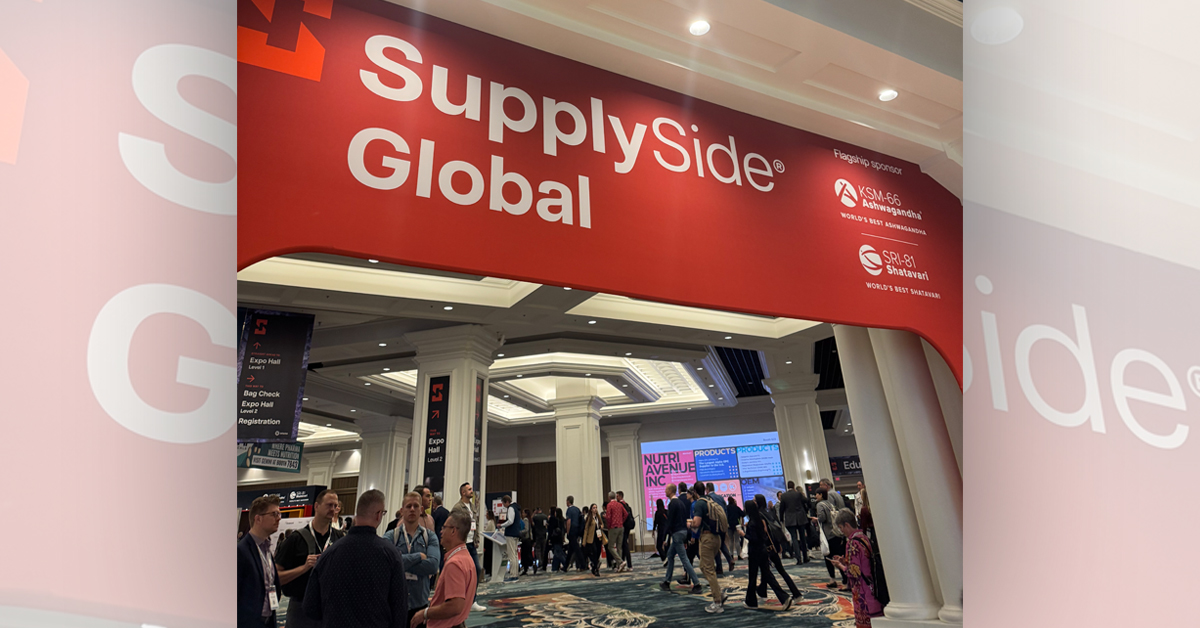
While many legacy CPG companies pledged to remove artificial dyes by a certain date, they aren’t necessarily planning to follow through with those promises unless federal or state regulations are passed, according to Duffy Mackay, SVP of scientific and regulatory affairs for the Council for Responsible Nutrition, speaking on a panel during SupplySide Global last week. Currently, legislation has only taken shape at the state level, and one of those laws in West Virginia is facing a lawsuit from the International Color Manufacturers over the mandate.
“The food industry is sort of capitulated with some of these voluntary phase-outs of colors. But in talking to some of these executives, they’re waiting. If there’s no regulation passed and this administration moves on, Froot Loops can go back to being fruity,” he said during a panel discussion at the event.
On the show floor, California Natural Colors addressed supply concerns if the industry undertakes a widespread shift to natural colors, stating it has received increased formulation requests since the new administration took office, but it has ample supply of colors for those who do follow through with reformulation. The company does not believe the federal mandate will lead to shortages, but noted it is insulated from supply shocks with two formats for its natural colors, a traditional liquid format, as well as a crystallized iteration that carries a shelf life of five years.
TikTok Trend Tension
Social media’s influence on innovation has also caused a stir among suppliers, generating rapid innovation cycles and an increased focus on limited-time offerings to meet ever-changing demands, explained Vibrant Ingredients’ VP of corporate marketing and communications, Jillian Hermanowicz. Many limited-time offerings are inspired by consumer creations, she said, specifically on platforms like TikTok. She highlighted Sprite Tea as an example, which spawned from videos of consumers steeping tea bags in Sprite.
“We’ve seen innovation pick up and trends making it through the life cycle faster post-COVID than it did beforehand… and I think it has to do with just the pace that consumers are moving at their attention span,” said Hermanowicz. “They want something new over and over and over again because that’s what keeps their interests, and that’s what’s going to keep them coming back.”
She said while there will always be a need for new flavors and line extensions, the firm has seen an increase in brands looking to step into entirely new product formats. Vibrant, which services both foodservice as well as retail partners, said that traditional innovation pathways are now blurred.
Culinary trends have typically begun in the foodservice realm and, once they reached a point of prominence for consumers, would then make their way into retail product formats. However, trends among functional beverages have followed a reverse course, Hermanowicz said, beginning largely in retail and now foodservice operators are working to innovate against those interests.
Supply chain challenges are also spurring a shift in innovation strategies. As more brands lean on limited-time offerings to test consumer appetites for a new product, or to meet a viral moment, supply chain hurdles are also setting initial parameters.
“Coffee is always going to have its place, but, if you look at an LTO [opportunity], are there non-coffee items that you can focus on in the short term to try and drive some incremental revenue while the coffee market stabilizes?”
Talking Tariffs
As the cost of everything continues to increase, most suppliers are passing pricing increases directly on to their customers. During a panel discussion on navigating tariffs during SupplySide, an audience poll indicated that 47% of attendees are passing the full, direct cost of tariffs onto the customer. But the industry hasn’t typically handled cost increases in this manner.
“I find it remarkable to pass the cost on to the consumer,” said Loren Israelson, founder and president of the United Natural Products Alliance, during the SupplySide panel. “Typically that doesn’t happen [and] the first time you see a wave of tariffs it’ll spread throughout the supply chain with the goal of trying not to reflect that tariff rate at the consumer level. Everyone takes a little haircut from the rate of the broker, contract manufacturer, brand holder, retailer, etc.”
Israelson said that the fact suppliers are already pushing price increases indicates that due to the series of “tariff step-ups” this year, the base of what suppliers could absorb is “now super saturated.” Vibrant also said it is passing the cost of tariffs straight through to the customer.
“There’s nothing we can do about it,” said Hermanowicz. “We’re kind of locked into the market as is. We’re not trying to benefit from it. We’re not putting margin on it. When we bill our customers, it’s a line item. We’re all trying to navigate it together. There’s no benefit for us trying to capitalize on it because it’s overall a detriment.”
There is a chance that the cost of tariffs – which are currently contributing $30 billion monthly to the U.S. economy, per Israelson – could be reimbursed to manufacturers if the Supreme Court finds there was no national security concern justifying their imposition. Either way, price increases are coming and will likely continue to drive consumers to private label alternatives.
“We’re going to see some fairly aggressive price hikes in retail in Q1, and that’s what I’m really concerned about,” Israelson said. “People walk into a store and they see a 10%, 15%, [or] 20% jump in price. That’s going to be a real barrier to purchase… Then [they] move towards cheaper products, go to a less expensive store… that altogether begins to change consumer buying habits. If it goes on long enough, those habits become permanent, so that’s a real concern.”