Search across the BevNET CPG Media network including BevNET, Nosh, Brewbound, Taste Radio, Nombase and CPG Jobs.
See Cheese 2026: Ragusa in Sicily to host first international congress on traditional cheeses
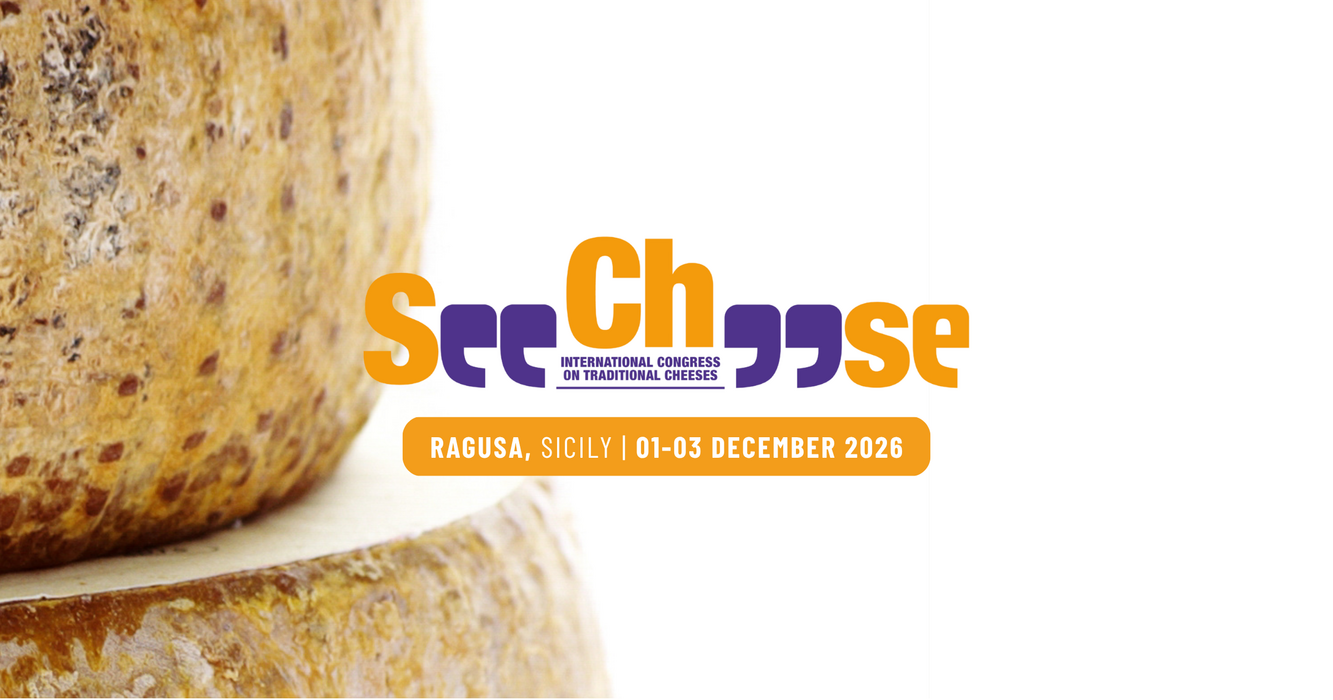
How can scientific research help traditional cheeses preserve their identity while adapting to the challenges of the future? This question lies at the heart of See Cheese – International Congress on Traditional Cheeses, the first international congress dedicated to traditional cheeses, taking place at CoRFiLaC in Ragusa (Sicily) from 1 to 3 December 2026. Established in 1996, CoRFiLaC (Consorzio Ricerca Filiera Lattiero-Casearia e Agroalimentare) is dedicated to applied research in support of the Sicilian region, working in collaboration with the University of Catania, the Regional Department of Agriculture of the Sicilian Region, the Municipality of Ragusa and the Progetto Natura cooperative.
The event will bring together 44 speakers from 16 countries, including researchers, producers, technicians and experts from Italy, the United States, Ireland, Algeria, Cyprus, Brazil, Greece, Malta, France, Turkey, Serbia, Poland, Morocco, Tunisia, Burkina Faso and Kazakhstan. Across 15 sessions, including five plenary sessions, participants will exchange experiences and explore different production systems, examining the role of research in understanding, safeguarding and enhancing traditional cheesemaking.
The guiding principle of the first International Congress on Traditional Cheeses will be the dialogue between natural and traditional production systems, scientific innovation and sustainability. Rather than setting tradition against research, the Congress seeks to bring science into the service of understanding, protecting and enhancing local practices, raw materials and production heritage.
“The Congress does not present traditional cheese as something that simply needs to be ‘protected’, but as a supply chain that must become more resilient, measurable and relevant to the present day. See Cheese starts from tradition, but its programme follows a path of transformation, from the local area to the consumer,” explains Cinzia Caggia, President of CoRFiLaC in Ragusa since 2023. “The identity of a cheese is not shaped by its recipe alone. It emerges from the interaction between territory, animal, milk, microbiology, technology, environment and culture, and is ultimately completed by the way consumers perceive the product.”
THE REOPENING OF THE SICILIAN REGIONAL CHEESE-AGEING CENTRE
The three-day congress will start with a particularly significant moment for the Sicilian region: the reopening of the Cacioteca Regionale Siciliana - a specialised centre dedicated to the study, research, maturation and promotion of traditional cheeses from the region - inaugurated in 2012 and now returning to the local community following a period of closure for renovation works.
The official ceremony will take place on Tuesday 1 December at 10.00 am, in the presence of local and national authorities, and will include visits to the Cacioteca and CoRFiLaC, followed by institutional greetings. Giuseppe Licitra, founder of the Cacioteca and a longstanding leading figure behind the project, will also attend the reopening. He has played a key role in establishing and developing this space dedicated to Sicily’s cheesemaking heritage.
“The energy-efficiency improvements and renovation works will enable the Cacioteca to become a centre of excellence for research and the enhancement of Sicily’s cheesemaking heritage,” explains Giuseppe Licitra, Professor at the University of Catania and founder of the Cacioteca. “Its reopening therefore means much more than the completion of extraordinary maintenance works. It represents the renewal and strengthening of infrastructure that supports CoRFiLaC’s scientific, technical and institutional activities.”
The reopening will mark the beginning of a new chapter for a facility that aims to become a key reference point for promoting Sicilian cheesemaking culture, bringing producers, researchers and the local area closer together. Plans include developing a multifunctional Cacioteca, equipped with dedicated spaces and ageing rooms for cheese, and designed to host research and experimental activities, initiatives supporting the supply chain, conferences, seminars and tasting workshops. With its ageing rooms, each with a potential capacity of several tonnes, the Cacioteca aims to become a centre of excellence for supporting and enhancing the ageing of Sicilian cheeses.
The works will also include the installation of a new photovoltaic system to improve the facility’s energy efficiency and reduce the energy consumption associated with its technical systems. The aim is to create a place that not only preserves and tells the story of tradition, but also studies it, passes it on and helps it evolve, fostering an ongoing dialogue between producers’ expertise and scientific research.
TEN RESEARCH THEMES TO SHAPE THE FUTURE OF TRADITIONAL CHEESES
See Cheese will focus on the major issues surrounding the development, protection and enhancement of local cheesemaking heritage. Its scientific programme is built around ten research areas spanning the entire traditional cheese supply chain: from animal nutrition and biodiversity to milk quality and microbiology; from production and ageing techniques to livestock farming sustainability; and from packaging to sensory analysis and consumer perception.
This journey brings tradition, research and innovation together to explore how scientific knowledge can become a practical tool for preserving the value of traditional cheeses, strengthening their resilience and supporting their evolution towards more sustainable production models.
The first area of investigation concerns nutrition and resource management. The use of agri-industrial by-products in animal feed opens up new perspectives on how resources can be used throughout the supply chain, reducing waste and creating new opportunities. This topic is closely linked to the broader concept of the circular economy, also explored through the valorisation of by-products from the dairy industry. Residues and materials traditionally considered waste can be transformed into new resources, generating both economic and environmental value.
Another central theme is the relationship between livestock farming, biodiversity and sustainability. Particular attention will be paid to small ruminants and other dairy species, the characteristics of their milk and products, and their role in local agricultural systems. Research will also explore the value of native breeds, not only as genetic and cultural heritage to be preserved, but also as a source of resilience for livestock systems and a means of differentiating dairy products.
This framework also encompasses one of the most pressing challenges facing Mediterranean livestock farming: heat stress. The Congress will examine its effects on animal health and welfare, milk production and milk quality. The issue will also be addressed through an international project involving Università degli Studi di Milano, Université Frères Mentouri Constantine 1 (INATAA) and Université Ferhat Abbas Sétif, both in Algeria, fostering a particularly relevant exchange for livestock production across the Mediterranean basin.
The focus then moves from milk to cheese, examining production and ageing techniques through a comparison of traditional cheesemaking and industrial approaches. Research will explore the relationship between raw materials, animal breeds, processing techniques, equipment and maturation conditions, and the characteristics of the finished product. This is where tradition becomes an object of scientific investigation: not to replace established knowledge, but to better understand its underlying mechanisms and identify the conditions that allow it to be preserved and enhanced.
A central role will also be played by cheese technology, maturation science and functional packaging. Traditional tools and practices, including the use of wood in cheesemaking and maturation, will be reconsidered in light of current scientific knowledge, bringing long-established expertise into dialogue with contemporary research.
Another key area concerns microbial diversity and food safety. Microbial biodiversity is one of the defining features of traditional cheeses and contributes to their sensory characteristics. Studying microbial communities, starter cultures and fermentation processes helps researchers better understand the relationship between the environment, raw materials and the finished product, while also addressing food safety in traditional production systems.
Completing this picture is the One Health approach, which considers animal health, human health and environmental sustainability as interconnected. Animal welfare management, veterinary approaches and the organisation of livestock systems thus become part of a broader vision of the supply chain, in which product quality cannot be separated from the conditions under which it is produced.
FROM MICROBIOLOGY TO PACKAGING AND THE CONSUMER
The journey explored by See Cheese does not end with production. The final stage of the supply chain concerns how cheese is perceived, chosen and accepted by consumers.
This is the focus of the tenth research area, dedicated to marketing, neuroscience and sensory analysis, developed in part through collaboration between CoRFiLaC and IULM University in Milan, together with Vincenzo Russo, Full Professor of Consumer Psychology and Neuromarketing. This collaboration has led to the establishment of a neuroscience laboratory at CoRFiLaC, modelled on the laboratory at IULM and dedicated to studying consumer behaviour through biometric data.
The aim is to understand how consumers respond to different factors, from the product itself to packaging, advertising and websites, and how a cheese’s sensory characteristics and identity can influence perception, appreciation and purchasing decisions. Research thus extends all the way to the table, connecting product quality, sensory experience, communication and consumer behaviour.
AN INTERNATIONAL DIALOGUE ON THE FUTURE OF TRADITIONAL CHEESE
The ten themes outlined in the Scientific Scope will be explored from an international perspective. Ragusa will welcome expertise and experience from a variety of production contexts, from Europe to Brazil, fostering an exchange between different livestock farming systems, technologies, cheesemaking traditions and scientific approaches.
The study of Brazilian cheeses, included among the Congress’s ten research areas, will offer a particularly valuable opportunity to examine how research and innovation can engage with different production identities and traditions from an international perspective.
The result is a vision of traditional cheese not as a static heritage to be preserved, but as a living system in which biodiversity, sustainability, technology, culture and markets are deeply interconnected.
The ten See Cheese themes reflect this complexity: from animal nutrition to microbiology, from native breeds to animal welfare, from cheesemaking to ageing, from the circular economy to packaging, and finally to neuroscience and the consumer. It is a journey across the entire supply chain, centred on a fundamental question: how can research help traditional cheeses preserve their identity while meeting the challenges of the future?
THE TEN THEMES OF SEE CHEESE’S SCIENTIFIC SCOPE
Nutrition, Management and Use of Agro-industrial By-products Agro-industrial by-products in animal diets and feeding management.
Production and Ageing Techniques Traditional and industrial cheesemaking, side by side.
Valorisation of Dairy By-products Circular economy principles and the economics of the full dairy supply chain.
Cheese Technology and Functional Packaging Production techniques, functional packaging, and the science of maturation
Marketing, Neuroscience and Sensory Analysis Brain science, sensory analysis, and consumer behaviour for artisan cheese products.
Small Ruminants and Other Dairy Species Milk characteristics, biodiversity, and environmental sustainability.
The Value and Sustainability of Native-Breed Livestock Farming Breed conservation and the economics of native dairy herds.
Microbial Diversity and Food Safety Microbial biodiversity, starter cultures, and food safety across traditional production chains.
Brazilian Cheeses Technical and scientific aspects of Brazilian cheese production.
Animal Welfare Management – One Health Integrated veterinary approaches and the sustainability of livestock management.
THE PEOPLE BEHIND THE CONGRESS
See Cheese will bring 44 speakers from 16 countries to Ragusa, creating an international forum for scientific expertise, production experience and different approaches to traditional cheeses.
Among the featured speakers is Giuseppe Licitra, Full Professor at University of Catania and founder of the Cacioteca Regionale Siciliana. He will explore the relationship between traditional cheeses, history and culture, drawing on his experience in researching and promoting Sicily’s cheesemaking heritage. Joining him will be John A. Lucey, Professor of Food Science at the University of Wisconsin–Madison and Director of the Wisconsin Center for Dairy Research. An internationally recognised authority in milk chemistry and cheese science, he has also conducted research on Provola dei Nebrodi and its ageing processes.
Representing Brazil, Antonio Fernandes de Carvalho, Professor at the Universidade Federal de Viçosa, will share research on the microbial characterisation of traditional cheeses and Brazilian cheesemaking. In the fields of dairy innovation and technology, Bartosz Solowiej, Vice-Rector for Research and International Cooperation at the University of Life Sciences in Lublin, and Head of the Department of Dairy Technology and Functional Foods, will contribute his expertise. Photis Papademas, Associate Professor at the Cyprus University of Technology, will also take part, drawing on his experience in dairy science and technology, from traditional production and sustainability to new processing technologies.
The Cheese Technology and Functional Packaging session will examine how new technologies can address practical challenges in cheesemaking, from monitoring coagulation to protecting cheese during storage. Jelena Miocinovic (University of Belgrade) will open with the challenges and opportunities facing small-scale Serbian cheese producers. Foteini Pavli (University of Malta) will present research on edible films and coatings for Maltese cheeselets. The oral presentations will cover tools for detecting cows’ milk in Feta, enzyme-based cleaning in cheese manufacture and active packaging for cheese preservation.
Livestock biodiversity and sustainable farming will also feature prominently, with contributions from Elena Ciani, Full Professor of Animal Breeding and Genetics at the Università degli Studi di Bari Aldo Moro, who specialises in genetics, genomics and the conservation of local breeds, Paul Boettcher, responsible for animal production at the Food and Agriculture Organization of the United Nations (FAO) in Rome, an expert in animal genetic resources and sustainable agricultural development, and Gaukhar Konuspayeva, Professor at Al-Farabi University in Almaty and an FAO consultant, whose expertise spans dairy science and production, from camel milk and cheesemaking to food safety..
The microbiological dimension will be represented, among others, by Cinzia Caggia, Full Professor of Agricultural Microbiology at the University of Catania and President of CoRFiLaC; Cinzia Randazzo, Associate Professor of Food Microbiology at the Department of Agriculture, Food and Environment, University of Catania (Italy); Luca Settanni, Full Professor of Agricultural, Food and Environmental Microbiology at the University of Palermo (Italy); Wioletta Chajecka-Wierzchowska, Associate Professor at the University of Warmia and Mazury in Olsztyn, Poland, an expert in food microbiology, safety and antimicrobial resistance; and Completing this thematic area will be Jennifer Mahony, Professor of Molecular Food Microbiology at University College Cork, will explore what Irish cheesemakers can learn from the microbial diversity of traditional Sicilian cheeses, and Delphine Luhring, a trainer in dairy technology and cheesemaking at ENILEA in Poligny, France, who brings extensive experience in transferring knowledge between artisanal production and industrial processing.
The Marketing, Brain and Sensory Analysis session will explore how cheese is characterised, perceived and chosen. Sara Spinelli (University of Florence and President of SISS) will open the session by showing how sensory science can describe the qualities of cheese and guide product innovation. Vincenzo Russo, Full Professor of Consumer Psychology and Neuromarketing at IULM University in Milan, will examine how the brain shapes the experience of flavour and how biometric data can help researchers understand consumer responses to packaging, communication and product characteristics. Giuseppe Di Vita (University of Catania) will close the session by looking at how consumer preferences for cheese and dairy products are changing, what drives those shifts and what opportunities they create for the sector.
SICILIAN CHEESEMAKING CULTURE: TRADITION AT RISK OF DISAPPEARING
The scientific programme will be complemented by a rich programme dedicated to Sicilian and Mediterranean cheesemaking culture, featuring cheesemaking demonstrations and activities showcasing traditional products. A particularly significant contribution will come from the cheesemakers of Geraci Siculo, including older producers who will demonstrate how to make Sicilian caci figurati, a traditional cheesemaking practice considered at risk of extinction.
The demonstration will provide an opportunity to pass on knowledge that must be preserved for future generations, while also showcasing Sicilian cheesemaking culture and bringing tradition, territory and knowledge together. The local area will also take centre stage through cheese pairings and tastings featuring olive oil, wine, traditional durum-wheat bread, chocolate, aromatic ingredients and beer.
For More Information:
Learn More

Stay Informed, Stay Competitive
Unlock the articles, expert interviews, and data reports that power the food and beverage industry. Join our community and stay ahead with exclusive insights from BevNET and Nosh.
Top news
- SPONSORED POST