MìLà Hits Retail ‘Inflection Point’, Expands In Frozen With Noodles

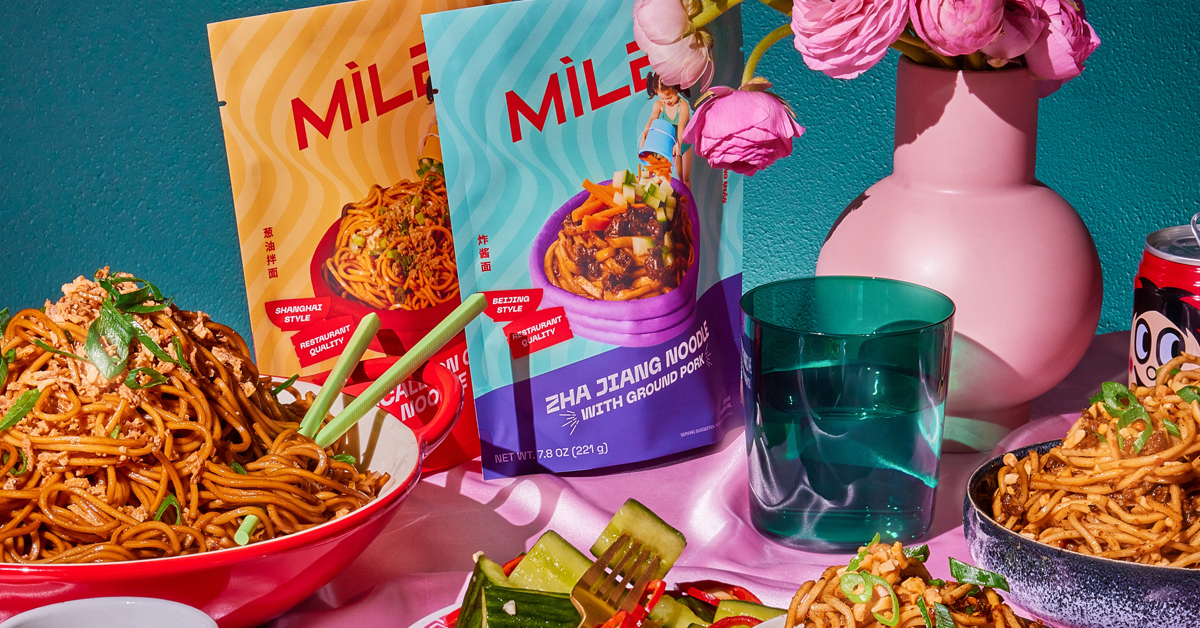
Asian street food brand MìLà is stepping outside of dumplings to expand into the growing retail opportunity of Asian noodle kits.
MìLà is expanding its presence deeper in retail after growing significantly in 2024 from around 450 to over 5,000 retail doors. To meet the distribution demand, the self-manufacturing brand spent the last year developing innovations to broaden MìLà’s appeal to consumers while also adjusting its go-to-market strategy from direct-to-consumer to retail and scaling its production facility.
Founded in 2018 by husband-and-wife restaurant owners Jennifer Liao and Caleb Wang, MìLà (formerly Xiao Chi Jie or XCJ) rebranded in 2023 as it prepared to tackle retail. The brand launched with frozen soup dumplings but has since added potstickers, dessert dumplings and noodle kits.
MìLà market tested its noodle dishes in January with a limited-edition Braised Beef Noodle timed to the Lunar New Year and then teased the broader portfolio expansion at Expo West in March.
Expanding into noodles (Carmelized Scallion, Spicy Dan Dan and Sweet & Savory) might seem like an obvious move for an authentic Chinese food brand, but it has come with its own challenges; in part stemming from the fact that “frozen [Asian] noodles isn’t really intuitive to a lot of people,” said Liao.
“The frozen pasta category is built out, but it’s not for Chinese noodles,” she said. “You might see lo mein frozen meals, but it’s not where people think to shop when they think of noodles.”
Taking the corollary from Italian food, there are multiple placements for the pasta category throughout the store from frozen meals to fresh pasta in the refrigerated section to jarred sauces and dry pasta in the center store. Asian options in the conventional channel usually are relegated to instant ramen or a small selection in an ethnic food section.
Barring a few exceptions, the sauce and condiment brands that have brought a more authentic flavor to Asian noodle kits — Fly By Jing, Omsom and Momofuku, to name a few — have done so in shelf-stable.
MìLà is familiar with the frozen section and plans to own that temperature state, but that has led to adjustments in its approach as it has moved into new categories and even expanded from its DTC roots.
When MìLà took its soup dumplings into grocery stores, it began to compete on-shelf with established brands with more capital for building broad distribution footprints and marketing campaigns.
Taking learnings from its roughly two years in retail, MìLà is planning a packaging update later this year on some of its dumpling varieties. The original versions (both pre- and post-rebrand) were better positioned for online shoppers, and now the brand is trying to meet a “standard of identity” that consumers are familiar with in Asian frozen foods.
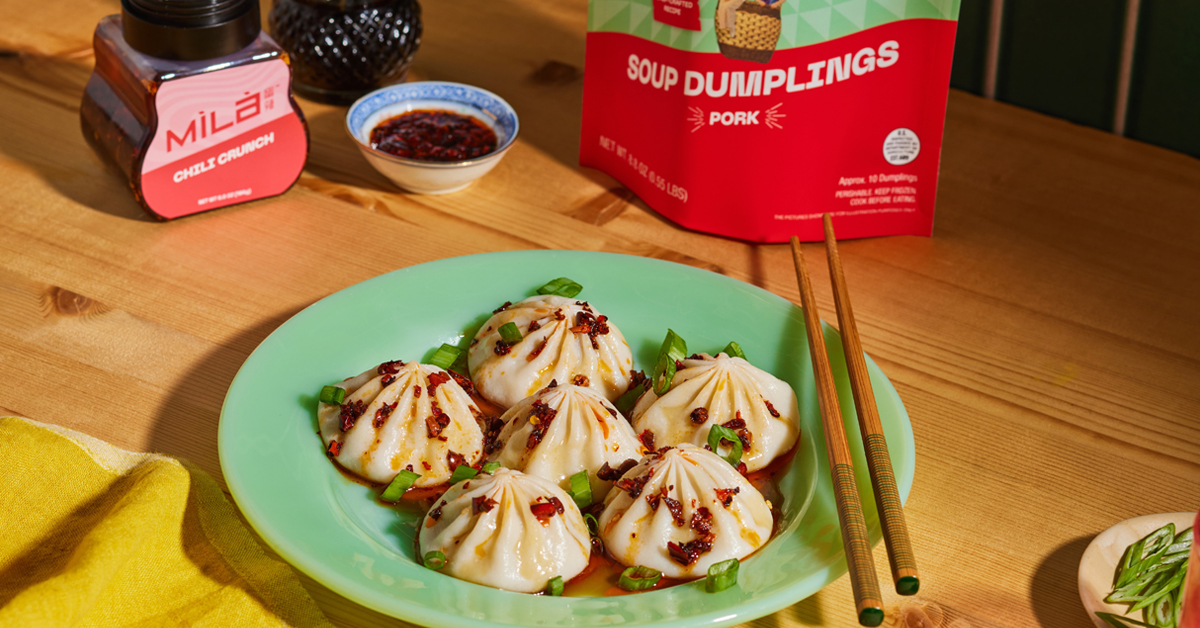
For example, MìLà’s soup dumplings use imagery of hot air balloons on the bags, which “doesn’t tell you enough information about what the food is,” Liao said. “If you are new to soup dumplings or new to the category, it’s just not intuitive.”
With DTC, a brand has a website, advertising and social media to tell a brand’s story, but in the freezer section, shelf-space is limited and the purchasing decision time is significantly reduced, Liao said.
MìLà has also had to adjust its pricing as it shifts its business towards more retail partnerships and less of a reliance on DTC. Average order volume (AOV) is much higher in DTC than in retail, but in retail a brand is usually serving a much larger customer base.
From MìLà’s perspective, that has translated to making more dumplings to maintain its revenue growth. Having control over its production has allowed MìLà to meet the demand, packaging and pricing changes it has experienced, but a vertically integrated business adds complexity.
In April, the brand began moving from its 10,000 sq. ft. space into a 80,000 sq. ft. facility. The brand intended to transition into the new space over one weekend so it could keep up with order commitments from retail partners. It took MìLà closer to six months to be fully operational at its new production plant.
Now that the brand has reached “stable” ground in its new home, it is looking ahead toward pack formats for new retail channels while also trying to stay ahead of additional growth opportunities.
“It definitely did not happen as we thought it would,” Liao said. “The inflection point happened quite quickly.”
Tagged Brands (1)
Explore the Nombase CPG Database
Head to Nombase to learn more about the tagged companies and their offerings.