Is Clean Label, ‘All Consumer’ Focus Key To Making Alt-Meat Mainstream?

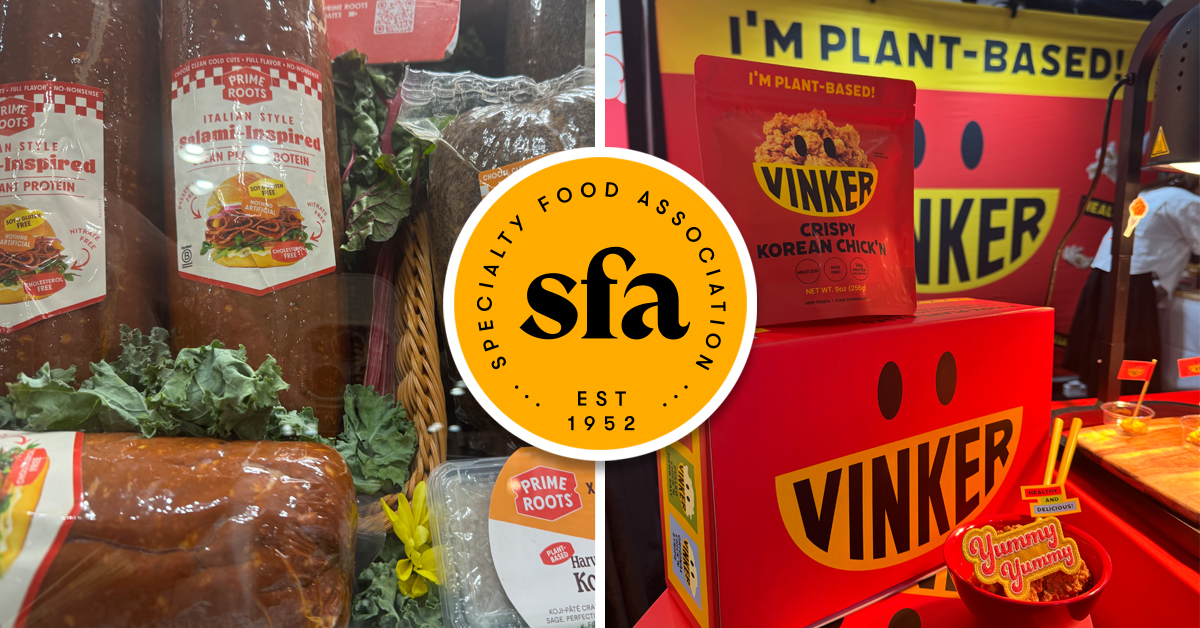
The plant-based meat category has undergone numerous waves from early entrants making soy-based alternatives to the heavily capitalized food tech types, but those still in the market are hoping they have finally narrowed in the product types, positioning and formulation approach to make it among mainstream consumers.
At this year’s Summer Fancy Food Show, early entrant Prime Roots debuted a new, deli-style look to match its updated formulation. According to co-founder Joshua Nixon, the goal of the overhaul was to make sure there “no way for [consumers] to say no” to the products. The tweaks, which were in the works for over a year and a half, resulted in a meatier tasting product and slight texture improvements, he said.
Additionally, the brand aimed to dial back the “fermented undertones” of its hero Koji ingredient in order to achieve a mainstream alternative via the reformulation. Nixon said an initial consumer survey found that the majority of non-vegan consumers reported they were satisfied with and/or would choose Prime Roots over animal-based products.
“We’re thrilled to unveil our upgraded recipes and new packaging that has been refined over years of feedback and that will drive real results,” said Prime Roots co-founder Kimberlie Le in a statement. “With some of our retail partners reporting that Prime Roots is driving 20% growth in deli sales – we’re not just taking share – we’re growing the category.”
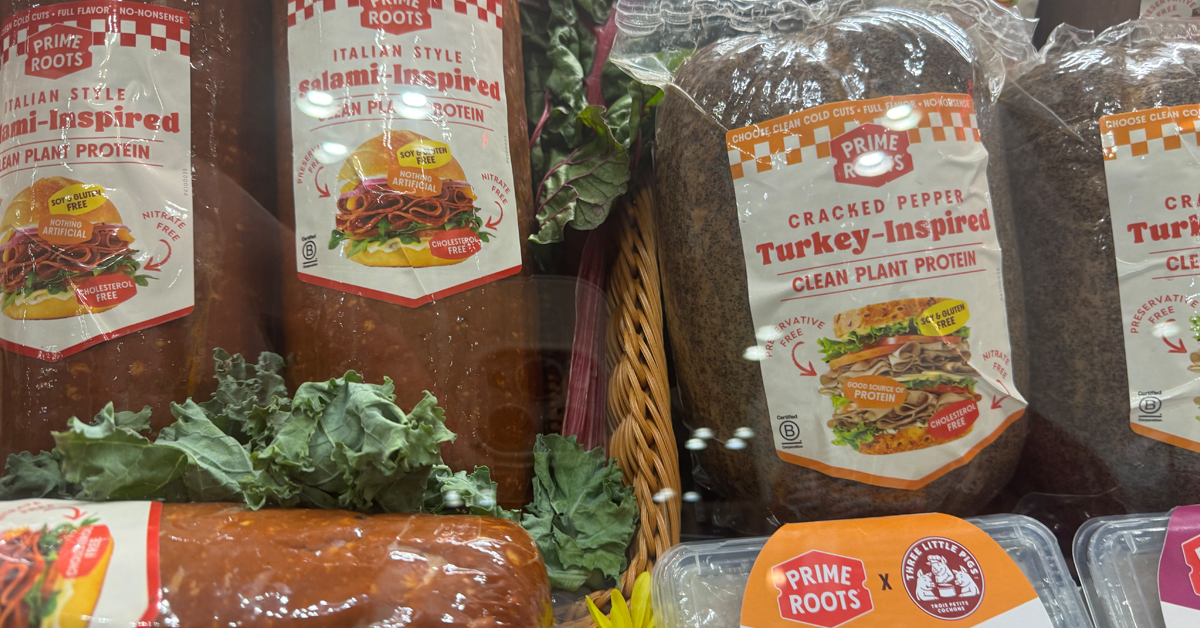
Prime Roots launched in 2017 and now sells a lineup of plant-based deli meat-inspired products including Smoked Turkey, Cracked Pepper Turkey, Smoked Ham, Black Forest Ham, Salami, Cupping Pizza Pepperoni, Bacon. The brand debuted with a clean label focus back when category leaders such as Impossible Foods and Beyond Meat were still perfecting early iterations of their “bleeds like meat” offerings.
Alongside the recipe updates, the brand also refreshed its labels, shifting to a red and white color palette that brought the addition of food photography and changes to the label hierarchy. The largest shift, however, was moving the product names from their previous “Koji-Ham” or “Koji-Salami” monikers to “Ham-inspired” or “Salami-inspired.”
Nixon said this is the largest shift and was the result of extensive internal conversations. He hopes that the rest of the industry will move in this direction. He also highlighted that previous, common naming schemes, such as removing a letter or misspelling “chicken,” can restrict consumer awareness efforts particularly on online platforms like Instacart as those words do not rank the products among their animal-based counterparts.
That early position has paid off as the brand now sells its lineup in stores across the West Coast and New York City; Nixon said it is currently focused on growing its presence up and down the East Coast.
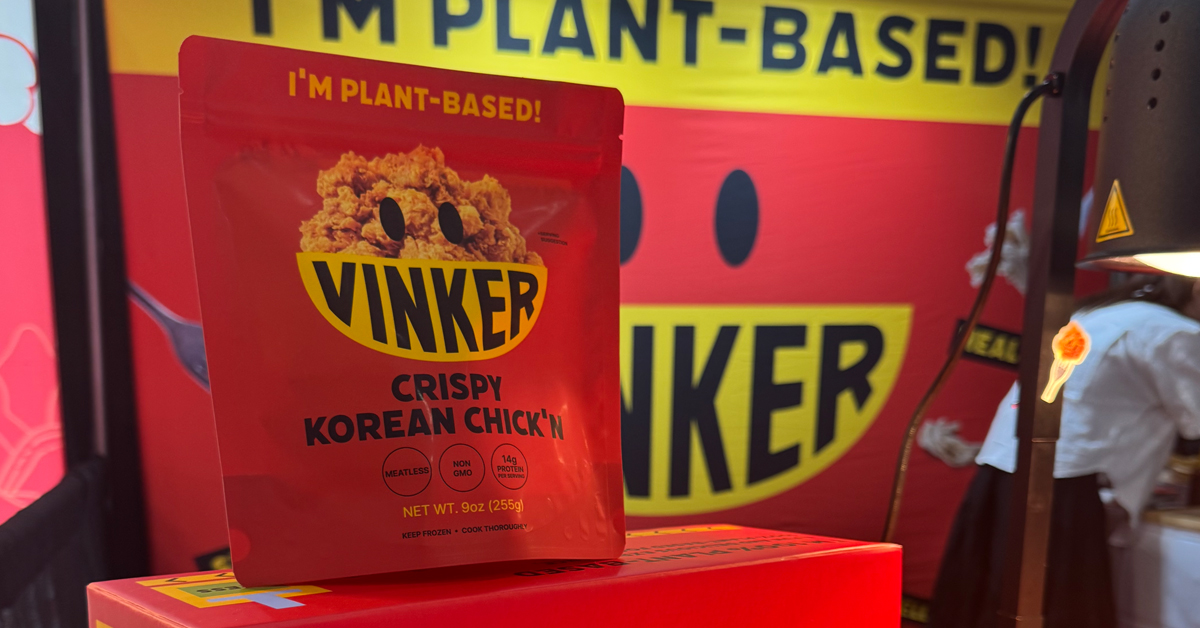
Elsewhere on the show floor, Canadian plant-based chicken producer Vinker also debuted a cleaner formulation for its Korean Chicken bites. Founder Marco Lee told Nosh that the tweaks primarily came from the sauce that flavors the product, swapping “commercialized gochujang” for an authentic and homemade version. The clean-label brand is working to now ramp up its presence among retailers in the U.S. and is in talks with a handful of distributors.
New York-based Bean Stalk showcased its lineup of vegan-friendly meat sticks and snack bites, including a lineup of savory, “meat-like” protein bars in Thai Green Curry and Jalapeño flavors. The emerging brand recently launched into the meal set as well with an 8-SKU lineup of frozen products ranging from plant-based calamari to an animal-free pastrami.
The vegan food company also debuted a Bolognese-style pasta sauce and offers a variety of pouched sauce products including Crab Paste, Mushroom Ragu and Garlic Ragu. While the brand’s product offerings stand out, the product types and formulations rely heavily on soy inputs.

Explore the Nombase CPG Database
Head to Nombase to learn more about the tagged companies and their offerings.